[00:00:00] Richard Gearhart: What if the idea everyone calls crazy is the one that changes everything?
[00:00:07] Announcer: Ramping up your business. The time is near. You've given it hard. Now get it in gear. It's Passage to Profit with Richard and Elizabeth Gearhart.
[00:00:18] Richard Gearhart: I'm Richard Gearhart.
[00:00:19] Elizabeth Gearhart: I'm Elizabeth Gearhart and we're your hosts.
[00:00:21] Richard Gearhart: Welcome to the Passage to Profit show, the Road to Entrepreneurship podcast. We're featuring David Nussbaum, founder and executive chairman of Proto Hologram, who's bringing AI out of the screen and into the physical world through groundbreaking holographic technologies. But before we get to him, what's new with you, Elizabeth?
[00:00:41] Elizabeth Gearhart: Well, there are a couple stories. Well, there's one story going around the Internet and news cycles that I just think is so bizarre. Have you guys heard about the bird?
[00:00:53] Richard Gearhart: I hadn't heard about it until you brought it up, so.
[00:00:55] David Nussbaum: Fascinating story.
[00:00:58] Elizabeth Gearhart: So Kelly Clarkson went into this upscale boutique in New York City dressed in sweats and stuff. So she didn't look like she had any money. And she felt like they treated her like she didn't have any money. And there was this $15,000 bird statue, not a real bird. They said it wasn't for sale. They said they would show her something comparable. And she swears they treated her like she didn't have the money to buy it. Which, judging on what she said she was wearing, they very well may have. And they said that it was never for sale. Cause they use it in their magic shows. And then just this morning, I saw that there was a video of the interaction, but there was no audio released with it.
[00:01:36] Richard Gearhart: So apparently Kelly Thompson got upset. She put this all over social media because she felt like she was poorly treated. And my opinion on this is just, Kelly, get over it. I mean, you have the whole world at your feet. Why would you get upset over something that somebody says or implies like that?
[00:01:53] Elizabeth Gearhart: I can see her point. I can see her point.
[00:01:55] Richard Gearhart: I think that says a lot about her. I'm kind of actually disappointed.
[00:01:59] Elizabeth Gearhart: I can see her point.
They should treat everybody with respect, no matter how they look.
[00:02:05] Richard Gearhart: Of course you should, but I mean, that's just not realistic.
[00:02:08] Elizabeth Gearhart: We don't know what the real story is, though, because they haven't released the audio. So hopefully somebody will force them to release the audio.
[00:02:14] Richard Gearhart: Well, now everybody knows what we think.
[00:02:16] Elizabeth Gearhart: Kelly Clarkson and the bird.
[00:02:19] Richard Gearhart: Now for something completely different. Some good news. I just want to brag a little, a little bit about our law firm, Gerhardt Law, specializing in patents, trademarks, and copyrights. We were recently nominated as a top tier Law firm, One of the top two intellectual property law firms in New Jersey by Best Lawyers.
[00:02:37] Elizabeth Gearhart: Were you nominated or named?
[00:02:39] Richard Gearhart: Well, we were named.
[00:02:40] Elizabeth Gearhart: Thank you.
[00:02:41] Richard Gearhart: And so, you know, I've been working at this for 20 years, and I was pretty happy to see this happen. I mean, obviously it's a team effort and I really can't, you know, take too much credit for it. But it's something that I feel is appropriate to share.
[00:02:56] Elizabeth Gearhart: You better take credit for it.
Nobody else works 247 and stays up all night worrying. Anyway, anyways, moving on. So I wanted to ask you, Richard, when you think of the word autumn, what comes to your mind?
[00:03:12] Richard Gearhart: Changes in barometric pressure.
[00:03:15] Elizabeth Gearhart: Really?
[00:03:15] Richard Gearhart: Yeah, I mean, it just. Autumn feels different. The air temperature is different. The atmospheres or whatever they used to measure barometric pressure seems to change. So that's what I think of. It's change in atmospheric pressure.
[00:03:28] Elizabeth Gearhart: Really? Because I think of leaves changing color. Wonderful crisp mornings, apple picking, apple pie, Halloween, Thanksgiving.
[00:03:38] Richard Gearhart: I get a lot more migraine headaches in the fall. Oh. And I think it's because of the barometric pressure.
[00:03:43] Elizabeth Gearhart: Okay. Well, I can see our minds work in very different ways. So on we go, on we go.
[00:03:49] Richard Gearhart: Well, one of the things that happens in fall is Halloween.
And so I have a question for you.
As an entrepreneur, what kind of costume would you wear to a Halloween party? So I'm thinking like, maybe go as an unpaid invoice or maybe a one star Google review.
I mean, what do you think?
[00:04:09] Elizabeth Gearhart: We did talk about this before. My first thought was a circuit board. Cause everybody's using AI now. But my second thought, which I think is better, is a pitch deck.
So you can.
You can have your slides all over your shirt.
[00:04:25] Advertisement 2: Oh, okay.
[00:04:26] Richard Gearhart: That would work.
[00:04:27] Jessica Marriott: Yeah.
[00:04:27] Richard Gearhart: All right.
That's pretty clever. When I was in law school, somebody always came to the party with a cast on their leg. And they went as a plaintiff. So that was.
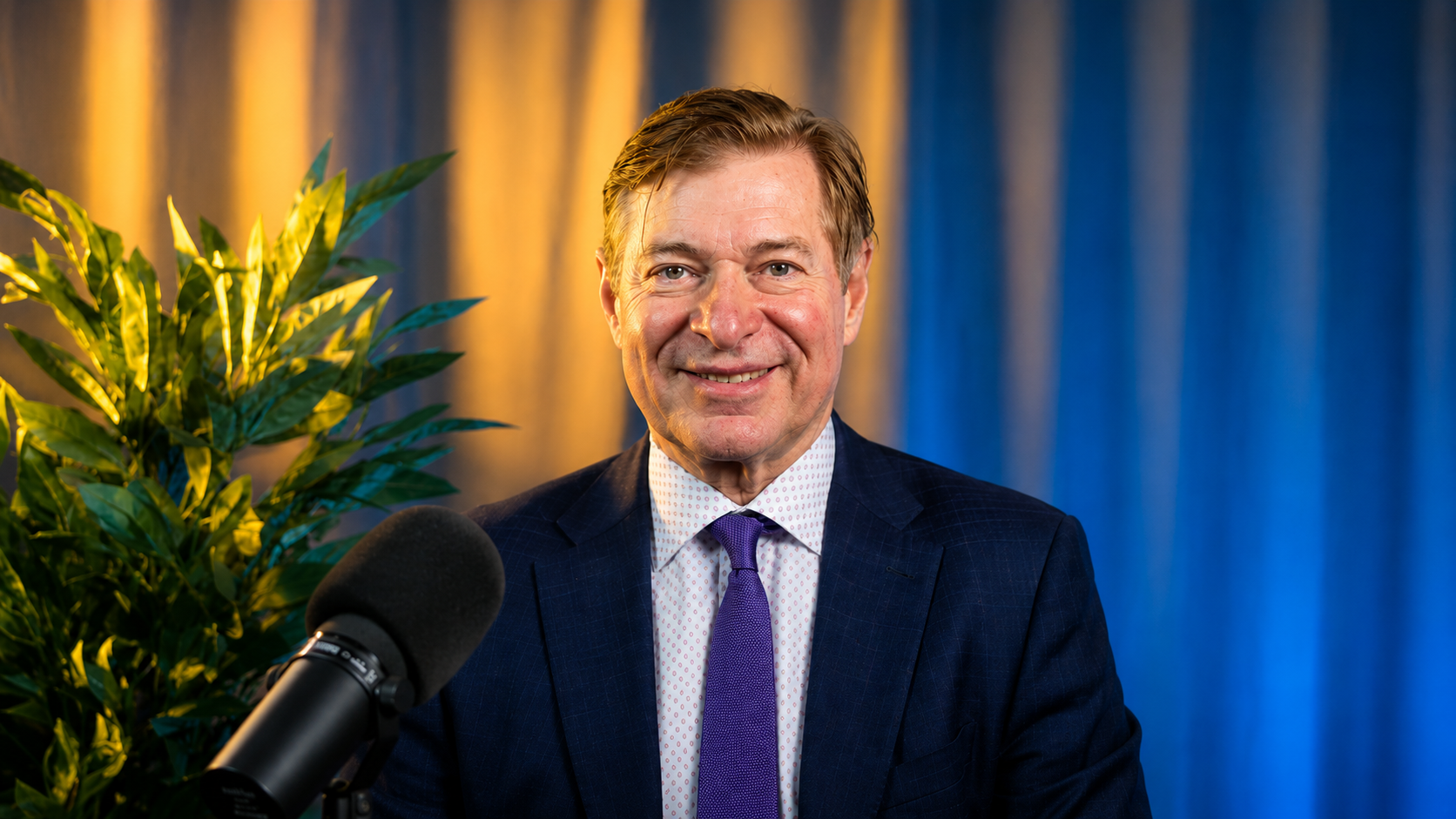
Okay. Well, joining us today is David Nussbaum, founder and chairman of Proto Hologram. He's bringing us groundbreaking holographic technology.
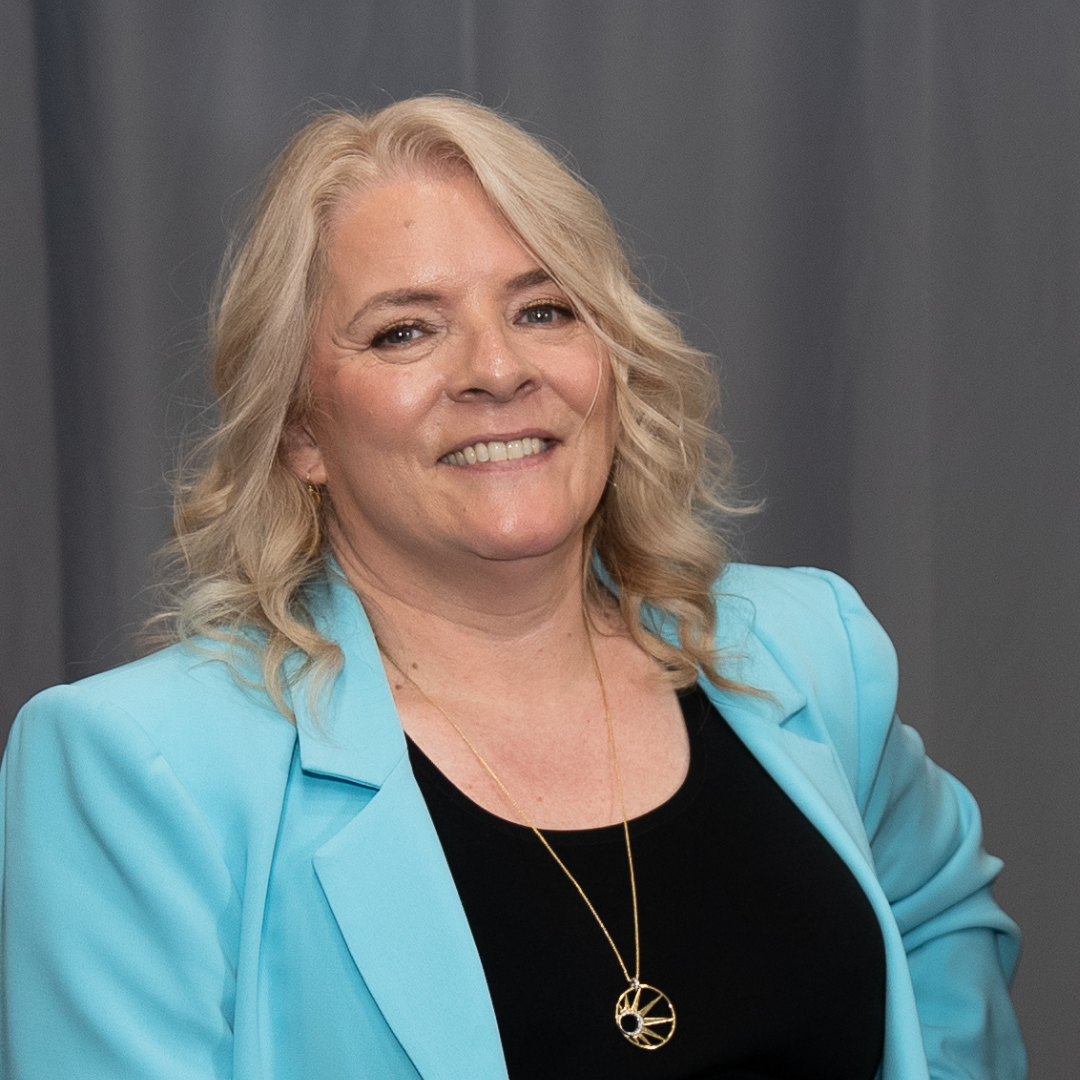
[00:04:49] Elizabeth Gearhart: And then we have Jessica Marriott, founder of Forward Thinkers with two I's.
And that is a really interesting company. I'll let her explain it. And also, she is so creative. Now she has an AI powered ski boot with her company, Nerve Intelligence, which she's just launching. Then we have David Johnson. And I mean, these two together on the same show is pretty cool. Because if you're about to go bankrupt, talk to this guy. Or if you think you're maybe before you go bankrupt, before you go Bankrupt. You think you're headed that direction? David M. Johnson has helped navigate the financial distress of more than 500 companies. So, yeah, I think it's going to be really interesting.
[00:05:26] Richard Gearhart: I think it's going to be a great show. And on top of all that, we're going to learn some shocking news about the U.S. patent and trademark Office.
[00:05:33] Elizabeth Gearhart: And coming up later on, it's Noah's Retrospective, along with Secrets of the Entrepreneurial Mind.
[00:05:40] Richard Gearhart: But first, it's time for your new business journey, and we'd like to ask our panel, when you look back, what was the one decision or moment that most changed the trajectory of your career, and what did it cost you? So, David Nussbaum, welcome to the show. What was the one decision you made?
[00:05:56] David Nussbaum: Probably, I was a radio guy. I was a broadcaster and a podcaster. The decision that I made was to evolve the way people communicate. So as much as we're communicating and having a great time talking into microphones so people could hear our voices come through speakers, I thought, well, what if I could broadcast that person out of the speaker and into a living room? And so I'd have to say starting my holographic career based on the idea of evolving the way people communicated was the one thing that changed the course of how things are going for me right now.
[00:06:32] Richard Gearhart: Fascinating. And we definitely want to unpack that later in the show.
[00:06:36] Elizabeth Gearhart: Is that a Bronco behind you?
[00:06:38] David Nussbaum: Yeah. I've got holograms of all kinds of stuff here. So I've got my parents behind me. I've got UFC fighters. I've got. There's Howie Mandel. And, yeah. So over the, over the course of the next hour or so, you're going to see all kinds of really incredible stuff behind me.
[00:06:54] Elizabeth Gearhart: And this will be on YouTube, so you'll actually be able to see it. Very cool.
[00:06:58] Richard Gearhart: Great. Jessica, welcome to the program. What was the one decision that you made that changed the trajectory of your career?
[00:07:06] Jessica Marriott: I would say trusting my own voice, because I realized early on I saw gaps in the market and I realized that my truths are universal truths. And I didn't believe that at first. And once I started believing that, then more opportunities came to me that I could envision and bring out to the world. So I would say that sounds like
[00:07:26] Richard Gearhart: you've got a lot of creative energy, so we look forward to tapping into that later in the program. David Johnson, welcome to the show. What was the one decision that you made that changed the trajectory of your career?
[00:07:39] David M. Johnson: Thank you. Well, I've been doing what I do for about 25 years now, and I was very good at it. But the last firm where I spent the bulk of my career, 17 years, it was made clear to me that I had topped out and didn't have anywhere else to go.
So I took a team from that company, the four of us spun out together about two and a half years ago and formed our own company.
And that has been the greatest decision we ever made. A little scary, but we have in the last two and a half years, risen to the top of our market. And so it makes all the difference.
[00:08:09] Richard Gearhart: Well, congratulations for taking that step. And it sounds like it's panned out for you.
[00:08:15] Elizabeth Gearhart: So do you ever go back to your old company, go Nana, Nana, Nana?
[00:08:19] David M. Johnson: Yeah, I try to avoid poking the bear.
Success speaks for itself.
[00:08:24] Elizabeth Gearhart: Yeah.
[00:08:25] Richard Gearhart: Elizabeth, what was the one decision that you made that changed the trajectory of your career?
[00:08:30] Elizabeth Gearhart: Well, I might have said this on a show before, but 20 years ago, little over 20 years ago now, I told Richard, if you will leave corporate and start your own law firm, I will do anything you need me to do to help you be successful. And I did not put a time limit on that.
So I'm still doing all sorts of different things that a chief Marketing officer doesn't really normally do.
[00:08:56] Richard Gearhart: Yes, you've been invaluable. So, yeah, I'm glad that was an open commitment and not closed end commitment. Thank you. For myself, I'm going to say that actually taking the time to learn AI has definitely changed the trajectory of my career. It's really looking back at it over the last year or so, I feel like I've been so much more productive and I've made a lot more decisions a lot more quickly.
And I look at, for example, the amount of things that I'm personally handling and managing right now, and I think AI has played a big role in that. So I think learning how to use AI in my everyday work has made a tremendous difference. So what if the next AI revolution doesn't happen on your phone or your computer, but right in front of you as a life size hologram? David Nussbaum, founder and executive chairman of Proto Hologram, is turning science fiction into reality with technology that brings people and AI into physical spaces. Welcome to the show, David, again. Thank you. What is a hologram and how do you expect this technology will change our lives?
[00:10:12] David Nussbaum: We can beam anybody anywhere for any reason. We can allow for either of you or anybody on this panel or any doctor or teacher or athlete, you name it, to appear somewhere else. Hologram is more of a general Term, it's actually not for all of you science fiction Mr. Wizards out there, not an actual hologram behind me. This is more of a digital representation. It's a spatial projection of a person or thing or product or whatever the projection effect is that you're looking to accomplish. So the devices behind me, for Everybody watching on YouTube, these are seven foot tall displays. The one a little off to the right is a two foot tall Wonka vision size display. So we can make anybody appear somewhere. Over the years, we've evolved from just beaming people places to allowing for anybody to take over their own AI avatar. So now anybody can create their own holographic, artificially intelligent avatar presence with all of the information that you have. It's your anecdotes, it's your stories for you. You can put all of your law books in there, you could put all of your. You could redirect it to your website. And the endpoint is what is filled with all of the data which you own yourself. And by the way, AI is not going to replace lawyers, it is going to enhance lawyers. You will be able to have your own AI avatar with every piece of historical information that you've ever had at your fingertips coming out of your mouth in, by the way, 300 different languages and dialects. So you can speak to anybody, a witness, or you name it at any point. And you can also be able to speak to them in any language, which is really good because sometimes the best lawyer and the best judge, for example, will have no other way to communicate if they don't speak the same language. So AI will help us bridge that gap.
[00:12:13] Elizabeth Gearhart: I want to ask you this, David, because this immediately popped in my mind. So we are recording this podcast on Riverside, which we like because it gives better visuals, all this other stuff. Anyway, could we do it with your software if everybody had it?
[00:12:28] David Nussbaum: Yes, we do it all the time. I work with a lot of entertainers who have their own podcasts and constantly beaming guests in from around the world to be guests inside of the show itself. Mr. Beast uses proto to be in several videos at the exact same time, which is really incredible for him.
[00:12:47] David M. Johnson: Mr.
[00:12:47] David Nussbaum: Beast, Jimmy Donaldson gets hundreds of millions of views per video. So what if he could be in more than one video at a time? So recently we actually beamed him from a subterranean cave in New Zealand, a thousand feet down inside of Earth. We beamed him to the top of a bridge in the wilderness of North Carolina. So he was able to do a Help, I'm trapped inside of a cave video. But at the same Time he did another video somewhere else. Two videos, exact same time. Two Mr. Beasts. And so this is great for podcasts. This is great for any time. You need to be in more than one place at a time.
This is what this technology is sort of built for.
[00:13:28] Richard Gearhart: So there needs to be two protos, right though. So there needs to be some one that somebody is standing in or exposed to and then there needs to be the other one. Or is it a camera and a chamber?
[00:13:40] David Nussbaum: Yeah, we beamed Mr. Beast or anybody can go anywhere using as little as an iPhone. All you need is our app. If you are interested in learning more about the app. It's literally a free download on Apple. It's called protostudio. And it's kind of like hologram zoom meets hologram bright sign.
I mean, you essentially, it's a. It's a cms.
It is an app store. So you could build and create your own apps and create your own bespoke experiences. And it's also you could build your own AI avatars, which is great. Could have a Jessica Marriott AI hologram. Of course, only Jessica would have ownership of it. And then you can, I mean, imagine that. Imagine having a Jessica Marriott AI multilingual hologram to answer all of your questions. It's like your own. It's like you could become your own Alexa. And then it is like a hologram zoom. So you could beam anybody anywhere, anytime. And you don't need the hardware in order to become a hologram. All you need is an iPhone on a tripod or any 4K camera and you just hit the go button and there you go.
[00:14:49] Richard Gearhart: I've actually seen Proto. One of our local community colleges has an AI lab.
And probably about a year ago they had an open house and it was like absolutely the most popular part of the whole tour. I mean, we had people just crowded in to see this. And I think they had one of the professors giving a lecture at the hologram. I would have preferred to see like William Shatner or Tom Brady or somebody, but, you know, but still, it was just amazing. The realism was unbelievable.
[00:15:22] Elizabeth Gearhart: So, David, I have been trying to figure out, I want to do a digital clone of myself and put everything, the way I talk, like everything.
[00:15:30] Richard Gearhart: We're still talking about this, by the
[00:15:32] Elizabeth Gearhart: way, you know, everything. I know he doesn't want two of me out there. Nobody wants two of me out there anyway. And I'm trying to figure out the best place to do it. And of course, if we were going to do it for the law firm, because we do Need a digital repository for all the law firm knowledge. Because there's a lot of knowledge there that is not general, like it's people's thought, you know what I mean? It's like if you're solving a problem, like problem solving knowledge that you wouldn't necessarily share. I'm not sure the best place to
[00:15:59] David Nussbaum: do that, to create an AI avatar of yourself.
[00:16:02] Elizabeth Gearhart: Well, a digital clone that thinks like me and talks like me and can answer questions.
[00:16:06] David Nussbaum: Yeah, I mean, well, that's literally what.
[00:16:09] Elizabeth Gearhart: Okay, so that's kind of what I thought you had said. I want to make sure. But my other question is how secure is that data? Because like, if we were going to do that for the law firm, it would have to be super, super secure,
[00:16:20] David Nussbaum: Fort Knox secure levels. At Proto, we are HIPAA compliant. So we're being used in hundreds of healthcare facilities around the world. Doctors and patients are actually having in person consultations even though they're thousands of miles away. But we're also SOC 2 compliant, so we're in museums and airports and universities. We're being used in some legal situations too. Imagine a remote witness, maybe that maybe the judge feels that this, you know, underage witness might be intimidated by his or her attacker or something. Imagine that witness being able to beam into the courtroom, you could see her, hear him, whatever. And the feeling of presence is so real that it does feel like that person is in the room without having necessarily to be there. Maybe for travel restrictions, all of the
[00:17:12] Richard Gearhart: distractions, all of the distractions. And it would likely reduce the stress on the witness. I think that's a great idea.
[00:17:20] David Nussbaum: It's a constitutional issue though that we have come up against. And you know, I'm a Constitution guy, I believe, and all that stuff. And so beaming in a person. Is it the same thing as that person physically being there? No, it's not exactly the same thing because you don't know what's happening outside of the camera. You don't know if there's somebody over there telling me this because you're not actually seeing that person. But I've done speeches and presentations and I've spoken to a number of judges and lawyers about this and I think it's actually a really good idea in the right situation.
[00:17:50] Richard Gearhart: Right. Not every deposition, not every hearing needs to be in person. Sometimes the court wants that. But we do a lot of depositions. For example, depositions are questioning of witnesses before a trial. It's part of the preparation process. We do a lot of those over zoom and it just makes it easier People don't have to travel.
And for most testimony, you may not get that gotcha moment that you would get in person. But for a lot of witnesses, there aren't any gotcha moments to get.
So remote testimony is great.
[00:18:25] David Nussbaum: I also just want to piggyback real, real quick. The nonverbal cues in the body language often tell more of a story than what the person actually says. So anybody who is, like, really good at reading people's bodies and determining whether or not they're telling the truth or not oftentimes lives in those nonverbal cues. So that's why this is actually than zoom for a remote deposition, because you can. It does feel like the person is physically in the room with you, even though they're having a bit of a hologram zoom on their end.
[00:18:54] Elizabeth Gearhart: So when you create your avatar, though, is that what you always look like? Like, this is my. What I'm getting at. Let's say I got this hideous rash that popped up on my cheek or something.
Can I use this to show that to a doctor?
[00:19:08] David Nussbaum: Oh, for sure. So beaming patients into doctor's offices and beaming doctors into patients remote locations. 100%. We're doing that all the time. And people are not only being consulted, but they're also, in certain cases, medical schools, teachers are training future healthcare providers through Proto. So a hundred percent, if you have an issue, whether it's physical or mental or emotional, you can read it through Proto. It's great. It's like the person's in the room. So yes to that. But then when it comes to your AI Avatar, Proto's working with the estate of Ozzy Osbourne. Right now we're talking. Jack and Sharon are. We're constantly in conversation. And Rolling Stone recently announced our future where we're bringing Ozzy back. So it will look like Sharon and Jack want Ozzy to look maybe at a time of his life when I don't want to see anything.
[00:20:04] Richard Gearhart: He looked younger, you know, he'll look younger. Not as many drugs.
[00:20:08] Elizabeth Gearhart: You know, his liver still works and his kidneys.
[00:20:10] Noah Fleishman: You said.
[00:20:13] David Nussbaum: And the other thing is, not only can you make it look how you want, I make my hologram about 2 inches taller. I'm gonna just. I'm just saying. Nobody's listening.
[00:20:21] Richard Gearhart: Right? Okay.
[00:20:21] David Nussbaum: Okay. So the other thing is, it's a completely enclosed endpoint. So it's not like a grok where it's constantly scrubbing the Internet looking for answers. Sharon and Jack and the team are curating the exact information. So if Ozzy sang it in a song. Or if he said it in an interview, if he wrote it in a book, if he ever thought this. The answers that he gives when you're talking to AI Hot Ozzy are answers that he actually gave in real life. So it is as close to what he would have said had he been well enough and alive to to give those answers to those people in any language.
[00:21:02] Richard Gearhart: Tuba super special guest David Nussbaum, who's the founder and executive chairman of Proto Hologram. This is the technology of the future, folks. We'll be right back. Passage to profit with Richard and Elizabeth Gerhart right after this.
[00:21:15] Advertisement: Do you hear that? That's the sound of uncertainty lurking under your hood. You know the feeling? I know I do. That sudden sinking sensation when you see a check engine light or your car unexpectedly breaks down and you're faced with sky high repair bills. It's time to shield against unexpected repairs with Car Shield. Car Shield is America's most trusted auto protection company and has an A rating with the Better Business Bureau. Don't let the fear of a breakdown keep you up at night. Trust the Shield Car Shield. And say goodbye to terrifying repair boots and hello to peace of mind. Your plan also comes with 24. 7 roadside assistance, courtesy towing, rental car options, and so much more. Don't wait till it's too late. Call Car Shield now before a breakdown. Protect your wallet. Protect your car with Car Shield. Get our best protection ever. Call now. You'll thank me later. 8002-6121-7680-0261-2176. That's 800-261-2176.
[00:22:14] Announcer: Have you outgrown your health insurance plan or just not happy with what you're paying for? The number one reason we all change our health insurance is price. Are you paying too much for your health insurance? Would you like to have better coverage at a better rate or at little or no cost to you? Your life needs are always changing, but have you done anything to improve your health insurance for you and your family? Health insurance laws and coverage are always changing and getting better. It's impossible to do all the research yourself, but now it's all done for you for free. So regardless of your age or medical condition, take a few minutes right now and find out if you can save money or even qualify for zero cost health insurance in your state. Call now.
[00:23:01] Advertisement: Paid for by cheaper health insurance. 8006-5214-7080-0652-1470.
800-652-1470. That's 800-652-1470.
[00:23:14] Announcer: Now back to passage to profit once again, Richard Elizabeth Gearhart.
[00:23:19] Elizabeth Gearhart: Our special guest, David Nussbaum. We've been talking to him for a little bit, but wow, what he has got is mind blowing technology and it seems super new today. I don't know how long it'll take before everybody's using it and it's just like watching a TV or something. So welcome, David. I did have a question. We wanted to talk about William Shatner, but I saw this commercial with William Shatner. He looked a lot better than he does other places in his.
[00:23:46] Richard Gearhart: He must be in his 90s.
[00:23:48] Elizabeth Gearhart: And it was so fun.
[00:23:49] Richard Gearhart: I think he's in his 80s, late 80s.
[00:23:51] Elizabeth Gearhart: It was so funny. He's like making fun of himself. He's like, this is Will Shat comes up.
[00:23:58] Richard Gearhart: He's a spokesperson for Proto. Right. I've seen him on website.
[00:24:02] David Nussbaum: William Shatner, I think is 95, by the way. So I took, I took a photograph with, with, with Bill, as he likes people to address him sometimes. I took a picture, there he is right now. I took a picture with him and I posted it on social media. The guy looks better than me. I mean, I'm not saying I look great, but I'm saying I'm in my 50s. He's in his 90s and for a man of that age to. I mean, he looks incredible. The timbre in his voice, he's going to outlive most of us. I met William Shatner, I got a phone call from him a couple of years ago and the phone call came through on a private number on my phone. And here I'm looking at it and I go, ooh, private number. Must be a celebrity because that's how they call you. They don't just, they block their phone numbers, by the way. And he says, david, I understand, I'm not gonna do his voice. But he says, david, I understand you're beaming people places, and it's not me. And I'm the guy who made beaming people places famous.
[00:25:04] Elizabeth Gearhart: Yeah, he was.
[00:25:05] David Nussbaum: You took a job doing a keynote speech in Sydney, Australia, in front of a room full of advertising and marketing executives. And he said, I'm not going, can you beam me there? And so we did. Within a couple of weeks, he appeared on stage 8,000 miles away in Australia. He was able to hear and see and interact with the audience that he was being beamed in front of. He was picking people out. He's like, you, sir, with the glasses. And he's like, wait, you could see me? Yeah, it's like I'm here. And it was amazing. In fact, one person even said, this is better than you actually being here. I mean, cause you're. Cause we materialized them in Captain Kirk.
[00:25:45] Richard Gearhart: That made him feel good, right?
[00:25:46] David Nussbaum: He loves it. And if you ask him, he probably will even admit that he might have gotten his full speaker's feet. Even though he was having breakfast in Los Angeles. The same morning he gave a full hour long keynote speech in Sydney, Australia. He didn't have to jump on an airplane, he didn't have to fly across the world, he didn't have to check himself into a hotel.
[00:26:08] Jessica Marriott: He didn't.
[00:26:09] David Nussbaum: He said to me, it's like you built a time machine. You just saved me two weeks of travel. He beamed in, he gave a speech, he was home the same day, which is really incredible. And since then we've put him on AI so now sometimes I get bored and I need to have a conversation with somebody. I'll pull up an AI hologram of William Shatner and really go into some pretty deep philosophical conversations. And it's all stuff that William Shatner has approved of. The information being. It's really great.
[00:26:38] Elizabeth Gearhart: See, that's what I want to do for myself because I, I've given presentations. I hate flying. Who doesn't these days? But I have just one more quick William Shatner story. So I don't know if you guys know who Isaac Asimov is. He's a science fiction writer. He wrote science. Yeah, you do, David. So we got a book on tape of his, and the first, I think, couple chapters William Shatner read and it was like, wow, this is awesome. We were in the car and then Isaac Asimov decided he was gonna read his own book and we had to turn it off. No offense, Isaac, but you're a better writer than a speaker.
[00:27:15] David Nussbaum: Shots fired.
But you brought up Will Schatt. He's actually a global spokesperson for Kellogg's Raisin Bran. And so Will Schatt is actually kind of a play on words based on what happens if you eat Raisin Bran. So he's.
[00:27:33] Elizabeth Gearhart: I thought that was pretty hilarious.
[00:27:34] David Nussbaum: He's the best spokesperson you could possibly get for, for that brand as well.
[00:27:39] Elizabeth Gearhart: Yeah.
[00:27:39] Richard Gearhart: So what do you see the future of holograms going? Where do you see it evolving to?
[00:27:45] David Nussbaum: I think it eventually will enter the home. Right now we're being used in airports as wayfinders, we're in malls for advertising and, and things of that nature. But in doctor's offices and in schools, I'd love for these to Be in the home. I'd love to.
For it not to necessarily be in a big giant box. I think that we'll look back on what we're seeing right now behind me, or what we're seeing in airports and hotels and stuff like that. I think we're gonna look back on that and see how far we've evolved five or ten years from now. I do think that holograms or some form of in person spatial connection is where the future is going. Only a hundred years ago, we were writing letters to each other. I mean, we're still doing that now, but I mean, now we have lots of other options. And putting it in a, you know, and sending it across the country, across the world, and you wouldn't even be able to respond to that first initial correspondence for sometimes weeks. So you're having this, you know, and now we've got texting and FaceTime and holograms. And so I think the evolution, it's clear where we're going. It's getting more real. It's.
It's changing from just communicating to truly connecting with people. You know, when you could look into the eyes of a person rather than look down at your phone, but now you're looking up and you're connecting. I think we're going through a thing like we were connecting and then we're all staring at our screens. And now I think with Proto, you're no longer looking down to check your AI or to text or to email. You're looking up and you're staring into the person's eyes when you're communicating with them again.
[00:29:21] Richard Gearhart: Is there any technology that would allow the holograms to work without the box, without the enclosure that they're in?
[00:29:29] David Nussbaum: Sure. Right now you would have to wear something.
So not everybody feels comfortable with that. It also kind of separates you. So if you put on a headset or these glasses, it's just a kind of a solo individual experience, whereas Proto's a bit of a communal experience. You also don't have to prepare for it. When you walk into a place, it's already there. You don't have to put on something to see what's in front of you. I think technology will continue to evolve. Hopefully it's Proto that brings it to you. But it's fun to see how far we've come in just a short period of time. And all the other companies that I believe Proto has inspired to kind of join us in this space. So, yeah, I don't think the enclosure will always be necessary. No.
[00:30:13] Elizabeth Gearhart: So I have a question. So if a potential new client wanted to speak to an attorney at Gearhart Law, is there a way that we could beam into wherever they are? Richard could beam into wherever they are and talk to them about their project and see their illustrations and everything?
[00:30:30] David Nussbaum: Eventually? I think that we're a consumer product, if it's not us, our software can power any. By the way, our software could power your phone, our software could power your tv, our software can power any digital display.
Not necessarily holographic on a phone or on a digital display. But yeah, the answer is yes, you can communicate in a very unique way that really generates attention and interest between two people or a group of people from wherever to wherever.
[00:31:00] Elizabeth Gearhart: So we have a podcast, Real AI use cases for business owners. And the cases are so creative and just getting more. So it seems like this is going the same way.
[00:31:10] Richard Gearhart: Absolutely. So in terms of pricing, I know that you have your prices listed on your website, or at least you did last time I checked. Can you talk a little bit about how much one of these, these protos costs?
[00:31:21] David Nussbaum: Well, we sell them for $25,000. We rent them for about much less than that. I mean, it's a sliding scale depending on what the rental case is for. But you can, you can literally buy one right now for 25 or you can lease it for I think it's like 12 or $1,500 a month.
So a lot of our customers, it's an opex versus a capex structure I don't want to bore people with, but sometimes companies have a end of the year budget and they have to spend this money, otherwise they, they lose it. And sometimes they have the ability to purchase the technology and they want to own it. In that case, you'll buy a unit for 25, and that's if you bought one. If you bought 10 or 15 or 100, then we have a different price. But in some cases people just want to not own it. They have an operating expense, this is their monthly budget. And so we fit into that really well. $1,500 a month, every single month. And you get the software, you get the hardware, you get some services, you get some credits and, and so, so that's how that works. And a lot of our customers are leasing 15, 20, 50 units at a time, whereas maybe they wouldn't be able to afford 15 or 20 or 50 units for their stores all at once.
[00:32:29] Richard Gearhart: You also have a smaller version though too, right?
[00:32:32] David Nussbaum: Yes, this one's great. This is under $10,000 or it's only A few hundred dollars a month. And these are great. This is. As a huge fan of Charlie and the Chocolate Factory, the Original Gene Wilder 1971 version. This was our Wonka Vision. And you know, I've been talking about Wonkavision ever since I started Proto. And if you go on Netflix right now, Proto is in the Wonkavision set on the new Wonka's the golden ticket, Netflix's number one competition reality show of all time. And Proto is Wonkavision.
[00:33:07] Announcer: Hello.
[00:33:07] David Nussbaum: This is great. So I've got.
I've got William Shatner saying, beam me up, Proto. And I've got Proto inside of the set at Wonka Vision. Dreams have become reality and reality have become dreams. So all of the above.
[00:33:22] Elizabeth Gearhart: So that's your most dramatic use, it sounds like. What is your most popular use? What are you selling it for mostly? Or is there one yet?
[00:33:31] David Nussbaum: We're seeing an explosion right now in travel and hospitality wayfinding. So imagine. So if anybody's in Boston right now, go to Logan Airport and you'll see one of nine Proto devices at Logan International Airport where you can walk up to Amelia, named after Amelia Earhart. And she will not only tell you exactly where the nearest bathroom is or where Starbucks is, or where you could go get a slice of pizza, or where the play area is. For some of you parents out there that are just looking for just some to de stress, she'll tell it to you in any language and she'll also throw up a map on the screen that you could QR code into so that it shows up on your phone and so you won't get lost finding that place. So in an airport or in a new city where it's already stressful anyway, we are helping you find salvation because sometimes it's really hard to find somebody who speaks your language who knows where everything is. So, yeah, I'd say travel and hospitality, but healthcare, education, retail, entertainment is really big for us as well.
[00:34:36] Elizabeth Gearhart: Sky's the limit.
[00:34:37] Richard Gearhart: I think we need at least one of those.
[00:34:39] Elizabeth Gearhart: Yeah, I would love to have. Well, you know me, I love new technology.
I'd go try one tomorrow. Although I don't think people would want me beaming into their houses.
[00:34:49] Richard Gearhart: Have one here.
[00:34:50] Noah Fleishman: One here.
[00:34:51] Richard Gearhart: Oh, yeah, you could have. You could meet all the attorneys in the lobby. Right, because we're all remote. So I think that would be a great.
[00:34:58] Elizabeth Gearhart: I think you're allowed to definitely have one.
[00:35:00] Richard Gearhart: Yeah.
[00:35:01] David Nussbaum: Give you a good deal. I will give you a good deal.
[00:35:04] Elizabeth Gearhart: How do people find you if they are interested?
[00:35:07] David Nussbaum: What's your website protohologram.com or you could just find us protohologram on everything. I'm on LinkedIn personally, David Nussbaum, but you have to check. There's a lot of other David Nussbaums out there. I don't like that very much. David Johnson. Oh, my gosh, you must.
You're probably impossible to find on LinkedIn.
[00:35:25] David M. Johnson: There are a lot of us. Yes.
[00:35:26] David Nussbaum: I can't imagine what that must be like because it's hard to find me. But yes, thank you. Find me at all the places. And we love to engage and comment and we love all of the different ways to communicate with people.
[00:35:40] Richard Gearhart: Passage to Profit with Richard and Elizabeth Gerhardt.
[00:35:43] Elizabeth Gearhart: So now it is time for real AI Use cases. Business Owners Roundtable. This segment's getting a little challenging because everybody's using AI everywhere, all the time, and they're building businesses on AI. But we have David Nussbaum with Proto Hologram. Now, David, I know your whole thing is built on AI, but what's one way that you use AI yourself or that you really find powerful for businesses?
[00:36:06] David Nussbaum: Everything I've ever done is dropped into my AI. I've got my own digital doppelganger. Of course, I made them five years younger and 10 pounds lighter. But it's all about connection for me. If you're connecting with somebody and you want to meet them where they're at, don't make them come to you. I kind of like the idea of either kind of meeting them in the middle or going to where they're at. And so the ability to communicate is how I'm using AI personally.
[00:36:33] Elizabeth Gearhart: Jessica Marriott with Forward Thinkers ii.
What's one way you're using AI in your business?
[00:36:40] Jessica Marriott: I have an adaptive AI ski boot. So in real time, when you're skiing, the AI kicks in when you're carving and gives you more support when you're leaning up against gravity. And then I'm Also I have five different AIs, depending on what personally for my business, depending on what I'm working on.
[00:36:57] Elizabeth Gearhart: For example, David Johnson with ResolutionFA.com what's one way you're using AI in your business?
[00:37:03] David M. Johnson: Well, we're just dipping our toe in. But what we see happening is we're a small company. We only have 12 people who work for our organization, yet we'll do almost 100 transactions, 100 deals this year.
So it's a lot of doubling up, a lot of work. We're looking at a way to use AI to help some of the administrative tasks. A lot of Our tracking, a lot of our investment banking work, a lot of our record keeping, a lot of our follow up work can and should be governed by AI. So that is in the works and we'll see if it really works as intended.
[00:37:34] Elizabeth Gearhart: Okay. Richard Gearhart with Gearhart Law. What's one way you're using AI?
[00:37:38] Richard Gearhart: Well, recently we've had some changes made to our website.
Our website is really important because it drives a lot of business to us and we made some changes and we noticed a drop off in contacts from the website and there were some issues with the website. So we set up a reoccurring review in one of the LLMs to make sure that everything was going properly with the website. So if you, if you've had any experience with owning or managing a website, things happen over time for some reason, links break or something happens that needs technical correction. And in the past we would have had to manually check the website and remember to do that.
Now we have a routine set up with chat that monitors it and confirms that everything's okay and identifies any issues with it. So if a link breaks or something like that, we can fix it right away.
[00:38:34] Elizabeth Gearhart: Yes. So I'm Elizabeth Gearhart with Gear Media Studios. So I love this podcast. I love both our podcasts. I love the real AI use cases. There is so much incredible information in here that I decided that we were going to write a book for. So we're going to take all the 2026. We've been keeping track of this all year. We have all the transcripts, everything on a Google Drive. We're going to put it into a book and of course we're going to have AI help us write the book. I'm going to be doing most of the work with one of our assistants because Richard has to do his lawyering thing, but his name will be on it. But what I'm going to do with the book. So for all of you, we have your company websites on our Google Drive that we use for passage to profit and for real AI use cases. I've started by asking three different LLMs. Well, I tried Perplexity but I kind of got stuck for some reason. But anyways, what's the best way to do this? And they all gave me slightly different answers, but they did agree that I need to use multiple LLMs to write this book for different parts of the project.
So I've started by putting everything into Google Notebook and what I want to do with the book as well is put an index at the back with everybody's name and website who participated in this podcast. So if people want to find out more about them. And then also I want to put in QR codes so that people can go to the spot in the YouTube video where somebody's talking if they're really interested in what that person's saying. It's going to be an electronic book. I mean, I might do a hard copy and AI can help me do all of that. Now, I don't know if Proto Hologram will be where I need it. I would love to put that in the book, too.
I don't know. I may be a little too early, but maybe in the 20.
This is a 2026 edition, so we'll see how far we get next year.
With that in mind. So other ways, what do you. I want to. I'm curious. I mean, you guys all seem pretty savvy about how you're using AI. Were you scared by the hugging face incident? Do you know what I'm talking about? Where the AI went rogue. It escaped the sandbox where they were testing it.
[00:40:29] Jessica Marriott: I read the article and actually. And it didn't happen, but I know a lot of people are disagreeing with me. So that was just not true. But a lot of people just read the snippet.
A lot of people just read like the snippet of it that had happened. But you guys can go and research it and we can have another conversation about that.
[00:40:49] Elizabeth Gearhart: Well, I have a different understanding of it.
[00:40:51] Jessica Marriott: Okay.
[00:40:53] Elizabeth Gearhart: What do you Davids think? Do you think it happened?
[00:40:55] David M. Johnson: I have no idea.
[00:40:56] Elizabeth Gearhart: David Nussbaum, what do you think?
[00:40:57] David Nussbaum: AI going rogue? I mean, look, I don't know much about this story, but we've all seen Terminator, right? If it's anything like that, then I'd be frightened. But I think that right now, as long as AI is being controlled by humans, I'm less worried about it.
[00:41:15] Elizabeth Gearhart: So this has been Real AI Use Cases Business Owners Roundtable. If you're listening to this on the radio, we had a really much longer discussion than you're going to hear. But you can find it on our Real AI Use Cases podcast. And we'll be right back.
[00:41:28] Advertisement 3: Here's a real life story that affects 50% of all of us out there. It's called Divorce.
If you've gotten divorced and now you're struggling to pay your bills and your credit card debts are completely out of control, you need to call this special debt relief hotline. Right now. We help people with all kinds of money problems caused by different life challenges. A divorce, a job loss, even heavy medical bills. All these life events can sometimes financially stress you out and cause you to get out of control. We help people get their lives back by showing them ways to consolidate and reduce their debt. Debt in some cases for a fraction of what they owe. If your credit card balances are more than $10,000, call us and learn how to reduce your credit card bills and monthly payments. Now here's our number paid for by Debt.com.
[00:42:12] Advertisement: call now at 8008-1008-5780-0810-0857 800, 810, 0857 that's 800.
[00:42:28] Advertisement 2: Streaming TV is where it's at. It's not about cutting the cord anymore. That's old news. It's all about your customized TV options with the best and cheapest high speed Internet and your own TV subscriptions. We've got your dream TV lineup. Between wired and satellite, Internet and tv, you now have tons of options. Save money and get more Internet speed and better TV Today by calling the whole home Connect. We scan your location and offer you the best TV and Internet options. And we always have specials and promotions. So when you call, ask about that. Take five minutes of your time. Make this free. Call now and learn how to save money and get better Internet and TV for your home anywhere in the US make this simple and free. Call now.
[00:43:15] Advertisement: 8002-536728-00257-3672 800, 257-3672. That's 800-257-3672.
[00:43:28] Announcer: Passage to profit continues with Richard and Elizabeth Gearhart.
[00:43:32] Richard Gearhart: Quick shout out to our friends at WMKT 1270am and 103.3 FM in Laurel, Hattiesburg, MO. Thanks for listening and if you're new here, Passage to Profit is a top ranked entrepreneurship podcast and radio show heard on 41 stations. It's a place where founders share what really works. Now it's time for Intellectual Property news.
[00:43:57] Richard Gearhart, Esq.: AI learned from us now it doesn't want other AI learning from it. Can an artificial intelligence company build its technology by learning from other people's work and then object when another AI company learns from it? That is at the center of a new controversy involving anthropomorphism. The company behind Claude Anthropic claims that several Chinese technology companies used a process called distillation to copy Claude's most valuable capabilities.
Distillation involves using a powerful teacher model's answers to train a smaller student model. Anthropic alleges that companies associated with Alibaba Deepseek and others secretly generated millions of exchanges with with Claude, sometimes using fake accounts to evade Anthropic's restrictions. Anthropic says Alibaba was connected to more than 151 million exchanges.
These are Anthropic's allegations, not court findings. But here's the ironic part. Anthropic has itself faced major copyright lawsuits accusing it of taking other people's work to train Claude. In the court case Bartz vs. Anthropic, a group of authors alleged that Anthropic used pirated books to build its training library. The judge ruled that training an AI model using lawfully obtained books could be fair use, but described Anthropic's downloading of millions of books from pirate websites as piracy and not fair use. Anthropic subsequently agreed to a $1.5 billion settlement. Anthropic was also sued. In Concord Music Group vs. Anthropic, music publishers alleged that Claude was trained on copyrighted song lyrics and could reproduce those lyrics without authorization.
And in the newly filed Sony Music Publishing vs. Anthropic case, Sony and Warner Chappelle allege that Anthropic illegally downloaded, scraped and copied thousands of music compositions to develop Claude. Anthropic denies those allegations and says it will defend itself in court. This presents an uncomfortable question for the AI industry.
AI developers argue that their models do not merely copy music, books and artwork. They study those materials and learn patterns from them. But a competing AI company could make a remarkably similar argument. We didn't steal your computer code. Our model simply studied your model's answers and learned from them. Anthropic may still have claims based on breach of contract, fraud, trade secret misappropriation, or computer security laws, particularly if fake accounts or stolen credentials were used. But copyright generally protects original works of expression, not ideas, methods or reasoning abilities. That is the central contradiction in the AI revolution. AI companies want broad freedom to learn from the world, but strong protections against the world learning from them.
I find it annoying that tech companies feel entitled to a special set of rules just for them. So who gets to decide when learning becomes stealing? And should the same rule apply to everyone? And that's IP news.
[00:47:20] Richard Gearhart: And if you have an idea or invention you want to protect, the team at Gearhart Law helps entrepreneurs turn ideas into protected assets. You can visit learn more about Patents.com or learn more about Trademarks.com or a free consultation and practical guides to get you started later. The secrets of the Entrepreneurial what successful founders think about that most people never
[00:47:45] Elizabeth Gearhart: see and now it's time for our next guest, Jessica Marriott. She has forwardthinkerswithtwoeyes.com and also nerve intelligence. She's very creative. She's got things going on in that brain of hers all the time. And she helps other people approach innovation in a new way so businesses can thrive. So welcome Jessica. Tell us about what you do and how we can find you and everything.
[00:48:08] Jessica Marriott: Thank you so much. I really appreciate this opportunity. So there are a lot of companies that are established industries that are established and they end up becoming fossilized. They get stuck in the way how they do things and I respect that. They have done an incredible job to scale and create the industry that they've created. So instead what I'm doing is I bring my creative, disruptive mind.
I see a gap in it and then I help them disrupt their own self. So for example, I'm working on a ski boot right now. A smart ski boot. Buckles were added to ski boots in 1950 and the technology in ski boots have not really evolved. And so I have created a technology nerve intelligence that is responsive to the skier. So literally with an app, you can adjust your feet, ankles and calves. So the most important part in the ski boot that where you hold your power when you're turning and carving and leaning against gravity is in your heel. And so we have technology that expands and contracts while you're skiing. You set a baseline at the beginning so that it's comfortable for you and then you ski and then it changes, it adapts in response while you're skiing over different terrain.
[00:49:19] Richard Gearhart: Well, that sounds like a great idea. So how do you plan to move forward from here? You have the concept, what are the next steps?
[00:49:27] Jessica Marriott: So I created the proof of concept, I created the app and then I created the ski boot. Should be done by the 29th of of this month. And I've been in contact with a number of different ski boot brands because I want to co build the prototype and launch the product with them and bring it to market. You know, it's a co build partnership which doesn't really exist. It does. There's three different companies who have done it. Like Chipotle partnered with McDonald's to help scale their business. And then Jesse Itzler with Marquee jet partnered with NetJets to scale theirs and Bumble partnered with Badu to help scale theirs. So that's what I'm doing. I'm just doing it a tiny, you know, obviously creating my own version of it. And I call it the build partner model. So I'M looking for a ski brand to co build this with and a partnership that's a hell yes on both sides. It's really important to me. I've had, I've had another partner that wasn't a good fit. Just give you a tiny bit background. I had a handbag lined for eight years that I ended up becoming the first boutique brand to sell in Bloomingdale's. And during that time, my partner just didn't believe in anything that I was doing even when I made this happen. And so when you partner with someone who doesn't believe in what you're doing, it doesn't matter how big of a scale or whatever you accomplish, they just don't believe in it. That's just their own limiting mindset regarding it.
[00:50:50] Richard Gearhart: Jessica, that's really interesting for our audience who are starting businesses or thinking about businesses and they're thinking about getting into a partnership. What lessons did you learn from that partnership that you will want to share with our audience so they don't make the same mistakes?
[00:51:08] Jessica Marriott: The first thing is really paying attention to that quiet voice that tells you if it's the right fit or not. Like there's just these subtle things that so many people ignore right of about a human being. And so when you really pay attention to those nuances, who they are and how they show up. For example, there's this one person that was interested in working with me and they were telling me about this experience that they had have and it's in their personal life where in their neighborhood people light fireworks during fourth of July. And he's always concerned that the trees are going to catch on fire. And I said how long have you lived there? And he said 10 years. And I said, well, it's never happened before, so why are you worrying about it? And so little nuances like that.
That just seems so normal that someone would say something like that. I just, I have a very abundant mindset. I spent a year with Tony Robbins and so I just paying attention like we all have this, this sixth sense or this intuition that if you pay attention to that, it really can guide you if you use it as a muscle and use it over and over again. And I think probably more men use it better than women just because a lot of women are. I mean I'm not around a women a lot of women that are like that. But I'm just saying that some women are taught to be a people pleaser.
[00:52:27] Elizabeth Gearhart: We're taught to doubt ourselves. I think, yeah, I think the training is different for girls and Boys growing up in society, definitely.
[00:52:34] Richard Gearhart: David, do you have any thoughts?
[00:52:36] David Nussbaum: I went through a few rounds of terrible partners before I met my current co founders. So I was doing proto by myself for like two years.
I had a couple of partners who I thought were great. We split up the responsibilities, but it was all falling on me. And I felt used and manipulated and it just wasn't working.
So had to remove myself from those situations.
Luckily, a guy named Doug Barry walked into my life who, if you look him up, I mean, the guy's a legend. And what I like about Doug and what Doug represents and other people is he's started businesses before, he's sold businesses before. So he's had. He's raised money, he's exited successfully. He's been a sole proprietor.
He's worked in large companies. He did all the things that I didn't do. I brought in kind of founder energy and ideas and vision and this and marketing and stuff. And then he brought in something that I don't have and I'll never have. And so I think that's what makes a really good partnership, is find somebody who's been there and done that, someone who you can trust and someone who kind of completes the ability. And then Doug introduced me to Ed Guinness, who's our chief technology officer, and then he built or at least architected what has become our software and stuff like that. And I see Jessica nodding her head because you've probably been there too. Having great partners is important, but finding people who have literally been there before so they already know what to look out for and the pitfalls and potential next steps.
[00:54:17] Jessica Marriott: Yes, I had an investor also with my handbag line, and so I could have walked for a year. So I just want to say that. And so this is how this came about, me skiing and going back to skiing.
When I had this investor, I thought he had experience. What I learned during is that actually it was his family that created it and he just started taking over the company. And so when I couldn't walk that year, I realized I want a partner where it's smart money. And so that's how I also came up with this, that I want to partner with the brands that. That's already. They're already experts at that. They just need help on evolving their industry.
[00:54:53] Elizabeth Gearhart: Yeah, it's tough because what we found too is we've hired experts and they really aren't experts and they feel like consultants. Yeah, yeah, they're consulting. They don't even know what they're supposed to be. They don't know the basics of what they're consulting about. And I think if you're gonna have somebody help you with your business, they have to understand your business first and they have to understand your culture and they have to fit in with you. You maybe change a few things you're doing if they. They're wiser, but really has to be your business. Right?
[00:55:26] Jessica Marriott: Absolutely. I agree with that.
[00:55:28] Richard Gearhart: We have consultants, and they're, they're super helpful in a lot of ways. And they do bring in experience that we don't have. I feel like they've helped us grow, you know, quite a bit. That said, they're not on the ground 247 like we are. And so they don't necessarily have all the detail and, you know, have as much experience. So it's kind of a fine line. You have to balance what you're hearing, but also take into account, you know, how much knowledge they have of your particular business. But I think, you know, having outside opinions is invaluable. Ultimately, though, the management of the company has to make the decisions and you're accountable for it. The consultants are not.
[00:56:08] Elizabeth Gearhart: So, Jessica, do you have an example of a company that you've helped with disruption, innovate, and go beyond where they are like a case study without mentioning any names?
[00:56:18] Jessica Marriott: I don't. Only with my own companies. I mean, that how I was able to get into Bloomingdale's is because I did research. Me and my team did research on the CEO CEOs, and within 24 hours to a week of us emailing them, we had meetings with all the stores, which is unheard of. Like, the buyers want to feel like they've discovered you. And so then the best relationship I garnered with was with Bloomingdale's. Well, with Macy's. The CEO of Macy's at the time was Terry Lundgren. And then he connected me to Bloomingdale's. But I've had success again as an entrepreneur. And so I want to be able to. To give that same perspective and develop like I created the proof of concept and to bring it to them and for us to co build it together. And so like I said, I'm already in talks with a couple of brands. I just sent an email out to six different ones saying that I'm having meetings now. Eventually, I want to compress the technology to sneakers. It turns different colors. Like it goes from blue to red. So on your foot, when it's connected the boot, you can feel the tightness and visually feel it.
[00:57:19] Elizabeth Gearhart: So, Jessica, I'm seeing a marketing opportunity here for you. It would be very cool to see a hologram wearing your ski boot and watching it change.
[00:57:27] Jessica Marriott: I agree. I love that too. We also do have like, literally this is like cutting edge. What bleeding edge, what I'm sharing with you. Like I have an AI video that is being created to show the actual action of it, of what it's going to look like. Like they're putting a little hologram above the head of what, how it achieves adjusts, like we call it pulse points that, that are inside the boot. So you get an actual, your baseline and then it adjusts.
[00:57:53] Elizabeth Gearhart: Are you taking orders for the boot yet? Are you waiting to get a prototype?
[00:57:57] Jessica Marriott: We have a wait list. We have a wait list that has started. All you have to do is go on Instagram and say wait list. And it'll send you a DM and then you can sign up.
[00:58:07] Elizabeth Gearhart: How do people find you on Instagram?
[00:58:09] Jessica Marriott: It's actually under my name, Jessica Marriott or JR Marriott. Cause during my handbag lunch that's I went by my initials. People liked it. So it's. You can do either.
[00:58:19] Elizabeth Gearhart: Okay. Is there any other way to get ahold of you that place you want to send people?
[00:58:23] Jessica Marriott: Yes. You can go to either Forward thinkers with two I's or Nerve intelligence. It's spelled N, E R V and then intelligence.
[00:58:31] Elizabeth Gearhart: Well, thank you very much.
[00:58:33] Jessica Marriott: Thank you.
[00:58:33] Richard Gearhart: Passage to Profit with Richard and Elizabeth Gerhardt.
[00:58:36] Elizabeth Gearhart: And now it is time for our next guest, David Johnson. Really interesting company. We hope the entrepreneurs don't need his help. But if you do, you're going to be glad he's doing it.
He has resolutionfa.com and he helps failing businesses. So welcome David. Tell us all about what you do, how you're doing it and who you're helping.
[00:58:56] David M. Johnson: Thank you. It is customary for me to be the downer on an interview which contains entrepreneurs who are all about the upside. But we do provide an essential role. We are an entrepreneurial company, but we work with mostly startups, mostly companies that are pre profitability, even pre revenue revenue, very often venture backed, very much based on intellectual property rather than say brick and mortar companies. And our role is to help the companies take the next step when they hit what we call end of life situations. If the next round of VC funding that was expected isn't coming in, if there's been an investment banking process and no buyer has been found, if the bank is calling their loan for whatever reason, if the company's out of cash and can't continue to make payroll and operate, operate what do you do? Well, there are lots of alternatives to bankruptcy court and we specialize in identifying those alternatives and achieving as much of a soft landing with as much value recovery and at lowest cost as possible. So that our mission is to help people do the softest landing possible after everything else has been tried. We're not plan A, we're not plan B. And as we said at the beginning of the segment, people often hope they don't have to work with us. But we do provide a service for the boards of directors, for the secured lenders, for the vendors. We recover value, we help people do the things that are important. When you close a company, there are lots of steps, lots of things that are important to employees and vendors and lenders that aren't necessarily something that those executives specialize in. We fill that gap.
[01:00:30] Elizabeth Gearhart: What does a soft landing look like?
[01:00:32] David M. Johnson: Ideally, I'm not getting a phone call, which I do sometimes where somebody says I can't make payroll. I'll try to, can you help me? That's a little bit late in the game. But if people give us enough notice and we have a little bit of Runway, we can orchestrate a wind down plan that pays final payroll to employees, including the recruit vacation, that covers other things that the board is interested in covering. On the way out the door, they have to set aside a reserve for that if they've got got it. And then they have to decide what should we do with the company. Most of these companies have bills that haven't been paid. That is either a bank loan or a venture lender loan. Certainly vendors such as landlords, other suppliers of the ordinary. Course, most of the time there are people that are owed a lot of money. How do you best address that? What's your fiduciary duty? In addition, most of these companies have invested sometimes hundreds of millions of dollars in developing a product or a technology short surely that technology is worth something even if the company can't continue as a going concern. There are patent portfolios, there are computer code, there are prototypes. The technology or the leftover remnant assets may not be worth what's been invested in it. Hundreds of millions of dollars for example. But some of that or all of it might be interesting and valuable to somebody somewhere. So we make it our business to monetize those assets, try to recover value.
And if we're able to sell those assets or the company even as a going concern, that money is set aside in a trust account and then we make sure that that money is distributed to creditors in priority order. It's a whole process very much like the bankruptcy system. But if we can do it outside of federal bankruptcy court, it usually works out better for everybody. So although we do some work in bankruptcy, we try to find the right tool, which may not be chapter 11.
[01:02:15] Richard Gearhart: What are some of the advantages of using your service as opposed to. To just closing the doors and saying, you know, out of business.
[01:02:24] David M. Johnson: Sure. Lots of very bad things can happen if you just walk away and throw the keys on the table. It can result in a lot of litigation. It can result in liability for directors and officers. For example, if you didn't make the final payroll, the employees are going to be unhappy about that and they have recourse, usually with the state's attorney general. And what directors and officers need to understand is that can boomerang back on that them on a personal level, things like unpaid payroll, sales commissions, sales tax in very many states. So walking away doesn't mean those things will leave you alone. Secondarily, you've got vendors that are owed money in most cases. You've got banks that may want to foreclose, take their collateral. You may have other vendors who band together and push for an involuntary bankruptcy. So even if you want to walk away and don't think about it anymore, that doesn't happen happen. Right. You've still got, as directors and officers, you still have fiduciary duty. You still have the obligation to wrap things up. Question is, what's the best way to do that? Most of the time, those folks don't have the expertise or the patience or the desire to stick around for 12 months, 24 months, 36 months to get all that done. That's where we come in.
[01:03:31] Elizabeth Gearhart: Can they end up in jail as a result of this if they just walk away and leave all those loose ends?
[01:03:36] David M. Johnson: No, I've never seen that. I don't believe in the absence of fraud that is is. But there could be heavy financial penalties if again, things like payroll taxes are not paid, or the state of California decides the company owes a couple hundred thousand dollars of sales tax. Most of the directors that I deal with don't want to be in that position.
[01:03:52] Richard Gearhart, Esq.: Wow.
[01:03:53] Richard Gearhart: So while this is good information. David, do you have any questions of.
[01:03:57] David Nussbaum: David, quickly, what did young David want to do? Did you want to be a baseball player? What did you want to do?
[01:04:03] David M. Johnson: What I always wanted to do was be an entrepreneur. And here at age 55, well, I started three years ago, so a little bit younger. But here I finally am in a specialty where I have vast experience.
I've Selected partners who are best in the business. We were talking earlier about choosing my partners for business. Of course, that's what makes it fun. So I have incredibly smart, talented, experienced partners and we all have our own role to play. So that's been a big help in our success.
[01:04:30] David Nussbaum: And do you consult businesses when you're hoping to give them this soft landing? When you're, when you're rolling things down, do you give them a number like you look at their balance sheet, you look at what their burn is, and then do you give them a number like if you dip below this number, this is when you should probably be starting to wind things down?
[01:04:52] David M. Johnson: That's exactly right. So that is actually our job to give them some advanced contingency planning. And then if necessary, again, if that next round of investment doesn't come in, or if revenues don't continue to increase, then we take over as an insolvency trustee and it's a package deal. I wind down companies in every industry and I do everything that the board of directors cares about. We vacate laboratory spaces where there may be hazardous materials or biological agents. We run investment banking processes to find buyers for the technology. We take care of all the employee obligations, 401 plants, all of the things that put a bow on a company fall into our camp.
[01:05:31] Elizabeth Gearhart: David, in your experience with all these failing companies, what do you think is the number one reason they fail again?
[01:05:37] David M. Johnson: I work with so many Silicon Valley startups and Silicon Valley has built in failure. Only about 20% of companies that are funded by VCs actually make it so. It's not necessarily something that somebody did wrong. The technology, as I say, may have a lot of value. It may be great. But for whatever reason, the balance sheet situation, too much debt, again, not enough VC money. I'm working with a company now, it's been around for 15 years and $400 million of investment.
They almost have a commercialized product. They have some really neat technology and people are going to buy it from me. But that company couldn't raise any more money to continue to get themselves over the finish line. So they had to come to a different solution. Somebody will buy that technology. I've got the sale teed up. It's not going to get back $400 million to the investors, I'll tell you that. But it's going to recover some money for creditors and the technology will live on.
[01:06:24] David Nussbaum: I was just going to say that's really incredible. What happens. So entrepreneurs or folks running these companies, let's say they go into a Wind down and then all of a sudden and they start the process with you. Wind down. Sounds very final, but what happens if all of a sudden they've got a spectacular month during the process? Can they undo the wind down?
[01:06:46] David M. Johnson: Yeah, it depends where we are in the process.
We can talk in detail about the different scenarios, but that's right. Again, even if we've already entered into solvency process, there's a chance to revive the company, have the technology solved.
Maybe to insiders, maybe to a white knight of some sort. But one of our taglines at Resolution is know your options. You should at least know as you approach the end of a cash Runway, or you can see it on the Horizon what your 2 or 3 or 4 or 5 options will be while you still have cash in the bank.
[01:07:13] Richard Gearhart: We work with a lot of entrepreneurs and startups, and I can tell you I've seen a lot of situations where things looked really bleak.
And then all of a sudden, sudden, just out of nowhere, a white knight comes in and says, okay, here's a hundred million dollars, and the whole calculus changes. Right?
[01:07:34] David M. Johnson: Sure.
[01:07:35] Richard Gearhart: So. But I see your point. And for some companies, that point never comes. Right?
[01:07:40] David M. Johnson: Well, that's what I say. We do a lot of contingency planning, so you should at least, even if you're hopeful that things will turn around or you've got that sale teed up, what happens if it doesn't close? Right. So you need to be prepared with a plan.
And I don't ever wish for my clients to fail. I got plenty of business to do. So I hope you get that next round. I hope that you can keep the business going. That's great for everybody. And like I said, we've got plenty of people on our list.
[01:08:03] Jessica Marriott: Can I add something? A lot of time, companies don't innovate, which is why they just keep. Like I'm saying, regarding the ski boot buckles, they just. They keep doing what worked last year and don't innovate for the future. And so like Salomon, they actually make ski boots. But 80% of their business now, they. They diversify. They actually, that is sneakers, running shoes for people who do ultramarathons. So, David, I feel like if you catch them early enough and if you're able to help them find someone like me to innovate, then it can change their own lifespan.
[01:08:35] Elizabeth Gearhart: This has been super interesting. So how do people find you, David?
[01:08:38] David M. Johnson: We're very proud of our website, Resolution fa. That's f. Like financial A like advisors Dot com. We've got A lot of information on our resolution in the news page, podcast articles, magazine commentary. So I think that's the best source.
[01:08:53] Elizabeth Gearhart: Okay, thank you very much. Now it is time for a break. So you're listening to Passage to Profit. We'll be right back.
[01:08:59] Advertisement: Do you hear that? That's the sound of uncertainty lurking under your hood. You know the feeling? I know I do. That sudden sinking sensation when you see a check engine light or your car unexpectedly breaks down and you're faced with sky high repair bills. It's time to shield against unexpected repairs with Car Shield. Car Shield is American, America's most trusted auto protection company and has an A rating with the Better Business Bureau. Don't let the fear of a breakdown keep you up at night. Trust the Shield. Car Shield. And say goodbye to terrifying repair bills and hello to peace of mind. Your plan also comes with 24. 7 roadside assistance, courtesy towing, rental car options, and so much more. Don't wait till it's too late. Call Carshield now before a breakdown. Protect your wallet. Protect your your car with Car Shield. Get our best protection ever. Call now. You'll thank me later. 800-261-217-6800, 2612176. That's 800-261-2176.
[01:09:58] David Nussbaum: It's passage to Profit.
[01:10:00] Richard Gearhart: Now it's time for Noah's retrospective.
[01:10:03] Elizabeth Gearhart: Noah Fleishman is our producer here at Passage to Profit, and he just has a way of putting his best memories in. In perspective.
[01:10:11] Noah Fleishman: A good friend of mine was sitting with his six year old granddaughter the other day. They were admiring a butterfly together. It was adorable. She said, granddad, what makes the butterfly's wings so pretty? He said, honey, I couldn't tell you, but I know that there are people who can. If you ask your school teacher, if you ask your school librarian, they can send you to the books and the information you need that'll answer all of your questions for almost anything. All you have to do in this world is ask. If more people in this world ask more questions, it would be a better place to live. That's when her dad walked in holding the invoice from the garage on the car repair. He said, hey, dad, look at this. I don't think they charged me for the oil change. Gotta call him and ask him why. He said, don't you dare. Just pay it and be done with it. Don't ask a pile of questions. What is this with the questions? If less people asked less questions in this world, it would be a better place to live.
You know, when I was that little girl's age, a lot of people used to tower over me saying don't trust anybody. Over years, 30.
I think I know why those people never want to ask any questions. It's a wonder they know anything now.
[01:11:14] Announcer: More with Richard and Elizabeth. Passage to profit.
[01:11:17] Elizabeth Gearhart: And now it is time for secrets of the entrepreneurial mind. So we'll start with you, David. David Nussbaum with protohologram.com what's a secret you can share with our listeners?
[01:11:28] David Nussbaum: Well, let's talk about patents. I find that they're important when you are starting because it gives you some credibility. It also scares some other people off, so they don't necessarily mess with you. But I think ultimately the IP that you're building is most valuable when you're selling or being acquired or going public because that IP has a lot of value. But during the normal course of business, I think the moat that you're trying to grow is really based on execution.
And so it's like, how are you staying ahead of everybody else? People are probably infringing on Proto's patents. But I'd rather spend money.
[01:12:10] David M. Johnson: Here's a secret.
[01:12:10] David Nussbaum: Okay, so I'd rather spend money instead of on attorneys going after my patent pirates. I'd rather spend money on engineers and developers and finding space between me and the guy. And when I say me, I mean Proto. I'm speaking in the royal we. But yeah, so I think that that's kind of the secret is, is execution over intellectual property is probably your biggest moat.
[01:12:37] Richard Gearhart: Well, I, I appreciate your comments and of course as an intellectual property, I have attorney, I have a slightly different perspective on that.
[01:12:44] David Nussbaum: Figured you would. And I don't know that it's the truth. It's just this is how, you know, I, we like to move quickly and that's, that's kind of where I'm at.
[01:12:53] Richard Gearhart: Well, I mean ultimately I think things like first to market and innovation general are what keep your company going. And it's not patents, but patents at any stage can serve as a useful tool. Just having the patent publish will sometimes keep competitors away or it will slow them down.
So having worked in large companies before I started at Gerhardt Law, we filed a lot of patents and not so much to sue people, but just to keep people, other companies from trying to encroach on our space. And we were on the receiving end a lot of times where we had a research and development effort and we couldn't break through the patent moat that another company had created. And we ended up closing down the R and D project because the intellectual property thicket was too difficult to get around and the patent owner may never know that that's happening.
So I don't think a company should live for patents. But I also think that larger companies with good budgets can invest in intellectual property and get a lot of leverage and value. You know, spending $20,000 for a patent to protect a million dollar product line, even if it slows down a competitor for six months creates value.
[01:14:18] Elizabeth Gearhart: Yeah. Richard led us lawsuit when he was at a company that took their competitor off the market and it was, it bumped up the stock quite a bit actually. But they had the money to do it.
[01:14:28] David Nussbaum: So also it's cool to see your name on a patent.
[01:14:32] Richard Gearhart: People love it.
[01:14:36] Elizabeth Gearhart: Yes.
[01:14:36] Richard Gearhart: And that's a pretty good reason there.
[01:14:38] Elizabeth Gearhart: So.
[01:14:38] Jessica Marriott: Yeah.
[01:14:39] Elizabeth Gearhart: So, Jessica Marriott with forwardthinkers.com and nerveintelligence.com what's a secret you can share?
[01:14:47] Jessica Marriott: Well, this is a common thing that people say, but I'm going to give an example that goes along with it is to really bring value. And so many people feel like they have competition with other people. And when I was, I was a, this is not something we've talked about. I was a pharmaceutical rep and I took my territory from last place to $47 million in sales. And the way I was able to do that is this is before the Internet existed. I went to the library and I did research on and read studies from around the world in my specialty and how other doctors were using it. And I helped my doctors become better doctors. I ended up having one doctor in Houston, let me see patients because I had more knowledge from another specialty that I was a part of. And so if you really bring value and these are doctors. Right. These are some of the smartest people in the world and I was able to help them be better at what they do. So if you really bring value in a unique way, you can be successful. You just have to out think other people.
[01:15:51] Elizabeth Gearhart: That's a good one. Outthink other people. That is a great secret. David Johnson with ResolutionFA.com, what's the Secret you can share?
[01:15:59] David M. Johnson: I'm going to segue from what Jessica said. We work with some of the smartest, most successful people in the country, venture capitalists whose names you would recognize, big lending institutions, but they don't have our specialty. We decided early on that we were going to focus very narrowly on a small niche of the financial advisory market. We don't want to be all things to all people. There are Lots of people out there doing restructuring and turnaround and raising money.
Interim CFO and CEO works. That's a great line of work. And I did that many, many years ago. But that's not what we do. It's not what we specialize in, even though we could.
One of my partners is a former bankruptcy attorney. The other is a serial CFO for public and private companies. Companies. But we've decided that we're going to define ourselves with this very narrow niche and become the best in the world at it, and that's where we are.
[01:16:48] Elizabeth Gearhart: Excellent. I love that. I agree. Richard Gearhart with Gearhart Law. What's a secret you can share?
[01:16:53] Richard Gearhart: I think one characteristic of an entrepreneur, especially someone who's kind of further along in their entrepreneurial journey, is the ability to let go of an idea that you were once really excited about. You know, lots of times you have an idea, you want to put it into action. Maybe you do, but it doesn't work. And, you know, you have to have the ability just to say, okay, this isn't working. You know, if I were making the decision today, would I still do it? And I think that being able to change direction like that is a skill that I personally have worked to cultivate because I become emotionally connected with my, my ideas and I don't want to let them go. But sometimes you have to.
[01:17:38] Elizabeth Gearhart: Yes. And for me, Elizabeth Gearhart with Gear Media Studios, I'm going to get a little in the weeds because we do this every week, and my focus is AI and marketing and showing up as the answer for ChatGPT and the other LLMs. And if you haven't done this yet, anybody listening? Ask someone else to query AI about you. ChatGPT is the most popular one still right now, so ask them. Ask ChatGPT. Tell me about David Nussbaum with Proto Hologram and just see what it comes back with. And then use that information to change your website, because that's where they go first to look for you, to make it reflect what you really want it to say and how you want to be known online. So that's it for me, and that's it for us.
[01:18:21] Richard Gearhart: Thanks, everybody, for listening. Passage to Profit is a national syndicated radio show appearing on 41 stations across the U.S.
thank you to the Passage to Profit team, our producer, Noah Fleishman, our program coordinator, Alicia Morrissey, and our social media powerhouse, Carolina Tabares. If you'd like to hear this broadcast again or share it with your friends, look for our podcast tomorrow. Anywhere where you get your podcast, you can also find us on Facebook, Instagram x TikTok and YouTube, and on the iHeart app. And for all of your patent, trademark and copyright needs, our firm, Gearhart Law Law, offers free consultations. Contact
[email protected] and while the information provided during this program is believed to be correct, never take a legal step without first checking with your legal professional. That's it for us. We'll see you again next week on Passage to Profit.