[00:00:00] Richard Gearhart: Every business starts with a leap of faith. The trick is getting customers to jump with you
[00:00:07] Announcer: ramping up your business. The time is near. You've given it heart, now get it in gear.
It's Passage to Profit with Richard and Elizabeth Gearhart.
[00:00:17] Richard Gearhart: I'm Richard Gearhart.
[00:00:19] Elizabeth Gearhart: I'm Elizabeth Gearhart, and we're your hosts.
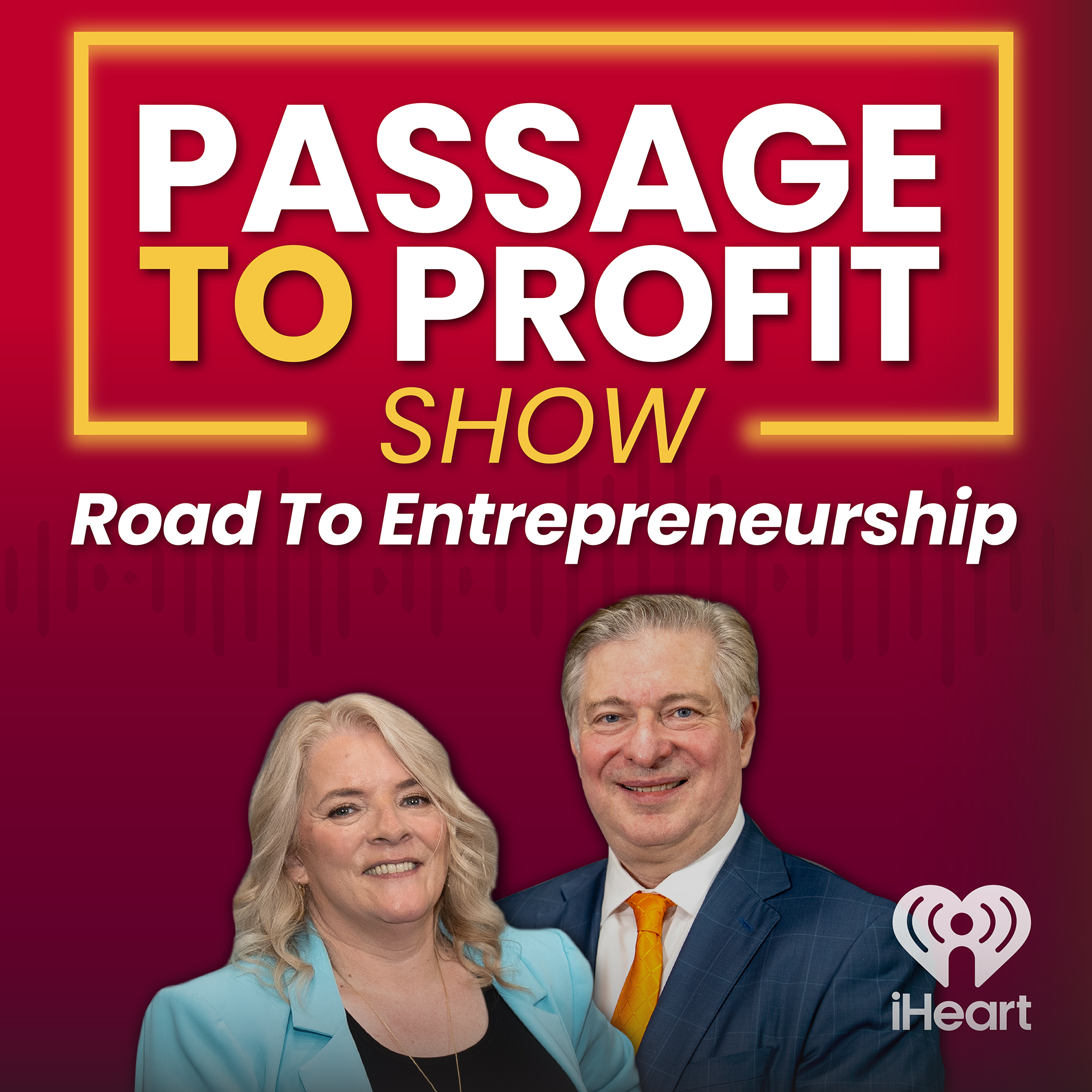
[00:00:21] Richard Gearhart: Welcome to the Passage to Profit show, the Road to entrepreneurship podcast. We have Angie Hicks, co founder of Angie, formerly Angie's List, and she's spent nearly 30 years transforming how millions of homeowners find trusted professionals and protect their biggest investment. But first, what's new with you?
[00:00:41] Elizabeth Gearhart: So last week was a lot of fun. We had out of town guests. They actually said a little bit on the show when we were recording in iheart Studios last week, but we did the whole New York
[00:00:50] Richard Gearhart: 15 minutes of fame.
[00:00:52] Elizabeth Gearhart: We did the New York tourist thing. We only we didn't get in nearly everything that we wanted to. But we did take him to iHeart, which was fun. And we. We went to this Hemingway event. So. Yeah.
[00:01:01] Richard Gearhart: So it turns out that our firm represents the estate of Ernest Hemingway, and they were having a centennial celebration of his first book, the Sun Also Rises. They had a reading from the book and several other celebrities there were part of the program. And it was just a lot of fun, and we got to meet a lot of new and interesting people.
[00:01:23] Elizabeth Gearhart: Yeah, it was a lot of fun.
So anyways, we love New York, and we just had a blast, but we live in New Jersey. New Jersey has its own charm. So the leaves are changing right now. It's beautiful, really.
[00:01:35] Richard Gearhart: Blue skies and orange and yellow and red and all the fantastic autumn colors. And, you know, New Jersey, it really is a fantastic state in the fall time. I really enjoy it. I have a question for you. The holidays are coming up, and I wanted to ask you what is better, a wish list or a surprise? When we're talking about gifts,
[00:01:55] Elizabeth Gearhart: definitely a surprise, especially if it's an expensive piece of jewelry.
[00:02:01] Richard Gearhart: So does that. If I get you jewelry, does that count as a surprise or is that like a partial surprise or
[00:02:08] Elizabeth Gearhart: that's a surprise.
[00:02:09] Richard Gearhart: That's a surprise. I
[00:02:10] Elizabeth Gearhart: never know what
[00:02:11] Richard Gearhart: you're
[00:02:11] Elizabeth Gearhart: gonna
[00:02:11] Richard Gearhart: get me. Well, no, I usually try to get you what you want. I personally prefer a list. I mean, I like to actually go in there and buy it myself. You buy it yourself, read the reviews, order it. And surprises are great, but they're not my preference. I want something more practical. We
[00:02:28] Elizabeth Gearhart: know.
[00:02:30] Richard Gearhart: So besides Angie Hicks, who else is on the program?
[00:02:32] Elizabeth Gearhart: Diego Mariscal is doing Something just amazing. He is redefining disability as a competitive advantage. I can hardly wait to hear about this. His businesses have generated over $84 million. And then we have someone after my own heart. A chef probably cooks way better than I do, who is taking his amaz food to private homes and catering events. He's in the Mile High area over there in Colorado. So he's branched out a little bit. And it's pretty amazing how fast his business has grown because he's in four states now. So we will see what he has to say about that. And we've got secrets of the entrepreneurial mind.
[00:03:13] Richard Gearhart: And on top of all that, we're going to explore the surprising lawsuit that the Golden Globes never saw coming. But first, it's time for your new business journey. And and we'd like to ask our panel, when you look back, what was the one decision or moment that most changed the trajectory of your career? And what did it cost you to make that decision? Angie, welcome to the show. Such a pleasure to have you. What was the one decision or moment that most changed the trajectory of your career?
[00:03:40] Angie Hicks: Oh, that's great. Thanks for having me here. For me, it was saying yes to an internship in 1994.
I was not an entrepreneur. I didn't have an entrepreneurial Bentley. I was an introvert.
I thought I was going to be a consultant or an actuary. I'm like, I'm a numbers geek. And I said yes to an internship that ended up being with my later co founder of Angie's List. And what did it cost me? Nothing.
That's the great thing about being 21, right? It cost me nothing.
[00:04:12] Richard Gearhart: The stakes are low at that point. The
[00:04:14] Angie Hicks: stakes are low, but the return is high.
[00:04:18] Richard Gearhart: Yeah. Well, thanks for sharing. Diego, welcome to the show. What was the one decision that you made that change the trajectory of your career?
[00:04:25] Diego Mariscal: Yeah. So the decision that certainly changed the directory of my career was was staying in the U.S.
i am a U.S. citizen. By mistake.
My parents were shopping and I was born six months and a half into my mom's pregnancy.
So pretty tiny baby. And my parents are both Mexicans. They were shopping and surprised I was born prematurely.
My mom jokes and says that I've always been really stubborn. And even before I was born, I wanted to get out quickly.
[00:04:57] Richard Gearhart: And
[00:04:57] Diego Mariscal: so because I was a US Citizen and because I am a US Citizen, I came for college.
And when I started as a freshman, I started my business.
And then I didn't really understand the nuance of, you know, going to college and starting A business at the same time.
And long story short, I got kicked out of college. I got a dismissal letter, and I called my parents crying when that happened. And they said, okay, you have two choices. You can either come back to Mexico and forget about your business and just go to school with your brother, or you can stay in the US and figure it out on your own. And I don't know why, how, what came over me, but I say I'm going to stay and I'm going to figure it out. And I remember crying in the parking lot thinking, how the hell am I going to figure it out?
And 10 years later, I figured it out. So that was definitely the decision that changed the trajectory of my life.
[00:06:03] Richard Gearhart: Absolutely. What a huge decision, too. I mean, to stay on your own in a foreign country or, you know, go back home. Right. So, um,
[00:06:13] Diego Mariscal: yeah,
[00:06:14] Richard Gearhart: big choices.
[00:06:14] Diego Mariscal: And so now when I'm faced with a hard decision, I'm like, well, nothing could be as hard. It wasn't as
[00:06:19] Richard Gearhart: hard as that one.
Steve, welcome to the show. Tell us about a decision that changed the trajectory of your business.
[00:06:28] Stephen Ingber: Yeah. So it was shortly after I graduated from college at Michigan State, and I was at my first marketing agency job in New York City on the rooftop at Mediacom. And they no longer. They're part of a different conglomerate now.
And I recorded a video tripping over a mini soccer ball to enter a contest for the agency to get sent to the 2014 World Cup.
And at the time, they were like, oh, we're only gonna send directors and vice presidents. And I was just like a junior staffer making no money, crazy overtime. And I was like, I'm gonna make a video and just submit it anyways.
Take my shot. That's always kind of in my fire from the hip kind of mentality. And I think what I had to lose from it was.
Was never really born with much athletic genes in my own family. So that video, which is still on YouTube, sitting out there somewhere to this day, very fuzzy, grainy, old iPhone footage, and it was sent to the entire agency to vote on. And I ended up getting selected to get on that trip, which was us winning a major account, which changed the entire trajectory of my career working for Anheuser Busch and many other Fortune 5000 that kind of gave me the entrepreneurial chops to be where I am today.
[00:07:40] Richard Gearhart: And I have to say, tripping over a soccer ball sounds like a perfect gag type of video that would get a lot of attention. So
[00:07:47] Stephen Ingber: it's out there. Like, it's every once in a While it comes up in conversation, I'm like, let me see if it's still on YouTube. And rest assured, it still is there. So.
[00:07:56] Richard Gearhart: What a great story. Thanks for sharing. Elizabeth.
[00:07:59] Elizabeth Gearhart: I think what's changed the trajectory of my career more than anything is moving around with you.
But I think.
I think finally settling up here in New Jersey, just outside of New York, and having access to all the activity and energy and everything has really made a big difference.
[00:08:17] Richard Gearhart: Yeah, we've lived in a lot of different places, haven't we?
[00:08:20] Elizabeth Gearhart: Right. But we would not be doing this radio show and podcasts. We weren't here.
[00:08:24] Richard Gearhart: Right,
[00:08:24] Elizabeth Gearhart: Right. So I think the moving and I think coming up here made a big difference.
[00:08:29] Richard Gearhart: Yeah, I think so, too. And speaking of passage to profit, one thing that changed the trajectory of my career was making time to do this radio show and podcast. It takes a lot of time and we have to prepare for the programs and there's a lot involved in it. But it's been totally worth it for me because I've met so many really interesting people and gotten so many different perspectives and different points of view that I would have never gotten if I had just stayed focusing on my law practice. So I'm really grateful for the opportunity to. And it's been a great experience for me, so definitely has made a big difference.
So. Hiring the wrong contractor can turn your dream home into a financial nightmare. And even online reviews and supposedly trusted recommendations don't guarantee you'll get what you pay for. Well, enter Angie Hicks, co founder of Angie, formerly Angie's List, who spent nearly 30 years tackling the trust problem at the heart of the home services industry. And she knows the why. Finding the right professional can be harder than it looks. Angie, welcome to the show. How do you find the right professional for your home?
[00:09:42] Angie Hicks: It's a process, right? Because, you know, you think about your home, you know, it is a probably your largest financial asset and you live there with your family, so it's an amazingly emotional space for you as well. So, you know, the level of trust you have for that contractor is going to be high because you want to be smart and make the right decisions. So, you know, when you're looking for a contractor, it's actually absolutely important that you, you know, do some diligence. Right. So you talked about it like Angie's List was born out of reviews, and that's still a cornerstone of, of how we continue to vet pros today. That homeowner instinct is super important, as well as their qualifications, licensure, you know, things like that. That they might also have, depending on the type of task. But then also, you know, talking to pros. Sometimes people are super quick and hire. And maybe they hire the first one they talk to and maybe don't realize what they were hearing was be true.
So it's important to talk to two or three people and then also make sure you're getting everything in writing. You know, a lot of times, some of these projects, putting a new roof on your house or a new big landscaping project, you could be spending tens of thousands of dollars. And you want to make sure that that contract holds up and that you're getting the work that you're paying for. And then you also want to make sure that you are talking to the contractor, especially as a bigger project. You know, it's all about a relationship.
So, you know, getting to know the contractor. So whether it's a small project and you might have a relationship with them over several projects, like your handyman or your plumber or your H Vac company that comes and tunes up the furnace, or your kitchen remodeler who you effectively feel like you're living with for months at a time, right? Because they're there at breakfast, they're there at dinner, they're there in between, you know, so having really strong communication becomes a key component of a good relationship.
[00:11:31] Richard Gearhart: So what kind of questions should a homeowner ask a contractor before hiring them?
[00:11:36] Angie Hicks: Well, you want to talk to them about the type of work and the type of experience they've done. So making sure you understand. You don't want them to be experimenting on your house. You want to make sure that what you're looking for is their expertise. I talk about this one a lot in the handyman category because it's such a broad, general category. Right. But, you know, not everyone's going to be good at everything. So you want to know. You're like, hey, is this handyman good at, you know, small plumbing jobs, or are they a painter really? Or what are they actually really good at? So you need to figure that out. And then you should also talk to them about previous jobs. I always ask them, like, hey, tell me about a job you're in the middle of. Tell me about one you finished recently, and then tell me about one you did a few years ago. Those are also good people to get references from when you're. Especially if it's a big project and you're check references because you can kind of see how the project stood up over time. You know, it's like, hey, you know it's like, it was great, but then I had an issue six months after they were done and you want to hear how they did?
[00:12:32] Elizabeth Gearhart: How do you avoid the contractors and maybe your site helps with this, who start your project and then just leave in the middle of it. And you keep trying to contact them and they're like, well, I'm waiting for a part or whatever and just give you these excuses. And in the meantime, you're sitting with a half finished kitchen, like,
[00:12:49] Angie Hicks: yeah, fair question. So I think that's one thing where the contract comes into play a lot. Also talking about timelines with the contractor ahead of time on a bigger project just to see how they're going to manage it. I redid my kitchen a few years ago and I, you know, not surprising. I basically acted as general contractor on the job. Right.
You know, but I didn't want them to start at all until everything was lined up. Right. I didn't want them to start demoing until I knew the cabinets and the appliances and everything were in. So once they started, it was going to go pretty succinct. I mean, it caused me to have to be really on the ball because I needed to make sure the, you know, the plumber was lined up and the electrician and things like that. But it narrowed. I mean, we did a full kitchen remodel and, you know, in about, I don't know, six weeks, I think it was so start to finish, which is pretty good. So I think it comes back to that point of communication and making sure you understand how many jobs they're doing at once, how, you know, how many crews they have, how strong their subcontractor relationships are. So the plumber or the electrician they're probably bringing in. And even I've been known to recommend getting reference checks. You know, reference check the contractor on the sub with the subcontractors.
[00:13:59] Elizabeth Gearhart: Yeah, we should have done that on one of our projects because I don't think he was paying the subs.
[00:14:04] Richard Gearhart: Well, one advantage
[00:14:05] Angie Hicks: there. Yeah. And you also want to make sure you have a lien waiver on your house so that the subs, if there is an issue like that, they're not putting a lien on your house in the process.
[00:14:13] Richard Gearhart: That's a really good point.
[00:14:14] Elizabeth Gearhart: That's a good point.
[00:14:14] Richard Gearhart: I was just gonna say, though, Angie, given your job, I'm sure you have no problem finding contractors. Right. You have a big list.
[00:14:21] Angie Hicks: I have a big list. But one of the things that happens for me is I'll be completely honest. You know, people Are uneasy about working for me
[00:14:30] Elizabeth Gearhart: personally
[00:14:31] Richard Gearhart: because, you know, too much.
[00:14:33] Angie Hicks: No, they're just like, oh, my gosh, you know, like, you're. You have, you know, like, your reviews are gonna count more. And I was like, no, like, my voice is the same as everybody else's. So. Especially in the earlier years, you know, my husband would be the one that would meet contractors. I go by my maiden name, so that just helped to alleviate it. But he had experiences where our contractor would be in the house and all of a sudden notice some pictures and be like, you know, face drains. And it's just like, oh, so. Yeah, so. So actually, yeah, so I. I know a lot of pros, but sometimes they can get a little anxious. But
[00:15:06] Richard Gearhart: I think your point about experience, understanding the experience is also really important because somebody can put on a listing, oh, I do this, and maybe they've done it once. And you. You want the contractor that's been doing it for a while and has the experience. So I think, you know,
[00:15:23] Angie Hicks: like, I talk about it like I use the same handyman for 20 years, and, you know, he did not like to paint. You know, luckily he was forthcoming and was like, I'm not going to paint. You know, so, you know, like on the list of things that needed done or whatever. And, you know, I appreciated that because I don't want, you know, I'm not hiring someone to a DIY job that I could have done myself.
[00:15:42] Elizabeth Gearhart: Say, you hire someone as a general contractor or acting as one, Is it feasible and will they accept it if the project drags on too long? If you say, okay, we're going to fine you every day over such an amount of time that this project drags on. Can you do that?
[00:15:59] Angie Hicks: Yeah, that is an element that should absolutely be in the contract. So when they're laying out the payment requirements, for example, so, like, hey, you're going to pay at these three intervals. They should articulate what will be completed on the job before you make that payment. And then I always encourage homeowners to hold back about 10% even when the job is done, to finish up what I call a punch list. Right. So the little things that are kind of like, well, we're missing this light fixture. We're missing whatever we're missing because, you know, it's amazing what the lever of the checkbook can do to motivate.
[00:16:35] Elizabeth Gearhart: Well, we've had projects that
[00:16:37] Angie Hicks: all needs to be laid, that needs to be laid out at the beginning in the contract.
[00:16:41] Elizabeth Gearhart: Yeah, we've had projects that Richard has actually had to finish Himself.
[00:16:45] Stephen Ingber: Not big ones.
[00:16:46] Richard Gearhart: Like, I didn't finish the basement remodel, but, you know, it was the smaller things. So you have a podcast, right? It's the Own it podcast with Angie Hicks, and I actually picked up a few episodes. I thought it was really fun, especially if you're interested in remodeling and home design and all sorts of things. And I wanted to ask you a couple of questions about one of your episodes where you said that you think bathtubs are on their way out.
[00:17:14] Angie Hicks: They are totally on their way out. And I'm like, I can hear my mom in the back of my head saying, every home should have a bathtub, because if they have children, they'll need a bathtub. You know, when they're little.
And if you think back on kind of how long we live in houses, you know, that time when you have a little one that might be two or three that wants a bathtub is so short. And it's amazing what kind of products have come out that you can put in a shower that can be used. It's not just like, you know, when I was a baby, I was washed in the kitchen sink, let's be honest. And then when I had kids, you know, they had baby bathtubs. Now they have babies, you know, now they have toddler swimming pools, basically, for your shower. So, you know, so think creatively about that, because it's a lot of space and it's an extra expensive thing to actually take out later. So if you don't have it to begin with, I think it's also just an interesting. So I'm going out on a limb and saying,
[00:18:04] Richard Gearhart: world without bathtubs. The
[00:18:07] Angie Hicks: world without
[00:18:07] Richard Gearhart: bathtub.
[00:18:08] Elizabeth Gearhart: But that's interesting because when we did some modeling on our house, some design on our house on the first floor, we have a bedroom and bathroom on the first floor. My mom had always like, my mom again, right? The mom. You need to have a bedroom on the first floor with the bathroom in case somebody gets sick or they can't do it, whatever.
[00:18:24] Angie Hicks: Yeah. My mom is mad because my house does not have a bedroom and a bathroom on the first floor. And, you know, she's getting to the age where she might end up living with us, and she's just like, where are you putting my bedroom and bathroom, Angie?
[00:18:35] Elizabeth Gearhart: Yeah, so, but we were gonna put a tub in there, and one of our friends who's a contractor
[00:18:40] Angie Hicks: don't do that.
[00:18:40] Elizabeth Gearhart: No, we didn't. So when we designed that, we have this beautiful shower in there with glass doors and tile And a pull down faucet, you know, the handheld.
[00:18:51] Richard Gearhart: I think they call it a car wash. Right,
[00:18:53] Angie Hicks: right, exactly.
[00:18:54] Elizabeth Gearhart: And I'm glad we did that because that's a guest room right now. I mean, hopefully we'll be able to make it up the stairs for a while longer. I don't know.
[00:19:02] Angie Hicks: But it makes it much more accessible too. I mean, if you think about, you know, like a lot of people are aging in place, right? And you know, how is your house growing with you? And if you, you know, a shower, you know, ages much better with you than a tub ever will. You know, being able to step in and out like that is a tripping hazard like no other. But a walk in shower is perfect, especially if you've got a little bench in there so they can sit down if they need to. It's great.
[00:19:29] Richard Gearhart: The safety profile is definitely better. And one of the other points I think one of your guests made was how houses now are being designed for multi generational living. Which is, I think, the point you were talking about. And that is, you know, you may have your kids living with you for a while, or you may have your parents living with you for a while, and you have to create spaces that can accommodate that. And you know, one of the things was open concept was like the house design that everybody wanted and now it's switching. People want more
[00:20:00] Angie Hicks: privacy.
It's true. And you know, so whether it's parents moving in with you, whether it's kids staying longer, it's just we're asking our houses to be much more multifunctional. So maybe you don't want all the bedrooms together.
[00:20:12] Elizabeth Gearhart: Right. We finished our basement and the reason we finished our basement was for two dogs.
[00:20:20] Angie Hicks: You know what, I did the same thing that was one of my projects last year. So my kids have dogs and they would bring them to visit. It would drive me crazy because the house wasn't terribly dog friendly. So we ended up ripping the carpet out and putting luxury vinyl in the basement. And now that is the place that, like, it's indestructible. They can go down there. And so I was like, okay, I did a project for the dogs.
[00:20:45] Elizabeth Gearhart: Well, you're the only other person I've ever met.
[00:20:52] Richard Gearhart: We don't feel so bad.
[00:20:55] Elizabeth Gearhart: But yeah, I mean, houses are being asked to do more. And I do think that, you know, trends come and go. But is it easy to remodel a house? I mean, if, if the structure's there. I know it's super expensive usually, but
[00:21:08] Angie Hicks: yeah, I mean, it's Also, you can do a lot of things, and I think it also comes down. I think kind of it's really expensive. Can sometimes be a misnomer, too, because there's a lot of things that can be, you know, kind of directive. So I did a house where I remodeled the kitchen and took everything out of it, you know, took it down to the subfloor and started over. Right. That kitchen was expensive. I did a kitchen where I was like, I'm fine with the layout. Cabinets seem like they're made pretty well and in fact, all like. But they had, you know, horribly outdated doors on them.
So I had new doors made. I put a new countertop, backsplash and sink in and all of it. And that was a fraction of the cost.
So you also just need to see, like, hey, what do I actually want? Because it totally transformed the way it looked. And, you know, how. How I enjoyed the kitchen, fraction of the cost. So, you know, kind of, how can you reuse the thing? You know, try not to tear out things that can be reused. Cabinets can be refinished. Cabinets can be painted. If they're solid cabinets, try not to get rid of them.
[00:22:12] Richard Gearhart: That's really good advice. And we've lived in some homes with some older cabinets that were really well made. The cabinet face was 100% wood, and plyw wood was really of a nice quality.
Now there's a lot of variation. There's a lot of MDF cabinets out there.
[00:22:29] Angie Hicks: And don't move electrical and plumbing if you can avoid it. That's like, you might as well have just put a supercharge on your cost, because when they have to reconfigure, don't move the kitchen sink unless it's going to materially change the way the kitchen works for you.
[00:22:42] Richard Gearhart: Well, we're with Angie Hicks, and we're having a great discussion about Angie's List and her career as an entrepreneur, as well as some fascinating topics for housing and home homeowners. But we have to take a commercial break, and we'll be back right after this.
[00:22:57] Advertisement 1: Do you hear that? That's the sound of uncertainty lurking under your hood. You know the feeling. I know I do. That sudden sinking sensation when you see a check engine light or your car unexpectedly breaks down and you're faced with sky high repair bills. It's time to shield against unexpected repairs with Car Shield. Car Shield is America's most trusted auto protection company and has an A rating with a Better Business Bureau. Don't let the fear of a breakdown keep you up at Night. Trust the Shield Car Shield. And say goodbye to terrifying repair booths and hello to peace of mind. Your plan also comes with 24. 7 roadside assistance, courtesy towing, rental car options, and so much more. Don't wait till it's too late. Call Car Shield now before a breakdown. Protect your wallet. Protect your car with Car Shield. Get our best protection ever. Call now. You'll thank me later. 8002-6121-7680-0261-2176. That's 800-261-2176.
[00:23:56] Advertisement 2: Have you outgrown your health insurance plan or just not happy with what you're paying for? The number one reason we all change our health insurance is price. Are you paying too much for your health insurance? Would you like to have better coverage at a better rate or at little or no cost to you? Your life needs are always changing, but have you done anything to improve your health insurance for you and your family? Health insurance laws and coverage are always changing and getting better. It's impossible to do all the research yourself, but now it's all done for you for free. So regardless of your age or medical condition, take a few minutes right now and find out if you can save money or even qualify for zero cost health insurance in your state. Call now.
[00:24:42] Advertisement 1: Paid for by cheaper health insurance. 8006-5214-7080-0652-1470.
800-652-1470. That's 800-652-1470.
[00:24:56] Announcer: Now back to passage to profit. Once again, Richard and Elizabeth Gearhart
[00:25:01] Richard Gearhart: here with our special guest, Angie Hicks from Angie's List. And I wanted to ask one question about attitudes toward housing. It used to be that the dream home was supposed to be this huge, magnificent mansion that was gorgeous on the outside. But attitudes toward what a dream home is are also changing. Maybe you could talk a little bit about that.
[00:25:26] Angie Hicks: Yeah, I mean, you know, I think people are thinking about their homes just differently and much more functionally, you know, and how they are using it.
And because it's quite honestly in this economy becoming a bigger investment, you know, they want to make sure that they're, you know, kind of making use of every bit of their space, you know, kind of having a living room that you never enter.
Why, like, you're just paying for that square footage. Like, how can you make that more space? So, so I think that is an important element for how people are thinking about their house is just like, I don't want just a showroom. I want, I want a room that Feels like me. That's usable by me all the time. That way there's no rooms off limits, which I think is a. Is a key driver today.
[00:26:13] Elizabeth Gearhart: Yeah. So I wanted to change gears a little bit. I mean, we could pick your brain about house stuff all day long. Angie, I'm sure you know more than anyone else on the planet, but you started this business when you were really
[00:26:24] Diego Mariscal: young,
[00:26:24] Elizabeth Gearhart: right?
[00:26:25] Diego Mariscal: You were
[00:26:25] Angie Hicks: 21. I did, yep. You're exactly right. I started this fresh out of college. So the. The internship that I did in college where said yes to the internship, turned into a relationship where I got to know my boss, and when I was getting ready to graduate, he's like, we should start a business together. And, you know, the worst thing that could happen is, you know, you work for a year and it fails and you've got a good essay for business school. And, you know, I was like, needless to say, that wasn't convincing to me. It took me a long time to actually say yes to starting the business, but in the end, eventually did.
Um, but I was 22. Like, I was young. I mean, I. I was. And we were in an offline world. So, you know, our marketing back in the early days was me going door to door selling homeowners memberships to Angie's List. So there was a lot of just kind of overcoming my natural tendencies that I had to work through. I'm like, I. You know, like, sales was the last thing I want to do. But you can't start a business without selling.
[00:27:27] Richard Gearhart: How did you feel, though, going door to door and knocking on doors?
[00:27:31] Angie Hicks: Absolutely miserable. I mean, but I was also a very. I'm also a very methodical person. So when I did it, I was like, okay, I need to spend at least 90 minutes a day doing this. I would get my spiel down. I'm like, I have to knock on this many doors so that I can get this many people to listen to me to get this, you know, So I turned it into a funnel for sure. And I had to celebrate the little wins. I mean, back then, I mean, if I sold one membership a day, it was a good day. And, you know, when you're starting a business and you're starting, you have to remember, like, you might have your five year business plan that tells you I'd like to be here by that point, but it's actually those tiny milestones that. That are what's going to enable you to get to that five year plan. Because you have to keep yourself excited. Feel like you're being Successful and kind of making sure that you're making those strides.
[00:28:23] Elizabeth Gearhart: Did you have a vision board in your plan all written out, so something that you could go back to when you got discouraged?
[00:28:29] Angie Hicks: You know? So the interesting thing was, with Angie's List, we actually patterned it after another business.
So there was a business in Indianapolis that started in the 70s that kept track of which contractors were good and which were not, but it only operated in one suburb of Indianapolis. And so it was just this little cottage business. Right. So we had the luxury. Cause we just. We took that concept and used that same concept in Ohio. We had the luxury of seeing what it could look like years later. So we had that. So I think there was that element. And then also, because we were opening city by city, you could be like, okay, I saw what success looked like in Columbus, Ohio. So now when we open in Cleveland, I can say, okay, this is on the right trajectory. It's not. And you kind of have some kind of guideposts to help you feel confident that you're in the right direction.
[00:29:21] Richard Gearhart: Well, I think it's great that you went and did that. I mean, it shows a certain amount of determination and certainly a lot of learning, understanding what works and what doesn't and understanding what people want. And I think sometimes entrepreneurs, they have an idea, and then they look for funding, and they haven't actually gone through the nitty gritty steps of starting out small and building up to something. And so you had the knowledge of what people really wanted, and you were able to transform that. How did you go about scaling from those humbler origins to where you're at now?
[00:30:01] Angie Hicks: Yeah, I mean, we. You know, we were. I mean, this was an offline world. And so we. We were just opening, like, city by city, and we're kind of opening a city a year for the first several years. But then the Internet came along. Shocker, right?
And so we figured the business would do well on the Internet, but we didn't kind of view it as a kind of transformational thing, which it did become. And so once we scaled and had the website, it allowed us to operationally be able to open markets quicker. But still, in those early days, our major cost to opening a city was our local marketing. We were a local advertiser. So think about daily newspaper, local npr, weekly newspapers, you name it, home shows. And it was. We knew that once we could get to a point where that. Where we could advertise nationally, we'd get a big efficiency in the business, and then, you know, you can take it one Step further. Once you could advertise online, you could bring another big efficiency. But really the big turning point in the business is when we crossed over that threshold to be able to advertise nationally, which came when we were about 30 markets.
So I went out to buy the NPR contract and you know, it was gonna be like a million dollars for those 30 cities.
And Bill and I were talking my co founder and we're like, he's like, you know, I feel like we should just check to see what NPR is. That seems like a lot of money. What's NPR nationally? Maybe we can buy it that way. And came back and I was like, yeah, I can get it for 800,000. And he's like, I bet we get a lot more cities. And I'm like, Yep, we get 700.
So that changed everything. So we went from 30 cities to 100 in about 18 months because all of a sudden the marginal cost to open a market went away.
[00:31:47] Elizabeth Gearhart: Wow. Is there anything you would have done differently? Looking back?
[00:31:50] Angie Hicks: There's something you do differently every day. I probably have to do something differently yesterday, but so just always keep that in mind.
You know, I think for us, we opened in the Midwest. You know, there is a reason people open startups on the coast, because there are lots of people there, you know, big cities. It took us a long time before we went to Chicago. I think it was like six years before, you know, even though it just down the road from Indianapolis, we were like, oh, I don't think we can open Chicago. But of course Chicago is great, right, because there's lots of people there, it scaled well. So you know, we could, we could have certainly inverted our opening, our opening strategy.
But we also figured out some of the tough lessons earlier this way because sometimes companies open on the coast and then struggle through the mid country, right? So we, we kind of got the reverse of that. So there's that. I just think there's always things you kind of come up against. I mean, there was a point where we had a bunch of competitors enter the space early on and you know, they were kind of the inverse model of us. It was free for homeowners and pros were paying. And we were like, okay, do we flip? Are we on the right side of this decision? I mean, I think there's constantly decisions that, you know, in the moment you're kind of deciding whether that's kind of feels like a big strategic move.
You might revisit that one, you know, five years, 10 years later and you might come out a different way. But there's. It's a continual process.
[00:33:22] Elizabeth Gearhart: It is. And things are always changing. And especially with AI now, things are changing so fast.
[00:33:27] Angie Hicks: They are,
[00:33:28] Elizabeth Gearhart: yeah. We try things and then we're like, okay, well this didn't work. Let's go try something new.
[00:33:32] Richard Gearhart: Absolutely.
[00:33:33] Angie Hicks: I think it's a time where like, like I've been around this long enough. I mean, you know, I watched the Internet come and disrupt a bunch of businesses. Right. You know, and kind of. And shepherded a business through that process. I mean, it's not so different, that kind of uneasy feeling. This is faster. But each kind of big technological development is faster, right? It's faster, bigger, quicker, et cetera. But you go through that process and, you know, it's like, how do you learn? How do you adapt?
[00:34:01] Elizabeth Gearhart: Exactly. Yeah.
[00:34:02] Richard Gearhart: So speaking of AI, how do you think AI will affect Angie's going into the future?
[00:34:09] Angie Hicks: I mean, I think AI is an incredible tool and you know, and I think, I think it can help us both from a kind of a homeowner. There's two fronts from the homeowner perspective and the pro. On the pro side, you know, a lot of the pros in our country are small businesses. You know, they might be, you know, a handful of people and they got into the trades because they love doing their trade, but they're also running a small business. And for all of us out there who've run a small business, there are a lot of hats you have to wear. And I think AI can certainly help with the non trade portion of running that business. And in fact, we're working on developing some tools for pros right now. For example, being able to do the initial call out to a customer that that's expressed interest and get a schedule, an appointment scheduled. You know, what actually happens in the real world today, if you are a pro, you might be on a roof hammering some shingles. Customer, you know, kind of leaves a voicemail and you're like, oh, I need to get back to them. So you're on the roof calling them back, trying to kind of schedule it on your phone and trying not to fall off the roof. So I think AI could be a real game changer for small businesses to really be able to leverage and magnify what that proprietor can do.
[00:35:25] Richard Gearhart: That sounds great.
So where can people find you, Angie?
They
[00:35:31] Elizabeth Gearhart: don't know
[00:35:32] Richard Gearhart: on the list.
[00:35:35] Angie Hicks: Well, we'
[email protected] and that's a n G I
[00:35:38] Elizabeth Gearhart: and I think your marketing's been amazing because everybody should know that. I know it.
[00:35:42] Richard Gearhart: Everybody knows
[00:35:43] Angie Hicks: Angie
[00:35:44] Elizabeth Gearhart: So now it's time for Real AI Use Cases Business Owners Roundtable. I'm going to ask everybody here one way that they're using AI in their business, their favorite way, their most creative way, and then we'll have a roundtable discussion. So I'm going to start with you, Angie Hicks of Angie.com. what is one way you're using AI?
[00:36:00] Angie Hicks: So we're using AI today and our AI helper that allows homeowners to share their problem in their own words or, you know, kind of however they want to explain it. I've got this thingy that's hanging down from my ceiling that's doing that. Like, think about how you explain the problems that you discover. And then we can use AI in order to match that back to our, you know, 30 years of history and make sure that we get that routed to the right task so they don't get stuck in the wrong type of trade.
[00:36:29] Elizabeth Gearhart: Wow, that is a great way to use it. Real AI Use Cases Business Owners Roundtable Diego Mariscal with number two gather-international.org what's one way you're using AI in your business?
[00:36:42] Diego Mariscal: How we use AI is figuring out the priorities of the date and also how do we make sure that disability continues to be part of the conversation. Right. And we continue to advocate to make sure that these learning language models have accurate information in them as well.
[00:36:59] Elizabeth Gearhart: Excellent. Stephen Ingber with milehighcook.net, what's one way you're using AI?
[00:37:04] Stephen Ingber: For me, I actually created an entirely custom backend CRM. So essentially what my system can do is like, do everything from inbound lead messaging to partnership negotiations, ingredient sourcing, hiring staff contracts, the list goes on. And it continues to build. And it just allows me to kind of keep track of this crazy world of ADHD up here. And I'm like, oh, it's been able to. It's been an equalizer. But I think there are things too that it only gets you so far. So definitely more to come.
[00:37:33] Elizabeth Gearhart: Great. Richard Gearhart with Gearhart Law. What's one way you're using AI?
[00:37:38] Richard Gearhart: We've been looking at creating a large language model particular to our law firm. So we have a lot of institutional knowledge, a lot of attorneys who've been working over the years, a lot of interactions with the Patent and Trademark Office.
And so we're trying to build an internal private AI system that will allow us to search our docket, which just keeps track of important legal deadlines. That's on one software system. Another software system we use for our finances, our invoicing, those types of things. And then we use Microsoft 365 to store our documents and project files. And so we're trying to create a system that will allow us to find information, synthesize it, and answer questions that the team may have about legal matters or financial issues.
So if we wanted to know, well, who in the last year filed patents in this industry, we could just ask the LLM to identify that instead of having to print out an Excel spreadsheet and comb through it and then get another Excel spreadsheet from another software and put it all together. So that's what we're working on. We'll see how it goes.
[00:38:52] Elizabeth Gearhart: Yeah, I really hope that works. I think that's a great use of it. So, for me, Elizabeth Gearhart with Gear Media Studios One way I use AI is I use four different LLMs, and I'm querying them once every month or couple months or so about how can small businesses show up as the answer on LLM. Search for ChatGPT, for instance.
And I got kind of a shock because they've been saying for the last couple years, oh, you have to have this thing called schema code on your website, and it's a roadmap for the LLMs, and it makes your website show up for the LLMs and they'll find you then. And I asked them, I don't know, yesterday or the day before, and they're like, yeah, you don't really need schema code. I'm like, what?
[00:39:35] Richard Gearhart: It all changes so fast.
[00:39:38] Elizabeth Gearhart: Nobody
[00:39:38] Richard Gearhart: knows what to do.
Very confusing.
[00:39:42] Elizabeth Gearhart: And so I was in a meeting with somebody who does marketing and is aware of AI and marketing, and I said that to her and she's like, I don't know. But I thought that was really interesting. So they're changing so fast all the time. I keep asking them, like, what do we actually need to do? And now they're saying, the top thing you need to do is just what you guys are doing. Go on podcasts, have third party validation, have people see you as the expert in what you're doing, and be all over the Internet everywhere you can. So when you go on a podcast, hopefully your host will put it on YouTube. We put it on social media, right. But it also goes on podcast distribution sites. So it goes out like Apple, Spotify, all these other ones. So you're everywhere online. So, Angie, I saw you agreeing with that,
[00:40:27] Richard Gearhart: so we were going to ask the question.
[00:40:28] Elizabeth Gearhart: Yes, go
[00:40:29] Richard Gearhart: ahead and ask it.
[00:40:30] Elizabeth Gearhart: So do you think we're all going to suffer from extinction by AI.
[00:40:36] Angie Hicks: I do not. I do not. I think we're going to be doing different things. I think, you know, kind of what work looks like will change over time and kind of the things that we spend our time doing and focusing on. But I think there are judgment calls and the importance of monitoring. I mean, it's like AI can be very confidently wrong sometimes. Sometimes it doesn't even, you know, represent kind of a broad spectrum of people when it kind of thinks about some of the commentary that it brings back. So I think that's important. It's not the value add stuff that's going to make, you know, a difference in your business.
[00:41:07] Elizabeth Gearhart: I agree. So this has been Real AI Use Cases Business Owners Roundtable. If you're listening to this on the radio, we had a really much longer discussion than you're going to hear. But you can find it on our Real AI Use Cases podcast. Incredible presenters coming up. And then we also have Secrets of the Entrepreneurial Mind, Passage to Profit with Richard and Elizabeth Gearhart. We'll be right back.
[00:41:29] Stephen Ingber: Here's a real life story that affects 50% of all of us out there. It's called Divorce. If you've gotten divorced and now you're struggling to pay your bills and your credit card debts are completely out of control, you need to call this special debt relief hotline right now. We help people with all kinds of money problems caused by different life challenges. A divorce, a job loss, even heavy medical bills, all these life events can sometimes financially stress you out and cause you to get out of control. We help people get their lives back by showing them ways to consolidate and reduce their debt. In some cases for a fraction of what they owe. If your credit card balances are more than $10,000, call us and learn how to reduce your credit card bills and monthly payments. Now here's our number,
[00:42:11] Advertisement 1: paid for by Debt.com. call now at 800-8100-880081-00857.
800-8100857. That's 800-810-0857. Streaming TV is where it's at. It's not about cutting the cord anymore. That's old news. It's all about your customized TV options with the best and cheapest high speed Internet and your own TV subscriptions. We've got your dream TV lineup. Between wired and satellite, Internet and tv, you now have tons of options. Save money and get more Internet speed and better TV today by calling the whole home Connect, we scan your location and offer you the best TV and Internet options. And we always have specials and promotions. So when you call, ask about that. Take five minutes of your time. Make this free. Call now and learn how to set, save money and get better Internet and TV for your home anywhere in the U.S. make this simple and free. Call now. 8002-5736-7280-0257-3672 800, 257, 3672. That's 800-257-3672.
[00:43:28] Announcer: Passage to profit continues with Richard and Elizabeth Gearhart.
[00:43:33] Richard Gearhart: Quick shout out to our friends at KWPM 1450am and 105.11 FM in Springfield, MO. Thanks for listening and if you're new here, Passage to Profit is a top ranked entrepreneurship podcast and radio show heard on 41 stations. It's a place where founders share what really works. And now it's time for intellectual property news. Hollywood usually gives out awards for drama. This time the drama is over. Who gets to use the name on the invitation? The company that owns the Golden Globes brand as sued Golden Globes foundation, the nonprofit created in connection with the deal that transferred the awards business to new owners in 2023. Yes, the Golden Globes are suing the Golden Globe Foundation. You might need a seating chart just to keep the parties straight. The trademark lawsuit filed Sept. 30 in federal court in Los Angeles alleges that the foundation is using the Golden Globe name without permission for activities including grants, events and promotional material.
According to the complaint, the parties discussed the license but never reached an agreement. The foundation's response? Its spokesperson points out that the charity was created as part of the very same deal that sold the Golden Globes to the company now suing it. Those are competing positions, not a court's determination of who's right for entrepreneurs. Here's the business A shared history can leave people with very different expectations about who gets to use a brand. Imagine selling your company but continuing to operate a related foundation, training program or annual dinner under the old name. You might see continuity. The buyer might see people assuming a connection the buyer hasn't authorized. That's why the paperwork matters. Who owns the name, who has permission to use it for what activities, and what happens when the relationship ends. If your plan is well, we'll work that out later. Remember, later may involve two sets of lawyers. The takeaway When a business changes hands, make sure the rights to its name are spelled out as carefully as the purchase price. That's it for IP News this week. And if you have an idea or invention you want to protect. The team at Gearhart Law helps entrepreneurs turn ideas into protected assets. You can visit learn more about patents.com or learn more about trademarks.com for a free consultation and practical guides to get you started later. The secrets of the entrepreneur mind what successful founders think about that most people never see.
[00:46:21] Elizabeth Gearhart: And now it is time to hear from Diego Mariscal. So Diego has an incredible business with entrepreneurs who have disabilities, and he's just rocking it. So. So Diego, please tell us all about what you're doing and how you started this.
[00:46:37] Diego Mariscal: Yes, I lead 2Gether-International. We are the largest accelerator for founders with disabilities. And the reason behind that work is I have a disability myself. I mentioned before I was accidentally born in the States. My parents, who are both Mexicans, were shopping and I was born six months and a half into my mom's pregnancy. She, she jokingly says that I've always been really stubborn. Even before I was born, I wanted to get out quickly.
And as a result of that, I was born with cerebral palsy. And I found that it was easier for me to start a business than it was for people to take me seriously in the workforce. And so with that frustration, I figure as disabled people, we have to figure out how do we address how we drive, how we communicate? And those are inherently entrepreneurship skills. You know, creativity, resiliency, tenacity. If given the proper support and systems, disabled people can make for extremely successful entrepreneurs. And we've seen that with Richard Branson, with whether you love him or hate Elon Musk. All the investors in Shark Tank have come out as having a disability. But that tends to happen after they reach a level of notoriety.
Our whole vision is how would policy, education, the world look differently if we were actually investing in people before then? And so that's what we've done. We've supported over 2000 entrepreneurs from all around the world, helping them raise more than $84 million, collaborating with companies like Google, Microsoft, PayPal, Comcast.
Could not be more proud. It's been 15 years in the making. I jokingly say to Angie's point earlier, that, you know, we are the 10 year overnight success. It took 10 years to really get us off the ground. But I could not be more proud of the journey that we've taken so far.
[00:48:36] Elizabeth Gearhart: And you have an accelerator, right?
[00:48:38] Diego Mariscal: Yes, yes. As an organization, we are the largest accelerator for founders with disabilities.
[00:48:43] Richard Gearhart: So for our audience who may not be familiar with business accelerators, can you explain a little bit about what it's all about?
[00:48:50] Diego Mariscal: Yeah, absolutely. So business accelerators are sort of like boot camps for entrepreneurs where for a short period of time, it can be anywhere between two weeks, 10 weeks. Ours is 12 weeks. Depending on the program.
You learn a lot of concepts that you need to learn about business. So you learn about sales, you learn about customer acquisition costs, you learn about negotiation.
So think about. The best way of explaining it is for the people that have seen Shark Tank. When they come to the Tank and they present their pitches and they get asked all these questions about, you know, what's your customer acquisition cost? How much did you make? What did you lose? All of those questions, the entrepreneurs don't just come out and know those answers, right? They have to learn those skills. And so that's what we teach entrepreneurs those skills to be able to pitch, to be able to learn, and to be able to manage their businesses in a way that they could eventually grow or sell their business.
[00:49:50] Elizabeth Gearhart: So how would somebody apply for that?
[00:49:52] Diego Mariscal: We have programs all year round.
And you go into our website together, international.org. the catch is that together is spelled with a number two, like you said. And you look at what program is available at a particular given time.
And we've done programs that focus on AI, we've done programs that focus on small businesses, We've done programs that focus on different kind of industries. And so you look at what's available and then you apply for that particular program and hopefully you'll get in. And if you don't, send us an hour and we'll try to help you either way.
[00:50:27] Richard Gearhart: Go ahead. Angie,
[00:50:28] Angie Hicks: how do you keep the network growing kind of longer term? So if I sign up for one of the programs, I get my business off the ground. Like, like, are there things that you do to create kind of a building community so that, you know, maybe, maybe I'm five years into my business, I could be giving back and kind of helping leverage other folks.
[00:50:46] Diego Mariscal: Yeah, absolutely. So we have a saying that once you're in the TGI family, you're. You're always part of the ecosystem.
And so we have a community. It's called a get together community. And it's. It brings people together. Just the way you say it.
And in very practical terms, I mean, you know, one of our two of our very first entrepreneurs are actually now part of our board of directors. So they not only receive services, they actually, after the fact, received investment from our community members and people within our network. And then they went on to become board of directors, which for those people who don't know, the board of directors is essentially my bosses. Right. It's a collective, as a collective group.
And so they now steer the ship into sort of where we see the organization going. So we very much see it as an ecosystem where people continue to grow and evolve.
[00:51:41] Richard Gearhart: Diego, what are some special challenges that disabled entrepreneurs face? I mean, it's already a challenge to be an entrepreneur, but to approach it with disabilities requires a lot of.
[00:51:54] Diego Mariscal: Yeah, and that's a great question. I'm, I'm really glad you brought it up because a lot of time people ask us, you know, why couldn't you work with existing accelerators? Why do you have to be separate accelerator? And the answer to that would be both of those are equally important. But having a community of like minded individuals allows you to create a safe space. Just like we have the Latin Chamber of Commerce or the LGBT Chamber of Commerce, you know, there's. Or the women's. There are unique spaces that can address unique challenges for different characteristics.
So specific to the disability space, I would say that there's three pillars.
One is the actual barriers in terms of accessibility.
So many times services don't necessarily have a sign language interpreter, or they don't have material in braille, or when you ask them about an accommodation, they don't know how to navigate an accommodation. Right. The number of times that folks have told us like, I'm deaf and so I need to pitch with a interpreter on stage, and I'm not allowed to pitch with an interpreter on stage. And obviously that disqualifies me or puts me at a disadvantage. So the first is the sort of the infrastructural barrier. The second is the attitudinal barrier, which gets to the point of seeing disability as a competitive advantage. Right. We've heard a number of times where an entrepreneur will meet with an investor and they will say, do not tell people that you have a disability. Right? Because people will automatically discount you. And that's like denying a whole part of your life, Right, That.
And so our whole model is, how do we think about disability as a competitive advantage in the sense of I'm not going to be successful in spite of my disability. I'm going to be successful in many ways because of my disability, because of the resiliency and the creativity that I've had to develop.
So I have cerebral palsy. I have literally, and this is not an exaggeration, fallen thousands of times in my life and thousands of times I've had to get back up. And so imagine that level of resiliency, tenacity in the context of business when I was horseback riding. I remember falling off the horse and I fell and I got up and I, you know, did it again. And the trainer was really shocked. It was like, normally people that fall, you know, are shaken and they don't want to get back up. And for me it was like, well, this is just a Tuesday, right? So that level of tenacity and for different disabilities, it looks different way. Those who are blind have to learn how to communicate in a very effective way so that they can navigate the world. Right. There are core characteristics that we develop as people with disabilities, but also every disability, you learn to adapt in different ways. And then the barrier number three, which I think is equally as important on the sort of like unique challenges.
Many people might not be familiar with this, but if you make more than $2,000, which is, or have $2,000 in assets as a person with a disability, you are at risk of losing medical benefits, government benefits that many of us depend on, which $2,000 in assets, you know, is nothing, essentially. And so there are things called able accounts, which allows you to put money into those accounts to prevent you from losing Medicaid. But there are a number of people that have denied promotions or that have denied business growth because they're afraid of losing those benefits.
And so having a unique space where people can learn how to navigate those systems and how do you best maneuver the complexities of the healthcare, especially for people with disabilities, is really unique.
[00:55:50] Richard Gearhart: How can people support your effort?
[00:55:53] Diego Mariscal: So the simplest way is donating. I mean, we exist, we are not for profit. We exist through partnerships and donations that, that anyone can do. But the other piece, equally as important is joining our network to be a mentor, a volunteer, an investor. If you invest in companies, right? Because the idea is, the whole reason behind the name together is we wanted to bring people with disabilities and non disabled people together to shift the way people think about disability.
So if you feel like you have mentorship to give or an investor that might be interested in this opportunity, that's the other piece, right. When you think about the disability market, most people don't realize that the market itself is almost as big as China in terms of a market size. Because people with disabilities are the largest minority in the world. Any of us can become disabled at any point in time. And as we age, we were talking about aging before. As we age, we're going to acquire a disability at some point in our life if we live long enough. It's a natural part of life. And so when you think of iPads, the technology behind iPads texting, your toothbrush, all of those technologies that we take for granted were actually developed by people with disabilities, for people with disabilities. And so it's a huge opportunity. And so my invitation to all of you listening is if you invest or if you are interested in being in cutting edge innovation, look at the disability space because it is one of the most innovative spaces that is under tapped at the moment.
[00:57:33] Elizabeth Gearhart: Great. Angie, did you have a question or comment?
[00:57:35] Angie Hicks: Yeah, I mean I just think this is incredible and I think having a network that can support like people is incredibly valuable because I think you're exactly right that safe space to be able to address your own unique issues is important in a world that can be very lonely. As an entrepreneur, right. You can feel like you're like I'm on an island. No one understands what I'm going through.
So having, I've always been a firm believer of surrounding yourself with good people that can support you. And this feels like just that type of experience where you can walk through your challenges and someone you're talking to relates to them and understands them and you can learn from them.
[00:58:14] Elizabeth Gearhart: Yeah. So Igo, I had another question. What technology areas do you support with your accelerator? Do you take consumer products and software and everything?
[00:58:23] Diego Mariscal: So we support all type of businesses depending on who our partner is for a particular program. So for example, tomorrow we're launching a program with Walmart that's looking at products that can go into Walmart store. We've done accelerator with Google around AI and how do we create AI businesses?
With Comcast we've done also technology innovation products. So it depends on who our partner is for the particular accelerator. But our sort of secret sauce or what we try to sort of push for is what we call high growth, high impact startups. Meaning we want to push people to think. Not that there's anything wrong with this, but we want people with disabilities to think, okay, how can I become the leader in the industry?
Right. We don't want to stay in the mom and pop shop. Not that there's anything wrong with lifestyle businesses, but our whole notion is redefining the way people think about disability. And we think that to do that we need to push the most innovative large scale businesses and solutions possible. And that often requires challenging entrepreneurs to think bigger than they've ever thought.
[00:59:37] Richard Gearhart: If our listeners go to your website and maybe you could remind us it's 2gether-international.org you have some pretty incredible success stories there. Maybe you could share one of your favorites with us.
[00:59:51] Diego Mariscal: Yes, yes, absolutely. So one of my Favorites is Eric Ingram. He's one of the board members that I've mentioned before.
He does satellite inspection in space.
And so he came to us with just an idea on a napkin, not really knowing, you know, how he was going to scale. He certainly had the expertise on the, on the space front, but didn't have an expertise on how do you grow and scale a business. And so we were able to help him not only grow and scale his business, but also get investment. At one of our events he got his largest, I believe it was around 2 million investment into his company. And now he has exited the company and continues to be involved in an advisory capacity.
But certainly a success story there.
And then the other that comes to mind is Keely Cadwells. She is a very, very well known disability activist and entrepreneur. She too came to us with no formal education on business, had not gone to school for business or anything like that and ended up selling her company. And I believe it's the largest sale of a disabled owned business to date. And now it has continued to develop another company that focuses on hiring people with disabilities. So there's a breadth of stories. We're doing a lot in Latin America now, which is really exciting, especially as a Mexican. I'm especially proud of that. And the whole preface of our work is again, how do you shift the way people think about disability from a limitation to a competitive advantage?
[01:01:24] Elizabeth Gearhart: Excellent. And your website is the number two G E T H E R-International.org
[01:01:32] Advertisement 2: passage to profit with Richard and Elizabeth Gerhardt.
[01:01:35] Elizabeth Gearhart: Okay, and now it is time to talk about food.
[01:01:39] Richard Gearhart: One
[01:01:39] Elizabeth Gearhart: of my favorite topics.
[01:01:41] Richard Gearhart: I'm already hungry.
[01:01:43] Elizabeth Gearhart: So Stephen Enger, he was a marketing person and he decided that he was going to do something he loved and become a private chef. His company is milehighcook.net let's hear your story.
[01:01:54] Stephen Ingber: The story starts. Yeah, like I always had this dream of like being this big great marketer and I was extremely blessed with, with some incredible opportunities with Agency World in New York where I'm originally from and then latching onto the client side of things, working for Anheuser Busch for a number of years in different capacities from sports partnerships to when the word influencer was the most scariest word you could ever say to a client. And you know, telling people to put money behind that and the advent of social media marketing and worked for FanDuel in its infancy as sports betting is kind of spread throughout and daily fantasy and then gymshark, you know, incredible leaders. But I always had this itch of just Like, I want to build, I want to do, I want to grow. And I was always felt like I was kind of boxed to like, okay, it's going to have to be like a consumer company and. Or maybe a marketing agency. And then I was turning 30, you know, this is right before the pandemic. And I was like, all right. I always love to cook.
So if you guys are familiar with the CIA, not the government, CIA. Culinary Institute of America. They have campuses in New York.
I wasn't
[01:03:03] Richard Gearhart: sure about that. I saw it in the show notes and I was
[01:03:06] Stephen Ingber: like,
[01:03:06] Richard Gearhart: this is CIA actually training cook. It's
[01:03:09] Stephen Ingber: a 50, 50 shot depending on who I talk to. They're like, oh, the food one. Like, oh, hold on. But yeah, so I, you know, a friend saw this, this, this, like, multi month, like, course at Culinary Institute of America out in Napa. I was living in Los Angeles at the time. And they're like, hey, you love to cook. Like, you know, you should do this. I signed up and Covid hit the world shut down. And they're like, oh, sorry, we're going to put this on pause for a little bit. And I'm like, all right. Then life moves on. I did a few more moves, moved to Chicago for a job, and then I ended up here in Colorado, where I'm at, working for Gymshark.
And then they were like, hey, you spent a bunch of money with us. They called me up and they're like, do you want to do this? And I'm like, let me talk to my boss. Because, like, this is a little bit of an interesting situation. My boss was like, yeah, as long as your work's getting done, like, you can, yeah, go out to California for a few months. And I did.
And I was like, all right, this is awesome. This life changing experience. Like, I was always okay at cooking. Not before college. That's its own story. But I sat on the credentials for a few years. And then I was going through a really bad breakup about five years ago, and lo and behold, I'll give the credit to my mom. And she was like, you should get off the couch and like, post something on Yelp. And I'm like, like, mom, this is nuts. Like, no one uses Yelp anymore. Like, no, like, just leave me alone. Let me have my moment here. I'll be back to normal here in a few weeks. And, you know, if you guys are familiar with Long Island Jewish moms, you know, in the best way possible, kept kind of pulling and like, nope, do it. And I'm like, fine, fine. I'll do this. And I'm like, all right, fine. I checked the box and I thought I was never gonna hear anything of it.
Then literally blow and behold. Next day I was getting out of the shower, my phone's like blowing off the hook. And I'm like, wow, what's, what's going on here? Like, this lady's calling me frantically. Hey, this, this catering company, like backed out on our Thanksgiving lunch. You know, for a corporate holiday. Do you want to cater it? I'm like, sure. You kind of respond back and like, you know, like, all right, this is faith, God, whatever, you know, you put that group into. And I'm like, I'm gonna say yes. And. And did I morally and just botch the job up? Yes. Cause I had no clue what I was doing. I never held a hospitality job up in my life, never worked in the kitchen.
So that was kind of the, the start of Mile High Cook. And from there I was still kind of doing my, my full time job. So I was like, all right, like I live in Colorado. I love the ski and travel lifestyle. Like I was always traveling a lot for work. So I was able to like get a private chef job in Aspen and do like a night of dinners there over the weekend. I'm like, cool, perfect, awesome. And I was like, oh, I know how to scale things because I used to work in business and CPG and. And then I started promoting my services in Aspen and Vail and Telluride. And then I was like, all right, let's think outside of Colorado. And you know, that's for Jackson, Wyoming and Park City. All these places that have enormous amounts of capital and wealth that people go there to vacation and, you know, celebrate. There's a lack of restaurants and just need for additional hospitality experiences.
[01:06:04] Elizabeth Gearhart: I want
[01:06:05] Stephen Ingber: to
[01:06:05] Elizabeth Gearhart: break in for a minute. That's what I was going to say. You did not pick low end places. So I imagine you could get a pretty good price for what you were doing. Right? I
[01:06:14] Stephen Ingber: had to first learn. And yeah, I think I had to learn that though. And that's the part where like, I think it was if I go back to that Thanksgiving lunch and that was just here in downtown Denver, it was like 30 people. I think I charged them like 300. And like I was just buying my own supplies from the grocery store. Cooking this in my own apartment kitchen downtown.
No. Oh no, no. I had to refund this client cuz like part of it was undercooked cuz I was so nervous. I didn't even know where to park my car to like, take everything up once again, if there was a mistake to be made, it was made. And even then, like, the first batch of jobs that I was doing because I just, I kind of going back to kicking a soccer ball and making a fool of myself. I'm like, so be it. Like, I'm going to do it. And turning point, I was like, all right, either I'm going to trust my laurels and like, going on this full time, or I'm going to continue down the corporate road and move around a bunch and try to grow the corporate ladder. And you know, I did end up like, as a chief marketing officer officer of a smaller golf technology company here in Colorado. And I was like, all right, this is awesome. Like, I was 30 something. I climbed where I kind of wanted to be and I'm like, I'm still not happy. And that's where I kind of was like, all right, I'm doing the chef thing just for, for funsies on the side. And yeah, to your point, like, at least I was, I'll give myself the credit there of like, I'm blessed. I live in the state of Colorado where we do have access to like some of the best destinations for people to visit and travel to at certain times of the year. So that's where I was like, all right, like, I'm going to start calling my shots there. But I still was underpricing myself or finding and hiring talent in these remote markets.
[01:07:41] Angie Hicks: Yeah. So what job was the turning point? I mean, I love the, I love the jump, you know, jump feet first and kind of just say, yes, I'm a huge proponent of that. But like, you know, there had to have been a job that you did find. You know, the, the first job when you walked away, you're like, I nailed that one.
[01:07:58] Stephen Ingber: Yeah, I think it was some of these like, multi day jobs like out in Aspen and Vale, and, and they were the ones that like, oh, this is what I paid my other chef in the past. And I was like, oh.
I'm like, oh, that can kind of match my old corporate salary. I'm like, so I think when I started, like doing that and then I realized like, okay, there's volume for this now.
And originally I was like going through lead generation websites to get a lot of my work. But then I was like, all right, I taught myself SEO and different ways to generate some of that, like local buzz and how to get onto Google and, and all of these different things. Like, I think that's when I started like realizing, okay, I have the momentum, I have the volume. I'm figuring out how to price myself a little bit better. And at first I was kind of just doing this all like, on my Google calendar of, like, I have a job here and I have a job there, and, like, this is the menu. And it was just all over the place. So I think that's when I was like, if I'm going to do this full time, that's where I need to build the systems and the operations to sustain it.
[01:09:00] Angie Hicks: For the entrepreneurs out there that are starting their own small business, like, where do you suggest they invest their time from a marketing standpoint standpoint, to get their name out, to get their story initially shared?
[01:09:10] Stephen Ingber: It's. It's sales. You have to know how to sell your. Like, you can have the best product, you can have the best service. Like, there's so many amazing chefs that I work with, but I talk to them like, where have their struggles been? I'm, like, promoting themselves, and they're like, I just don't feel comfortable on the phone. I don't understand how to email. And that's where, like, AI, you know, we can go into the AI conversation. I'm like, if you don't know how to sell, like, that's where the door gets shut right into your face. And you just have to be extremely tenacious and not be scared of getting no's. Like, I trust me in this world. Like, I've done everything from catering and private chef events for weddings and funerals and big corporate mergers, product launches, and, like, you know, majority of them, I'd say 95% and up. Like, everything goes 100% great. But sometimes you're gonna, like, you're gonna land on your face at the end of the day, and you just gotta be able to take that punch and know that. That all right, I'm gonna be okay. Like, you know, you'll get a bad review online. You know, you're. You can probably relate to this very much like a contractor. Like, they do 10 jobs incredibly well. Then there's that one.
You can't please everyone. But it's. It's how you respond back to that. And I think the first time it happens, you're gonna almost feel like you're going through a breakup a little bit. You're gonna want to sit back down on the couch. I'm like, I'm done. I'm over. I'm never gonna touch this again. And for me, it was like, nope, screw this. I'm. I'm. Nope. We're Right back on the horse. Like, what are the, but what are the two things I'm going to take from this, this last job and apply it to the new one and learn what are the things I'm going to fix.
[01:10:38] Richard Gearhart: So what are some of the differences between entrepreneur life and corporate life that you've experienced?
[01:10:44] Stephen Ingber: I think it's structure. I think while, like I said, I was blessed, I was able to grow up through the career ladder and have less and less oversight as you kind of go up. But at the end of the day there was always someone you still had to push that idea past. And I think for better or worse, like I'm a box of all ideas up here. And I think part of that is like the ADHD mindset of like, I want to try, I want to do. I have all this different creativity aspect, but it was always kind of falling on deaf ears. And I think when I moved into the entrepreneurship side I'm like, yeah, I'll give it a try. Like, what's the worst that'll happen? Like, I'll be okay. Like I'm not. Once again, just as Angie just said, like, you're not going to please everyone.
You have to find your niche. And you got to the, it's the famous, like Edison saying of like, there's a thousand ways to, you know, invent the light bulb, but there's only one way to light it up. Something along those lines. But you gotta keep trying until you find what hits for you and hits for your audience. And when you're in that corporate lifestyle, like certain people thrive with that structure. For me I was just like, get, get me outta here. Like, I want the freedom to, to try and grow and break things and find what lands and keep going from there. So I think that's the biggest thing. I think it's also like if something interests me or I see that like interest in my customer because I am small right now and I use a lot of AI backed systems. I don't have 30,000 employees. Maybe one day we'll see. I'm able to move quick and nimbly and respond to what those needs are and to adjust.
[01:12:10] Elizabeth Gearhart: Mile High Cook. I love the name. To me this name sounds like something on a TV show. And I've known a lot of marketing people that have started businesses, they don't always come up with great names. I'm like, but you're in marketing.
How did you come up with the name? It's really a great name game.
[01:12:28] Stephen Ingber: Yeah, I, I think it pays homage to, to where the business started like, you know, I live in Denver, my mile high city, mile high mile above everything else.
And it goes into at least the corporate strategy of, like, the markets that I am trying to be successful in. Like resort towns. Vail, Aspen, Telluride, Jackson. All these places were, knock on wood, good skiing weather and snowboarding weather. But I think it just came to me of like, all right, other people were just like ChefSteve.com and ChefBob.com and I'm like, okay. Like there's nothing, you know? And I knew I wanted to have bigger visions than just me as an individual chef within a business.
[01:13:04] Elizabeth Gearhart: Excellent. Well, we are looking forward to your expanding into the New Jersey area. And it sounds like you have big plans, too. So. Milehighcook.net and what states are you serving now?
[01:13:15] Stephen Ingber: Currently in Colorado, Wyoming, Utah, and Arizona. And I got a few more that are nearby, adjacent on the map here in the next few months.
[01:13:22] Elizabeth Gearhart: Excellent. Thank you. We need to go to break now, but we'll be right back. Stay tuned. We'll be back with Secrets of the Entrepreneurial Mind.
[01:13:30] Advertisement 1: Do you hear that? That's the sound of uncertainty lurking under your hood. You know the feeling. I know I do. That sudden sinking sensation when you see a check engine light or your car unexpectedly breaks down and you're faced with sky high repair bills. It's time to shield against unexpected repairs with car shield. CarShield is America's most trusted auto protection company and has an A rating with the Better Business Bureau. Don't let the fear of a breakdown keep you up at night. Trust the shield Car Shield. And say goodbye to terrifying repair bills and hello to peace of mind. Your plan also comes with 24. 7 roadside assistance, courtesy towing, rental car options, and so much more. Don't wait till it's too late. Call CarShield now before a breakdown. Protect your wallet. Protect your car with car shield. Get our best protection ever. Call now. You'll thank me later. 800-2612-1768-0261-2176. That's 800-261-2176.
[01:14:29] Announcer: It's passage to Profit.
[01:14:31] Richard Gearhart: Alicia Morrissey is our programming director at Passage to Profit, and she's also a fantastic jazz vocalist. You can scroll to the bottom of the passageprophetshow.com website and check out her album.
[01:14:45] Elizabeth Gearhart: And now it is time for Secrets of the Entrepreneurial Mind. So, Angie Hicks with Angie.com, what is a secret you can share with our audience?
[01:14:54] Angie Hicks: Be honest about what your strengths are. And be honest about what your weaknesses are, because entrepreneurs aren't great at everything. And the only way they're going to build businesses and do really well is if they can say, hey, this is my weakness, and go find someone who shores that up for them. And that's hard to admit. Sometimes
[01:15:12] Elizabeth Gearhart: it is hard to admit we think we can do it all, but I think that's excellent advice. Yeah. Stephen Ingber with milehighcook.net what's the secret you can share?
[01:15:20] Stephen Ingber: I think it's knowing how to move past roadblocks, like knowing when the end of the road is the end of the road. Because like I said, there's gonna be always a lot of people that are gonna tell you no. But it's holding to your core beliefs and knowing how to pivot and move and do it quick.
[01:15:34] Elizabeth Gearhart: Richard Gearhart with Gearhart Love what's a secret you can share?
[01:15:37] Richard Gearhart: I think sometimes being needed can become a trap. If you're a founder, right, because you start the business and you're used to doing everything, sort of being the center of attention. And as the business evolves you have to start giving over some of that decision making and control over to other people and trust them. And really in some respects the goal is sort of to become expendable for the day to day operations so you can focus on other things, strategies to grow the business. And that can be a hard transition to make. And I think most founders feel an emotional pull involved in the operations because there's a lot of satisfaction there if you've gotten to a certain point. But you have to kind of just resist that and stay focused on what's ahead.
[01:16:26] Elizabeth Gearhart: I'm for me, Elizabeth Gearhart with Gear Media Studios. I think my secret is podcasting can be more valuable than you think. And I'd mentioned earlier in the show that I'm constantly querying the LLMs for different ones about small business and I ask them about Gearhart Law, et cetera, and I had one of our assistants query them about intellectual property firms near Summit, New Jersey, etc. A bunch of questions about that.
And our podcast Passage to Profit comes up every single time that you query Gearhart Law. And I asked the LLMs, what would you say is the main reason that we get inquiries from people through the LLMs? Because Gearhart Law gets inquiries from ChatGPT Claude we had an AI agent people tell us how they found us. And it said two of the LLMs said passage to Profit was main reason we ranked high with these LLMs as an answer to people's queries.
So being on podcasts, you know, I know, Angie, you have your podcast. I'm sure you're way up there, too. But even if you can't do your own podcast, there's this a lot of work, right?
Being on other people's podcasts is a huge lift for you, too, with AI in today's world, because it's natural language speaking, it's real people. I know some people are using AI clones to do their stuff, but they can tell the difference. But it really has a bigger impact that you may think.
[01:17:46] Richard Gearhart: Good advice. That's it for today's Passage to Profit show. If you enjoyed this episode, subscribe to the podcast and leave a quick review. Also, follow us on Facebook, Instagram, TikTok and X and subscribe to our YouTube channel for bonus content. Tune in next week for another episode of Passage to Profit.