Episode Transcript
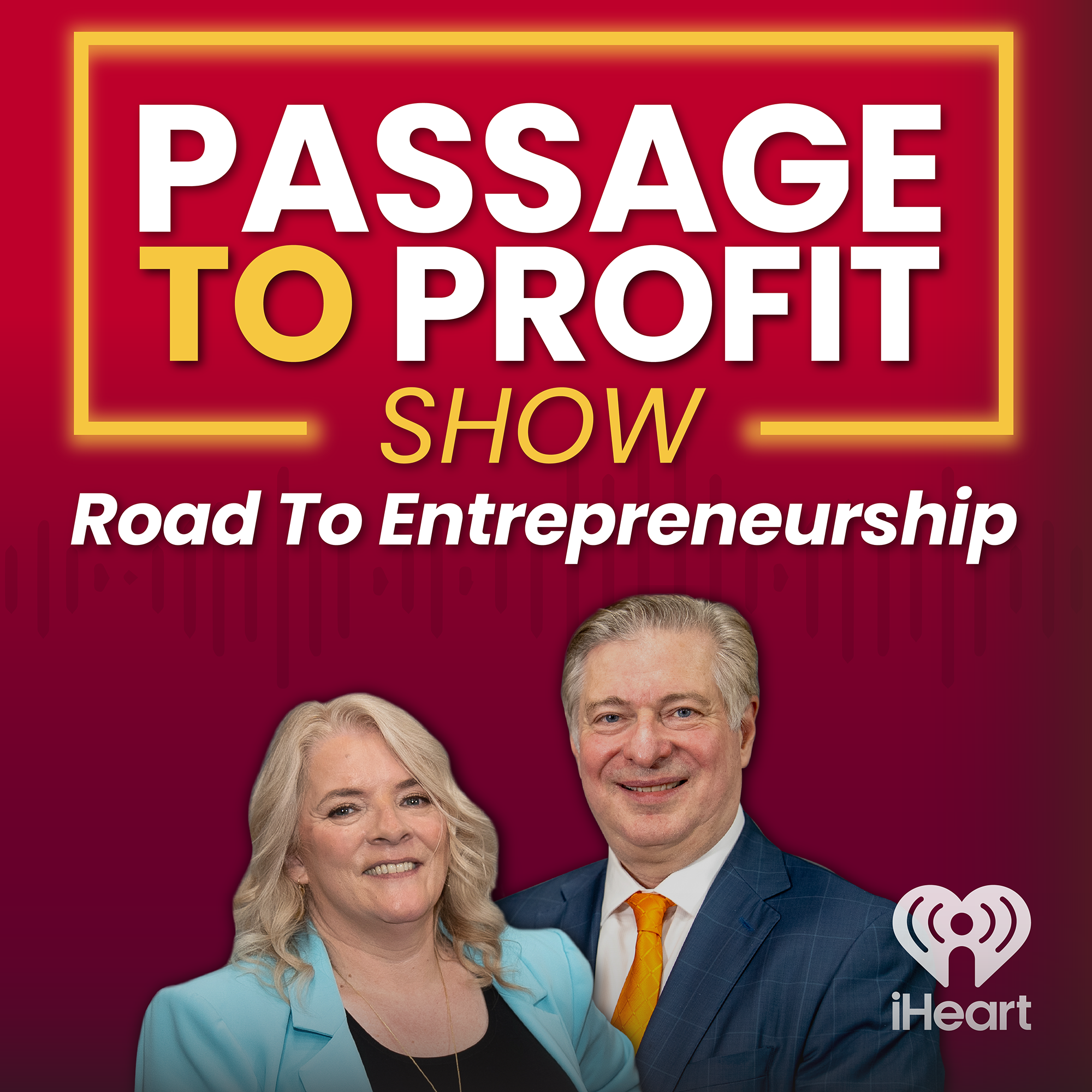
[00:00:00] Announcer: Where entrepreneurs come to grow. It's passage to Profit with Richard and Elizabeth Gearhart.
[00:00:06] Elizabeth Gearhart: And now it is time for our next guest. I'm very excited to introduce Rosemarie Iskowitz, who has this incredible program for teenagers. One of the biggest obstacles holding young adults back isn't a lack of talent, but the way they've been taught to think. Rosemarie addresses us a welcome. Please tell us all about what you're doing.
[00:00:26] Rose Marie Iskowitz: I, I really appreciate that beautiful introduction.
Quite frankly, you know, you hit the nail on the head with young adults today.
I think that people call them that maybe the softer generation or maybe there's some sort of disconnect what's going on with these folks and I think possibly between Covid and from maybe parenting styles being a little different, us as moms and dads doing everything for them, Whatever the case may be, maybe they didn't find their way. We didn't let them have their own problems and mistakes along the way.
But I think where we are is they need help with their mindset. They need to understand that their outlook, the way they look at things in life really has a very important impact on what their trajectory is going to be for their life.
[00:01:20] Richard Gearhart: And do you think that kids aren't seeing it that way now?
[00:01:23] Rose Marie Iskowitz: It's a great question. I have young adult children, and I feel that every situation that they encounter is almost like life or death. They don't understand how to navigate difficult challenges or difficult waters. And in a lot of ways, I blame myself. But I think there's a lot of parents that are like this in that we did so many things for them that they didn't learn to do things for themselves.
[00:01:53] Richard Gearhart: So can you give us an example?
[00:01:55] Rose Marie Iskowitz: Absolutely. You're getting ready for sports.
And instead of that little child, maybe 8, 9, 10 years old, being responsible for packing their bag, we pack everything for them. When they forget something at school, we run it to school for them.
And some of these things, they're not learning to be resourceful. They're not learning to solve problems for themselves.
Now, we can't undo that because I think we have that already in our society.
But what I do think we can do is help kids understand that making mistakes is part of the process.
It doesn't mean you're a failure. It doesn't mean you screwed up.
[00:02:40] Elizabeth Gearhart: It.
[00:02:40] Rose Marie Iskowitz: It means you're learning.
And so we keep going.
[00:02:44] Richard Gearhart: I would have been a lot tougher with our kids, but I felt I was committing parental malpractice if I didn't take the sandwich to them because they forgot their lunch.
[00:02:55] Elizabeth Gearhart: Well, they did have to take care of themselves some. But I do agree that it was a lot easier for my kids than it was for me growing up. You know, my mother worked.
[00:03:05] Richard Gearhart: You're not a caring parent if you're not meeting every need.
[00:03:08] Elizabeth Gearhart: So we know that this happened. We know it's there. So now I want to know what the solution is. So, Rosemarie, what is your solution?
[00:03:14] Rose Marie Iskowitz: For me, I have created a curriculum that I'm bringing to the school systems, nonprofits, organizations, even juvenile correction center, any place that works with young adults that has a vested interest in them being the best versions of themselves, being career readiness, all of that good stuff. I created a framework. It's called Rise, Recognize, Investigate, Shift, and Evolve. And within those frameworks, I have short videos that they can watch. And when I say short, I mean the TikTok generation short, two to three minutes. And each one has just a simple lesson that they walk away with. The lesson may be, if you want to start a new habit, start small.
Don't try to run a marathon when you haven't gotten off the couch. You've been watching Netflix, things like that, just to put simple concepts in their head about how they can get started and move forward.
[00:04:24] Elizabeth Gearhart: That is great. So you're using this for children. Do you have to convince their parents? I know you go through school programs and things.
[00:04:31] Richard Gearhart: I know some adults who could use some of this, too.
[00:04:33] Elizabeth Gearhart: Oh, definitely. But do. But are the parents receptive to letting their children go through this kind of program?
[00:04:39] Rose Marie Iskowitz: That is a really good question. That. Something super that I haven't even contemplated yet. So thank you. I am working with schools and different organizations.
I would not think that it's not like sex education or drug education. That maybe would be controversial.
Everything in the curriculum is 100% grounded in science and psychological theories that are widely accepted.
[00:05:10] Richard Gearhart: I think people understand that there are certain boundaries and that people are better off if they learn certain types of responsibilities.
And I think sometimes parents kind of notice that. But the problem is, in society in general, you also want to be seen as a good parent. You don't want your child to be isolated at school, so you just kind of go along with stuff, even though maybe in the long run it's not in the best interest of the child. But if there's a program out there like this, it's more neutral and maybe it would be more accepted.
[00:05:38] Rose Marie Iskowitz: It's absolutely neutral. And one of the main goals when I set out to create this was that it does not Come across academic, judgmental, preachy. Nobody wants any of those things. It's really more like another young adult talking to them, saying hey, did you ever think about it this way? Very non confrontational.
[00:06:04] Elizabeth Gearhart: That's great. Richard Curtis, did you have a question or comment?
[00:06:07] Speaker E: I was just thinking about helicopter parents because those are like the super example of parents who won't let any dirt, any foreign thoughts come into their kids head. I mean they don't just run to school with a sandwich, they take a plane, take a jet to deliver the sandwich.
[00:06:27] Rose Marie Iskowitz: It's really hysterical because similar to you, Elizabeth, my parents both worked. I didn't do any activities, I didn't do any sports, I didn't leave the house. My parents worked and I was with my grandparents and, and they didn't have any activities for me. They didn't even speak English. So I sat in front of the television. So if I wanted to do something, I needed to be resourceful, creative. I'd had to go outside.
I know we're preaching to the choir with a lot of these things and we can't unring the bell, but we do. And we also, we don't want to blame ourselves and we don't want to blame the kids, but we need to recognize that there is a disconnect and we want to work with them to help them understand that they are capable and they can do these things. They can do anything they set their mind to.
They just need to have the right mindset.
[00:07:24] Elizabeth Gearhart: And I think it's so important because especially in that age group that you're talking about, there's so much negative peer pressure, especially with social media now. Do you tell them anything about social media?
[00:07:35] Rose Marie Iskowitz: The social media is a huge component of it because between the bullying and the comparison and you know, just the unhealthy versions of people that you see out there that you think everybody has got the perfect body and the perfect this and the perfect that. It's very unhealthy for these kids. And that's where I believe a lot of the negativity is coming from.
You also, I don't discount the COVID situation either. My son was in college when Covid hit, having the time of his life and then boom, college closed, home with mom home for the next foreseeable months. And then when he went back to school, everything was closed. So, so he was actually living at school in an apartment with five people. But they couldn't leave the house, everything was closed, even the outdoor activities.
So I'm not coming at this from a political standpoint. But what I am saying is there was an isolation factor and that impacted these kids at a pivotal time in their life. And I've heard from other parents that have everything, their kid being a little bit uncomfortably social all the way to, like, an agoraphobia and not even wanting to leave the house.
So these are the things that our young adults are dealing with, right?
[00:09:08] Richard Gearhart: Well, I think part of it is the parents, too. I mean, most of us can look back at our childhood and say, oh, our parents made us feel bad. They made us do this. And my life would be better if my mother had been this way or my father hadn't said this. And so you bend over backwards to make sure that your kids don't have those kinds of experiences because you want them to grow up in a better
[00:09:32] Elizabeth Gearhart: environment, but you screw them up anyway. And they're still mad at you anyway because you just.
[00:09:37] Richard Gearhart: I guess it didn't make any difference.
[00:09:40] Announcer: How do you track the progress after the program?
[00:09:44] Rose Marie Iskowitz: And that is absolutely one of the most important things. And I'm really glad you brought it up because I would love to partner with an organization that would be able to help me determine the efficacy using the proper assessments and tools. That's a little bit out of my skill set.
So for an organization like mine as a startup, I am looking for support and those types of things.
[00:10:15] Elizabeth Gearhart: And how do people get a hold of you?
[00:10:17] Rose Marie Iskowitz: They can connect with me through my website, which is rise cognitiveblueprint.com you can also find me on LinkedIn. Rosemarie Iskowitz.
[00:10:29] Elizabeth Gearhart: Okay, so you're looking for schools to partner with. You're looking for data analysis people to partner with and other institutions, too. Do you have very many clients right now?
[00:10:39] Rose Marie Iskowitz: Right now, we have a few that we're starting pilots with that I'm very excited about. We have a nonprofit school that we're working with. I have a few nonprofit organizations that are connected with the New Jersey Youth and Family Services as well as the ddd. There's interest and opportunity there.
So I am more than excited to recruit new pilot partners.
[00:11:07] Richard Gearhart: That's great.
[00:11:08] Elizabeth Gearhart: How many kids would you like to affect in 20? 27?
[00:11:13] Rose Marie Iskowitz: Thousands. I would love to get this out to thousands of kids. And really, I would love to take the framework that I've created. I really think it lends itself to multiple areas. In other words, it can be the RISE framework for veterans, the RISE framework for working with folks that have addictions or different type of treatment, because the components of the framework work in a lot of different settings.
[00:11:48] Elizabeth Gearhart: Great. Well, thank you very much Rose Marie. So this has been Rose Marie Iskowitz with RiseCognitiveBlueprint.com if you enjoyed this episode, subscribe
[00:11:58] Richard Gearhart: to the podcast and leave a quick review.
Also, follow us on Facebook, Instagram, TikTok and X and subscribe to our YouTube channel for bonus content.
[00:12:07] Announcer: Learn more at passagetoprofitshow.com.