Episode Transcript
[00:00:00] Speaker A: What happens when artificial intelligence stops being a tool and starts reshaping identity, creativity, security, and even the way we understand reality itself? Today on Passage to Profit, we meet the entrepreneurs building the systems behind the next digital revolution.
[00:00:18] Speaker B: Ramping up your business.
[00:00:20] Speaker A: The time is near. You've given it heart, now get it in gear.
[00:00:25] Speaker B: It's Passage to Profit with Richard and Elizabeth Gearhart.
[00:00:29] Speaker A: I'm Richard Gearhart.
[00:00:30] Speaker C: And I'm Elizabeth Gearhart. And we're your hosts.
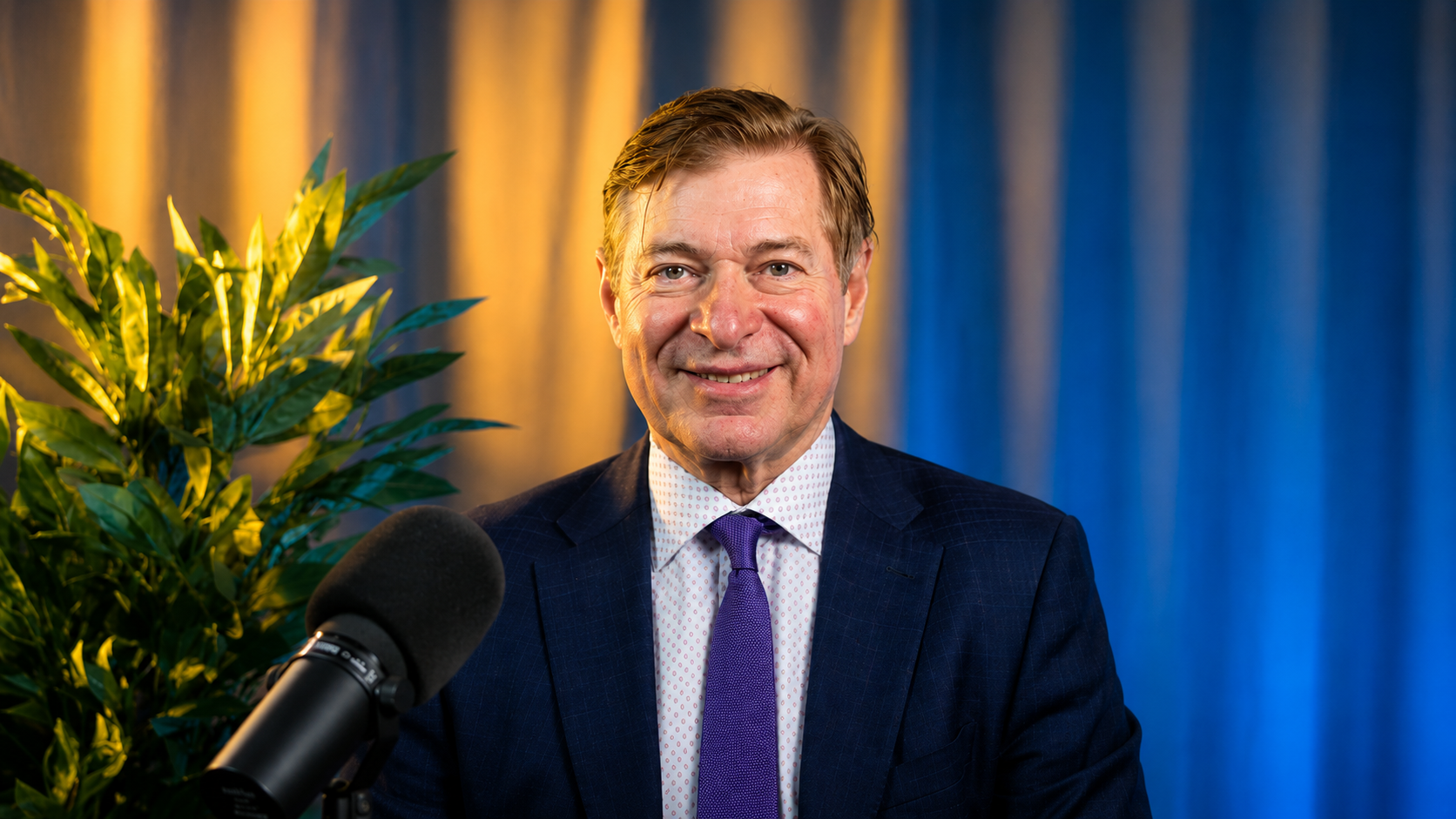
[00:00:33] Speaker A: Welcome to the Passage to Profit show, the Road to Entrepreneurship podcast. What happens when the CEO who helps scale cricket into a billion dollar powerhouse turns his focus to AI, digital identity and the future of 3D worlds? James Thornton, who is the co founder and chairman and CEO of Taffy, joins us and reveals how AI ready 3D data is reshaping everything from gaming and robotics to healthcare, autonom systems and the future of human creativity.
[00:01:06] Speaker C: And I gotta tell you, all three guys on this show today blow my socks off. I thought I knew a little bit about AI. Anyway, what can today's entrepreneurs learn from a man who went from selling golf balls as a kid to becoming one of the nation's top franchise Experts and possibly McDonald's first ever food delivery contractor long before Uber Eats ever existed? Well, today we're talking with Cliff Nonemaker of Franocity. That's an amazing story, Cliff. I can't wait to hear that. And then we have another amazing entrepreneur here. This is a little scary stuff, I gotta warn you, but it's important.
So what if the systems powering our military and critical infrastructure are already under attack? Eric Carnegie, CEO and founder of Simple Sense, is building the technology to stop threats before they strike and turn fragmented data into real time mission advantage. Wow.
[00:01:59] Speaker A: And on top of all that, we'll talk about brain implants that allow people to communicate directly with computers.
[00:02:06] Speaker C: And coming up later on, it's Noah's retrospective along with Secrets of the entrepreneurial Mind. This has been an exciting week for us. We got our patent allowed.
[00:02:18] Speaker D: Yay.
[00:02:19] Speaker C: So during COVID I started a business where I was doing videos of business owners B2B, and I wrote a patent application on it. And then of course, Richard and I always brainstorm. Right, Right, always.
So Richard threw in some great ideas. So we applied for the patent under both our names and voila, we got it on Monday.
[00:02:39] Speaker A: That's really pretty excited about that. Very excited about a patent attorney and a patent agent who actually have a patent. So.
[00:02:47] Speaker C: Yeah. How many patent attorneys do you know that have their own patents? Not many.
[00:02:50] Speaker A: Not too many. And I'd like to switch gears a little bit and talk about the irs. Everybody's favorite topic. Well, it turns out that during the COVID period, the IRS wrongly penalized people who filed their returns late. And so the court recently ruled that if you were penalized by the IRS for a late filing or incomplete filing of your return and you paid interest or penalties, you can get that back.
[00:03:20] Speaker C: Yay.
[00:03:21] Speaker A: And of course, the IRS is protesting the ruling, but if you file a claim before July 10th of 2026, you may be entitled to a refund. So we just wanted to make sure our listeners were aware of this development.
And if you filed your return late or had problems with your return during COVID area, you may be able to get some money back from the government if you paid penalties.
[00:03:45] Speaker C: Well, I'm pulling that as a YouTube short.
My next topic is it's kind of a sad day. Ted Turner, who started CNN down in Atlanta way back when, died today. It's May 6, 2026. He died at the age of 87. But there's this great clip of him being shown on TV where someone asked him what his success was due to, and he said, early to bed, early to rise, work like hell and advertise.
So thank you for those words of wisdom, Ted.
[00:04:19] Speaker A: That's great. We lived in Atlanta for a while, right? But we never met Ted Turner.
[00:04:23] Speaker C: We weren't in the same circles as
[00:04:25] Speaker A: Ted do and I, but he revolutionized the whole broadcasting industry. He invented cable. Love it or hate it, he invented it. So congratulations, and we wish you all the best in the next life. And speaking of the next life, you know that people are still arguing over Jimi Hendrix records. When did Jimi Hendrix die?
[00:04:46] Speaker C: 1970.
[00:04:47] Speaker A: 1970. Now it's 2026. So what is that, like over 50 years? Over 55 years. And there's still. Well, it turns out that some of his heirs filed a lawsuit in a UK court, and they wanted royalties for the streaming of Jimi Hendrix music. And because back in the days when he signed these contracts with the record company, they didn't have streaming, Right? And so the record contracts didn't cover them. So the relatives of a couple of the musicians who were in the band, the guitarist Noel Redding and the drummer Mitch Mitchell, who played with Jimi Hendrix, their relatives filed this lawsuit. So unfortunately, Noel Redding and Mitch Mitchell are both dead. So it wasn't even them. And the court held that, sorry, you know, you guys don't get any extra money. The record company gets to keep it. But it is creating an interesting issue now about legacy rights and what happens to music rights as technology evolves. And I guess in this case they decided that the money stays with the record company. But we'll see what happens in the future.
[00:05:54] Speaker C: We'll see. Well, Mother's Day is coming up and I'm pretty excited. So a few years ago, Richard and I, for my birthday and our daughter was with us. But this time it's just us because our kids are off doing their own things. Years ago, we went to Bergdorf Goodman for a high British tea and we're going to do that again. It was so much fun. It's not as expensive as you would think. I mean, it is a splurge treat, but it's not as expensive as I would imagine something at that store would be. But it was really fun. So we're going to do that.
[00:06:21] Speaker A: It's cheaper than buying a purse there, let's put it that way.
Or shoes, you know. No, I mean, trust me, it's not. And we're gonna crazy.
[00:06:30] Speaker C: Probably just do some fun things in New York for the day.
[00:06:33] Speaker A: So, yeah, we're looking forward.
[00:06:34] Speaker C: We're looking forward to it.
[00:06:35] Speaker A: Hopefully we'll get some good weather, wander around Central park, maybe do a few
[00:06:39] Speaker C: fun things, Maybe go to an immersive experience somewhere.
[00:06:42] Speaker A: Maybe go to an immersive experience.
[00:06:44] Speaker C: There's some pretty cool ones.
[00:06:45] Speaker A: That's not like a pool where they put you in the water. It's like virtual reality. There's a lot of those things in
[00:06:51] Speaker E: New York right now. So looking forward to that.
[00:06:54] Speaker A: Well, I have to point out that since our daughter is a nurse, it's National Nurses Week and it runs from May 6 to May 12.
So if you know a nurse, thank
[00:07:07] Speaker E: her or him or their service.
[00:07:09] Speaker A: I think it's gotta be a very difficult job dealing with sick people and their relatives all day, but somebody's gotta do it. And what's really interesting is that a lot of companies now are looking at the marketing opportunities of Nurses Week. They're offering special deals to nurses because they want them to come into their stores and to their restaurants. They think it's a good thing. And probably they also want to reward the nurses for all their hard work.
[00:07:38] Speaker C: Excellent.
[00:07:38] Speaker A: Passage to profit with Richard and Elizabeth Gerhardt. Time for your new business journey. We'd like to ask our panel, when you look back, what was the one decision or moment that helped change the trajectory of your business and what did it cost you to make that decision? James Thornton, welcome to the show. What was the one decision that changed the trajectory of Your business for this
[00:08:00] Speaker E: current business, our business today.
A few years ago, we were a 3D direct to consumer business operating a consumer marketplace. And we made the decision to leverage the assets, the technology from that direct to consumer business to create Taffy, an enterprise business that brings solutions to companies like Roblox, Meta and EPIC in terms of cost.
Fortunately, that direct to consumer business was profitable, cash flow positive. So we funded the new venture out of that cash flow. But all in, all told, you're talking about several millions of dollars, tens of millions of dollars that we've spent in building out Taffy.
[00:08:39] Speaker A: Awesome. Well, thank you for sharing that. Cliff Nonemaker, what was the one decision that changed the trajectory of your business?
[00:08:46] Speaker E: There are a lot.
[00:08:47] Speaker F: So if you have to pick one, I'll pick one I think that everyone can probably relate to. I was raised by a family that said if you want something done right, you have to do it yourself. So I did.
[00:08:58] Speaker A: Right.
[00:08:58] Speaker F: You can't scale that. It's you literally impossible to create wealth doing everything within your organization. I then came across a quote from J. Paul Getty, which literally blew my mind, which was, I'd rather have 1% of 100 men than 100% of myself. And at that moment I realized, and it hit me very hard, wealth is not built through control. It's not built through doing everything yourself. It's built through people, it's built through scale, it's built through systems, which that brought me to franchising.
And I also, at that same moment in my life, became very intentional about visualization.
And I'm actually having this conversation constantly now. People don't realize the power of your own mind. Right. Which is mindset. So between understanding that I have to scale through people, I can't be doing all myself. That literally changed my life and allowed me to create wealth because I was no longer buying businesses that I felt I needed to understand. I was now buying businesses that I need to hire people that were experts in that area, manage the manager, manage KPIs and focus on execution. So that literally, as simple as it may sound, changed my life.
[00:10:06] Speaker A: No, that's a great insight. And that mindset change can make all the difference in the world. When you really begin to appreciate, even though you may know a lot and you are able to do a lot of the business yourself, you can't do it alone. So thank you for that. Eric Carnegie, welcome to the show. What was the one decision that changed the trajectory of your business?
[00:10:27] Speaker G: For me, it goes back to when I was 26, was out of college was looking at either an MBA program, had an offer for a full time job with benefits, or was looking at starting my own venture and decided to go down that path. I think when you look at a typical corporate career, over your lifetime of earnings, you're gonna make somewhere between 3 to 4 million. That's a pretty guaranteed career path if you decide to go your own way. There's actually no cap, but the floor is zero.
And so there's a lot more risk there. Didn't pay myself for a couple years, you know, learned a lot. The median income of an entrepreneur over their lifetime is actually lower than if you go that corporate path. About 35% is what one study showed.
Average income of an entrepreneur is actually much higher, but that's because the top 10% do really well. And so I'd say I'm still closer to the median. But as an entrepreneur you have uncapped upside. And that's what that decision came down to for me is chasing that upside, that potential in what I do and not sort of, I guess mortgaging the short term potential to earn income and have a steady job and guaranteed income for that potential upside. So that decision has affected then everything I've done since then.
[00:11:46] Speaker A: And that's a really interesting point about the income. I'm not really sure that people fully appreciate that. There might be sort of a trade off there statistically, but you also gain a certain amount of security if you can do it yourself because corporate life is, you know, nowadays is, is no longer certain even with the averages that you mentioned. A lot of people start in corporate and then they end up going out on a pursuing life of entrepreneurism. But very, very insightful comments. Elizabeth, what about you? What was the one decision that changed
[00:12:22] Speaker E: the trajectory of your business?
[00:12:24] Speaker C: I was defeated by website torture, I'm not going to lie.
I had this idea for this website, it was a B2B video directory and I had a certain way I wanted to go and I really trusted this guy and I hired him and his developers could never get it right. Then another guy said why don't you do this? And tried to put some more software and they just, I would have meetings with them and they wouldn't do anything I said. And so I finally gave up and I kind of gave up on the project but I let it lie dormant. And now as I said earlier, I'm sorry, I can't quit talking about this. This just happened. I, I wrote a patent on the technology, on the method, and Richard contributed ideas. So both our names are on the patent and it just issued. So yay. We're very happy about that. The patent attorney who has his own patent.
But now I'm thinking maybe it's time to take a second look at this, Especially with all the AI agents and everything would make it so much easier. And I could probably do the website myself at this point.
[00:13:24] Speaker A: Because of AI, Taking a new look at an old business can sometimes be pretty interesting.
[00:13:31] Speaker C: That's going to be my secret too.
[00:13:32] Speaker A: And that's going to be your secret. So for myself, I think one thing that changed the trajectory of my business was I cut back on my drinking, started exercising. It's kind of funny how they say that the time a CEO invests in a company shows results and manifestations, sometimes a year or a year and a half later. Right. And so the things that you're doing now are really going to impact in the future. And running a law firm I found personally could be stressful at times. And I think sometimes I relied on alcohol to kind of help me through some of the rough patches. Well, pretty much given it up and really started to focus on exercise and taking care of my health.
And I would say that's, you know, over a period of time that has really helped the law firm do a lot better. I'm more alert, I have more energy to put into the business.
So that's what's changed the trajectory of Gerhart Law this week. And I think it's important to take care of yourself as an entrepreneur for sure. So what if everything you've been told about scaling a startup is wrong and the real game isn't growth, but building a platform no one can compete with. James Thornton has taken companies from zero to nearly a billion, rebuilt failing businesses and now sits at the center of a controversial shift in AI where data and not the AI models is the true power. So how hard do you have to work to create a billion dollar company?
[00:15:07] Speaker E: I wish you could actually measure it. It's pretty difficult to do. It is all day, every day, every moment, effort in order to be able to do that. The real magic is entrepreneurs. They do two things. The first thing they do is they make decisions that others can't or won't make. And the second thing is they surround themselves with people that are smarter than they are and then give them all the credit. Despite the blood, sweat and tears that have gone into my businesses, both running public companies and startups, the real magic has been just being surrounded with wonderful people, really capable, talented people, when I'm not at my best they can carry a little extra water. And sometimes when they're not at their best, I can do so for them. And when you know, you're in that kind of environment, the sky really is the limit.
[00:15:59] Speaker A: But during the course of your career, I'm just trying to put it into perspective for our listeners who may not have a billion dollar company. What were your work days like? I kind of think of Elon Musk, for example, who seems to work almost nonstop.
Elon Musk works almost nonstop, for example. Has that been your life model or have you found some time to find at least a little bit of balance in that?
[00:16:25] Speaker E: You obviously can't argue with Elon's success, but I chose to take maybe a little bit different of a path. You know, Stephen Covey shares the principle of sharpening the saw and the importance of taking time to pause and to make sure that you sharpen the saw. And I have found that to be an really important part. My experience as an entrepreneur and in building these companies has been if you don't take the time to better yourself, if you don't take the time to learn new things, if you don't take care of yourself physically, it's really a difficult thing. Our family has a sixth generation cattle ranch in southern Utah. It has become a real escape for me. So over the years I've taken advantage of the opportunity to work on the ranch to do things that push me physically and give me a release being.
And I've tried to blend that into my work habits or around my work habits so that again, my tank is full and I feel like when I am engaged at work I'm giving 100%. That doesn't always happen, but that's my goal. And I think having the ability to blend other interests and personal welfare with your company is an important step.
[00:17:37] Speaker C: That's so true. I feel like my most creative times are when I'm not thinking about work in the thought pops into my head, right, but what if someone has a company And I think all companies go through this where they're struggling and maybe they can barely pay their bills. How do you turn that around?
[00:17:53] Speaker E: Well, generically, that's a pretty big question, right? It certainly sort of comes down to the type of company that you have. I've been in tech and content development for most of my career and it really does at the end of the day come down to just putting one foot in front of the other and not neglecting the simple things. Again, Cliff referred to the fact that it's so important to leverage people around you. But he also talked about how he was the guy willing to do everything. You know, I've emptied my own garbage cans for as long as I've had my career. You know, I've done the simple things, the day to day steps. Perhaps I could give you just a really brief anecdote. In my early 20s, I had a stroke. I had an aneurysm. And I was told at the time that I would never speak again.
And I didn't have use of the left side of my body. And I had wonderful parents who would not buy into the prognosis. They believed that I had the ability and with the support again of friends and family, that I would recover. But it started with very small steps. I remember my dad sitting at the foot of my hospital bed, tossing a tennis ball up to me. And when we first started doing that exercise, sometimes it would take minutes, maybe longer, for me to even be able to reach over and grasp the tennis ball. And then it took some doing to be able to sort of roll it back. And then eventually I could throw it back to my dad using my left hand that they told me I would never use again. It was those small steps, it was those, those quiet moments that made the big difference in my personal healing. And that really is true for any entrepreneur, especially when they're starting out and they're struggling to make ends meet and sometimes worry if they're going to make the next payroll. If you focus on the little things, the things that are right in front of you, my experience is, more often than not, you'll figure it out and you'll find a path to achieve what you're trying to achieve.
[00:19:58] Speaker C: Wow.
[00:19:58] Speaker A: How do you feel the experience of having a stroke shaped your outlook on life and your career?
[00:20:05] Speaker E: Well, it also very much made me appreciate the things that matter and even the simple things. I remember again, several nights laying in a hospital bed and the only sound in the room, in a dark room, that I could hear was the sound of myself breathing.
And right after the stroke, my experience was I complained a lot. I felt sorry for myself. I was angry at the world. I just felt like I had been robbed. But in those quiet moments when I would only be able to hear myself breathing, I would do things like just count the breaths. One breath, two breath, three breaths. And it pointed me to what matters, right? And I started to think differently. I started to think how grateful I was that I could hear my breath.
And that led me down a path of appreciating those simple things. And it's The. It's the same thing in business, right? You celebrate even those small victories. You're going to have failure, you're going to have moments, you're going to have difficult times. And it's not just about celebrating the big wins, the big contract, or the large revenue or the investments people are willing to make into your business. It's the small victories. It's those little things that sometimes should motivate you to celebrate those more. We have a regular town hall with our company, and that's what we do at the town hall. We don't talk about EBITDA and financial performance and how we did in those moments. We talk about how people are doing. We talk about how they're winning in their work and in their individual workflows. And now we're talking about how they're using AI in those individual workflows and how fulfilling and how efficient that helps them be.
And that's important. It's important to not just get caught up in the things that are loud and big and require fireworks and celebrate those wins and allow your team to do the same.
[00:21:57] Speaker A: I tend to be a warrior, and I have to get Elizabeth a lot of credit because, you know, she'll say, well, what are the three good things that happened to you today, Richard? And I'll ask her the same question. And, you know, even if it's just for a few minutes to get refocused on a few positive things. And there aren't always huge things.
Sometimes they're simple things, like, I got a computer problem fixed by the IT service or whatever it is. But just reframing things like that, I think brings a freshness to the way that you look at what you're doing.
[00:22:30] Speaker C: So, yeah, and I love it when people say, well, what if we hit rock bottom? It's like, what happened to your business in 2008? Did you survive?
If you survived 2008, as a business person, you can survive almost anything. Right.
[00:22:43] Speaker A: So, James, I wanted to ask you a question about something that popped up here in our show Notes, and that is data and not the AI model is the true power of AI going into the future. I'm wondering if you could talk a little bit about that.
[00:22:58] Speaker E: Sure, I'm happy to. So even as recently as a few months ago, people were celebrating the model, right? It was about the ability to build some type of foundation model that could bring something revolutionary or bring more efficiencies to, you know, companies and industries. What people I think are finding is sometimes those AI models, while they're brilliant Technology, you'll get an output that isn't exactly the way you want it to be. I mean, sort of think about in your everyday work life using a tool like ChatGPT.
I mentioned that I, I love to continue to learn. I'm, I'm in a, a four course certificate program right now with Vanderbilt University and the first certificate was on prompt engineering. And as much as I use AI and as much as our business is an AI native company in terms of providing data training to companies, I learned so much and I learned that I'm going to get exactly out of ChatGPT or even an AI agent like TBT or even more advanced AI agent. I'm going to get what I want based on what I put in. It's garbage in, garbage out. And I think that's what I'm experiencing even in our core business in providing really high quality training data to train mostly visual models, models for gaming or tech or robotics. The ability to get a good outcome, to have that model perform the way that you want it to. That AI model, it's all about the input, it's all about the data that you're putting into that model and how well it's structured, how, how high quality it is. That's really important. So whether it's in your personal workflows or when you're talking about big giant AI companies building these massive AI models, if you're not putting quality into the model, you're not going to get quality
[00:24:56] Speaker C: out well and we can feed the models things like I have to constantly tell the models I use more. A few of them, look, I'm an old lady and I use AI and I use it for this.
[00:25:08] Speaker A: So don't assume you look much younger. By the way.
[00:25:10] Speaker C: I said don't assume that we're not using it. But also I ran into an incident with the. I totally agree with you that the prompt is the most important thing. I feel like it's a pretty linear thinker still because of. I'm going to talk about this later in the show. What I'm finding with people is somebody will ask me a question, I'll say, well, you just go ask the AI and problem is they don't know how to ask it. That's what's happening now.
[00:25:34] Speaker E: I was just going to suggest, you know, you gave the case of really explaining yourself to the AI to the LLM model. Maybe I could just share one trick that I think really works in getting the most out of the model. I'm sure you know both Cliff and Eric do this in their businesses. It's called Persona prompting.
So instead of trying to describe yourself to the AI model, describe the person or the function or whatever that you're trying to solve for.
So if I'm trying to help my dev team work on some code on, on a product that we're working on, a procedural tool tool that we're working on, I don't go into my AI tools or my AI agents and describe myself to them because they're going to, they've learned my voice a bit and they're going to give me back what they think I want to hear. Instead, I will say, I'm a junior developer, I just started at the company, I just graduated with my computer science degree and I'm really learning AI.
[00:26:43] Speaker C: Yeah, we do that all the time. Because like you, if I put in a question, it says, well, for Gear Media Studios, your studio, this is, I'm like, I'm doing this for a client.
[00:26:52] Speaker A: But did the prompt class that you took really help you sharpen your AI skills? Did they provide some standard formats to use? How did that work?
[00:27:01] Speaker E: So the course at Vanderbilt really, you know, it gave suggestions and it gave scenarios and you take exams, but you also work through labs and models where it helps you refine sort of that prompt engineering. And so that was helpful. And think of it this way. I've been actively making money in AI since about 2018, and I use in my personal, in my professional workflows. It's at the core DNA of our business that we're in the AI data business. And I still found that I, I learned some good tricks. I, I learned some, some new things. And so that was, was very helpful and we, we extend that educational program to all of our employees. So as an example, a course that, that is commonly spoken to, that everybody beginning in AI should consider taking is called AI for Everyone.
It's by, it's, it's taught by Andrew Singh, it's taught through the Coursera platform.
And every one of our employees have taken that course. And then from there they branched out. If they're a project manager, they're taking AI for project management.
And we give our employees the opportunity to learn as they go. And I have to set that example. I have to be willing to learn and continue my journey along this path.
[00:28:21] Speaker C: I think that's excellent. I think we all do. I think that's, I've given that as my secret many times before. Never stop learning. And even if you think you know something, you don't know everything about it.
[00:28:30] Speaker A: Probably that's right. So on that thought, we have to take a commercial break. We're with James Thornton, who is the co founder of DAZ3D and we're going to learn more about DAZ3D right after this commercial break.
[00:28:44] Speaker H: Do you hear that? That's the sound of uncertainty lurking under your hood. You know the feeling. I know I do. That sudden sinking sensation when you see a check engine light or your car unexpectedly breaks down and you're faced with sky high repair bills. It's time to shield against unexpected repairs with Car Shield. Car Shield is America's most trusted authority auto protection company and has an A rating with the Better Business Bureau. Don't let the fear of a breakdown keep you up at night. Trust the Shield Car Shield. And say goodbye to terrifying repair bills and hello to peace of mind. Your plan also comes with 24. 7 roadside assistance, courtesy towing, rental car options, and so much more. Don't wait till it's too late. Call CarShield now before a breakdown. Protect your wallet. Protect your car with Car Shield. Get our best protection ever. Call now. You'll thank me later. 800-2612-1768-0261-2176. That's 800-261-2176.
[00:29:43] Speaker B: Have you outgrown your health insurance plan or just not happy with what you're paying for? The number one reason we all change our health insurance is price. Are you paying too much for your your health insurance? Would you like to have better coverage at a better rate or at little or no cost to you? Your life needs are always changing, but have you done anything to improve your health insurance for you and your family? Health insurance laws and coverage are always changing and getting better. It's impossible to do all the research yourself, but now it's all done for you for free. So regardless of your age or medical condition, take a few minutes right now and find out if you can save money or even qualify for zero cost health insurance in your state. Call now.
[00:30:29] Speaker H: Paid for by cheaper health insurance. 8006-5214-7080-0652-1470.
800-652-1470. That's 800-652-1470.
[00:30:43] Speaker F: Building your business one idea at a time. It's Passage to Profit with Richard and
[00:30:48] Speaker C: Elizabeth Gearhart and our special guest, James Thornton.
James has got just this amazing AI technology for 3D models and you can use it. So he's going to tell us all about his Daz platform.
So James, tell us what you Were just talking about Daz.
[00:31:05] Speaker E: 3D is more than a couple decades old. It's a business that started as a 3D modeling and creation company where we have a very robust 3D software platform. We give that away to consumers for free. We've probably had somewhere in the range of 6 million downloads of that software over time, several hundred a day. And then we operate a direct to consumer marketplace where content that is built using our technology and our software can be sold. And so we have a Creative community, a UGC community of hundreds of the very best 3D artists and developers on the planet. And they use those tools, they create content and they bring it to the Daz site and they get to rev share with us. And many of those hundreds of artists, while they're not technically our full time employees, make a full time living doing that. And the content goes into animations, it goes into cinema. I mean, maybe you've heard of, for example, digital online influencers like Lil Miquela that was actually built on our technology.
And so we've had this really awesome direct to consumer business for a couple of decades a few years ago. So actually in 2019 we then formed a B2B brand called Taffy. And Taffy serves that enterprise customer. So if you look at sort of the three foundations of the Daz business, it's technology, it's an awesome content library, the best and most versatile 3D content library on the planet.
And it's this creator community. And we've taken that three legged stool or those three competencies and we've now built new tools, procedural tools, AI tools that allow us to service enterprise partnerships. And we also do that in two ways. Number one, we can provide really cool content. If they have marketplaces or if they are doing game development or app development, they can use our content.
And again, those that are building AI models can then use our data to train their models. So if you think of any kind of text to character model that you might see in say Meta Horizons in their VR headset, or Roblox has a product called 3D Cube or a company like Tencent has a product, all of those models are text to 3D or text to content models.
That can only work if you've put good data into those models. And because we own all our data, because it's high quality, because it's IP protected and versatile, we're able to give them quality training, data sets that they then can use to train those models. So that now it's not just about a creator who is really artistically Talented or willing to spend hours and hours and hours learning how to use a software program. It's now an enthusiast or it's somebody just exploring the use of 3D or a small business that is building a website or something and wants to be able to have really cool content.
Those models are out there being developed and while we don't own the models themselves, we train many of them using our data.
[00:34:35] Speaker A: So how would I go about incorporating 3D animation into say, our website? Would that be an application or a use that this would work for? Or does it have to be like a 3D glasses from Meta or something? Virtual reality type of content?
[00:34:54] Speaker E: The beauty of 3D is it works in 2D. Even you know better than 2D content does. So if you're creating product images, if you were creating particularly, we have lots of clients in the fashion space as an example. So if people want to do clothing try on or something like that, and they want to do that through their website, they can do that with our content. And what we're seeing a big movement toward are people now giving real personality to AI agents in their marketplace. So, you know, let's say you're building a website and you have a customer service function and you're using say a customer service product like FIN to be able to do customer service for your customers. Now you can give that AI chatbot or agent, a Persona, a digital Persona, a real identity, and you can use our content to do that as well.
[00:35:50] Speaker C: Yeah, I would encourage everybody listening to this to go to his website, daz3d.com I went and I was just pretty blown away. I really wanted to start playing with the stuff there. Because you have a free trial, right?
[00:36:03] Speaker E: Absolutely, it's a free trial. Like I said, the software is free. People can just go there, create an account, download the free software that comes with a pack of free content for them to play around with and if they like what they see, and they can purchase right through directly through that marketplace.
[00:36:21] Speaker A: So what are the most common applications for this technology?
What industries or products use this the most?
[00:36:28] Speaker E: It is a wide array of companies for us in sort of our target focus is on actual content and character and scenes and 3D avatar side. Again, you're going to see people use it a lot in the fashion space, you're going to see it a lot in gaming. So we can optimize or make that content so that it works across all different formats and platforms, so people can use it to build a game.
Even if you're an indie developer and you're just looking to build a simple app or a simple game. You can use the content, people use it a lot for still rendering and images. So if somebody's writing a book, they can build illustrations for that book using the 3D content if they're not an artist and don't have the budget to have an artist do that. So there's really a lot of applications. And then of course, on the training data side, it's all about physical AI and autonomous AI right now. And so I mentioned we have a sixth generation family ranch in southern Utah and it's amazing what AI is bringing to agriculture. Again, all of that needs good trading data to train those models, but it's, it's phenomenal. And so we've actually rebranded our ranch in southern Utah the AI Ranch. And there will be a podcast from the AI Ranch and it's all about focusing on, on markets like, you know, farmers and ranchers, agriculture or drilling and mining and energy or construction, and helping people first of all understand AI as a general principle and in their general workflows. But then it'll transition to actually helping them with amazing technology. As an example, Nvidia is working on a robotics program to completely eliminate pesticides in farming. And I don't know if you've ever, if you've watched any of those videos online, but it's fascinating. It's a robot moving I don't know how fast, 10, 20, 30 miles an hour down a row of crops. And it has 10 arms. And AI has trained it to be able to identify the weeds or what's not supposed to be there from the actual crop. And it's just going through at amazing speeds, pulling out the weeds and such as. Right.
[00:38:53] Speaker C: So I love that, I love that. I just have one quick comment. Richard's telling me that we need to wrap up, but this is probably outside your core business. But I could see a lot of applications for this in the education sphere, especially teaching science. I remember taking calculus years ago and the guy trying to describe how you have this 3D object and you take a slice out of it. In my brain just going, yeah, I don't see in 3D, but. And then also like molecular structures and stuff like that.
Probably not something you've gotten into, but hopefully somebody is. But this is just amazing. But I, I think I'm most enticed by the robot story. That is so cool.
[00:39:31] Speaker E: It's pretty awesome.
[00:39:33] Speaker C: I've wanted a robot for many years.
[00:39:35] Speaker A: Yeah, you can figure out how to get one to do the grocery shopping and cleaning up the house, then that would be even more impressive.
[00:39:42] Speaker C: Empty the cat box.
Okay, so once again, how can people find you?
[00:39:49] Speaker E: Go to daz3d.com and again, you can reach out and contact us if you have a specific need.
If you look under the tab of AI Solutions, if you're a small business or a company looking to integrate AI into your workflow, you can click on the AI Solutions site. And yeah, all of that information is available and our team is pretty speedy to respond. So we'd love to hear from you folks.
[00:40:16] Speaker A: Excellent.
[00:40:17] Speaker C: We cannot stop talking about AI. You know what? I feel like I live and breathe AI every day. Every time I have a question, that's where I go. So now it is time for AI Use cases Business Owners Roundtable. I know you guys are all like up to your eyeballs in AI, but I'm going to ask you each for your favorite use and then we'll talk about it a little. So, James Thornton with DAZ3D.com what is one of your favorite uses of AI?
[00:40:43] Speaker E: I would say that in our business, again, our entire customer service and our quality assurance group is now powered by AI Solutions. It's pretty incredible how fast you can resolve customer concerns outwardly facing how we are able to respond to customers and their needs.
[00:41:01] Speaker C: Excellent. All right, Cliff Nautamaker with Fronosity.com what's your favorite way you're using AI in your business right now?
[00:41:07] Speaker F: I use it three different ways. I use it for decision support, pressure test, an idea like, does this make sense? Like, just test it and flesh it out and see content and distribution, and I use it as operational leverage. It's brilliant.
[00:41:22] Speaker C: Eric Carnegie with SimpleSense IO, what's your favorite way you're using AI right now?
[00:41:27] Speaker G: With an AI prompt, there's much less friction for that user to say, yeah, I want this data, I want it in these columns. I want to see this in this kind of graph. So that kind of savings is what we're looking at.
[00:41:39] Speaker C: Wow, that's amazing. That's what it's for. So, Richard Gearhart with Gearhart Law, what's your favorite way you've been using it lately?
[00:41:46] Speaker A: Lately, I've been using it to find vendors, using it as a search engine, and it tunes the search more specifically to what my needs are. Instead of just putting in a few keywords and then having a bunch of possibilities pop up, I can be specific about the characteristics that I want and it'll find vendors for me that I would never have considered before. And so it's a You know, very straightforward, very simple way to use AI, but it is proving to be very valuable. We're looking for a new cfo, and it surfaced some talent agencies that I was unfamiliar with and made some really great recommendations that is speeding the process considerably.
So even though there's humans involved, it is doing things that weren't available before.
[00:42:37] Speaker C: Excellent. Well, I'm Elizabeth Gearhart with Gear Media Studios, and I know you guys have probably all touched on this, so I don't know. A few months ago, a year ago even, I would try generating images in ChatGPT, and they were really terrible. And so I'd go back to Canva, and then I found Manus, which is an agent, and it did better images. Well, then somebody said, oh, you should try ChatGPT again. And actually, you should try Claude, which I haven't gotten back to Claude that deep yet. Anyway, so I started using ChatGPT for image generation again. And I teach this adult school class getting started in podcasting. And for the last class, everybody gets to make a little video in my studio. And so I took those videos and I did a screenshot of the people's faces when they're smiling. Like, I managed to catch every one of them. And then I put the screenshot of the person, the title of their podcast, and a little bit about it, because they didn't even do, like, a full podcast or anything into ChatGPT. I said, okay, generate a YouTube cover for this. I was blown away. You know what? It wasn't just that it could take the prompt and figure it out. It was the quality. I don't think I could go into Canva and generate something like that.
[00:43:45] Speaker A: You know, that has changed so much over, like, even the last three or four months. If you tried getting a thumbnail image out of AI three or four months ago, you just got this weird distorted thing, and now you've got a thumbnail that looks great.
[00:44:00] Speaker C: But you know what else it can do now that it couldn't do before?
Before, it would do a thumbnail, and you would say, okay, keep everything the same and change this one thing. And it would change the whole thumbnail. Now, it can change one word, it can change one color. The speed at which these things are going is like a steamroller. So I want to open the floor up. Like, I do have another AI thing I want to talk about while we're here, but I want to see what other people want to say about AI in general. Any profound thoughts?
[00:44:26] Speaker A: Well, just to kick things off, the attorney in me is going to come out and say, there's been recent court cases where people have used AI for, you know, strategy purposes. And the prompts and the reports that were generated from the AI have been considered to be discoverable and have actually ended up in written opinions of the court. So there was one case in Delaware not too long ago where a senior manager decided that they wanted to break a contract with a company that they owned. He went to his legal team. The legal team says, no, you can't do it. He went to ChatGPT and started strategizing with ChatGPT about how to break the contract. And then he followed chatgpt's advice, ousted the management team of the company that was the target, and then got sued for breach of contract. And all of the prompts and all of the information that he had used was considered discoverable information, and they could
[00:45:27] Speaker C: be used against you in a court
[00:45:28] Speaker A: of law operation against you. So you have to be careful when you're using this stuff.
[00:45:33] Speaker C: Real AI Use Cases. Business Owners Roundtable. So this has been edited for the radio. If you want to hear the whole thing or see it, it's on YouTube and you can hear the whole podcast. It's called Real AI Use Cases. There was a lot of incredibly great discussion. I love it when people disagree because at this point, we don't know who's right. But maybe in six months we'll have a better idea. But coming up, we're going to be interviewing Eric and Cliff, and we also have secrets of the entrepreneurial mind. So stay tuned.
[00:46:02] Speaker D: Here's a real life story that affects 50% of all of us out there. It's called Divorce. If you've gotten divorced and now you're struggling to pay your bills and your credit card card debts are completely out of control, you need to call this special debt relief hotline. Right now. We help people with all kinds of money problems caused by different life challenges. A divorce, a job loss, even heavy medical bills. All these life events can sometimes financially stress you out and cause you to get out of control. We help people get their lives back by showing them ways to consolidate and reduce their debt. In some cases, for a fraction of what they owe. If your credit card balances are more than $10,000, call us and learn how to reduce your credit card bills and monthly payments. Now, here's our number, paid for by Debt.com.
[00:46:46] Speaker H: call now at 8008-1008-5780-0810-0857. Eight hundred, eight one zero, zero eight five seven.
That's 800-810-0857.
[00:47:02] Speaker I: Learn how thousands of smart homeowners are investing about a dollar to avoid expensive home repair bills. John A former non customer said, my air conditioner broke and I had to spend $1,900 to fix it. Jeff A customer wrote, my air conditioner broke and I got a new one at no out of pocket cost. Mary A former non customer wrote, my heating system stopped running. I had to spend $3,000 to get a new one. Lisa I customer wrote my heater stopped working. I got it fixed at no out of pocket cost. For about $1 a day, you can have all the major appliances and systems in your home guaranteed fixed or replaced. Call now. If the lines are busy, please call back.
[00:47:43] Speaker H: Call the home warranty Hotline now at 8002-554940-80255-4940 800, 255-4940. That's 800-255-4940.
[00:48:01] Speaker F: Passage to profit continues with Richard and Elizabeth Gearhart.
[00:48:05] Speaker A: Quick shout out to our friends at Watt 1240am and 106.1 FM in Traverse City, Cadillac, Michigan. Thanks for listening. And if you're new here, Passage to Profit is a top ranked entrepreneurship podcast and radio show heard in 38 markets across the U.S. it's a place where founders share what really works. And now it's time for intellectual property news. Here's a story that sounds a little bit like a sci fi movie, except it's real. A former Harvard scientist named Charles Leiber, who was convicted in the US for lying about his financial relationship with China, has now reportedly rebuilt his brain computer interface research lab in China. And yes, brain computer interface sounds like something invented five minutes before things go terribly wrong in a science fiction movie. Now, to be fair, the technology itself is actually amazing. Brain computer interfaces could someday help paralyzed patients move again, could help people communicate after severe injuries, and potentially treat neurological diseases. So there's a real humanitarian side to this research.
But from an intellectual property standpoint, this story is fascinating because it shows that sometimes the most valuable IP isn't sitting inside a patent office, it's sitting inside someone's brain. And apparently China understands that very well. According to Reuters, Libor now has access to advanced labs and research facilities in Shenzhen that may actually exceed what he had available at Harvard. That's a big deal because countries are no longer just competing for patents, they're competing for scientists, engineers, and talent. Recent brain computer interface trials from companies like neuralink in China have reportedly enabled participants to move computer cursors and robotic devices using only their thoughts and even convert brain signals into spoken language at surprisingly fast speed. Speeds, meaning early forms of human machine integration are already becoming a reality. We're seeing this happen everywhere now. The brain drain applies to AI, biotech, semiconductors, quantum computing. It's like the Olympics for nerds, only instead of gold medals, countries are trying to win Nobel prize winners and PhDs. And here's the interesting IP lesson for entrepreneurs. A patent alone is not enough anymore. You can patent an invention, but protecting the know how behind it, the trade secrets, the expertise, the people, that's becoming just as important. Because once critical knowledge walks out the door, gets on a plane and lands in another country, good luck at stuffing that genie back into the bottle. And honestly, this is why companies are investing so heavily in confidentiality agreements, cybersecurity, employee training, and trade secret protection. In today's economy, your biggest asset may not be your building or your equipment. It may be what your team knows. Now, personally, I'm still trying to figure out whether brain computer interfaces will help humanity cure disease or just make it easier for advertisers to know when I'm thinking about pizza. Either way, the global IP race is definitely getting more intense. And if you have an idea or invention you want to protect, the team at. Gearhart Law helps entrepreneurs turn ideas into protected assets. You can visit learn more about Patents.com or learn more about Trademarks.com or a free consultation and practical guides to get you started later. We have secrets of the entrepreneurial mind, what successful founders think about that most
[00:51:57] Speaker C: people never see really interesting conversations we've been having. Now it's time for CLIFF Nonemaker with Fornacity.com, the franchise king. Tell us all about what you're doing and how you're doing it and your thoughts on it.
[00:52:09] Speaker F: Furnosity is a boutique consulting firm where we help investors, people, listeners, right? We help them navigate the process of buying a franchise. We specifically live in the franchise world. Not the independent mom and pop world, but the franchise world. So there's approximately 4,000 franchises in this country. We represent approximately 600 brands that are serious about growth, proof of concept, which is critically important.
Brands with a good margin, brands with a healthy labor model, you know, brands that are recession resilient. And we tend to focus on brands that have what's called an item 19 and that's a written earnings claim. And it helps the investor understand how much money could I make if I bought this brand? Believe it or not, more than half of all franchise in America have no written earnings claim in their legal document. And they cannot answer that question legally. So if you ask a franchisor, how much money could I make if I buy Subway? Is a perfect example. Everyone knows Subway. Subway does not have a written earnings claim in their FDD. They can't actually tell you, you will do 450, 500 grand, top line gross. You will net X. They cannot legally answer the question. You're left to your own devices to work with a consultant, someone that could help you validate, you know, that opportunity. So, in a nutshell. And we do it for free, which is incredible, nobody believes it because free is the most abused word in human language. But we work for the investor for free because we're compensated, like realtors or headhunters. We're compensated by the seller, the franchisor, so we're compensated by the brand.
[00:53:46] Speaker C: So if I wanted to buy a franchise, first of all, it costs a lot of money, right? Secondly, what would you tell me? Like what? What should I look at? Should I make a list of everything I'm good at and everything I'm bad at or.
[00:53:56] Speaker F: That is the best question I've ever heard. What should you tell me? It's the opposite.
[00:54:01] Speaker E: It's.
[00:54:01] Speaker F: You need to tell me, why are you here? That's a great cry. I love that. No one has ever said it like that. I think that's just brilliant. I don't. It's not about me, it's about you. It's about you and your spouse. Why are you here? What do you want to invest? What's your appetite for risk? What's your day to day involvement? You have a production company, you've got your law firm. Is this a side gig? Is this ancillary income? What's your risk tolerance? What's your time horizon like? What phase of life are you in? Are we approaching 30 or. Because a lot of times I don't see the client, I'm speaking to them over the phone, right? It's mainly telephonic or something like that. So I don't know what phase of life they're in. I don't know that they have three children still at home or their empty nesters changes everything. What do you want to earn? Right? So understanding big picture. Do you have an appetite for debt? And you're like, no, no debt. We're anti. We just want to do a cash deal, own the business. We don't want debt. The dollar is worthless. It's expensive to borrow. Not interested. Got it. So once we learn from you, and you give us your investment objectives and your reason for being here. Now we recommend brands that we feel fit. Exactly what you're trying to do, right? You want to manage the manager, you want to maintain your position in the production company, in the law firm, it means your bandwidth is maybe 10, 15 hours a week, right? But you have a really good person that you want to put as your manager. Maybe it's a family member, maybe it's a dear friend, maybe it's a business partner, right? That all these questions, all this understanding of you, you know, prognosis before diagnosis is malpractice. Think about that. Everyone's quick to say, what can you tell me? Prognosis before diagnosis is malpractice. Know your client, know your patient, know what's going on in their life, then make the recommendation. So I really appreciate that question. That is a big issue in my business. And what's crazy, everyone wants to create wealth. Everyone wants to retire on time. Everybody wants to leave corporate America. Nobody wants to work, you know, in the environment anymore. But no one has put any thought into what they want. That introspective self. Everybody knows what they don't want, which is why they keep attracting the negativity. Because what you think about, you bring about. It's a law of attraction. Simple. It's not a rule, it's a law. But if people start focusing and visualizing on what they want, it becomes self fulfilling prophecy. It's that much easier to get there. And we help them get there through being disciplined through and having a strict adherence to our due diligence and helping the client navigate the process.
[00:56:32] Speaker A: That's really interesting. You're helping people escape from corporate America. Perhaps if somebody is wants to start their own business because they want to try something different, what is the difference between starting a business with your own product or your own idea or your own service versus going into business with a franchise? What are the advantages and disadvantages?
And do you see that there's any particular personality types or characteristics that favor one path over the other?
[00:57:02] Speaker F: If you're too entrepreneurial, you mentioned the person that created something. Let's say there's a category, creator listening, right? Someone created something. You might be too entrepreneurial for franchising. Franchising has a framework. There are curbs. We call it freedom within the framework. But there's still framework. For example, you are not selling hot dogs at McDonald's, period.
Like, why not? I want to sell hot dogs. My area loves hot dog. The answer is no, we're not selling hot dogs at McDonald's, like, that's the end of it. You're never going to see that on the menu. And a lot of brands can say that.
[00:57:33] Speaker A: I never really thought about that. You know, I love hot dogs and I never go to McDonald's. Maybe there's that. Maybe that's the reason I started reading
[00:57:39] Speaker C: the book on that McDonald's franchise. I got about halfway through. It was a thick book. But that was the number one thing I took out of it, is you had to do it Ray Kroc's way, period.
[00:57:49] Speaker F: Ray Kroc created a license to print money in selling hamburgers and french fries and milkshakes.
[00:57:56] Speaker A: Right.
[00:57:56] Speaker F: Like at the, at that time. Remember it was a very limited menu at the time. The menu is obviously expanded. But yes. And he's like, look, if, if you want to create wealth, if you want to make this work, if you want to have a very small percentage of failure, this is how you're going to execute my business and execute it. If you don't want to follow the framework of a McDonald's, then go build your own hamburger joint. And people have, you know, and people have failed. So your failure rate is really reduced. I have always say, everyone knows Elon, Elon Musk would make a terrible franchisee. He would meddle with it, he'd do all sorts of things to it, he would change it. He's way too entrepreneurial. He's a huge visionary. He would not be a fit for franchising. So, you know, the average person driving a truck right now that wants to get off the road, or the average person listening that has a two hour commute, round trip to work, that's tired of it. They're tired of the windshield time. It's like, look, I'm not going to invent anything. I don't need a patent attorney because I'll never patent anything. Like for that person saying, I won't do these things, I could just join a franchise, execute flawlessly, create wealth, have a great life, and yet I didn't invent, create, disrupt category anything. That's what I love about the methodology of franchising. It is one of the single greatest methodologies to create wealth ever created. Because you don't need to invent anything. Just buy into the model and execute flawlessly in your local market and then scale it and hopefully have a beautiful exit one day. Or create a legacy, which is a big conversation right now. Create a legacy for the children and grandchildren. Let them take the business over for
[00:59:29] Speaker A: some franchises that are maybe new and they don't really have the track record of a McDonald's. How do you counsel somebody about whether they take the risk with a newer franchise versus maybe something that's more established? Because there is risk if you're working with a franchise that's just starting out. Right, right.
[00:59:48] Speaker F: Proof of concept is critical. So let's just say there's a. Like we had a brand. A brand. It was in California, it was a yoga studio doing over a million a year. But you're a yoga studio doing a million a year in an area in California with household income of a quarter million dollars in a 1 mile radius. That isn't exactly proof of concept in Tampa. That's definitely not proof of concept in a small town in Texas.
In that example, I'm out. I'm not introducing that to my client until that brand starts opening locations in other socioeconomic markets and other areas that we could say, okay, this model did a million in California with a quarter million household income, but it's also doing 750,000 in an area where the household income is 125,000 in a five mile radius. So like, okay, now we're looking more like America where we could put these studios. I don't really get involved in brands that have fewer than, let's say 20, 30 locations that are scattered about, not centrally located. The benefit of embracing a young brand and taking it seriously is that all primary markets are available. There are no primary markets available for large brands. You're not even in Secondaryville. You're in tertiary town. Right. And no one wants to be there, which is why they're all available.
[01:00:59] Speaker C: What is the range of cost of buying into a franchise and how many hours a week do you think you have to work as an owner?
[01:01:06] Speaker E: Great question.
[01:01:06] Speaker A: Yeah.
[01:01:07] Speaker F: I tell people, if you don't have a hundred liquid and you're willing to invest it with a little appetite for debt, don't do this. Everyone wants to come with 30 to 50,000. It's just not enough. It's too marginal. And this is why people fail. They run out of Runway. I have seen this my entire career. Small business owners that are failing. And it always comes down to why.
Why are these people failing? When I started, I had no money, so I bought blood in the street. Failures of businesses that were franchises. The most I ever paid for a failing business was 50 grand. And they paid a half a million for it.
[01:01:44] Speaker E: Right.
[01:01:44] Speaker F: So I'm giving them pennies on the dollar. And then you would ask these folks, how did you get involved in this business? Because in my head I'm saying, you should not be in this business. The answers were all over the place. And they all lacked any discipline, any structure. It was. My neighbor's friend around the corner was in it, so I was in it. It was always just some abstract reason to buy something. It's like, how'd you end up in that business?
My cousin years ago did this. They were going on five cruise. These are true stories. They were going on like five cruises a year. Well, like, we got to do that, right? The guy going on five cruises a year is a salesman, farmer, rep. You're an engineer in a cubicle, afraid to speak to people. You're not even on the same planet. You're a social introvert. This is an extrovert. Like, you're not even in the same. Nothing about you two resembles anything. And we see this a lot.
[01:02:36] Speaker C: How hard do you have to work if you own a franchise? Is it 60 hours a week, 100 hours a week?
[01:02:40] Speaker F: Well, that. That was your bandwidth question, right? Like, how much do I really need to do? I tell people, if you don't have at least 100 liquor, you're willing to invest and take on some debt. Don't do this. If you don't have at least 15 to 20 hours a week of bandwidth during working hours, everyone says, oh, I got that. No, not after 6pm and not Saturday and Sunday. If you need 15, 20 hours minimum during business hours that you can manage your manager, because you're not there, you're keeping your career. Nobody wants to go all in on anything anymore. They want to manage risk by keeping one foot in corporate America, and it makes it that much more difficult to scale the business. That's why they really need a good manager.
[01:03:19] Speaker A: So for those listeners who may have a business and they're thinking about turning it into a franchise, what kinds of things should they consider before going down that road?
[01:03:29] Speaker F: If someone has a business idea and they want to become a franchisor and start scaling the business throughout the country, that is an episode in itself. People don't realize what they're getting involved in when they become a franchisor. You have, let's say, 100 people, 100 different personalities representing your brand across the entire United States, multiple markets. There are serious financial and resource demands that are put on that person to support them. Many of the people that are going to buy their brand know nothing about the industry. Nothing. That's the power of franchising. That you could literally reinvent yourself with the stroke of a check and get Involved in any business you want.
[01:04:10] Speaker C: James, did you have any questions or comments for Cliff?
[01:04:13] Speaker E: You didn't talk much about AI and the impact on the franchise world specifically. I'd love to hear your thoughts on that.
[01:04:22] Speaker F: Yeah, I like franchising because I feel it has the furthest distance from AI. Humanoid disruption. Look at home care. Home care. I have to dispatch a caregiver into the home of an 80 year old to care for that person throughout the day until the loved one comes home. Look at roofing. Someone needs to crawl up on that roof, fix that roof, replace that roof. Look at water, fire, mold and biohazard. Look at a hurricane hitting Florida, ripping a roof off, filling the house up with 2000 gallons of rainwater. Extra. Who's doing that? AI is not doing that. I could tell you how to extract water. I could tell you how to create a vortex of air inside of a structure to dry it before mold starts entering that structure. All the things we do, hand dexterity brands have the furthest distance from AI and that's coming from the person who's about to disrupt the world. With Optimus Humanoids, they are the furthest distance. So anything evolving. Hand dexterity is really where I kind of put clients. So I focus on real quick. Five categories. Any business involving tools, any business involving men's health. Anything evolving. The humanization of pets and animals. Anything evolving. The Silver Tsunami, aging of America. Anything involving biohacking, anti aging, longevity peptides, NAC stem cells, sensory deprivation, red light therapy. I could do this all day long. And then anything involving youth enrichment due to the public school systems and parents feeling the kids aren't getting what they need to be productive human beings. Those five categories, that's the winning hand right there.
[01:05:53] Speaker C: Excellent. Thank you. And we have heard that, that there aren't enough people doing the trades. So I think a lot of jobs are going to go to the trades. Cliff Nonemaker with feronicity.com all about franchising. Reach out to him. If this is on your radar screen, he'll. The thing I like about Cliff is he'll give you real advice. He's not going to tell you, start this franchise even if you can't afford it. He won't do that to you. So I feel like he's the real deal. So reach out to him with questions.
[01:06:17] Speaker A: Passage to Profit with Richard and Elizabeth Gerhardt.
[01:06:20] Speaker C: Eric Carnegie, SimpleSense I.O. kind of scary business. Like, how do we keep ourselves safe from like the computers taking over the world, attacking everything, taking over our bombs and everything.
[01:06:32] Speaker A: He's almost the anti AI guest so
[01:06:36] Speaker C: tell us what you do and how you got there and how it's affecting us.
[01:06:41] Speaker G: Yeah, well, I didn't intend to get into this specific business in cybersecurity, so I have a computer science background but kind of specialized in solving big problems inside big organizations, so ended up here. I would say it's already happening. It's been happening for years, so it may be scary to find out about it, but there have been nation to states attacking each other's electrical grids. And I think there's more coming with the new AI models like Mythos, which essentially it used to be really expensive to carry out these attacks and the new AI models are making it very cheap. And so it's going to open that up right now that's kind of locked down, but it's going to open that up to lots of other attackers who now don't need the resources of a state to carry out these kinds of attacks. So it can seem scary. On the other side, there's more talent, there's more people working on the defense side than there are on the attacking side.
So you know, they're probably by an order of there's at least 10 times, maybe 100 times more good people than bad people kind of defending against these things. Technology has created this problem. And there's technology on the side of the defenders too. Our job at Simple Sense is to make sure that in highly regulated industries like the military, where they have all kinds of regulations and paperwork and you can't just throw a new AI model in or throw, they're still using paper and pen. You go into an operations center and they have a whiteboard with grease pens and that's how they're making decisions and tracking things. So just bringing them up to modern standards is really our job is how do you bring modern technology in? Because especially with the cyber threat now, they need those technologies to be able to defend themselves. You've seen in the last year there have been some hacks, some attacks on water utilities.
So there was one at a water utility in Florida and one of the engineers there, one of the operators there, walked by a computer screen and saw the mouse moving and somebody had actually, an attacker had actually remoted in and was changing the chemical mixture in the water that was going out to the local community. This is a small utility. I mean, this is a small town. They don't have a big budget. So I think that's where it's going to be scariest, is the customers who don't have the dollars to defend against this and how they respond to this kind of threat as it gets worse.
[01:08:55] Speaker A: So who are these attackers and threateners? Did they try to hold the municipal facility hostage for some sort of ransom demand, or was it just somebody who was being mischievous and just wanted to see if they could do it? Did they ever find the person who did that?
[01:09:13] Speaker G: Yeah. So early on, the attackers tended to be more like hobbyists, you know, people who could do it, and they did it because they could make some money. Now it's nation states, so Iran, Russia, North Korea, the US as well. The US attack when we went into Venezuela, we took out the electric grid and had other impacts. So that was part of that attack into Venezuela when we, we took out the former president there. I've actually been surprised that with what's going on in Iran, that more hasn't happened in the U.S. i'm sure there are a lot of things happening behind the scenes that we don't know about. But the fact that there haven't been major disruptions when Iran is one of these sponsors of these kinds of attacks has been surprising to me because you would think they would throw back anything they could at us. Hopefully that's a good sign that we're able to defend.
[01:10:01] Speaker A: But they don't even have to be in Iran to initiate these attacks, right? They could be anywhere. All of the bombing and shooting and everything is not going to necessarily stop those kinds of attacks, right?
[01:10:12] Speaker G: Yeah, exactly. I mean, this is all software. One of the most significant attacks of the last couple of years, there's a group called Volt Typhoon that is attributed to People's Republic of China. And what they're doing is using. So like my mom had a business, she had a little WI fi router in her business that she bought 20 years ago, 15 years ago. She's never updating the firmware of that thing. It just sits there. Well, now they're end of life. Cisco isn't even providing updates for them anymore. You really need to tear the things out. Well, people still have them around and because they haven't been updated, this attacking group, Volt Typhoon, and then there's a bunch of variants off of it, but they use these small office routers as launching points. So because they're so old, they can get right in and then use those to attack local targets. And the problem is if you have a local facility, like a water utility locally, what looks like you're just getting local traffic, it's not coming from China, it's not coming from Russia. So you don't block it because it appears to be local. Well, there's these networks of tens of thousands of these things around the world that now are being leveraged for this kind of attack. So the FBI is trying to get people to remove these, but it's how do you get my mom to like buy a new WI fi router? Right, that's a hard problem. So we're going to have to solve problems like that because the attacks are going to ramp up here in the next year.
[01:11:32] Speaker A: Well, I have to say that our IT company I think is just absolutely nuts on security.
And you know, I can't, sometimes I can't use my email because they have email filters. We want to reset a password.
It gets caught in the spam filter. They have these really tight controls. But after hearing what you're saying, maybe it's worth it. And as much as it hurts our productivity, I suppose the alternatives are much worse.
[01:12:01] Speaker G: That's the problem with good cybersecurity, is that if it does its job, it actually just makes your life worse and you get no benefit from it because it's preventing attack. Part of the challenge we face is how do you implement this kind of cybersecurity and these kinds of controls and make the end users lives better? How do you improve their lives at the same time that you're saying, well, you got to rotate passwords and that's not a good enough password. And all of these kind of barriers you introduce.
[01:12:25] Speaker C: James, do you have a comment or question for Eric around this topic?
[01:12:29] Speaker E: Eric, we are consistently contacted by government agencies for training, you know, simulation models and training, autonomous models and those types of things.
What I've heard from those folks that we're talking to in those spaces, from a security perspective, the biggest advantage right now for AI in the space is early detection and wondered if that's, you know, you're in the throes of it, you're at the heart of it. If that's similar to how you're thinking about AI integration in cybersecurity, or is there a bigger aha that maybe I'm
[01:13:07] Speaker G: not thinking of in the space that I'm in, critical infrastructure like let's say an attacker gets into a water utility, gets in inside a network, gets in an inside view, well, they have to sit there and figure out where their target is because they didn't necessarily come in with the design of that system. So while they're sitting there, they're probing the network, they've got to look around so they're throwing off Signals that are abnormal, that aren't. You know, if they got into a router, then they're talking to other devices in a way that didn't normally happen. So there is a trail there, and that's where AI can be really helpful, I think. James, back to your point, it goes back to, well, what data does that AI or that engine have access to? And so if it's not getting the right data, it's not going to see the right signals. And that's the biggest part of our job, is unlocking all of that data, doing that in a way that's still compliant with all the regulations. But how do you expose all that data? So now an AI can help a human detect those signals and respond faster. If you respond in the first seven days of an attack, you have a pretty good chance of preventing that attack once they're on the inside. Some of these attackers, though, they've been in for years and undetected, and so that's where a lot of their risk is.
[01:14:19] Speaker C: So what do they do when they attack? I mean, they change the chemicals in the water. They shut down water plants. Do they ever attack like normal people?
[01:14:28] Speaker G: And the attacks have been more ransom. So I'm going to take out your. There was a big food distributor and they got shut down for weeks because attackers got in. It ended up costing them hundreds of millions of dollars to get their systems back. So it has been financial. The shift with nation states involved is that the attacks are happening without an economic benefit. They're happening to sow discord, to disrupt.
And again, that's why I'm surprised we haven't seen more with what's currently going on in Iran. But once they get in these systems, they just have to sit there and figure out. And then depending on if their target is economic or sowing disruption. And as they figure that out, when they're on the inside, then they go after it. But this kind of thing has been happening since at least 2011, so it isn't new. AI will accelerate it, though.
[01:15:16] Speaker A: What about the security around LLMs and machine learning? Have there been instances where people have hacked into, say, ChatGPT or Gemini successfully and then been able to distort the logic and the process?
[01:15:32] Speaker G: There's been prompt injections. I mean, you could. You could throw a website up on the Internet and put a bunch of content on it and feed, and then that gets scooped up and fed into the training model. So there's ways to influence it just by posting things online.
[01:15:46] Speaker C: That's why I said I have to keep telling it that old blonde women are smart too.
You influence it by what you put in there, right?
[01:15:53] Speaker G: Yeah. And now there's AI training on AI generated content. And so you end up with this weird. You can only go with so many iterations before it's complete gibberish. Because, like I was talking before, it's really just a math relationship. It's not a logical or emotional relationship between words. So as long as that math is working, it'll keep going.
There was a study that came out and I think it took like four generations of AI training on itself before it was just absolutely nonsensical. So as more and more AI generated content is now out online for marketing purposes, which is an early use case, well then other AIs are training on that and we're just feeding that machine.
[01:16:27] Speaker C: You know, Google Gemini trained on Reddit and Google did a big deal with Reddit. And you know, Reddit is the wild west. You can answer any question any way you want on there and there's no fact checking at all. So that, to me is terrible.
[01:16:40] Speaker G: The language model is. It's not about truth or facts, it's about relationships between words. So you have to separate those two things. If you want 100% accuracy, you're not going to get that out of an LLM, but you'll get words that seem related to each other. I think the scary thing for me, so anthropic came out with Mythos, and if you haven't read about it, M Y T H O S, Google it. So they had this all locked down and they're only sharing it with certain customers and governments. And yet there was an article came out that some like, unauthorized people got access to it already.
And so it's just like, guys, if you're going to release this thing, then you got to make sure that the access is locked down. Apparently you can get on some forums and figure out ways to get into new models that have been released. And so Mythos is what's able to chain together these different attacks in new ways and initiate, like, actually create the cyber attacks that then can be launched against targets in a way that used to have to be done with millions of dollars and lots of people.
[01:17:36] Speaker C: SimpleSense IO Eric Knagy what should a normal person be doing now to protect themselves? Is there anything we can do like a normal user?
[01:17:44] Speaker G: Yeah, I mean, I think just awareness, understanding, educating yourself on what's out there and how it works. If you get an email or you get communication, don't take it at Face value. Make sure that you're double checking things. When I have new employees start, they'll inevitably, their spouses will get text messages saying, I need to get them a gift card, you know, so don't believe that kind of stuff. People are chaining together public data together in new ways. So, yeah, be skeptical and keep learning, and that'll get us through this.
[01:18:14] Speaker C: I had a message from somebody about something and I was investigating, I was talking to this guy and he's like, go to this website and do this, and then I can take over your computer. And I'm like, what?
And so I hung up. And he kept calling me back and calling me back because he wanted to take over my computer.
[01:18:29] Speaker G: Yeah.
[01:18:29] Speaker C: And it looked like.
[01:18:30] Speaker G: And it's going to be voice. So our voices now being out in this podcast, somebody can take that and train a model off of our voices. And so you could get a call and it sounds like it's your son or daughter, and it's not. But they're asking for something. So it's, It's. That's where I go back to human connection. How do we prove our humanity to each other? We're gonna have to figure that out.
[01:18:49] Speaker C: Eric Knagy. Thank you. Well, how can people find you, Eric?
[01:18:53] Speaker G: Yes, it's Simplesense IO. Or you can find me on LinkedIn.
[01:18:56] Speaker C: Passage to Profit with Richard and Elizabeth Gearhart. Our special guest today, James Thornton will be right back.
[01:19:02] Speaker H: Do you hear that? That's the sound of uncertainty lurking under your hood. You know the feeling. I know I do. That sudden sinking sensation when you see a check engine light or your car unexpectedly breaks down and you're faced with with sky high repair bills. It's time to shield against unexpected repairs with Car Shield. Car Shield is America's most trusted auto protection company and has an A rating with the Better Business Bureau. Don't let the fear of a breakdown keep you up at night. Trust the Shield. Car Shield. And say goodbye to terrifying repair bills and hello to peace of mind. Your plan also comes with 24. 7 roadside assistance, courtesy towing, rental car options, and so much more. Don't wait till it's too late. Call Car Shield now before a breakdown. Protect your wallet. Protect your car with Car Shield. Get our best protection ever. Call now. You'll thank me later. 8002-6121-7680-0261-2176. That's 800-261-2176.
[01:20:01] Speaker E: It's passage to profit.
[01:20:03] Speaker A: Now it's time for Noah's retrospective.
[01:20:06] Speaker C: Noah Fleishman is our producer here at Passage to Profit, and he just has a way of putting his best memories in perspective.
[01:20:13] Speaker J: Can you imagine a world without caller id? That was the world I grew up in. Either you sat by the phone all day and waited for it to ring and pounced when it did, or you stayed out of the house all day to avoid the call you didn't want. Well, one day my mother got nailed. It was about 8 o' clock on a Saturday morning. My mother and I had just moved into our brand new apartment and nobody was awake. The phone woke us up. Who could it be? My mother picked up and turns out it was her old friend from high school. Thirty years earlier, she hadn't spoken to this woman in years, but she calls up and says, hey, I got your number from a friend and I'm in town. You want to get together? Well, my mom's just kind of waking up, her hair's a mess and she's in her night clothes and she says to her, oh, you know, I would love to, but it turns out I have plans today and I was just on my way out the door. Well, they parted kindly and hung up and I broke up into an excited explosion of laughter. My mother didn't know what hit me. I explained to her what I was laughing at, the sight of her in her bed clothes with her hair a mess, saying, I was just on my way out the door. And we both laughed together for at least a good five minutes. It was a wonderful mother and son bonding moment. And it was made possible by a little less technology.
[01:21:18] Speaker B: Now more with Richard and Elizabeth. Passage to profit.
[01:21:22] Speaker C: Now it is time for Secrets of the Entrepreneurial Mind. And each of our guests here is going to tell a secret, as are Richard and I. We will start with James Thornton with DAZ3D.com James, what's a secret you can share with our audience?
[01:21:37] Speaker E: There is this balance between being able to do the little things in a business startup and in an entrepreneurial environment.
But doing that will almost certainly not lead to a success unless you balance it with a goal in mind, with seeing where you want to take the business. So it's a little bit of reverse engineering, sort of like announcing we're going to put a man on the moon or a person on the moon and not really know how you're going to do it and then reverse engineer from there. So do the little things, but do the little things that you've defined are important to reach your ultimate goal.
[01:22:13] Speaker C: Okay, cliff notemaker with fornacity.com what's the secret? You can share.
[01:22:18] Speaker F: My secret weapon is execution. As simple as it may sound, most people can't do it. I am surrounded by people who are idea rich and execution poor. They do nothing or they, they talk.
[01:22:31] Speaker A: Yeah.
[01:22:31] Speaker F: And they, they're always the first to tell you at the dinner table. They came up with that idea 15 years ago, but they did nothing. And that's what they do. They do absolutely nothing. They just talk, they dream, and they tell you all the things they've invented in their mind and all the things that they've created. Already thought of that 14 years ago.
Execution is my secret weapon. I dig in deep. I am unreasonably selective as to where I put my time and attention. That's why I don't have a Facebook account. I hate social media. I think it's a total waste of time and I think that most people will be instantly happier if they stop doom scrolling on all of that crap every day and just got laser focused. Unreasonably selective. Who's in their life, what they're going to work on and then execute flawlessly. And it put emphasis also on flawlessly.
Some people just execute. It's super sloppy. They didn't think it through. Like, just do it, get it done. It's literally a life hack. It's your edge.
[01:23:26] Speaker A: It is.
[01:23:26] Speaker F: You know, and, and there was a question before. It's like, and how much would that cost? Nothing. These are like showing up on time, being professional, having an attitude of gratitude. These things are free.
Execution's free.
Just do it. It doesn't cost a dime to huddle your staff and say, we're going to become a culture that's going to stop meeting for hours, going in circles, talking about nothing. We're going to be a culture of executing and obsessing over acquiring customers or whatever you want to obsess over as an organization. So my answer to everyone is execution.
[01:23:59] Speaker C: I love that. Just do it right.
Okay. Eric knag you with simplesense IO. What's a secret you can share?
[01:24:07] Speaker G: Just be helpful. I find that especially in this business as a startup founder, the more that you're helpful to other people and that can be employees that can be potential customers.
Like helping a customer solve their real problem versus just like selling them something they don't need will pay dividends over time. Helping other founders out on their journey comes back around. And the more helpful you are, kind of the more you put out there, then the more you'll get back later. One story there. There are venture capitalists or VCs out there.
And I was just on somebody's website and they literally said, the way to reach out to us is through your network.
And so there is no front door, there's no email. You have to reach out to them through an intro from somebody who knows them. And you do that by meeting other people and building a network and being helpful to those people so that when you do need that intro, they'll be like, sure. Because all they have to do is send an email. It's not a big deal. But if you can't get those emails, you can't talk to these people. You can't raise money.
So just be helpful. It does pay dividends. You don't always know what it'll pay off, you know, when you're doing it, but you can't know that.
[01:25:11] Speaker C: I agree. So, Richard Gearhart with Gearhart Law. What's your secret?
[01:25:14] Speaker A: I'm learning that rest is not optional, as in taking a break. And I used to work 80 hours a week, and I was just pounding all the time on email all the time, and I would only take a break if I felt like I earned it. You know, if I had cleared off my desk or if I had finished these projects, then it was time for a break. That's when you rest. And now I'm beginning to see it a little bit differently. You know, rest is part of the process.
You need to take some time off and clear your brain, and that's just as important as the task that you're working on. And so I'm learning that, and I thought I'd share it. Maybe it's not a secret, but it's a practical step forward.
[01:25:56] Speaker C: Absolutely. And I'm Elizabeth Gearhart with Geremedia Studios. And my secret is, if you had a project you were working on and you quit because it just couldn't go the way that you needed it to, or for whatever reason, reevaluate it in light of AI. Because AI can do so much more now that we couldn't do just a short time ago. I do have one project I'm sitting on, and I've been saying for the last two years, I'm waiting for the AI to catch up. I think it's coming, and it is coming, but it'll probably be a little while more. And it may be it's kind of a creative project. That's a fun project, but I know the AI will be there. But there's other things I've done that wanted to do, and I just got stuck like my website I was doing. And now with the AI, it'll just take care of all that stuff. It can clean it up in a few minutes. So reevaluate. If you got stuck somewhere, maybe ask AI, like, how could you help me with this now?
[01:26:48] Speaker A: Yeah, that's a really good point. Well, that's it for us this week. Thanks for listening. Passage to Profit is a nationally syndicated radio show appearing on 39 stations across the U.S. thank you to the Passage to Profit team, our producer, Noah Fleishman, our program coordinator, Alicia Morrissey, and our social media powerhouse, Carolina Tabares. If you'd like to hear this broadcast again and share it with your friends, look for our podcast tomorrow. Anywhere where you get your podcast. You can also find us on Facebook, Instagram x and on YouTube, as well as the Iheart app. And for all of your patent, trademark and copyright needs, our firm, Gearhart Law, offers free consultations.
Contact us at dearheartlaw. Com. And while the information provided during this program is believed to be correct, never take a legal step without first checking with your legal professional. That's it for us. We'll see you again next week on Passage to Profit.