[00:00:00] Speaker A: Is the difference between obscurity and opportunity just one bold decision or one moment most people are too afraid to take?
[00:00:10] Speaker B: Ramping up your business.
[00:00:12] Speaker C: The time is near.
[00:00:13] Speaker A: You've given it hard, now get it in gear.
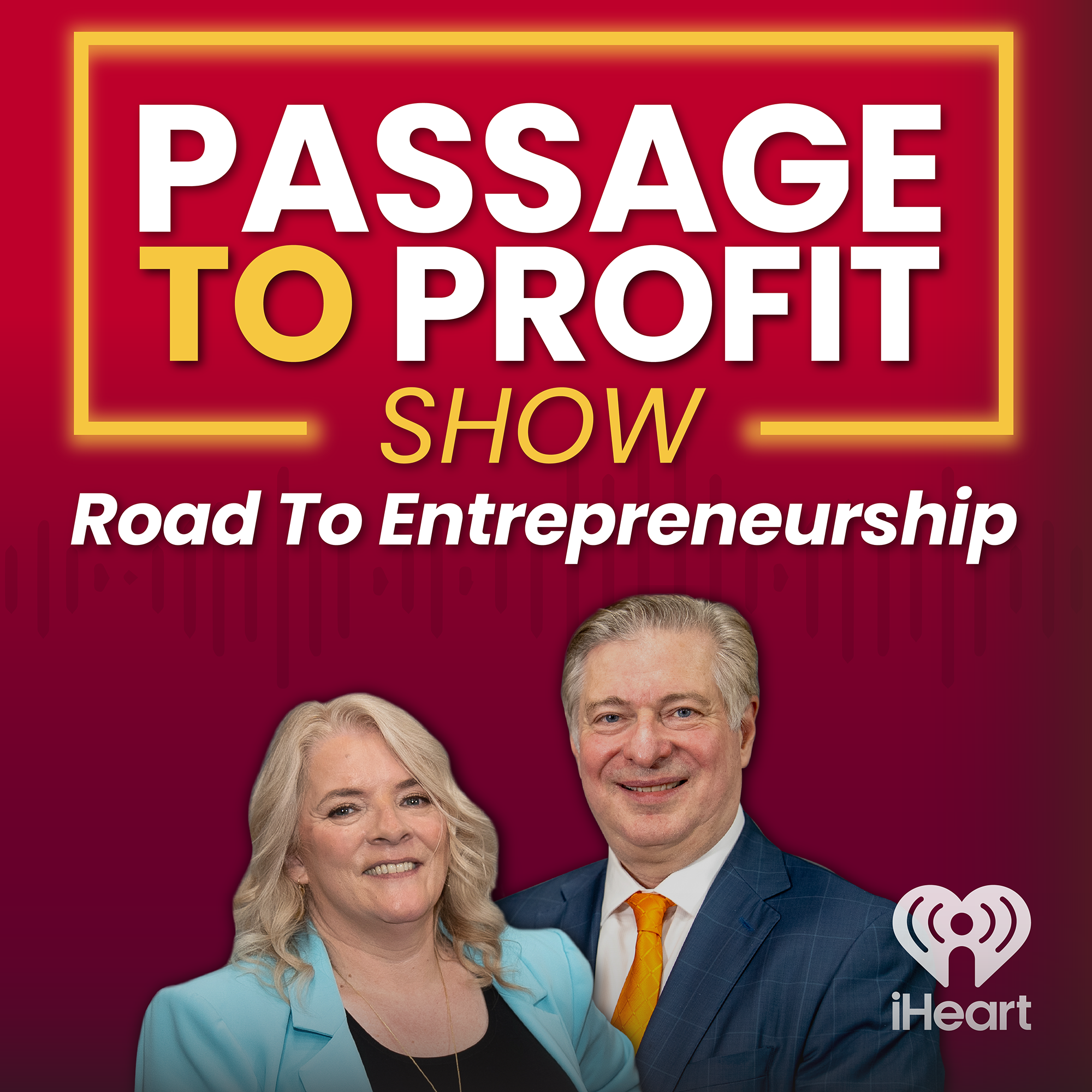
[00:00:16] Speaker C: It's Passage to Profit with Richard and Elizabeth Gearhart.
[00:00:21] Speaker A: I'm Richard Gearhart.
[00:00:22] Speaker D: And I'm Elizabeth Gearhart and we're your host.
[00:00:24] Speaker A: Welcome to Passage to Profit, the road to entrepreneurship. We're joined by Tony award winning Broadway producer Ken Davenant, who has raised over 100 million for the arts and built one of the fastest growing theatrical companies in America. And you'll find out what entrepreneurs can learn from the business of show business.
[00:00:44] Speaker D: And we also have other amazing presenters. Dominic Forth, CEO of Thought Leaders of America and founder of TV bookers. So how hard is it to get on TV these days? He can guarantee you national TV interviews and tell you why a single appearance in the right place can suddenly change how the entire world sees you. And after Dominic, we have Stacey Iltis and Carrie Schroeder. They transformed Fly Dance Fitness into one of the fastest growing fitness franchises in the nation. And you'll find out the secret to their success has nothing to do with fitness after all.
[00:01:21] Speaker A: And on top of all that, you'll hear about their secrets for success.
[00:01:25] Speaker D: And later on, we'll hear from our friend Alicia Morrissey, a great, great jazz singer. And we've got secrets of the entrepreneurial mind.
[00:01:32] Speaker A: But first, it's time for your new business journey. We like to ask our panel, when you look back, what was the one decision or moment that most changed the trajectory of your business and what did it cost you to make that decision? Welcome to the show. Ken, what was the one decision that you made that changed the trajectory of your business?
[00:01:53] Speaker C: My first show was a very tiny show called the awesome 80s prom that I opened off Broadway. Broadway in 2004. It was a one night of the week show. I did everything. I sold the tickets. The group sales line was my home apartment number. I took the tickets, I directed the show, I wrote the show.
I was the house. I did everything. I always say that Broadway producers are just like any founder of a startup. And for the first three months, just like most startups, all we did was lose money, just a lot, a lot of money, week after week after week.
But what was interesting to me is that the audience was having an amazing time. They were losing their mind at the show. They were going crazy. I was getting a lot of people that I really respected and to see it going, do I have something here? And they were like, I just had the best time. The best time, the best time. But it was not showing up on the bottom line. And then I was. I ran out of money. That's it. I was on my therapist's couch. I was crying my eyes out saying, I know I have something here, but I have no money left.
And I was working with an advertising agency at the time, and they recommended all these. Here's what you should do. Spend money here. Da, da, da, da, da. And I, in a vulnerable moment, I said, I just came from my shrink's office, and I was in tears because I have no more money left. I have nothing. And the advice I got from this executive who looked right me in the eye and said, then stop advertising.
Don't spend any money, and just get as many people in to see that show as possible.
I went home that day, and I gave away so many tickets, I couldn't stop. Like, I literally was just emailing everybody I know, going to banks and going to insurance companies where I thought my audience was.
And we were a huge bachelorette party destination. So I was going to a wedding show, just giving tickets away like crazy. And I think one of the problems with entrepreneurs, we build a product and we so don't want to give it away because it's so valuable to us.
I just gave the thing away. I filled the next few weeks of performances, and literally the moment after that, all of a sudden, we started becoming profitable with no money.
But the word of mouth started that way.
[00:04:07] Speaker A: Awesome. Dominic, welcome to the show. What was the most transformative moment in your business that changed its trajectory?
[00:04:16] Speaker E: Well, I can certainly relate to Ken's story. When you're launching a business, you're full of this optimism and enthusiasm.
And I remember when we launched the TV bookers, we surveyed 10 entrepreneurs, and we said, would you do this? And four immediately said, yes. Yeah, we want to be booked on tv. This sounds great. Two said maybe, and then four said no.
And so we looked at each other, my business partner and I, and we said, that's great. That's a 40% close ratio, potentially increasing to 60%. This is going to be awesome.
And so we launched right at the end of 2022, and. And you can guess what happens next.
Those four people, they were just like, oh, no, sorry, we're not ready yet. No, yeah, we will do it, but not in the future.
And so we learned very quickly that, to Ken's point, that you've just got to be out having those conversations and really, brute force in some ways to get off the ground.
And I've heard the analogy before. I'm sure other people on the Today have heard this as well, where, you know, when a airplane takes off, it uses the most fuel.
And when you get to altitude and cruise control, that's where you can take your foot off the gas.
And so for me, that was a real sort of rude awakening into the business world because I'd always had a corporate nine to five.
You know, I could take two hour lunch breaks or even three hour lunch breaks if I needed to.
And so it was just realizing that you have to speak to as many people as possible, really, because we, the people we did end up booking had great experiences, but not enough people are hearing about us. And so how do you do that? And so I think the power of referrals is so strong and the power of building trust and credibility.
And then that's ultimately what then sent me on this journey to become CEO of Thought Leaders America. Because now we build trust at scale as well. But that's awesome. Yeah. But I'd recommend to people, never underestimate how much hard work is needed at the beginning.
[00:06:14] Speaker A: Yeah, absolutely. Stacy and Carrie, what about you? What was the decision that transformed your business?
[00:06:20] Speaker F: Well, I'm going to take you back to 2019, when we became business partners.
And six months after that, the pandemic hit. And we had no business experience, really no guidance when we took over this business.
But what we did have was some social media and just like Ken had said, not spending any money on advertising.
When we reopened our doors, we went straight on social media and started filming our classes. And people really, they saw themselves on their own phones at home. Cause everybody was at home at the time. They couldn't go anywhere else. But we were reopening sooner than a lot of other states were. So people were able to see themselves in class and they wanted this. So then we decided to franchise.
[00:07:06] Speaker G: And that was a big leap. It was something when we took over that we saw kind of like, it seemed like a pipe dream at the time, like, oh, that would be really cool if we could franchise this one day.
But the catalyst was when we started going viral on social media.
And it really was one of those things, like, you know, we talked about it and so we need to take this risk or I'm not sure if we ever. Or like when we're going to get this opportunity again because we were getting so many emails and messages and how can I do this? Where is this? You know, they didn't even know. Like, we were just In Sarasota. Like, they already figured maybe this is something already offered all across the country.
[00:07:44] Speaker F: It was like a movie. Like our. Our email would. Ding, ding, ding, ding, ding.
This is crazy.
[00:07:50] Speaker G: And so it was one of those things that, like, wow, well, we have no idea what we're doing with this. And, you know, we. It really was just something that we felt like we need to strike while the iron is hot, so they say. And so we got a referral for a franchise attorney even. That was a whole journey and taking that risk and then realizing that we needed to get a different franchise attorney, you know, even after spending a year with them, you know, getting our documents in order, so really finding the right people in our corner that if we didn't know exactly what it was that we needed, since there were some things, of course, with experience that we lacked and to finding those people to have in your corner to help build that strong, like, very small but mighty team.
[00:08:34] Speaker A: That's great. Elizabeth, what is the one decision or moment that was important for your business?
[00:08:39] Speaker D: Well, I actually had a really negative moment.
We launched the business in April. I had a great grand opening, and then the city and the utilities decided that they were going to shut down our street and the streets around us and do a whole bunch of really loud work right outside the podcast studio all spring, summer, and fall.
And so I basically just kind of. I didn't do any marketing. How could I. One mistake I made was I shut down the Google business page. I said we were temporarily closed, but I opened that back up. So I focused more on speaking and teaching at that point. And now we'll see if I can recover from that.
[00:09:19] Speaker A: Yeah, well, I think you're on your way. You know, one of the moments that transformed Gerhart Law was Covid. And before COVID everybody worked in the same office environment.
After Covid, everybody went remote. And it really changed the flavor and the nature of the practice. It changed the way we interacted with our clients, and it changed the way we interacted with our team. But we learned through that process and we're able to now engage attorneys to work for us from all different parts of the country where that wouldn't have been possible before. So it was definitely a transformational moment for us.
So what if I told you that Broadway isn't just bright lights and standing ovations? It's high stakes entrepreneurship where millions are raised, fortunes are made and lost, and producers think more like venture capitalists than artists. We're joined with our guest, Ken Davenport, the Tony Award winning producer who's raised over $100 million for the stage and calls Broadway investing the riskiest investment you'll love to make. Get ready to pull back the curtain on the real business behind the show. And why the next Hamilton might be closer than you think. So why do some Broadway shows succeed and others fail?
[00:10:33] Speaker C: Well, if I had the answer to that, I would have every single Hamilton that has ever been.
You know, that's the fun part of what we do. And actually the fun part, of course, any business. I mean, there is. You know, I always say that entrepreneurship is the, like, the NASCAR of business. Right? Like, we're in it because we like the thrill of it. We don't actually know what's gonna work, but we love getting behind something that we really feel will change the world. I think every entrepreneur.
That's why we get into this. And yes, hopefully we make some money in the process.
So what makes a Broadway show a hit and whatnot? The audience. Just like any other business, the customer decides what they want to use and what they don't wanna use.
And that can change every day. I've developed shows that I have resonated that I knew would resonate with an audience. But frankly, by the time the show got to Broadway several years later, the audience's appetites had changed. Right. This happens. This is why we always have to be thinking ahead and why I always think of that famous Henry Ford quote, if I asked my audience what they wanted, they would have said, faster horses.
I am trying to think about what my audiences want tomorrow, not just today.
You know, there's a lot of reasons that go into the moneyballing of Broadway. But at the end of the day, what makes a show a hit or not? An audience. And I never know whether it's gonna work until that curtain goes up on that opening night performance.
[00:12:03] Speaker A: So I just find that's really, you know, fascinating. And I appreciate how it's difficult to predict what's gonna work and what's not. On the other hand, everybody involved is a professional. You have huge amounts of talent. You have amazing writers, costume designers, set designers, amazing actors. And so you have all of these talented people who are working 110% in order to make it all work out, yet you still don't know whether it's going to work out or it's not. And so why is it so unpredictable?
[00:12:38] Speaker C: Well, listen, even Warren Buffett has picked some losers. I mean, we can do all the research and have all the most highly educated people saying, yes, this is going to work, and then enron happens. Right? Like, there are just things sometimes that we can't predict. And then there's frankly just some really good salespeople out there that are selling something that they shouldn't be selling.
But look, theater specifically is one of the most collaborative art forms there is on the planet. Right. I often say it's like trying to get 17 people to paint the Mona Lisa. Right? You have a writer, you have a director, you have a set designer, you have a lighting designer. You have all these different people, and they all have to be firing on all cylinders in order to pull it off collaboratively. That's why I'm in the business. I was an only child. I didn't have many friends. I was longing to be around a tribe of people.
That's what the theater is. Right. When I started working in the theater as a kid, I was like, oh, my gosh, this is what I want to be in this family. But everyone has to be doing 110%, as you said. And then that thing, even if it's great, has to be great for that audience at that time. It has to be built in an economic way. There's so many factors that have to come into play in order to pull that off.
[00:13:56] Speaker D: Well, you have produced a huge number of very successful shows, and I noticed that you seem to like to do comedies. Is that right?
[00:14:05] Speaker C: I like to do shows that entertain and inspire. Like, that's my goal. I like stories about ordinary people doing extraordinary things.
Like, it's probably no surprise if I tell, like, I am producing a musical based on Joy Mangano's life. She was the subject of the movie Joy.
We're doing a musical about her life. She invented the miracle mop. She went on QVC herself even when everyone told her she's crazy. It's the story of an entrepreneur. Right.
[00:14:33] Speaker D: Definitely gonna go see that one. I love that movie.
[00:14:36] Speaker C: Yes. Well, wait till you see the musical. So, like, that's what I'm attracted to. Entertaining and inspiring shows that make you have a great time. And then when you leave, you're inspired. You get a big smile on your face. You're filled with joy, and you want to spread that joy however you can.
[00:14:51] Speaker A: So does a successful movie usually translate into a successful Broadway show? Or are all the elements so different that you don't know how it's going to turn out?
[00:15:01] Speaker C: That's a very good question. Because you would think, oh, just because a show is coming from a movie, that it's bound to be a hit because of the success factor of the movie. But no, it's not the case. Remember Big the Movie? Do you remember Big the Musical?
[00:15:15] Speaker A: No, because it was a big flop.
[00:15:18] Speaker C: I remember going, oh my gosh, this is going to be great. It has a little fantasy to it. It's going to be perf. One of the reasons why it didn't work is because the movie was so big and because it was so dependent on Tom Hanks.
Right. How can you beat that performance and that movie? Very difficult. So arguably the more successful the movie, and certainly the more dependent the movie is on a star, I believe the less likely it's going to work. Here now I am developing a musical based on the movie Slumdog Millionaire. A huge awareness, right? Best musical winner, best song, all of that. But those actors weren't stars at the time. The story was the star. Those are the ones that make it. Billy Elliot, the musical was so good, people now forget that it was a movie. Full Monty, great musical, the Producers. It was about Broadway, so the musical itself seemed to only make sense.
So it's not all of them. The Broadway right outside my window here is littered with flop musicals that were based on very successful movies.
[00:16:26] Speaker D: So we saw Sting's musical, the Last Ship, and it closed right away. But I thought I heard something that it's opening again.
[00:16:34] Speaker C: They're doing it at the Met as a show.
[00:16:37] Speaker D: As a Broadway type show.
[00:16:38] Speaker C: As a musical. Yeah, musical, opera, which it sort of was, if you remember it.
[00:16:43] Speaker D: Yeah. Oh, that's interesting.
So you can revive something that has died. I was surprised.
[00:16:49] Speaker C: Look, the. One of the most successful musicals of all time is Chicago. It's been running for how many years now? 30 something years. That's not the original production, right? The original production was produced decades before it. It's a revival of a musical and often shows again. Perfect example. The audience wasn't ready for it as they were in the 90s when the revival came out. And if you know the story of Chicago, it's about someone that quote, unquote, gets away with murder for a justifiable reason and the lawyer who gets the person out of it. The revival debuted right around the time of the O.J. trial. It was something that all of a sudden, razzle dazzle. Give em the old razzle dazzle and maybe we can get you off.
So it resonated a certain way that it didn't resonate the 20, 30 years before that.
[00:17:39] Speaker A: So one of the themes that we seem to be capturing in the show is how people and how Broadway shows are unpredictable. So there's success and then there's failure. How do the people in Broadway or working in Broadway handle the failure? How do they maintain their resilience? Putting their heart and soul for years into a production and then having it close in a couple of weeks? And then how do you bounce back from that when it happens?
[00:18:07] Speaker C: Gosh, it's one of the most challenging things for anyone working in the theater because everybody is an entrepreneur. The actors are. They have their own business, right?
No one tells them to get out of bed and go to the office every day. There's no guaranteed paycheck. Like all that stuff when they're trying to get a show. And then they get a show. Oh my gosh, I finally got a show and I finally get health insurance and I finally get all the things and then, oops, it's big the musical and I'm out of a job two months later, right? Oh, no, I'm back to it now I got to audition, now I got to advertise myself now, like all of the things that we do as entrepreneurs and the rejection rate is high, right? So like you've got to build up a very successful ego in order to be able to get back in line. It's like entrepreneurs trying to raise money. It's like any of the things that we do as small and medium sized
[00:18:55] Speaker D: business people talking about raising money. You have a book, Broadway Investing 101, how to Make Theater and yes, even make money, that was published in 2019.
I'm just curious, what do investors look for when they're looking to invest in a show?
[00:19:11] Speaker C: Broadway investing qualifies in an asset class that is alternative investing or really passion investing. You don't invest in Broadway theater. And I will just tell this to anyone out there who is ever thought about it. If you don't like the theater, do not invest in the theater. Right? Like it's that simple. Investing in Broadway is like investing in art, wine, thoroughbred, horse racing, restaurants, et cetera. You gotta love it. Now, I'm a big believer that if you achieve a certain level of net worth, you should be doing some of this investing. Because frankly, if you hit a piece of art, if you hit a thoroughbred, the returns are enormous. And you're also doing something you love at the same time.
You're involved in the process. The real reason people get involved investing in the theater is they want to be involved in the process of making theater, making art. They believe in it, like I do. Look, I believe the world is a better place if there's more theater in it, period.
So people that invest in it usually want to get behind that. Then it's my job to say, okay, great, we're all in this, we're making a great show. We're going to get it all over the world. The message of the authors are going to be heard.
And at the same time now I'm going to work really hard for you to get your money back and hopefully turn a profit.
[00:20:27] Speaker A: Has it ever occurred where somebody is putting a lot of money into the show and they want creative control over what happens during the program? Or are they usually hands off?
[00:20:38] Speaker C: No, listen, and we give, I should say this, we give access and level of input to people, depending on their experience, knowledge, et cetera, and of course, the level of their investment.
I like to say that, you know, I'm the chairperson of the board, I'm the founder of the startup, I'm the CEO, but I have board members. Those board members are the people that I assemble that usually raise or invest the most amount of money and that I can seek the counsel of. At the end of the day, the CEO is going to make the decision, period. But I love getting input from people around me and I allow all my investors give notes, come to a room like all that stuff. We give them that access because I'm a big believer. You never know where the next great idea is going to come from.
[00:21:20] Speaker D: You really are a theater lover. You're really into this. And you created a best selling Broadway board game, Be a Broadway Star. That sounds like so much fun. What made you think of doing that? That was kind of like an offshoot of what you're doing. Did you make money from that? It's so funny.
[00:21:37] Speaker C: Yeah, you know, that's been fine over the years, but I think the best projects that we come up with are the ones where it's not about making money and then hopefully you make money. That's the thing. You know, the. Every time I've set out and said I'm gonna make money with this, it's never worked. That's why I believe everything that entrepreneurs should do should be based on something you love and something you believe in. And that's how the board game was created.
My girlfriend at the time, who's now my wife, came home from a party with a bunch of theater people. And you're gonna hear the basic principles of all entrepreneurship in this story.
She came home and I said, what'd you do? And she said, we played the game apples to apples.
And I said, what is a group of 20 something theater people playing apples to apples? Why aren't they playing a Broadway game? Then I went to Google and googled Broadway board game and there were zero. So I said, I'm gonna fill a need. I'm gonna make a game for I know a community of people that if they had the thing, that's what they would do.
So it's like, look. I looked for competitors. There were none. It was an empty space. I knew I had an experience, authority. I never made a board game in my entire life. I googled next, how do I make a board game? And I went through the steps and I made a board game. And that was, you know, 15 years ago and it's still one of the best selling Broadway board games on Amazon.
[00:23:05] Speaker A: That sounds great. We're here with Ken Davenport, the Tony award winning producer. We have to take a break, but we'll be back right after this.
[00:23:12] Speaker H: You hear that? That's the sound of uncertainty lurking under your hood. You know the feeling? I know I do. That sudden sinking sensation when you see a check engine light or your car unexpectedly breaks down and you're faced with sky high repair bills. It's time to shield against unexpected repairs with Car Shield. Car Shield is a mirror America's most trusted auto protection company and has an A rating with the Better Business Bureau. Don't let the fear of a breakdown keep you up at night. Trust the Shield Car Shield. And say goodbye to terrifying repair bills and hello to peace of mind. Your plan also comes with 24. 7 roadside assistance, courtesy towing, rental car options, and so much more. Don't wait till it's too late. Call Car Shield now before a breakdown. Protect your wallet. Protect. Protect your car with Car Shield. Get our best protection ever. Call now. You'll thank me later. 8002-6121-7680-0261-2176. That's 800-261-2176.
[00:24:11] Speaker B: Have you outgrown your health insurance plan or just not happy with what you're paying for? The number one reason we all change our health insurance is price. Are you paying too much for your health insurance? Would you like to have better coverage at a better rate or at little or no cost to you? Your life needs are always changing. But have you done anything to improve your health insurance for you and your family? Health insurance laws and coverage are always changing and getting better. It's impossible to do all the research yourself, but now it's all done for you for free. So regardless, regardless of your age or medical condition, take a few minutes right now and find out if you can save money or even qualify for zero cost health insurance in your state.
[00:24:57] Speaker H: Call now paid for by cheaper health insurance. 800-6521-4708-0652-1470.
800-652-1470. That's 800-652-1470.
[00:25:12] Speaker C: Now back to passage to profit. Once again, Richard and Elizabeth Gearhart and
[00:25:16] Speaker D: our special guest, Ken Davenport. He is an amazing Broadway producer, but that's not all he does. We've been talking to him about how you get a show on Broadway, what investors look for, but now I want to talk to him about his podcast and his marketing style. So he has a very innovative marketing style. He's been on the front page of the New York Times twice.
Really, Ken? Like, how did you do that? What is your innovative style?
[00:25:43] Speaker C: Well, the first press agent I ever had said to me that your goal as a producer should be to get off the theater pages. So in other words, speaking more broadly, your goal as a business owner should be to get out of the section that you are most likely going to be featured in, right? So if you're a real estate agent, you don't want to be in the real estate section. You want to be in lifestyle. You want to be whatever it is.
And I will never forget that. And so everything I do is try to come up with something so unique and so different and so special that a broader audience wants to hear about it. The two articles that you're talking about that appeared on a one of the New York Times, I crowdfunded a Broadway musical in 2011.
So my revival of Godspell, we raised $5 million, as little as $1,000 at a time from over 700 people. And that was when, before crowdfunding was really a thing. It was pre jobs act, all of this, right?
Micro investors on Broadway never heard of before. In fact, the world thought you needed 100,000, $250,000 to invest on Broadway. That was number one. Number two, the second one was I was doing research for a Broadway show. I incorporated dial testing, the same testing that movies use or theme parks or debates. I put people with dials at a Broadway show and let them like it, hate it, et cetera.
Never been done before.
I have this formula, actually. I call it dramatic marketing.
And what I do is say, what is my show about, right? For Godspell, it was about bringing a community of people together. That's what the authors told me. And then I couple that with what hasn't been done before.
And that is usually what does it so it's organic to the story.
And then I add something that's never been done before.
The most famous one I did, and I've done about 20 or 30 of these. I had a show called My First Time. It's about exactly what you think it's about. It was my answer to the Vagina Monologues. And it was real stories that people. About people's first sexual experience.
Something that almost every single person on this planet has in common, if you think about it. And while I was doing the research for this show, I discovered all sorts of statistics and interesting information that I felt people must here to help demystify this process, for people to understand it and realize that a lot of people were making choices, frankly, that they shouldn't make, or in some cases, weren't making the choice themselves. So I was saying to myself as I was creating the show, you know, who should see this show first?
People who have never had sex before as an educational tool.
[00:28:22] Speaker D: Yeah.
[00:28:23] Speaker C: So then as we were getting towards the first preview, I said, well, that's what my show is about. That's its mission. What hasn't been done before? Well, that's what I believe in. Well, why don't I just give away free tickets to virgins? So I announced a free ticket for virgins policy. I probably wouldn't do this in 2026, by the way.
[00:28:43] Speaker A: I was going to say, all of this seems to take a lot of courage.
[00:28:48] Speaker C: Everything we do is courage. But that one press release not only appeared off the theater pages, but the Associated Press picked it up and put it out to the entire world. It was on the homepage of cnn, on the homepage of msnbc, all the major television networks. We had a line out the door and we had television crews covering it. And Jay Leno, host of the Tonight show at the time, did a joke about it in his monologue, like, these are the kind of special, unique, weird things that get the kind of attention that we all want. And yeah, it takes courage and guts, but at the same time. Does it. The crazy thing is, I've done another hundred of those that you've never heard of that all flopped. It's just sort of like spitting and throwing stuff out into the world that are unique and hoping you catch the wave.
[00:29:40] Speaker A: I do think you have to go there in the first place. And, you know, and I think it does take a lot of courage to go there. Right.
[00:29:48] Speaker C: I did, you know, the other one that got a tremendous amount of attention, my production of Once on this island had a Goat in it. And like a live goat and live chickens. It was set on an island.
[00:29:58] Speaker A: So, okay.
[00:29:59] Speaker C: You were all like, okay, that's interesting. Except when I did a focus group about the show, everyone at the focus group was talking about the goat. Even the people that had not seen the show, they had heard about the goat. I did two things immediately. Every piece of advertising we did on the show after that, the goat was featured in it. There was a picture of the goat to remind people, oh, that's the show with the goat. And the second thing I did, I still am in the doghouse about this, but we were up for a Tony Award that year. In fact, we won the Tony Award for that year. And I said to my wife, I'm so sorry, but I can't walk you down the red carpet into the Tony Awards. And she was like, who are you taking besides your wife to the Tony Awards? And I said, I'm walking the goat down the red carpet of the Tony Awards.
[00:30:44] Speaker D: Like, the goat.
[00:30:45] Speaker E: And if you.
[00:30:45] Speaker A: She lost out to the goat. How did she handle that?
[00:30:48] Speaker C: And she is the goat, by the way. She is the greatest of all time.
Because she said, of course, this is what you do. And if you Google Ken Davenport goat, you will see the results. And they went. All those photos went all over the place.
It's what my show was about, what the audience thought it was about. Again, thinking about them first. And two, what hadn't been done before is no one had ever walked a goat down the red carpet.
[00:31:14] Speaker A: So we have time for one more question in this segment. Ken and I wanted to ask you, what do you want to leave behind as your legacy?
[00:31:21] Speaker C: My gosh, I don't want to think about my legacy right now. I've got too much I want to do. This is going to sound so simple, but I want to leave smiles on people's faces. I mean, like, the greatest moments of my producing career are when I go to see my shows and I actually don't watch what's happening on the stage. I especially go to the last five minutes, and then I turn around and look at the audience, and I watch the smiles, the cheers, the laughter, the tears, like, all of it. And I know I've moved an audience member along with the actors and the authors and everybody. We've moved an audience member in the same way I was moved when I was 16 years old and saw Les Mis and said, I want to do that. I want to leave that. And I'm sure our other guests today, whether it's fitness, whether it's booking people on television. Whatever it is, it's about watching your clients and the audience achieve success. Like what we've done makes them feel better, be better, be healthier, achieve success. And for me, it's entertain and inspire. When I feel that they're entertained and inspired, I'm fulfilled. And I just hope I leave a whole lot of people out there like, oh, gosh, that show made me feel so good. And now I'm going to go home and be in a better mood and want to do something else and hug my kids and just be a happier, healthier person.
[00:32:41] Speaker A: Well, thank you so much for that. And I think you'll leave an enduring legacy in many, many ways. And we appreciate all that you're doing. How can people find out more about you?
[00:32:51] Speaker C: Well, because of the goat incident, you can just Google my name and you'll find me. But the best way, if you have any interest in the business of Broadway or what we do, en Davenport B Way is my Instagram handle, and that's the best way to keep up with me and everything I've got going on.
[00:33:08] Speaker A: Thank you, Ken Passage to Profit with Richard and Elizabeth Gerhardt.
[00:33:12] Speaker D: Now it is time for AI Use Cases Business Owners Roundtable. So I'm going to ask everybody here for one way that they're using AI in their business. Ken Davenport, what is one way that you are using AI in your business today?
[00:33:26] Speaker C: We don't do anything that threatens to replace art or the artist. I use it for a tremendous amount of research and of course, trying to speed up the conversion process for ticketing purchases and provide people with the information they need.
[00:33:39] Speaker D: Great. Dominic. Fourth, what is one way that you're using AI in your business today?
[00:33:43] Speaker E: What we've been doing behind the scenes is using AI to analyze over 4 million podcast shows. You know, shows that have performed well. Why did they perform well? And ultimately increase the likelihood that someone not only gets balked, but what really matters is how they resonate with the audience when they do get booked.
[00:34:02] Speaker D: That's amazing. Yeah. And we'll come back and talk more about all of this, but I want to go to Stacy Iltis and Carrie Schroeder. You can each speak, though. How are you using AI in your business?
[00:34:13] Speaker G: We find that it's been really helpful, especially as we're growing our franchise and we have 23 franchisees at the moment. And it's really just helped us with getting to really elaborate and expand our resources for them. And that's really been something that's important to us as we grow the franchise.
[00:34:33] Speaker D: Absolutely. Richard Gearhart.
[00:34:35] Speaker A: So, yeah, I'm just going to follow on a couple of themes that Dominic and Stacy raised and authenticity. I think there's going to be a trend in 2026 and 2027 where people are going to be hungry for real, authentic audiences. Things like streaming and Broadway shows and live performances.
When I look at YouTube, there's so much AI generated content out there. And a lot of the people that I've been talking with have said there's going to be a swing back away from that with a focus more on live human connection. And so, of course, AI is going to play a role in some entertainment, cinematically. I think it plays a big role in movies that are made now, and we'll continue to do that. But I also think people see it and they see that it's not authentic and there's going to be a part of them that really wants that live authenticity. I mean, you can't replicate a Broadway production with AI, at least not yet.
[00:35:37] Speaker D: Well, I hope never. I don't want to see robots dancing around the stage, please. But for me, I use it for research and I get into long discussions with Google Gemini mostly, but I talk to the other ones, too. And right now I'm really trying to pin it down on how it decides which content to pull into an AI summary and. And how it decides which content to cite. And Gearhart Law is lucky because we've been cited. Well, I don't think it's just luck. I think it's all the video that we do, and it specifically answered me with one of Richard's videos that he did on a very specific topic that was AI and life sciences. And so I'm constantly doing research on that. And I think that the more I use it and the more Google Gemini I have, the personalization with Google Gemini, the better answers it gives me. And I keep asking it the same questions, just phrase different ways, and it feels like I go a little deeper each time and it'll give me a little more information than it did the last time.
So I think one of the tricks to using AI is not just take the first answer, it gives you, like rephrase your query, go a little deeper with your query and really dig with it and you will get better answers. So I've gotten some answers on that. It's really interesting because we can use the Gearhart Law data that we have to kind of figure out what's going on with this. And we are getting cited. People are calling Richard and saying they found him on ChatGPT and on Google Gemini and actually the podcast, this show is a big piece of that, helping us show up in those results. I do want to throw this one little clue out, though. The other thing that's helping us show up in those results are that we have reviews on our Google Business page. You will not show up as a cited source if you do not have Google reviews on your Google Business page. But anyway, I want to open this up to the floor. Does anybody want to jump in with some observations or some other ways they're using it?
[00:37:31] Speaker E: I was just going to say, if you're using it in that way, setting up specific agents for tasks can be really helpful. Here's the topic. How would you approach this interview? And so we just go into those conversations with producers, so much more informed, or we can push back on the clients, but you can have different roles previously there. So that's helped us.
[00:37:50] Speaker D: Yeah, that's a great way to use it. Say, take on the role of this.
I've, I've heard people doing that too. Yeah. And that, that I've used that for presentations like what are people going to ask? And it's really useful.
[00:38:02] Speaker E: Yep. Social media Business Coach Financial.
I mean, you can go through the whole. Alex Hormozi. I've done that before.
[00:38:09] Speaker A: Or, you know, I think the predictive value though, of AI is kind of overestimated. You know, we've taken transcripts from social media content and asked it to predict, you know, how well it's going to do.
And it's always optimistic.
[00:38:25] Speaker D: ChatGPT is always optimistic.
[00:38:28] Speaker A: And so it'll say, oh, if you say this or you, you put this hook in here, then you can expect, you know, this kind of reaction. And if you do it in real life, it just doesn't seem to work out, you know, quite that way. So I imagine over time it'll get better, but I'm not really sure it's there yet.
[00:38:47] Speaker D: Coming up, we're going to find out why companies invest in intellectual property even when their business is contracting. This is the Passage to Profit show with Richard and Elizabeth Gearhart and our special guest, Ken Davenport. We'll be right back.
[00:39:00] Speaker I: Here's a real life story that affects 50% of all of us out there. It's called divorce. If you've gotten divorced and now you're struggling to pay your bills and your credit card debts are clear, completely out of control, you need to call this special debt relief hotline. Right now. We help people with all kinds of money problems caused by different life challenges, a divorce, a job loss, even heavy medical bills. All these life events can sometimes financially stress you out and cause you to get out of control. We help people get their lives back by showing them ways to consolidate and reduce their debt, in some cases for a fraction of what they owe. If your credit card balances are more than $10,000, call us and learn how to reduce your credit card bills and monthly payments. Now here's our number, paid for by debt dot com.
[00:39:45] Speaker H: Call now at 8008-1008-5780-0810-0857.
800-810-0857. That's 800-810-0857. Do you hear that? That's the sound of uncertainty lurking under your hood. You know the feeling? I know I do. That sudden sinking sensation when you see a check engine light or your car unexpectedly breaks down and you're faced with sky high repair bills. It's time to shield against unexpected repairs with Car Shield. Car Shield is America's most trusted auto protection company and has an A rating with the Better Business Bureau. Don't let the fear of a breakdown keep you up at night. Trust the Shield, Car Shield and safety. Say goodbye to terrifying repair bills and hello to peace of mind. Your plan also comes with 24. 7 roadside assistance, courtesy towing, rental car options, and so much more. Don't wait till it's too late. Call CarShield now before a breakdown. Protect your wallet. Protect your car with Car Shield. Get our best protection ever. Call now. You'll thank me later. 800-261-217-6802.
That's 800-261-2176.
[00:41:00] Speaker C: Passage to profit continues with Richard and Elizabeth Gearhart.
[00:41:04] Speaker A: Quick shout out to our friends at KACT 1320am in Odessa, Midland, Texas. Thanks for listening and if you're new here, Passage to Profit is a top ranked entrepreneurial podcast and radio show heard in 38 markets. It's a place where founders share what really works. And now it's time for IP News.
When a business slows down, most companies cut spending. But some companies do the exact opposite. They double down on innovation and patents. And that's exactly what we're seeing right now with Global Automated Stellantis, the company behind brands like Jeep, Chrysler, Dodge and Fiat. According to a Reuters report. Even the company faces economic pressure and softer sales, in part due to the auto market. Its innovation leadership says that they plan to keep filing patents aggressively. Now, that might sound counterintuitive when companies tighten their budgets, research and intellectual property are often some of the first things to get cut.
[00:42:03] Speaker D: But Stellantis is taking the opposite approach. Instead of pulling back, they see this moment as an opportunity to strengthen their long term competitive position. The thinking is simple. Technology cycles don't just stop just because the economy slows down. And if you keep innovating and keep protecting those innovations, you may emerge from the downturn much stronger than your competitors who paused investment.
[00:42:30] Speaker A: And there's also a strategic element to this timing. Economic downturns can actually be a powerful moment to build intellectual property. When competitors are cutting budgets and slowing research, companies that keep investing can quietly build a very strong patent portfolio. And when the market rebounds, those patents can give them a major advantage. So while it may be a bit unusual to increase innovation efforts during a business continuation, historically, some of the most successful companies have done exactly that.
[00:42:57] Speaker D: And there's a lesson here for entrepreneurs and founders as well. When cash flow tightens, intellectual property often gets pushed to the bottom of the priority list. But the long term value of a company is often tied to the technology it owns and protects. Companies that continue building and protecting their innovations even during uncertain times can come out of the downturn with stronger positioning and more valuable assets.
[00:43:22] Speaker A: So innovation creates opportunities, but patents help secure that opportunity. The Stellantis strategy highlights an important point. The companies that keep investing in technology during the hardest moments are often the ones best positioned to lead when the economy turns around. And if you have an idea or an invention that you want to protect, Team at Gearhart Law helps entrepreneurs turn ideas into protected assets. You can visit learn more about Patents.com or learn more about Trademarks.com or a free consultation and practical guides to get you started. And later. Coming up, we have secrets of the entrepreneurial what successful founders think that most people never see.
[00:44:03] Speaker D: Okay, and now we are on to our next presenter, Dominic Forth. He helps people get on tv. How do you do that?
[00:44:12] Speaker E: Well, my story started really about 20 years ago. I've been in media for over 20 years here in the states and worked for just a number of stations across the US So everywhere from Kansas City to Tampa Bay to San Francisco, Tulsa, Oklahoma, Denver, Colorado.
And I feel very fortunate. I've worked with some exceptional media people and went into a consulting role where that then grew to over 40 TV stations across the US everywhere, small markets like Medford, Oregon, in between.
And so I had these relationships and I didn't realize how valuable those relationships were until I had a friend who was trying to get booked on TV to promote a new book. And the book was about psychedelics. In fact, the title of the book was called Psychedelics for Everyone. And so you can imagine, you can
[00:45:03] Speaker A: imagine the news producers even for me, or especially for me.
[00:45:11] Speaker E: Yeah. And so he couldn't get booked. And I said, well, let me explain, because this wasn't about taking, you know, magic mushrooms at music festivals. It was about, like, treating clinical anxiety.
[00:45:21] Speaker A: I would still like some if you can.
[00:45:26] Speaker E: So we went, I explained I had producers who I'm friends with, and I said, hey, I'm trying to get this story because it's going to really help veterans especially.
And they're like, oh, is that what this is about?
And so I went back and booked him on three shows. And he was like, this is amazing. You can do this. And I was like, well, yeah, I used to work with these people at this station, that station, and so forth. And so that was the end, the beginning of the TV bookers. And, you know, it's just sort of grown from there. But the biggest thing I realized was people didn't want to get booked on tv.
What they really wanted to do was share the story. And so there was so much more that we could do. And, you know, where I grew up near Liverpool, we're all big storytellers. You know, you think of, like packed pubs in the winter, everybody's huddled around with pints swapping stories, kind of back to naval traditions and things like that.
And so I realized that we had to.
That I had to really go on this personal journey to help other people tell their stories.
And so that's now why we work with so many podcasts around the country, radio shows, speaking events, you know, conferences, traditional PR as well. But it all comes back to what is a great story.
That's what ultimately drives what we do, is helping people tell the stories and ultimately transform lives by telling that story.
[00:46:43] Speaker A: So what is a great story?
[00:46:45] Speaker E: Yeah, you know, the three things that we look for is, number one, it has to be audience centric. You know, a lot of people like talking about themselves, but really, what's in it for the audience? Because to be honest, audiences are quite selfish, as Ken, I'm sure you can testify.
And the second piece, though, is to make that more effective, it has to be emotionally engaging. So how do you activate someone so they go from sitting back on the couch to suddenly leaning in and paying attention?
But the third piece, and this is the one that's missed the most often, and you nailed this at the top of the show, is you have to be authentic. And so in a world where attention is quite cheap really. Where clicks are cheap and things like that. Having credibility and trust is priceless. And so that authenticity piece is so important. It's the first thing we work with clients on is how do you come across authentically and sometimes the hardest as well for a lot of people.
[00:47:42] Speaker D: How do you overcome, help people overcome their fear of being on video? Because I have a video podcast studio, Richard, and I have it. And I have people that want to start podcasts and they just hate themselves on video.
And it's really hard to get over that hump of having people be on video. And this is a non threatening atmosphere. It's like nobody else is up here when they're recording.
What do you advise people for that?
[00:48:07] Speaker E: Well, let's take your example. So like, what is it you don't like about. I'd just be curious, like, what is it you don't like when you see yourself on video?
[00:48:14] Speaker D: I don't look nearly as put together as like some of the other people that I see. And I, you know, we all notice our tiny little imperfections. Like I have one friend who's absolutely gorgeous and she says, oh no, you, you filmed my wrong side. And she, she won't do it. I've kind of had to get over that because everything we do is video.
[00:48:33] Speaker G: Right.
[00:48:33] Speaker D: So I just live with it. Yeah, but I don't know how to convince other people that, hey, you look fine on video, you know.
[00:48:39] Speaker E: Yeah. I often start at the root cause of the story itself. So what's the end goal? Is this story going to benefit you or does it benefit the audience? Because often there's a shift there when people realize that this is really going to benefit so many people. How you look becomes really secondary because the message is so important is that you almost, I don't want to say have a duty or responsibility, but think of all the people you can help by telling this story and the impact that you can have and the transformation that you can cause. The other piece is everyone's rooting for you, Your co hosts, the audience. Everybody wants you to be successful. And I think that's often a barrier for people where they feel that they're going to get into this environment. And you know, the old days, people start throwing rotten vegetables and fruit at them and things like that. And it's the opposite. Like everybody wants you to be successful and, and the information you bring, even if you don't say everything flawlessly or you miss, you have five points to talk through, but you only get through to three.
The audience is so grateful for those three things that you did bring up. They're not thinking, oh, two things weren't said because they have no idea of that. So that's the shift we often work with. And I know it's easier said than done.
[00:49:54] Speaker D: Well, no, that's. It's not about you. It's about your audience. And that's exactly the same thing Ken said, too. So that's really great advice. I'm going to use that. Thank you.
[00:50:03] Speaker A: Ken, maybe you have a question here in the sense that you work with professional performers, and so what are some of the things that they would also use to overcome some of those fears?
[00:50:14] Speaker C: The biggest thing that I think performers do is they relentlessly perform.
They are constantly in front of people to get better at it. I'm a big golfer. I have to hit thousands of golf balls in order to improve my golf game just a little bit.
So for those people that are nervous about being on screen or on anything, I think it's just about trying to do it as much as possible. And my favorite thing to show people that are nervous about this is I always ask people, especially if they're Internet savvy, like, who's the biggest YouTuber that you know? Or, like, biggest influencer that you know? And they'll mention someone. And the one that I love to talk about, because I think she built such an amazing brand and was one of the first. Is this Bethany Moto, who is one of the first, like, YouTube makeup tutorial women.
And what you do is you go onto their YouTube channel and scroll all the way down and all the way back to their very first video.
[00:51:19] Speaker D: Yeah, that's a scary thing.
[00:51:20] Speaker C: And it's usually terrible. Like, that's the. That's the fascinating thing to do. And you're like, how. And Bethany's is fascinating to watch because she's a teenager and she's stumbling a little bit. She's finding her place. She's a new artist. She's a new. Like, she doesn't know what she's doing, but she started. She served the tennis ball. She turned her camera on, said, I'm gonna talk about makeup, then go three months ahead, she's a little better.
And then three months ahead, and then three years ahead, and then look at her now, and it's like a. She got better.
[00:51:51] Speaker E: Why?
[00:51:51] Speaker C: She hit a thousand golf balls. It's the same thing. Yeah.
[00:51:55] Speaker E: To piggyback off that. I do feel that imposter syndrome is very, very real. And I also think fear can be a positive thing as well.
Because sometimes when you have that sense of fear and that imposter syndrome, it's really a sign of growth. It shows that you're moving into a new realm, or not realm almost, but new, new role to, you know, try and explain it a bit better. And so I work a lot with clients on embracing that fear.
And to Ken's point about repetition, I think Batman, to be honest, I was on a flight recently and Batman Begins was on, on the plane.
And you talk about someone who embraces his fear. But how does Batman become, you know, ultimately who he does in that movie? Well, it's, it's all the practice and the repetition with the monks.
And there's parts in that movie where he's getting knocked down, he's getting beaten with sticks and all sorts.
And yet in the end, you know, by embracing his fear, we know how the story ends. He then goes on and fights fear itself and turns fear into other people. And so those nerves and those sort of that early fear that you feel is a positive thing. And it's just learning to embrace that because it's a very special stage, especially when you're starting out, you know, on TV for the first time.
[00:53:07] Speaker D: Yeah, I want to shift gears a little bit here. One thing I want to point out is that in Today's world, in 2026, thought leadership and trust and third party validation are hugely important for showing up in Google search and AI searching. And this is a way to establish that, a very good way to establish that. But how do you guarantee 100% placement for people on TV? Like how do you actually get them on there?
[00:53:34] Speaker E: So there's two parts to this. So one is we don't take clients on who aren't going to be able to be booked. That's the first piece we have to shoot people very realistically if they're controversial or political. We don't take political clients. We try and avoid the political sides of things.
So that's the first.
The second is personal relationships. And so quite often will a client will come to us and we'll say, hey, give us seven days. I just need to feel this out with some of our client, some of our contacts to see if this is a fit or not.
And what will happen is often we'll bring a client forward that wants to talk about a certain topic and a producer will say, that's a great topic. I've got two teenage boys back to school's coming up. I think this would work. But would they be willing to tweak the messaging slightly? Because Then we can feature them on this. And then I'll go back to the client and say, is this aligned enough? And that's how we'll get them booked. So it's very heavy on the personal relationships, but it's also so. And this was hard for me at first because I'm a big yes person and really shooting people straight and not taking on clients who aren't a good fit and being honest with them and saying, I'm really sorry that our agency can't take you on. Here's some other options that you can, you know, pursue instead.
[00:54:50] Speaker A: In terms of types of TV shows, are you focused mostly on morning shows or do you work on business shows? Are there particular markets that you work with? Are you looking mostly at local TV versus national tv?
[00:55:05] Speaker E: I'm a huge proponent for local tv. And it's funny because clients come to us and they say, I want to be on Good Morning America. I want to be on, you know, Fox News or cnn. And they've got. They've never had TV experience before.
So I'm like, that's great. So does everybody else. Let's be practical on this and pragmatic. So local news is really powerful because you have a very loyal audience, especially in the mornings and especially for health care professionals. A lot of shows have it mandated by the producers that they need at least one medical segment per each hour programming quite often.
So we're able to put our medical contributors on in, you know, major, major markets like Washington D.C.
in New York. We work with like PIX11, for example.
And then the goal is. And again, this goes back to Ken's point about repetition, getting those thousand reps in. You have to really practice to get to that national level. Unless it's a very unusual story and people have just gone straight into national. Don't get me wrong. But for consistent thought leadership, there are, you know, a lot of tweaks that we have to make with messaging and with delivery. But yet we've placed clients on like Bloomberg, fox news, the CNNs of the world. We've done that. But I would say for anyone listening to this that wants to be on tv, do not diminish the power of local news. Because you could get five or six appearances or even weekly contributor roles on a local affiliate and get tons of reps in versus the person that stands back and says, I'm only doing national. It could be 12 months, it could be 18 months. And meanwhile, the person that's done local now has 25 or even 52 appearances over that time.
[00:56:45] Speaker D: Do you feel like somebody who's been on podcasts or hosted podcasts or has a YouTube channel has a, an advantage over someone who doesn't when it comes to this?
[00:56:54] Speaker E: I definitely do. And I would also really add how powerful podcasts are. In fact, in some ways, podcasts are more powerful and more persuasive because you might wait for the call to have, you know, a two and a half minute interview on, let's say a top 10 regional affiliate. Now you're part of that. Might be 45 seconds. Yes, it's a lot of credibility. You've been called as the expert on that topic.
But when you think of the average consumer or person at home with a podcast, you're with them for 30 to 45 minutes and it might be one on one, you might be with them in the car when they're cooking dinner, when they're at the gym riding the bike. So podcasts are really, really powerful because you have that intimate relationship building.
And I honestly feel that will nurture a sale further forward a lot faster than waiting for news hits on breaking news cycles where you might get the call to be an expert.
[00:57:49] Speaker A: So how do you see media changing now in the next two or three years? Is television still going to have the credibility strength that it has in the past? Or are social channels like YouTube and podcasting going to be even stronger and predominate?
[00:58:09] Speaker E: Yeah, so it's interesting how AI especially and geo, you know, as we mentioned earlier, how it pulls from different sources, that has really helped the power of being featured on tv because it was kind of declining for some time, I think just general sort of, and this is just my opinion, but now that people are seeing being featured on a major news network really does help with your AI, you know, with the LLMs and everything.
But I do feel that the true power of a strong message is really recognized on YouTube. And I think if you have a strong podcasting strategy, where if you're guesting on podcast a lot, I would recommend for business owners to host podcasts. I think it's really, really powerful. It opens a lot of doors, a lot of business relationships and then having your own YouTube channel because there's so much audience, I mean, that's where the audience really is now, if you want large number of impressions. Just to give you an example, we had a client that they had a video from the New York Stock Exchange that got posted last night at 7pm by this morning, we already had 6,000 views on it. And that's only going to compound over Time now, Yes, a local TV placement might have 20 to 40,000, maybe larger, but YouTube, for compounding brand building and especially for customer acquisition, I just don't see anything that can really stop the growth of YouTube. I just think it's so powerful.
[00:59:33] Speaker A: Plus, it's evergreen. Right. And it's searchable. If you're on a television program, you've got your time there, but it's different if you're on YouTube and people can find you over and over again.
[00:59:45] Speaker E: Yeah. And I don't want to diminish the power of TV because it is extremely credible. Obviously, you've had journalists with decades of experience who have vetted you, they featured you, but it's hard to get those clips sometimes. And sometimes it will take us seven days just to get the digitalized version of that interview. Whereas being a guest on a podcast, there's so many positives to being on a podcast because now you have this evergreen asset. It can be edited into clips that could be 12 months of content throughout the year. You've got all the SEO backlinks and you still have the third party endorsement of the host as well. So I think it does all work together. But I am seeing a shift, and I'd be curious from everyone else's experience as well. But the shift for me is just the digital platforms and especially when you own the platform. If you own your own podcasting platform, you own your own mailing list, your newsletter list, it's just that's really where the growth is.
[01:00:36] Speaker D: Well, I do have to say all the research I'm doing, and I do research on podcasting and discoverability and AI discoverability. YouTube always comes up as one of the top things you have to do. And you have to do YouTube shorts and then you can send people to your longer content. It likes both, but YouTube is the main discoverability engine for a lot of content for people.
And when I researched for a presentation I gave in January, it said the one thing podcasters can do in 2026 is put their content on YouTube as a YouTube podcast. So I tell everybody, start with YouTube, like, and then pull out the audio and put it as a podcast. But I think TV is still pretty powerful. But like you said, it's a little harder to do.
[01:01:19] Speaker E: We've had clients who have just about to be on air on like News Nation, and then suddenly there's a press conference from the president that gets announced and they've been on hold for 40 minutes waiting to.
And their segment gets canceled. It never gets rebooked again. And you know, and then they come to us like, what was that about? I'm like, we're sorry. We have no control.
And so you have to have the right type of CEO mindsets where a lot of CEOs, they're used to being the top dog and so they call the shots. It's on their schedule. The media and the major networks, they don't care. If you want to be featured, you have to be ready at 3:30pm you'll go on at 3:36pm and if there's a press conference, you'll get bumped and they'll move on to the next person if you're upset about it. So again, I don't want to come across like being negative about tv. It's very, very powerful. But there are some realities there. Whereas with podcasting, you get 40 minutes with an audience, sometimes even longer. YouTube, you have this content that keeps growing and compounding over time.
[01:02:18] Speaker D: Dominic 4th he helps people get on TV. How do people find you? And I know you help people get on tv. You help them start podcasts, you help prepare them emotionally. Sounds like. How do people find you if they need these services?
[01:02:31] Speaker E: Yep. So if you have a story to tell and you want to make an impact, you can find me personally on LinkedIn. Dominic 4th and you can connect with our
[email protected] that's thoughtleadersamerica.com passage to profit
[01:02:48] Speaker A: with Richard and Elizabeth Gerhardt.
[01:02:49] Speaker D: And now we are going to go on to our next presenters, Stacy Eltice and Carrie Schroeder with fly dancer fitness.com how they took something fun that they love to do and turned it into this big franchise. They're moving all over the country. So welcome. Tell us how you did this.
[01:03:07] Speaker F: Carrie and I became business partners in 2019 and six months later, Covid hit and we were faced with a choice. I guess not really much of a choice. We had to close our doors for like three months.
But during that time, I mean, there's always an opportunity. So we saw the opportunity to go online and start doing virtual classes to keep our community together. Just in Sarasota. This was before franchising ever was thought of. Once we reopened our studio, we started filming on TikTok, which everybody was finally on TikTok at that point. And the world responded and they saw how fun our classes were, the authenticity of our classes, because it's real people in these videos. It's not professional dancers. It's all just regular people. Nurses, doctors, teachers, you name it, they're in there. And from there we saw the demand of wanting this studio in people's hometowns. People were telling us, I've been looking for this forever. You guys are fulfilling a need I didn't even know I had. I need this in my life.
So we decided to start the franchising process. And during that time we worked on a certification program to get people to teach this class at any local studio. While we were getting those franchise documents ready. And then we launched our franchise, we were inundated with interest immediately after we launched it with hundreds of applications. We went through those, we interview everyone together, and now just a few years later, we're at 23 locations signed. We've done all of this ourselves with a small but mighty team of all women. That's in a nutshell, our story.
[01:04:46] Speaker A: What is the class like? How is this different than other fitness classes?
[01:04:50] Speaker G: We focus on adult group fitness. Our main format that you see majority of on our social media, it's called throwdown. It's our signature format and that is a high cardio hip hop dance fitness class. So it's 60 Minutes. You know, we have up to date music in there, like stuff you'll hear on the radio, but then also some 2000s, maybe even a couple 90s hits in there as well. But we come to get a workout. But this is also so much about a community and being able to dance together, like for exercise. But in that process, we do not strive for perfection like we will. You know, even as instructors, you know, we mess up and we laugh at each other as we catch back into the routine. It's all about having fun and then realizing along the way like, wow, I just burned like 600 calories in that class. That's amazing.
[01:05:44] Speaker A: Are you all dancing in unison? Are you all doing your own dance? How does it work?
[01:05:49] Speaker G: Yes. So they're all choreographed routines that we come up with in house. So we have a new routine that gets introduced every Saturday and then throughout the week that routine is broken down. But then you also get in a regular throwdown class, basically about 16 other routines that we have put in previously. They could be maybe a 10 year old song that we're never going to get rid of because it is that fun.
And then some newer routines as well. But there is repetition. There's about two to four parts in every routine and they do repeat. So even if you do come in as a brand new client, like we're trying to balance the oh my goodness, this is fun. But I'm a little overwhelmed to keeping it interesting. For those clients who have been around for over a decade with us, I'd
[01:06:34] Speaker D: like to ask a question. Yeah. So there are other fitness clubs like this? Well, there's clubs that have aerobics. There's Zumba. There's other ones. What do you think made yours take off like it has. What made it so special?
[01:06:47] Speaker F: I think there are so many workouts that people can get through it and they get on with their day. This is the workout that people get to do, and it's the highlight of their day. It's something that they look forward to while they're at work or before they go to bed. They put their kids to bed at night and they're like, I get to go to fly in the morning. I get to. To do this workout. Just like Ken's industry, it's kind of like people think that this is just a fitness class. It's so much more than that. We have a lot to do with entertainment as well. We put the fun at the forefront of our studio and at our fitness classes because people are going to continue things that they have fun doing. They enjoy it. We think that fitness should be enjoyable, and we make it enjoyable. This is something that people look forward to doing. And yes, it is hard. It is not a cakewalk. Step touch, you know, step clap. 5, 6, 7, 8. Class. We are going full out for 60 minutes. People are drenched in sweat, but they're leaving smiling and happy and hugging and cheering each other on. Carrie was the maid of honor in my wedding. Another thing that's so great is that we have all ages in our class, so women in their 20s, all the way up until their mid-60s, 70s, are in our class shaking that thing and having an amazing time doing it. And it's all women from our community. It is like a family. And we're just trying to share that with as many people as possible across the country.
[01:08:20] Speaker G: Yeah, great.
[01:08:21] Speaker D: So, Ken, do you have a question or comment?
[01:08:23] Speaker C: Yeah. I think what I loved is that they said it's about entertainment, about fun. And actually, I think there is a bit of entertainment in every industry out there.
And what I love about what they've done is that they've managed to weave in performance and show womanship into what they do into fitness. They've created something which can be that people do not want to do. I don't care who they are. The people that say they love working out, I think they're lying.
So I'm just gonna say it so to say, to give people fun and something enjoyable. And of Course, the thing that all of us lack, that the theater is built on and we certainly lacked coming out of the pandemic, is I think they built a community. Obviously proven evidence by the people that were like, I've been waiting for this. I've been waiting for this. I've been waiting for this. And then the real people aspect of it, which I see all over their website, is it's just real people doing the thing, showing up and having a good time and having a good time with other people like them. And those communal experiences are what we all crave and we all need.
[01:09:29] Speaker D: Okay, so what is the throwdown move?
[01:09:31] Speaker G: We got a bunch. I mean, just as an example, we have over 200 active songs in our library right now, which I know it might sound crazy that we have that much choreography stuffed in our heads, but a lot of muscle memory does kick in, thankfully, and we do have to trim the list about twice a year so it doesn't get a little bit too out of hand with that. But, you know, there are certain moves that we do think of, like, a lot of squatting.
We'll slap the floor, and then, like, Stacy's that we all trigger each other on. Even with that, when someone does something extra, like adds a spin or. Or, you know, hits the floor or whatever it is. And it's really just about building each other up in our studio as well. But, yeah, I mean, there are definitely like, some maybe, like, more fitnessy kind of moves that are weaved in. Another thing that we have with our choreography that's important is we do a lot of traveling around the room, and we found that also is really big for calorie burn. And then also just to be able to interact with. With the others in the room just adds a lot of energy, for sure. So a lot of jumping, you know, turning the traveling. And then like Stacy mentioned, though, like, this really is for all ages. So we have those that are in their 60s and even into their 70s that are doing this. They might just not be jumping or they might not be doing the trick.
[01:10:51] Speaker D: I'm definitely not jumping.
[01:10:52] Speaker A: I was just going to ask, what experiences did you have early in life that you think put you on this path to owning a fitness studio?
[01:11:02] Speaker D: That's a good one.
[01:11:03] Speaker F: I was a theater kid, so I love. Of course. This was wonderful.
I was a theater kid in high school. And you're right. I think before the interview, we were talking about how if you're in theater, you're not necessarily going to be on Broadway, but you are going to Be leading rooms and theater taught me how to speak in front of large audiences, how to be okay with performing. And a lot of what we do, Carrie and I and our entire team, when we are leading our fitness classes, we feel like we are performing and we are in charge of making that emotional connection within the room, making people feel something. Just like on a Broadway show, you're making the audience feel something and making them want to come back the next day.
[01:11:47] Speaker G: Yeah. And then for me, I grew up dancing. I definitely would not have thought as a kid that I I would be co owning a dance fitness studio and franchising that like definitely not in my wildest dreams. I actually went to school for engineering, so I'm definitely more like math and science minded. But that does help, you know, with having that background in some ways with as far as with operations and running the studio. But you know, having the passion to dance like never left me. And I grew up dancing. But then it's like, you know, when I went to college, I stopped dancing. You know, like that happens to so many people and that's what we find is such a connection because there's so many just like us that they love something, they did it their whole lives and then they go off to school and then it's not a part of their lives at all anymore. And that's like really depressing.
And I found fly when I was, it was 16 years after I graduated high school. So besides, you know, going to the clubs in the early 2000s, like I really wasn't dancing anymore. And so it really like reignited that love that I realized that I'd been missing. And especially when both of us took over, we had young kids and it like finding ourselves again with this and to be able to move our bodies and have something for ourselves. Like it's so much like besides just being able to move your bodies, it's so good for your mental health and all the things to like set everything aside. You go through the barn door and can just like let it go for the hour and just let loose. And I think that's what is so important for so many others to have that.
[01:13:22] Speaker D: That is great. I agree 100%. I love that it's online too because you don't have a studio in New Jersey yet. I would like to try it. Stacy Eltice and Carrie Schroeder with Fly Dance Fitness. How do people find you?
[01:13:36] Speaker F: They can go to our Instagram or our Facebookly dance fitness or Visit our website flydancefitness.com People think we're a lot bigger than we actually are. Like, you can get ahold of us, so you can get ahold of us. And we do respond to all of the DMs.
[01:13:53] Speaker D: Okay, great. Well, thank you very much, and we're gonna go to break now, but don't go away, because we have secrets of the entrepreneurial mind. Coming up. We'll be right back.
[01:14:01] Speaker H: Do you hear that? That's the sound of uncertainty lurking under your hood. You know the feeling? I know I do. That sudden sinking sensation when you see a check engine light or your car unexpectedly breaks down and you're faced with sky high repair bills. It's time to shield against unexpected repairs with Car Shield. Car Shield is America's most trusted auto protection company and has an A rating with the Better Business Bureau. Don't let the fear of a breakdown keep you up at night. Trust the Shield Car Shield. And say goodbye to terrifying repair bills and hello to peace of mind. Your plan also comes with 24. 7 roadside assistance, courtesy towing, rental car options, and so much more. Don't wait till it's too late. Call Carshield now before a breakdown. Protect your wallet. Protect your car with Carshield. Get our best protection ever. Call now. You'll thank me later. 8002-6121-7680-0261-2176. That's 800-261-2176.
[01:15:00] Speaker C: It's passage to Profit.
[01:15:02] Speaker A: Alicia Morrissey is our programming director at Passage to Profit, and she's also a fantastic jazz vocalist. You can scroll to the bottom of the passageprophetshow.com website and check out her album.
[01:15:16] Speaker D: It is now time for Secrets of the Entrepreneurial Mind. So, Ken Davenport, what is a secret you can share with our audience?
[01:15:25] Speaker C: A secret that I can share with your audience is that however hard you think it's going to be, it's going to be harder. So giddy up, gear up. Don't do it unless you're ready to do it. Because every time I sit down and say, oh, I've been through this before. I got this. It's harder. There's another complication, there's another challenge. You never stop wanting to continue to do bigger things and better things and more unique things.
You know, we always say that. Oh, when I just do this, then I'm gonna retire, play more golf. It's gonna be great. I'm gonna sell my company. I'm gonna have my big hit. And the fact is, entrepreneurs just face it, look in the mirror, and say, you're Never gonna stop.
You're never gonna catch the horizon, and it's gonna continue to be hard. The challenges are gonna get different and bigger. But also that's why we do it, because we actually love that challenge.
So just giddy up.
[01:16:20] Speaker D: Yep, I agree. So, Dominic fourth. What's a secret you can share with our audience?
[01:16:24] Speaker E: I'm going to share a lesson that my father taught me many years ago. And we just finished watching the European cup final, and Greece had just upset Portugal, and it was not expected. And they beat Portugal 1 nil. And were Greece the best team? No. In fact, Portugal had all these flare players. And he turned and looked at me with a smile on his face and he said, dominic, organization will beat skill every time. And I looked at him and said, but how is that possible? Like, Portugal have Ronaldo. They have all these players. And he said, yep, skill may win in the short term, but in the long term, organization will always persevere. And I found that lesson to be so true in entrepreneurship, where and even in sales as well, where you come on the sales call and you try and be all flashy and.
And everything else, but then there's no follow up, you know, And I'm sure people have been on calls like that where this person promises the moon and there's no follow up. And so having organized systems and processes, even though it can be quite boring at times, will endure and outperform entrepreneurs who maybe have more flair and skill.
[01:17:30] Speaker D: I agree, and I'm mine kind of goes along with yours. But let's. We'll do Stacy's first. And Carrie. So, Stacey Ultitz, what is one secret you can share?
[01:17:38] Speaker F: My first one is passion and heart will set you apart all the time. And then my second one is let yourself be new. And that's something that we say to our clients, whether they are brand new or whether they've been with us for 10 years, they're always learning something new. And I think with your audience, let yourself be new at something. It's really hard for us to let ourselves fail and to not know. So I think it's really important to just let yourself be new at something.
[01:18:01] Speaker D: Yeah, love that. And Carrie Schroeder, what's the secret you can share?
[01:18:05] Speaker G: I would just say that anything that seems like a big leap, it's not going to feel comfortable and it's going to be scary. And you're going to ask yourself a million times like, oh, my gosh, should we do this? Are we ready? But I will say that you are never ready. You're never going to know everything. So you just need to have faith in yourself and take that leap. Because honestly, if you don't, your calling will keep calling you. But at the same time, you have to just jump and go for it or you're never gonna know.
[01:18:33] Speaker D: So true. So true. So, Richard Gearhart, what's the secret you can share?
[01:18:38] Speaker A: Suck it up. I mean, sometimes unfair things happen. You're in difficult situations and it doesn't do any good to complain about it. So you just kind of have to suck it up and keep going.
[01:18:51] Speaker D: Well, mine is I'm Elizabeth Gerhardt. And mine is I'm kind of on the same wavelength as Dominic. I was just gonna say organized every day. So every day I have, I have this book. It's a handwritten book and every day I go through it and see what my meetings are for the day and organize everything I have to do that day. And if I have other stuff that can't fit in the day, I put it on the notes side on it. So that helps me stay on track. It's just every single morning getting up and organizing myself.
[01:19:18] Speaker A: Well, that's great. Well, that's it this week. Thanks for listening. Passage to Profit is a Gear Media Studios production. It's the nationally syndicated radio show appearing on 40 stations across the U.S. in addition, passage to Profit has also been recently selected by Feedspot Podcasters Database as a top 10 entrepreneur interview podcast. Thank you to the P2P team, our producer Noah Fleishman, and our program coordinator Alicia Morrissey, and our social media powerhouse Carolina Tabares. Look for our podcast tomorrow anywhere you get your podcasts. Our podcast is ranked in the top 3% globally. You can also find us on Facebook, Instagram X and on our YouTube channel. And remember, while the information on this program is believed to be correct, never take a legal step without checking with your legal professional first. Gearhart Law is here for your patent, trademark and copyright needs. You can find
[email protected] and contact us for a free consultation. Take care everybody. Thanks for listening and we'll be back next week.
[01:20:26] Speaker H: It.