Episode Transcript
[00:00:00] Speaker A: What if the biggest risk you took in your life isn't failing but playing it safe,
[00:00:08] Speaker B: ramping up your business?
[00:00:09] Speaker A: The time is near.
[00:00:11] Speaker C: You've given it hard.
[00:00:12] Speaker A: Now get it in gear.
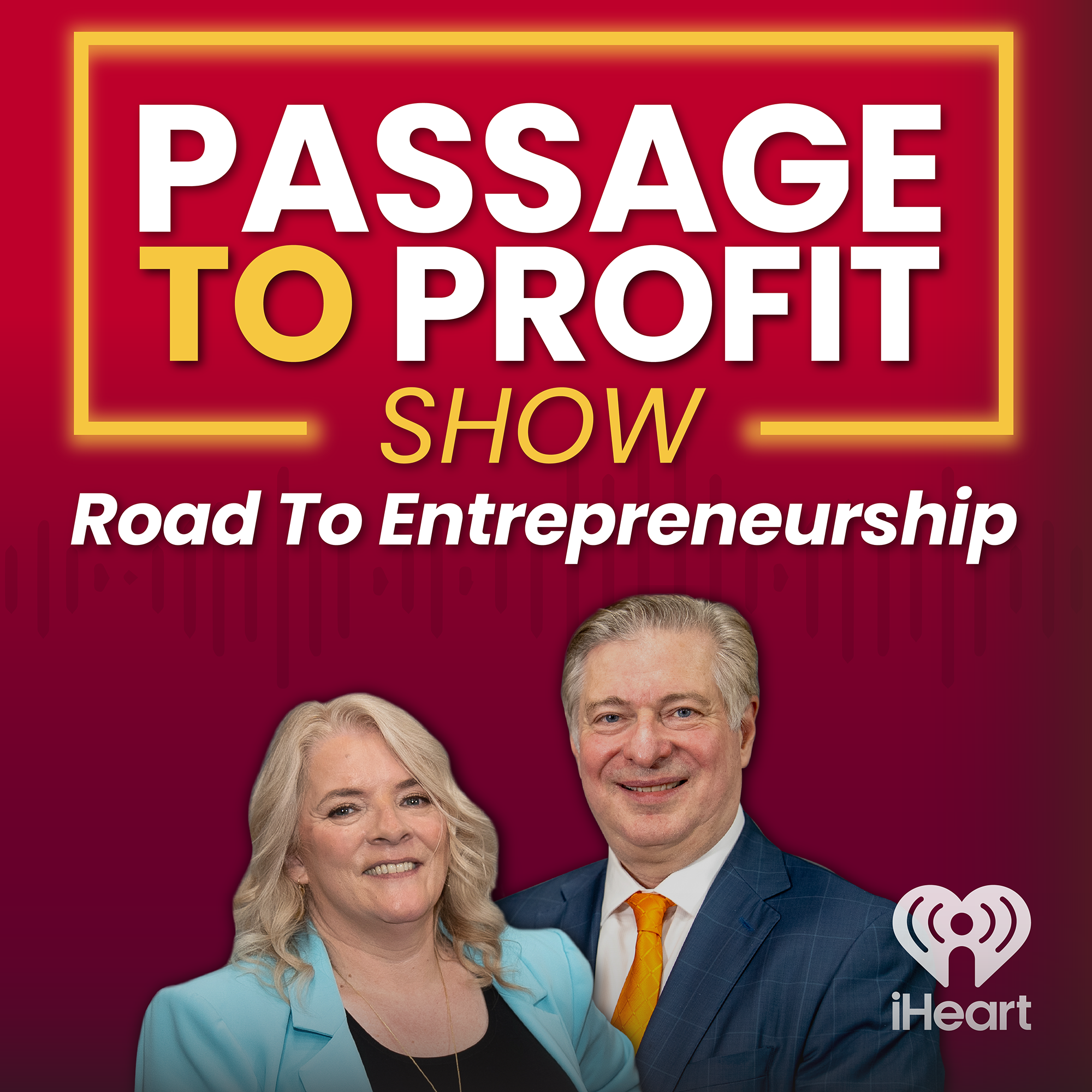
It's Passage to Profit with Richard and Elizabeth Gearhart. I'm Richard Gearhart.
[00:00:20] Speaker D: I'm Elizabeth Gearhart and we're your host.
[00:00:22] Speaker A: Welcome to the Passage to Profit show, the road to entrepreneurship podcast. Today we're with Richard Browning, who is a superhuman. He built a human powered jet suit that's really redefined what's possible in business innovation.
[00:00:37] Speaker D: And then we have two amazing guests. So excited. Dr. Catrisse Austin. So she's a dentist to the stars, but she's more than that. She took her dentist brand and really blew it out. We're going to see how she did that. And then James McCormick, chairman and CEO of Cloud, a structure and C suite growth expert and he is doing something with AI that's just, I don't know why it hasn't been done yet. Well, I guess it's so new. That's why this is really going to be interesting. And coming up later on, it's Noah's retrospective along with Secrets of the Entrepreneurial Mind.
[00:01:11] Speaker A: And on top of all that, we're going to talk about why everything you are buying from the world's biggest companies isn't physical. It's invisible. But first, it's time for your new business journey. We'd like to ask our panel, when you look back, what was the one decision or moment that most changed the trajectory of your business and what did it cost you to make that decision? Welcome to the show. Richard Browning, what was the one decision that you made that changed the trajectory of your business?
[00:01:42] Speaker E: Thank you. So I think probably the biggest sort of seminal moment on this nine year journey was turning a kind of free time, evenings and weekends, crazy dream of seeing if you could reimagine human flight into something that actually has now become $100 million business and a brand. And actually that moment was deciding to call it gravity and actually brand and market and communicate that I suppose, rudimentary piece of technology into something that has inspired millions. So it was that moment of branding, I think, to answer your question.
[00:02:16] Speaker A: That's wonderful and we really look forward into learning more about that. With us Today also is Dr. Catrisse Austin. Catrisse, welcome to the show. What was the one decision that you made that changed the trajectory of your business?
[00:02:29] Speaker F: Yeah, I started my dental practice in 1998 and I think the biggest thing was having clarity that I wanted to serve a specific market that I wanted to be known as the dentist of the stars and go after very influential people. So, number one, having clarity. Number two, positioning myself to acquire those specific clients. And number three, once I acquired my first celebrity, which was the musical legend Isaac Hayes, hiring a publicist to help me spread and distribute my message to the masses.
[00:03:03] Speaker A: That's an amazing story and we're very interested in hearing more about that. James McCormick, what was the one decision that you made that changed the trajectory of your business?
[00:03:14] Speaker C: It was a decision to take the company public. Public as opposed to being a crowdfunded entity. We made the decision like a year and a half ago that it made logical sense for us to be a public company. We went through what's known as the direct listing process as opposed to a traditional ipo. And we did that to enable us to have access to the capital markets and allow us to get the capital we needed to really expand our operations to fit our vision. I guess you would say that's amazing.
[00:03:54] Speaker A: It's always fascinating when a company goes from private to public, and we look forward to hearing more about that. Elizabeth Gerhardt, what was the one decision that changed the trajectory of your business?
[00:04:06] Speaker D: I think the decision that changed the directory of my business and also my life pretty much was to jump on AI as soon as I found out about it. Our son told us about ChatGPT years ago and I started using it and I've been using it ever since. And now I find myself in a position where I'm telling other people how to use it and giving presentations about it.
[00:04:26] Speaker A: That's great for me. I would say that the one thing that most changed the trajectory of our business was getting and using a CRM. This was a while ago, and it's really important to understand where your business is coming from, what kinds of clients you're attracting. And a CRM, which is a customer records management system, allows you to keep track of those things. And with the CRM, we've been able to fine tune our marketing and our client intake, and it's made a huge amount of difference.
[00:05:01] Speaker D: And also we've been working with AI visibility for Gearhart Law for the last year and a half or two years. And our CRM's telling us how well that's doing too.
[00:05:10] Speaker A: Absolutely.
[00:05:10] Speaker D: Getting clients from ChatGPT.
[00:05:12] Speaker A: Okay, well, now it's time for our guest interview. What if the future of flight isn't billion dollar aircraft, but one man strapping jet engines on his arms? Richard Browning has built a real life jet suit. That can hit 80 miles per hour, challenging not just the limits of physics, but the way government, military and entire industries think about mob.
So welcome to the show, Richard. I've seen your stuff on YouTube, it's amazing. And this was long before you even decided to be a guest on our show. So thank you very much for joining us. Can you describe your jet suit for our audience?
[00:05:50] Speaker E: Yeah, certainly. And yeah, we are guilty of invading most human beings, social media at some point and mainstream media over the last nine years.
So it consists of a backpack which has nowadays three little engines in the base of it.
And then on each arm you have a pair of engines. So your arm sits between each engine. And the result of these seven engines is they create enough thrust downwards that you can lean on that thrust and then manipulate it in a way to allow you to fly in a really kind of natural, organic way. So we've done over 300 events in 53 countries.
We've kind of changed how medics respond up mountains. We've changed how special forces move in maritime environments and even in places like Ukraine. And we've got an amazing entertainment business. So it's really, I think to some people, to many people, it's redefined how humans dreamed about flights. You're not getting in a flight vehicle anymore. With this, you are becoming the flight vehicle with the addition of a very small amount of technology.
Now, to be clear, this isn't going to replace civil airliners. You know, you're not going to go to the, you know, go to Walmart in one of these things. But it has inspired millions.
[00:06:56] Speaker A: So do you have to be like a super strong person to wear this? Because when I look at it, you've got these jet engines attached to your body and there's a lot of force that is being applied. So do you have to be like in really good shape to use this?
[00:07:10] Speaker E: It was fun for the first couple of years to sort of not really shoot down that assumption. And I have to say the first versions were terrible. Like the first versions of most equipment, most technology nowadays, it is super simple. So we've trained over a thousand people to do this in the UK and the us. We've got a training center in California. And even my two sons, who are now 17 and 19, they learned when they were skinny little 13 year olds. So no, really, the physics of this is like you're leaning on a surface. If you imagine leaning on a bar waiting for a beer and you've got your arms roughly straight and you're waiting, you know, for somebody to serve you. And you're leaning on that surface, you are taking probably at least half of your body weight without even thinking about it, leaning on that surface. If the rest of your lift, if you like, in that case is from you standing on the ground, if you replace that by having the thrust of the engines in the back, then actually you can really just start to lift off the ground by just leaning on that thrust. You know, the thrust is a proxy for or a replacement for the surface you otherwise are leaning on. So no, it's really effortless.
[00:08:10] Speaker D: I am very interested in this. Do your eyelids fly off at 80 miles an hour? That is amazing to me, 80 miles an hour. But really, are there places you can do it in the United States and in England too, like.
[00:08:22] Speaker A: Well, you probably need a permit in
[00:08:25] Speaker E: New Jersey, actually, on that subject, the US has been one of the easiest jurisdictions because under your FAA rules, we fall in the ultralight category, so. So you can technically almost do it wherever you like if you don't go near flying over other people or airports or anything silly. Anyway, we have a. We have a facility in California and we have another one in the UK about two hours west of Heathrow with our big headquarters. In fact, I'm sat here in one of our buildings in our headquarters. It's surprisingly quick to learn. So it's very similar to surfing, skiing, snowboarding, or even watching your kids learn to ride a bike. It's a weird recalibration of your balance.
So if you just take a moment to think about skiing, that's mad. We never evolved to slide down mountains on two, you know, bits of wood, right, and wood in the past.
And yet you can calibrate, readjust your balance, which is an amazing thing. If you think of running across the surface, your brain is in real time making lots of micro adjustments to stop you falling over. If you just adjust that, then you can learn to ride a bike or ski or surf or snowboard. We train people by having a simple kind of tether just behind your neck into the backpack, which means you just don't fall over, basically. And you can feel the balance. And when you get.
You just gently come up into the hover, everybody gives you a stupid grin like you see in the first Iron man film, frankly, when he worked it out. And then they get it. And then you never think about it again. You never get skill fade. It just becomes innately part of you.
[00:09:43] Speaker A: Wow. So tell me what you were thinking and feeling the first time you tried this.
[00:09:48] Speaker E: So there wasn't really a first Time because.
And if I point people, if, if you Google for. Or search for Richard Browning and TED Talk, the original 2017 TED talk, there is all the visuals over about three minutes. No attention Spanish over about three minutes. There's all the visuals of showing the very amateur ludicrous behind closed doors attempts at trying to gradually go from one engine, validating that that thrust thing would feel like a surface to two engines, to four, to six, to eight, et cetera, and trying all sorts of different combinations. So it kind of cumulatively built. But I learned quite early on that a, that the thrust would feel like just leaning on a surface, which is kind of strange because exactly as you said, conventional wisdom would imagine it rip your arms off or gyroscopically tear your arm out of its socket or all this stuff. But no, it just feels like a surface. But you have to go and try that.
[00:10:35] Speaker A: I really haven't seen any footage of that, by the way.
[00:10:39] Speaker E: It just doesn't happen. It's funny how, you know, inventing anything new, creating anything new is taking the survivable recoverable risk in the pursuit of dismissing the assumptions that have stopped other people trying things. Right. Everything's impossible until it isn't. We've actually got impossible is nothing written across the entrance to our whole headquarters here. The idea of catching a returning booster rocket with a sort of claw on a tower sounds still ridiculous and yet certain Mr. Musk is now making that a daily occurrence. Right. So it just shows that that ethos is real.
I suppose the proper answer, your question was that in 2016, I started in March alongside a busy oil trading job in the city of London. I didn't tell anybody out what I was doing. I started in March and by November that year I'd managed to do the first very, very wobbly, rudimentary flight with engines on my arms and actually on my lower legs, on my calf muscles, which was a mad idea. But I did a six second wobbly flight. That was the first kind of proof that the concept was actually working.
[00:11:34] Speaker A: Wow.
[00:11:35] Speaker D: This reminds me of the Wright brothers with their first airplanes. Right.
[00:11:38] Speaker E: Do you know, there's a funny. Whenever people say that, it's very kind of people to kind of connect us to that. And you know, some people say, like, you know, the sketches Da Vinci made, you know, he would have, I think, been quite pleased with this. I would love to give him the chance to have a go. But yes, we've got a little, a little step on that human journey of turning the dream of looking at the birds and imagining that freedom. We've got a little kind of notch on that journey, I would say. But there's a funny anecdote with the Wright brothers. Do you know the famous footage of seeing Kitty Hawk take flight that is actually about three days after they first did it. They actually invited the media to the launch day. No one turned up. No one turned up because they didn't know what they were talking about. What do you mean flying? Like with some sort of bicycle adapted wing thing. Not interested. So they actually, on their launch day, no one showed up. They had to beg them to come. A few days later when a few people had seen it, I thought that speaks volumes even in America about people's belief in the new and the, you know, crazy.
[00:12:31] Speaker A: We're with Richard Browning, who is the CEO, founder and chief test pilot of Gravity Industries. What do you see as the future for your jetpack, I guess is what we would call it. Yeah, I mean we see one in every kitchen or one in every garage.
[00:12:48] Speaker E: A lot of people are excited about that possibility. But at the moment, no, I mean it's a bit like saying a NASCAR is a car. Say let's have one of those and go and pick up a, you know, quart of milk from the shops or whatever.
[00:12:59] Speaker A: Hey, I'm done with that. You know, where do I sign up?
[00:13:02] Speaker E: You know, you could, but for a fairly, fairly bunch of obvious reasons, it's not the most appropriate vehicle. So in the same way, despite this journey starting with genuinely a sort of joy fueled exploration into what most people thought was impossible, this has now turned indeed into, you know, just shy of $100 million business because we built a whole entertainment division out of it. And also we've got the, what we call the professional division which is medic and military response. So we can fly special forces soldiers and I was a Royal Marine a long time ago in the uk we can fly soldiers over any terrain, night or day, in pretty much any weather to do a job and importantly, self extract. So you can just take back off again, fly back over that minefield, get back to safe territory and get out. So it's, you know, I would admit it's niche, but everybody looks at what we do and immediately imagines it's Tony Stark's, you know, solution to traffic, which is not.
[00:13:54] Speaker D: Yeah. Who are the people that are coming to California and outside of Heathrow to use this?
[00:13:59] Speaker E: We have an amazing collection of people. So I think, I mean it is genuinely, genuinely the most eclectic mix of people. Anybody from indeed Marvel superhero kind of enthusiasts through to People who've had a life or a career in aviation, helicopter pilots make very good jet suit pilots because they've already familiar with the five axis of freedom of rotation and everything. We have YouTubers, of course, you know, all the social media folks, they're not always the best, let's put it that way.
[00:14:26] Speaker A: I was going to say Mother's Day is coming up.
[00:14:31] Speaker E: Yes. So we've had, you know, honestly, I will say this. Sometimes women make the best pilots because they tend to listen more than men, I will say. And they tend to, yeah, I already
[00:14:40] Speaker A: know how to do this. I don't need any training to that point.
[00:14:43] Speaker E: Yes, we do get a lot of guys sometimes turning up thinking they've seen Iron man and they just roll their sleeves up and says, I've got this and it's fine. You then spark up 2000 horsepower of jet engines and they tight. They tend to wither a little and think, no, I think I'll take the tether in the end and give it a go with that. But no, it's an amazing collection of people. You know, we've had Hollywood, Hollywood a listers right through to billionaires, to all sorts of people. It is. I mean, I would say this, wouldn't I? But feeling that power and then that roar of those engines and then feeling that force and feeling your feet come off the ground and yet it's very calm. It's a really gentle, serene, almost like that stereotypical dream of flight when, you know, you're a kid or sometimes you dream as an adult of flying, where you're running along and you do just step off and go wherever your mind takes you. It is kind of like that. It is very high.
[00:15:29] Speaker A: Do these things go kind of as
[00:15:30] Speaker E: high as you like? I mean, we could probably do 5, 6, 7,000ft quite easily, but we never do because actually for many going up,
[00:15:38] Speaker A: it's easy, but coming down is a little bit more complicated.
[00:15:41] Speaker E: No, it's pretty simple. It's just doing it at the right pace could be a problem. If you got it wrong, you're definitely coming down.
Yes, indeed. So we just terrain hug. In fact, it leads lots of people on social media to think we're somehow pushing off the ground. The physics of that doesn't work. If you're firing a gun, the recoil in your shoulder isn't dependent on what you've shot at.
So we're just firing a gun, if you like, of air downwards, but using jet engines which propels you upwards. So if you fly off the edge of a cliff you just notice, right, you're still propelling air downwards now, because we're vector thrust adjusting, we're basically. If you point the engines down, you go up, if you flare them to the side, you come down. Your brain is able to adjust that super finely so you can terrain hug. You can spend your whole time five or six feet over the ground. So for medic, military and even entertainment reasons, there's no need actually to go high. And as a result, the authorities around the world kind of like us because we never get near other aircraft and we don't ever get in a realm where if you have an unexpected problem, you, you're going to hurt yourself or anybody else. So for nine years we've never done any significant irrecoverable damage to any of us. I've probably crashed the most in all the development years.
[00:16:51] Speaker A: We're with Richard Browning, CEO, founder and chief test pilot of Gravity Industries. Richard, has your suit appeared in any movies?
[00:17:00] Speaker E: There's a movie called Fallout based on a gaming franchise, sort of post apocalyptic theme punk kind of thing. Actually, it's not a film, it's one of the sort of Netflix type series. Anyway, we flew in that one of the Nolan brothers very brilliantly reached out and said he wanted to engage with real physics as far as possible. So one of my team who's also a stuntman, flew around with these enormous robot legs on. And so a lot of the shots in the film where this robotized character comes flying in, all the kick up of dust and the physics of it is real. They then exchanged his skinny little body for the rest of the robot, I think. But yeah, we've done that. I did a thing with Tom Cruise many years ago we were looking at, and I think it'll happen either Mission Impossible or James Bond at some point. The more we do military stuff, the more that gets you in the public eye in the sense of the public would look at it and go, oh yeah, it's that cool thing we've seen the military really use. And therefore it sort of gets the vote of confidence in those kind of film franchises. But yeah, we've appeared in quite a lot.
[00:17:57] Speaker D: So I have to ask you this absolutely ridiculous question, but I've been dying.
[00:18:02] Speaker E: Won't be the first. Carry on.
[00:18:03] Speaker D: Have you ever hit a bird?
[00:18:04] Speaker E: Do you know, that's not such a simple. Sorry. That's not just a silly question. I have done so many events in so many bizarre places around the world for so many reasons. I did lose control momentarily and got into a flat spin by Losing your control, as it's called, because there was a bunch of ducks at an event that got kind of scared, flushed up in the air, and I just flew after them because it was just an amazing experience.
So I didn't hit them, they didn't hit me. But I nearly lost it because of that. And there was another one where we were testing with wing systems.
So if you imagine a skydiver's or wingsuiter's leg wing, it's like a big web of fabric between your legs that inflates with the ram air effect. We experimented with those. And it brings your legs up flat, and then you do absolutely accelerate like crazy. We don't do it anymore because the speed started to get too high. But as I was doing that, I was flying down this lake and a swan started to do its amazing takeoff routine. And you could just see it rising. And something in my mind was like, oh, Christ, which way is this going? Because it was coming towards me. And, I mean, if you're in the aviation world, you have conventions about both turning the same way, in terms of both turning left, let's say. But no one had told the swans, so I had to try and guess which way it was going, because hitting a swan, I was doing easily 60, 70 miles an hour. It would be doing probably 40, 50, the closing speed. Hitting something that heavy would be a problem. So actually, I didn't hit it, but it has nearly happened, so that's not such a stupid question.
[00:19:25] Speaker A: We're here with Richard Browning, CEO of Gravity Industries, inventor of a human flight suit. If this conversation is firing you up, imagine getting this kind of insight every single day. Subscribe to our podcast and leave us a quick review. Follow Passage to Profit on Instagram, Facebook, TikTok and X and subscribe to our YouTube channel for bonus content. This is how more entrepreneurs find us. So share it, post it, and tag it. Let's build this community together. Passage to Profit with Richard and Elizabeth Gerhart. Back with more after this.
[00:19:59] Speaker G: Do you hear that? That's the sound of uncertainty lurking under your H feeling. I know I do. That sudden sinking sensation when you see a check engine light or your car unexpectedly breaks down and you're faced with sky high repair bills. It's time to shield against unexpected repairs with Car Shield. Car Shield is America's most trusted auto protection company and has an A rating with a Better Business Bureau. Don't let the fear of a breakdown keep you up at night. Trust the Shield Car Shield and say goodbye to terrifying repair and hello to Peace of mind. Your plan also comes with 247 roadside assistance, courtesy towing, rental car options, and so much more. Don't wait till it's too late. Call car Shield now. Before a breakdown. Protect your wallet. Protect your car with Car Shield. Get our best protection ever. Call now. You'll thank me later. 8002-6121-7680-0261-2176.
That's 800-261-2176.
[00:20:58] Speaker B: Have you outgrown your health insurance plan or just not happy with what you're paying for? The number one reason we all change our health insurance is price. Are you paying too much for your health insurance? Would you like to have better coverage at a better rate or at little or no cost to you? Your life needs are always changing, but have you done anything to improve your health insurance for you and your family? Health insurance laws and coverage are always changing and getting better. It's impossible to do all the research yourself, but now it's all done for you for free. So regardless of your age or medical condition, take a few minutes right now and find out if you can save money or even qualify for zero cost health insurance in your state.
[00:21:44] Speaker E: Call now.
[00:21:45] Speaker G: Paid for by cheaper health insurance. 8006-5214-7080-0652-1470.
800-652-1470. That's 800-652-1470.
[00:21:58] Speaker B: Now back to passage to profit once again.
[00:22:01] Speaker A: Richard and Elizabeth Gearhart. We're with Richard Browning, CEO, founder and chief test pilot of Gravity Industries. And he's been telling us all about his human jet pack, which is just amazing.
Richard, how do you build a category for something like this that doesn't even exist? It's not really on anybody's radar screen. How do you take a prototype and build a business out of something like this?
[00:22:29] Speaker E: Yeah, that's a good question. And people get obviously quite excited about the idea of the engineering journey of trying to work out how do you even get this to, I could say off the ground, get to get this built.
Uh, but actually the bigger challenge in, back in 2016, once I got it technically to actually fly, the bigger challenge dawned on me as to how do I, or what, frankly, what do I do with this, right? Do I stick it on YouTube and probably get a bit, bit embarrassed at my, you know, quite big important day job, oil trading in the city of London. I hadn't told anybody about what I was doing in the weekends and evenings.
Or do I accept the hard path of trying to Turn it into a branded, marketed, scaled company that would fuel its own progression towards where I think it could get to. And it, we kind of got there now in a way nine years later.
And that was a real challenge. And you're absolutely right that not only was there no rule book on guidebook on how to do this, but we were having to kind of improvise, sort of innovate our pathway to try and decide like a where does it sit versus people's popular cultural references of Iron Man, Rocketeer and all this kind of stuff. How do we play with that, how do we inspire people with that, but also have enough sincerity and grown up, I suppose, professionalism that the military and aviation authorities and governments and things will take us seriously. That was a fascinatingly challenging journey. I often used to joke that we need to try and entertain 7 year olds and the chief of the defense staff in the, you know, in this case in the UK mod, that that's quite hard because the easy thing to get social media renown if you like, is just set fire to stuff and do stupid things. Right. But then you cut off the senior, you know, all the grownups in the room. You don't get allowed to fly in the 52, 53 countries we've flown in around the world. You just don't get taken seriously. So that was a fascinating journey and there was a really interesting point of reference and it was an American guy who actually came from the world of marketing and media that gave me one of the best bits of advice right early on when I was grappling with this as a, as a frankly oil trader, I mean, I knew nothing about media and PR and all this kind of stuff. I knew enough to know. I didn't know enough. That was probably very important. But he told me a really interesting thing. He said, look, you're flying around like it does look like a superhero thing. Yeah. And I was struggling with like, well, what do we do with this Iron man thing? I didn't build this to build an Iron man suit, but it's kind of cool that people think it looks like that. Yeah. But he said, do not position yourself anywhere near that A, you'll probably get a really nasty letter from Disney at some point. And baby, if you position yourself as some sort of like real life version of that, there's enough people will look at it and without using any brain power will go, well, that's just not as good as the film. So I'm not really that interested. So we positioned it as this like leather jacketed Biker jeans, kind of 1930s Steve McQueen kind of cool, leather clad, flying biplanes upside down under bridges and motorbike racing kind of vibe.
And it worked really well. We ended up with people that really engaged with what we were doing. But then they would turn to their friends and family and say, my goodness, this looks like Iron Man. And they would tell each other rather than us telling them. And that worked really well.
[00:25:31] Speaker A: One other question that I had was how do you raise capital for a project like this?
It's helpful to have investors. If you're making a lot of prototypes, what's your strategy?
[00:25:43] Speaker E: Uh, you've goaded me into tearing the fun investment story of this business. Everything we do is weird and unusual and some of the stories, I question myself whether they're real or not. They're so mad. Anyway, this one, so I, I got the thing to fly. I'd self funded by absolutely bootstrapping it. I mean we used like everything you could imagine. Make, do, amend. It was crazy. I used to use the, the drill, the, the, the triggers off electric drills, like domestic drills, as the throttle trigger. Just because you could rip it out of an old broken drill and you're done all of that stuff. Um, but I got it to work. We launched the company in actually April Fool's Day, which is the time we're recording this 2017.
Everybody shared it because they thought it was a joke. Wired and Red Bull went crazy with it. And those brands absolutely catapulted us into the right realm. Chris Anderson from TED reached out and said, oh my God, if this is real, you've got to bring it to ted. Like in a week's time we worked out a sticker on a plane. However, in the middle of that, a certain guy called Adam Draper reached out from Boost VC in California and said, oh my God, this is amazing. If this is real, this is really exciting. Bring it to our VC firm. Open day. So I jumped on a plane, went to San Mateo on the way to Vancouver to do ted, thinking at least I could try and prove it works after taking it out of a plane. Dunno why I think thought it wouldn't work, but I didn't even know they'd allow me to take it there. But they did. Did the flight demo. Blew dust everywhere. And then this tall skinny guy came up to me, elderly gentleman with a, with a hundred dollar bill and said, here's your first revenue for clearing out my parking lot.
And I thought that was kind of funny. I actually liked the $100 bill because this was like nine years ago. $100 felt like quite a lot of money back then, so that was quite good. But then he took it back off me and I thought that wasn't very funny. Anyway, I was still standing there. He chatted to Adam. I realized he was Tim Draper, Adam's father, the very famous VC in the valley. They came back up and said, this is the most powerful manifestation of the spirit of entrepreneurship we've come across. We believe you have to be a virtual superhero to get an idea through to becoming a scaled company. You've just manifested that spirit. We have to be part of this. How about half a million dollars for 10%? So I thought I used to be, and I still was a trader and I thought I should be better than this. I didn't have a plan. I hadn't even thought about raising money. So there and then I haggled into 650 because half a million pounds sterling was about 650, and that was my excuse. And he literally gave me the $100 bill back, having signed that as the deal sheet. And that's on my wall somewhere in here. And that was my first raise. And then since when we've done more sensible raises, but that was a busy week. And then I went on to fly and speak at Ted.
[00:28:06] Speaker A: Throwing money at you. That was that. That's a great position to be in.
[00:28:11] Speaker D: 10%, I guess. How does 10% stack up? I mean, I guess that's not too bad for a company that's just starting out.
[00:28:18] Speaker E: Well, valuing the company in a parking lot. Six and a half million dollars for just literally with no business model, nothing. It was a bit of fun to fly around. Right? I mean, that's. That's very California, to be honest.
[00:28:28] Speaker A: Yeah.
[00:28:28] Speaker E: But it's. Well, because like I say, the last raise was at an $83 million post money valuation. And that was a couple of years ago. So he's doing. He's done all right. And he's. And he's followed on as well.
[00:28:36] Speaker A: Well, onward and upward. It's been great having Richard Browning CEO, founder and chief test pilot of Gravity Industries.
[00:28:45] Speaker D: Now it is time for real AI Use Cases Business Owners Roundtable. So everybody gets a chance to say one way they're using AI, and then we all get to have a discussion about it because it's so important and changing our society so much right now. So I'm going to ask everybody here one way they're using AI in their own business to make it more efficient. So I know everybody here on this call is well versed in AI and experts. But I want one really cool way that you're using it that other business owners will go, wow, that is awesome. So I am going to start with you, Richard Browning, with Gravity Co. What is one way you're using AI for your business?
[00:29:25] Speaker E: I mean, to be honest, the main way, it's the most unglamorous way. It's research. I mean, if you want to design how you do racing and race obstacles, let's say for our race series, you just start asking AI to do inspired different images. If you need to procure a tank right now, today, this came up of how you go and put a jet suit. If it falls in the sea, you need to put it in fresh water. We're just using AI to try and research what are the best suitably sized tanks that you can get in one of the friendly Southeast Asian countries that we're working in, what can we procure? I mean, it's not glamorous, but it's in the most amazing research agent. And I'm sure that resonates with most people listening to this.
[00:29:58] Speaker D: Absolutely. Okay, Dr. Catrice Austin, what's one way that you're using?
[00:30:02] Speaker F: Creating intellectual property, my authority assets, books, podcasts and frameworks.
[00:30:09] Speaker D: Nice.
[00:30:10] Speaker A: She gets a thumbs up from me for that.
[00:30:12] Speaker D: Okay. And James McCormick, what's one really cool way you're using AI in your business?
[00:30:18] Speaker C: How we pay our salespeople is really complex. So commission software, There is nothing off the shelf that we can buy or modify that can help us with figuring out how to quickly and accurately pay our salespeople correctly from a commission standpoint. So we've used AI to go out, right? We've loaded in the parameters, we've used AI, and it is so far we've created something I would say that takes us 90% of the way of where we need to be, and very short, it will be at a hundred percent. Our engineering team, just a very talented group of people heavily versed in AI and large language models, those sorts of things. But writing code is quickly becoming a thing of the past. And we more and more are seeing our engineering team use AI not to replace engineers, but to make them more productive, I guess you would say, in adding enhancements and features and extra stability to our system.
[00:31:27] Speaker D: Absolutely. Yes. Our son codes, and he uses it as a starting point. He does have to do a lot of work fixing it up, but it's a great place to start. Richard Gearhart with Gearhart Law. What's one way you're using AI in
[00:31:39] Speaker A: order to Be an effective entrepreneur. I think you have to maintain your health. So I've been using it to help monitor my diet, monitor my sleep, and also monitor my exercise routine. So I have a smartwatch that collects all sorts of data on me and I put it into the, into chatgpt every day and it tells me how much I should eat and it tells me how hard I should work out and it criticizes me for not getting enough sleep. But it's really been a great step forward for, for my physical and mental and whatever condition. So I think it's using it for, for health monitoring has been great for me.
[00:32:22] Speaker D: Yes. And I'm Elizabeth Gearhart with Gear Media Studios. And of course we probably all use it every day. Right. But what I was using it for this morning was I'm starting a new podcast for the studio and I'm going to have a co host and Richard's going to drop in when he can and it's going to be podcasting pain points and how to fix them. And we kind of tried to shoot a video and I'm like, yeah, this isn't very good. So what I'm doing now is I'm asking Gemini because YouTube is owned by Google, right. So I figured Gemini will give me the best answers. How can I shoot a video that will ensure the longest viewer retention and capture the most interest? And can you give me like a step by step for this video on this topic and we'll see what it says and what kind of instructions it gives me? And of course it's, we're not going to read it wrote, we're going to talk naturally too. But then after we shoot it, I'm going to put it either back through Gemini or maybe through Gemini and ChatGPT and just say, okay, how would you edit this to make it even more interesting? So I think one thing we struggle with with YouTube and we look at this all the time, especially Richard, is retaining listeners because that and viewers, that's really what Google looks at with your content. So that's kind of a down in the weeds way.
[00:33:34] Speaker A: I still think though that when it comes to content, the human touch is still the best. I think that if you over engineer it with AI, then it comes across as over engineered with AI. And people are wary of YouTube videos that are just completely and totally animated and they're fake. Sometimes they're entertaining, but they're, they're fake. And I think the trend now is more toward real live content and content that's generated by humans. There's something that is especially authentic about that.
[00:34:06] Speaker D: Yeah, we're going to generate the content. We're just getting guidance. So this has been real AI use cases. Business Owners Roundtable Passage to Profit with Richard and Elizabeth Gearhart. Coming up, we are going to be interviewing Dr. Catrisse Austin and James McCormick. They have amazing companies and just brilliant stories. So stay tuned.
[00:34:28] Speaker H: Here's a real life story that affects 50% of all of us out there. It's called Divorce. If you've gotten divorced and now you're struggling to pay your bills and your credit card debts are completely out of control, you need to call this special debt relief hotline right now. We help people with all kinds of money problems caused by different life challenges. A divorce, a job loss, even heavy medical bills. All these life events can sometimes financially stress you out and cause you to get out of control. We help people get their lives back by showing them ways to consolidate and reduce their debt, in some cases for a fraction of what they owe. If your credit card balances are more than $10,000, call us and learn how to reduce your credit card bills and money payments. Now here's our number, paid for by Debt.com.
[00:35:12] Speaker G: call now at 8008-1008-5780-0810-0857.
800-810-0857. That's 800-810-0857.
[00:35:28] Speaker I: Learn how thousands of smart homeowners are investing about a dollar to avoid expensive home repair bill.
John, a former non customer, said, my air conditioner broke and I had to spend $1,900 to fix it. Jeff, A customer wrote, my air conditioner broke and I got a new one at no out of pocket cost. Mary, a former non customer, wrote, my heating system stopped running. I had to spend $3,000 to get a new one. Lisa, A customer wrote, my heater stopped working. I got it fixed at no out of pocket cost.
For about $1 a day, you can have all the major appliances and systems in your home guaranteed fixed or replaced. Call now. If the lines are busy, please call back.
[00:36:10] Speaker G: Call the home warranty Hotline now at 8002-5549-4080-0255-4940.800, 255-4940.
That's 800-2554-4940.
[00:36:27] Speaker A: Passage to profit continues with Richard and Elizabeth Gearhart. Shout out to our friends at K L I S AM 590 in St. Louis, Missouri. Thanks for listening. And if you're new here, Passage to Profit is a Top ranked entrepreneurship podcast and radio show heard in 38 markets. Now this is the Intellectual Property News podcast with Richard Gerhardt. Let me throw something out there that sounds a little crazy at first. 98% of the value of major companies like Apple, Nvidia, Costco, Lilly, MasterCard are not in their physical assets. Their value is in the intangibles.
So what does that mean? It's not the buildings, it's not the inventory, it's not really even the product or the service. It's the intangibles.
So what are people buying when they buy a product or service from one of these companies?
Well, they're buying the engineering, they're buying the R and D, they're buying the distribution system, or they're buying the software or the data.
Things that are protected with patents and trademarks. Ultimately, you're buying ideas. So just to give you a quick example, if you buy an iPhone, it's not just the metal and glass, it's the technology behind it.
It's the company ecosystem that helped create it. It's the brand trust that you have in Apple, and that's where the value is.
So this represents a real shift in the way we think about companies and their valuations. It used to be that companies were valued based on the factories that they had and the equipment. And in fact, only a very small percentage of these companies, 2%, has value relating to inventory and equipment and even things like real estate. In fact, the growth of intangible assets as a component of company market value is up 35% since 1995 and almost five fold since 1975. Now it's all about what you can legally protect. If you're a founder now, you take a big risk if you don't pursue protection, because if you don't own it, it can be copied or a competitor can outscale you and the value disappears. One mistake that entrepreneurs make is focusing on the building and not on the protecting. Too often they focus on the product first and then the IP later. And unfortunately, in today's age, that's backwards. Entrepreneurs should approach their business with an inventor mindset. Inventors don't ask, what did you build? They ask, what do you own?
So the real valuable is in the invisible assets and the ideas, things like brand know how, technology, all things that can be protected with patents, trademarks and copyrights.
So here's the question. What part of your business actually has value and do you own it? If you have an idea or invention you want to protect, the team at Gearhart Law helps Entrepreneurs turn ideas into protected assets. You can Visit us at learnmoreaboutpadants.com or learn more about Trademarks.com for a free consultation and practical guides to get you started.
[00:39:58] Speaker D: So now it is time for us to hear from Dr. Catrisse Austin, celebritybrandingusa.com how she went from being a date dentists to being on all this media. It's really amazing. Please tell us your story.
[00:40:12] Speaker F: Thank you so much. Well, I have been in the dental industry for 30 years as of this year, and it really stemmed from my own personal story of not being happy with my teeth. Braces changed my life, and at the age of 15, I decided I wanted to be a dentist. And I started my business in 1998 in New York City. VIP smiles with the goal of becoming dentist to the stars. I wanted to make all those people who were in the media and who had a camera presence or stage presence have a smile. I figured if anyone could do it, why not me? And that was right around the time that the public really got educated on the possibilities of smile makeovers with shows like Extreme Makeover and the Swan. And once I saw that live transformation on tv, I really embraced myself in learning cosmetic dentistry, and I built a whole business on being dentist to the stars. And the one thing that I decided that I needed to do in order to propel that was to hire a publicist and really get as much visibility that I could. And the moment that I hired my first publicist, I started to get on television in New York City, the media hub. I got on Good Morning America. Today's show featured in magazines, and the patients really started to come. My first celebrity client was a musical legend, Isaac Hayes. And he was really intrigued. I met him in a restaurant, and I just decided to interrupt his dinner. It was very rude. And I just went up to him with my elevator pitch, hey, I'm Dr. Catrisse Austin. I'm a new dentist here in New York City. I don't know if you're happy with your dentist or if you don't have a dentist. I would love to be your dentist. And he told me to sit down, have dinner with him. And when I sat down and had dinner with him, he decided that he would be my first celebrity client. But not only did he do that, he put me in his entourage. He started taking me to the Oscars, the Grammys, the Acapulco film festivals. And it really brought in and gave me access that I needed to really take that dream of being dentist of the stars and running with it. So that's how I got my start. And I've gone on to work with Toni Braxton and DJ Khaled and Anthony Anderson and most famously, Cardi B, Clarissa Shields, the current heavyweight women's boxing champ, and so many more. But the pride has been working with not just the celebrities, but everyone that wants to have a beautiful, healthy and confident smile. And using the media and what I call the fame formula is my framework of how I built that visibility and turned it into an enterprise.
[00:42:54] Speaker A: Well, that's really, really great. So what did you tell Isaac Hayes about his teeth that convinced him that you were the dentist for him?
[00:43:02] Speaker F: Here's the thing.
Everybody needs a dentist. Whether you need cosmetic dentistry or you just need a basic cleaning. And Isaac Hayes just needed a basic cleaning and, you know, just general maintenance. So.
[00:43:15] Speaker D: Yeah, well, you were very brave. I mean, that took a lot of guts.
[00:43:19] Speaker A: That took a lot of courage.
[00:43:21] Speaker D: What can you get courage to do that?
[00:43:23] Speaker F: You know what, Asli? I have been, and this is something that I realized. I have been approaching celebrities since I was 12 years old.
My mom was very free spirited and she let me run and kind of do the things that I always wanted to do. So I'm from Flint, Michigan, and my favorite rappers run. DMC came to Flint, Michigan in 1982 and I wrote a fan letter to them and I said, you know, hey, I'm your biggest fan. And I slipped it underneath their dressing room door. And the young Russell Simmons, who went on to be a big mogul, came out and said, who wrote this letter? And I said, me, me.
And he said, you wanna come back and meet the guys? And I did. And that was the first celebrity encounter that I had. But the key was he gave me his business card, which I still have to this day. And he said, why don't you keep in touch? So when the first hip hop concert came along about a year later, I took that business card, went to the concert with my mom. And after the concert I said, mom, hold on, I'll be right back. I'm gonna take this business card and go talk to the security guard. And I did. And I said, Hey, 12 years old, I'm a friend of Russell Simmons. Here's his business card. I don't know how I knew to do that, but I got backstage to the first hip hop concert ever and met all of these celebrities. So I have had that fearlessness and the instinct to network since I was 12 years old.
[00:44:49] Speaker A: That's great. You know, especially for a dentist. You usually don't Dentists don't usually have that killer networking instinct, that's for sure.
[00:44:56] Speaker D: So now you're teaching other people, Dennis, and other people how to become sort of like entrepreneur celebrities, right?
[00:45:04] Speaker F: Yeah, it's really a celebrity is the state of being well known. That is the true definition of celebrity. What I'm really teaching people is how to own their space, how to be the authority and the go to in their space. And does celebrity or fame come with that? Sometimes, yes. But I want you to be the only choice when it comes to being a dentist, a author, a speaker, entrepreneur of any sorts. It's really about owning, owning your space. And you do that by building your authority.
[00:45:33] Speaker D: Are you doing one on one coaching with people do that?
[00:45:36] Speaker F: Well, what I do first is I take you through a scoring system. So I need to diagnose where you are and I've come up with an authority ladder. So you may be just starting and you're emerging. Well, once I take you through a few questions, I give you your score and I see where you are, then I may have to start with an audit to just give you a overview and define, you know, who you are, give you that clarity, help you with your positioning and give you a roadmap. But if you're a little bit further along, we may do an intensive where I spend a half a day with you and we'd go into a deep dive as to what you need to do at your level. And so we have five levels emerging, advancing a recognized authority, an influential authority, and then the highest level is the dominant authority. When someone thinks about veneers, they're thinking about Dr. Catrisse Austin. When someone's thinking about media, they're thinking about gere media. You know, so that's, that's what we, you know, I meet you where you are and then I do the necessary things to give you that roadmap so you can get to that dominant space, that dominant authority level.
[00:46:44] Speaker A: So what attracts you to celebrities? What makes you want to be involved in celebrity culture and lifestyle?
[00:46:53] Speaker F: I grew up in a music. My mom was a teenager, she was 17 when she had me and she took me to all the concerts too. She was just a. She was into entertainment. And so she didn't put me off with my grandparents. I was in that environment.
So when I got to New York City and didn't know anyone, I turned to comedy, I turned to music and dance clubs and of course it's the glitz and the glam, it's the fun outside of being a dentist, I get to, you know, that was one of the key things. I was like, dentistry is kind of boring. Like, I'm more than just a dentist. I have a life outside of dentistry. And so when I was building VIP smiles, I said, how can I marry the two things that I love? My two worlds together. And that was the part that only made sense. And so I started hanging out at a comedy club when I got to New York in 1996.
And they were just fascinated that I was a young black female dentist at the age of 26. At the time, they were like, we never met anyone like you, so don't go back to Michigan. Like, when you finish your residency. I was there doing my residency when you get finished. Like, we would love. Like, we don't want to go to the boring dentist over there. We want to go to someone cool like you. And so I said, you know, bet I'm going to stay in New York, and I will be the dentist to the stars. And it has made my career as a dentist so much better than some of my competitors. I get to have a lot of fun. I literally have gone on tour with some of my clients, European tours. Like, I'm cool to hang around. And so I get to do cool things and travel the world and do dentistry a different way. I have mobile equipment where I've been in the studio with DJ Khaled fixing his teeth. I have videos that I have on YouTube, you know, so I get to have a lot of fun. That's why I do it.
[00:48:47] Speaker D: Nice. So, Richard Browning, do you have a question?
[00:48:49] Speaker E: Yeah, I think. I think he's more of an observation, really. I mean, I think that's really impressive at such a young age as well, to not feel intimidated or too reserved to go and, like, reach out. I think I bet we can all remember, and people listening to this can all remember times where either, you know, you should have just turned around and said something to somebody that you recognized, or maybe it was somebody you actually wanted to speak to from a romantic point of view, you know? Or more importantly, let's be positive, the time you did have the guts to go and do that and how it paid off. I can't think of a time where I did have the confidence to do that and I did it, and it didn't pay off. It very rarely goes wrong. I can't. You're right. Do you agree?
[00:49:31] Speaker F: That's right. I would agree.
In my 30 years, I've probably had only two celebrities that kind of, like, what are you talking about? Like, no, you know, but the rest of them were very receptive because they all have that need. And I'll be honest, it took me about an hour, about a half an hour to get the guts to go over there. But just what you said, Richard, I said, you know what? He's a musical legend. I may not ever see this man again in my life. So you know what? You gotta take that shot. And I'm so glad that I did.
[00:50:05] Speaker E: I think that's great. And actually, it really, it really, it really is hard. If you are thoughtful in how you approach somebody, it is unusual. I think that that's going to pay off badly. Like you say, the worst is you get a slightly dilute sense of humiliation. They're like, sorry, who are you? And you just go, oh, sorry. Don't worry about it. I mean, that's not the end of the world. Why is that? Why are we so inhibited, especially this side of the Atlantic in Europe and the uk we're terrible at this. By the way, you guys in America generally are much more open at doing this kind of thing. But it is funny to think how generally it's nearly always positive. I mean, do you, do you feel the same, James?
[00:50:37] Speaker C: Yeah, 100%. I was just going to say that.
[00:50:39] Speaker E: Right.
[00:50:40] Speaker C: And by the way, Catrice, that's been my experience as well. Talking to people, just reaching out. My observation has been in talking to people, you know, celebrities, sports figures, whatever has been, there are people, too. And frankly, if you're not a jerk about it, right, and you're not demanding and you're sincere, I've always found people to be incredibly receptive to have conversations and those sorts of things.
[00:51:05] Speaker D: Dr. Catriece Austin, Celebrity BrandingUSA.com I'm just wondering how you balance your two businesses, because you're a dentist, but you're also helping people with media. Like that is a lot of work for one person to do. How are you balancing that?
[00:51:21] Speaker F: It is. What I didn't say is in 2017, I did sell my practice, and now I have a lot more time to focus. And during the pandemic, this is exactly what I spent a lot of time in the house building my new business.
I do dentistry. Right now I'm kind of filling in for dentists who need, you know, time off or right now, I'm filling in for someone who had back surgery in December. So I can still, you know, as long as I keep my licenses active, I can still keep my fingers and my hands wet in dentistry. Now, if somebody calls me right now and they want a Smile makeover. I have a office that I can still see them, but I'm not practicing dentistry full time. I really want to be on the other end and coach and help the dentists that are coming out of school. They have a lot of pressure, a lot of debt, and the industry is changing. So they need me more than ever right now to figure out how they can stand out and really monetize their businesses and get that visibility. So I feel even better being on this side of the spectrum to help them be successful. I've had my success. Now it's just as rewarding to see other people build their brands and their businesses. I get just as much as joy as doing a smile makeover.
[00:52:41] Speaker A: Dr. Austin. So just one last question here before we wrap up the segment. What are the three most important things we should pay attention to maintain proper oral health?
[00:52:52] Speaker F: Gosh. I have a smile workout number one. You want, you want to. If you have bleeding gums, you see pink in the sink. That means you have a gum disease, gingivitis, a mild gum disease, or advanced gum disease. And what you need to do. Here's the workout.
Brush for 2 minutes.
Electric toothbrush are my favorite. Floss. Use the flossers. They're easy, affordable, and will save your smile. And also use mouth rinse for 30 seconds. 10 seconds, 10 seconds. And take it to the head. And don't forget the tongue. Clean that tongue. It holds a lot of bacteria. And if you do that every single day in the morning and at night, you will save your smile. Have fresh breath and a confident smile as well.
[00:53:35] Speaker D: Brush and floss and rinse.
[00:53:37] Speaker A: There you go. All right.
[00:53:38] Speaker D: Okay. Well, how do people find you?
[00:53:41] Speaker F: If you are interested in branding, you go to celebrity brandingusa.com and if you are still interested in a smile makeover, you could go to dental health vipsmiles.com and tune into the let's Talk Smiles podcast. Okay.
[00:53:57] Speaker D: Thank you.
[00:53:58] Speaker A: Passage to Profit with Richard and Elizabeth Gerhardt.
[00:54:00] Speaker D: And now James McCormick with cloud a structure.com keeping people safe. I went on your website and it was very cool. Really tells the story. But tell us, tell our listeners your story.
[00:54:14] Speaker C: Sure. A couple things. Cloudestructure is a company that started as a thought, as an idea by our founder and former CEO Rick Bentley 20 years ago. And what happened? He calls it the vacuum effect, which I find hilarious. Let me explain.
So think back 20 years ago. You know, there was an AI.
There was basically, you know, the 711 type. Put the videotape in recording system. He had rented a small Office space to do work. Somebody stole his laptop. So he marched in the next morning to the property manager, right, and said, hey, can we look at the video of what happened last night so we can see who took my laptop?
And they started looking at the footage, and there was a big blank spot like the Nixon tapes, right? And they said, oh, we don't have footage from that time. Turns out the cleaning people unplugged the network video recorder to plug in the vacuum. They had no video footage. That sparked the idea of, gee whiz, what if you could figure out a way to take these images, put them up into the cloud, you know, where they're protected and available 24,7. And that's what they set off doing. Now, unfortunately, cloud wasn't really that big a thing 20 years ago either. Bandwidth wasn't ubiquitous. It was expensive. And, you know, just over time, as bandwidth became more available and there were AI tools, they. They were able to morph, I guess you would say, the ideas into an actual solution.
That's how it all started.
[00:55:56] Speaker D: Richard knows all about getting unplugged by the cleaning service.
[00:56:00] Speaker C: Yeah,
[00:56:03] Speaker A: talk about getting unplugged. But it just reminds me of a story I can't resist. We had an employee once, and we noticed that wallets were missing or money was being taken out of purses around the office.
And so we set up a laptop across from a purse and then left it unattended and blanked out the screen on the laptop. And we got video of this guy taking money out of. Out of a purse. And of course, he was immediately shown the door. But, you know, the surveillance stuff can come in handy, I guess.
[00:56:35] Speaker D: But when we first started the firm, when Richard first started, he was in our attic, and we had a cleaning service, and they came during the day for some reason, and there were outlets all over the place. And for some reason, they decided to unplug the computer.
[00:56:46] Speaker A: But anyway, I think this AI is an amazing innovation, and I'm glad you're doing yet.
I just think it certainly adds another level of protection for anybody and especially for security.
[00:57:01] Speaker D: So can you give us an example?
[00:57:03] Speaker C: Sure. One of our main verticals right now, I could take you through a few different use cases, if you will, but one of our main verticals right now, I think we mentioned this, was multifamily housing. Why? In multifamily housing, 85% of property managers report that crime is on the rise.
Okay, 85%.
So if you have an unsafe environment or it's perceived as unsafe, you're going to have lower occupancy rates, you're going to have unhappy tenants, all that, all those sorts of things. So let's leave aside at the moment the return on investment, the ROI of a solution like ours vis a vis traditional security guards. Absolutely no comparison. But that's different matter. So what is it that property managers are interested in? There's a few things. One, as we talked about, they want the ability for someone or some process to stop threatening activities or bad events to happen before they happen. Mailroom theft, assaults, dog bites, those kinds of things. You know, we talked about the people in the parking garages. Then they also, from a liability standpoint, want to be able to have areas that could be problematic. Think pools.
[00:58:22] Speaker A: Right.
[00:58:23] Speaker C: People trying to enter pools after hours. There's just a host of liability issues as well as it being a potential nuisance to other tenants.
[00:58:32] Speaker D: Right.
[00:58:32] Speaker C: Because people generally aren't in the pool being quiet.
[00:58:35] Speaker E: Right.
[00:58:35] Speaker A: One other thing that this brings to mind, I see the security benefits, but I also see, like you remember that show Person of Interest, where the cameras were monitoring, like every single person in the country.
[00:58:47] Speaker C: Yeah.
[00:58:48] Speaker A: And so, I mean, what's your take on that? Is there like a privacy issue here that this creates?
[00:58:54] Speaker C: I think, to your point, people reluctantly are becoming more accepting, if you will. Right. Of the fact that there are cameras everywhere. I don't know if I shared this statistic, but it is estimated, the Wall Street Journal estimated there's a billion video cameras deployed on a worldwide basis. A billion. And Those cameras capture 1.44 trillion minutes of video per day. Okay, so you're going to get facial recognition solutions and those sorts of things. Right. I mean, the numbers are staggering. Now, our solution, we don't own the data. We don't share the data with anyone. The data is our customer's data. The only thing that we have their permission to use is video of certain threatening events or things happening on the properties. So we can continue to refine and train our AI models.
[00:59:55] Speaker A: Okay.
[00:59:56] Speaker C: Now, where could it be a benefit to our customers? Well, say you've got a tenant that you know was a repeat offender, you made them vacate the premises, but they keep coming back. And you want to know when that person is potentially back on property. We can absolutely. Right. Match that person's face and provide alerts if that person crosses a certain zone or perimeter.
And, you know, notify the property management group or their security people or whatever the case might be.
[01:00:30] Speaker A: So we're James McCormick, he's from Cloudastructure. Richard, what are your Thoughts about the whole security privacy thing and what James is up to.
[01:00:41] Speaker E: I think a serious kind of question would be how do you as a company go about trying to protect your kind of intellectual property over this? Because I imagine that the AI processing sophistication of analyzing behavior, human behavior, is going to get relatively commoditized over time and ever more sophisticated. So is it all about your company brand or how do you go about that?
[01:01:05] Speaker C: No, it's about always trying to be ahead of where the competition is going. Right. For instance, I was just at a security conference for the day in Las Vegas last week. Lots of people are out there saying, hey, we have, you know, video surveillance and we're using AI to detect threats. Lots of people saying it, but there's key differentiators. Richard Light. A lot of these companies are just using, for lack of a better phrase, clipboard, right.
So here's a gun and they're training their models or using that as a triggering mechanism, no pun intended, for, you know, the models to say, oh my God, here's a threatening activity. But in the real world, in a grainy video at night, AI has difficulty telling the difference between a stapler and a gun. Or are those two people dancing or are they fighting? So, right, so by us using real footage, which are remote guards, right, as part of their activities, or they are tasked with, you know, constantly repopulating images for our models to analyze. By staying ahead of the competition and having a vision of where you want to take things in the future, that's how we think we protect. That's kind of the moat for us right at the moment.
[01:02:32] Speaker E: Yeah, it's going to be rich data sets and enormous amounts of example or enormous data sets of example incidents, I suppose a bit like the self driving car world has just tried to create enormous data sets of every kind of cab crossing to, you know, things falling off vehicles and everything you can imagine. And even still, they're still learning.
So yeah, that's going to be your key, usp, I guess.
[01:02:56] Speaker C: Well, and the other thing, the other differentiator, which is fairly common, complicated to do, but much the way that Google is indexed the web, we actually index our videos for our customers so that they can use simple keywords. Right. So the property manager comes in in the morning and they see that their big gate to the parking garage is smashed and there's blue paint on it, right. They can type in parking garage this date, blue paint. And up pops the image of Bob driving his pickup into the gate for whatever reason. And now they have the ability to go to Bob and say you've done it again, you have to pay the 1500 dollars repair fee. Those sorts of examples as well.
[01:03:40] Speaker E: That's a great solution to what do you do with like you say trillions of minutes of or trillions of hours of content? Because huge amounts of it, when nothing's really happened, could just be archived and dumped.
[01:03:50] Speaker H: Right.
[01:03:51] Speaker C: And we just had our 2025 conference call. And I use those statistics not just to, you know, the 1.44 trillion minutes, but more from a standpoint of what portion of that video is still being used. From a reactive standpoint, not a proactive standpoint, I can't give you the answer, but if you want my guess, I would say 90%. Right. Because most people. It's like your house, right. What, what do security experts say? What's the number one thing if you have an alarm system that helps to deter thieves? The ADT sign that you have in your front yard. Not the actual system, but the sign. So I think cameras are so ubiquitous. People go, oh, there's a camera, I'm safe. But we find that that's not necessarily the case. Might be helpful to go back and retrieve historical information, but that's not what we're about.
[01:04:49] Speaker D: Didn't you say that you have. Have speakers?
[01:04:51] Speaker C: Absolutely. It could work in any application, but today it works incredibly well from a multifamily standpoint. Here's the way it works. The way our software as a service works is we charge a baseline per camera for the 247 video surveillance service. Okay, then not every camera. Is a customer going to want to have it be remote guarded.
But high traffic areas, high risk areas, parking garages, entryways, pool areas, those sorts of things. And the cameras that are remote guarded generally have a speaker attached to them so that if something is identified as potentially threatening, it goes to our humans in the loop, it goes to our remote guards, and they have the ability to actually, I guess you would say, confront people and it's either, you know, I think we had mentioned this, right? You in the black hoodie with the crowbar in the parking garage and poof, off they go. But it's also, you would be amazed the number of talk downs we have to do to people in the pool.
[01:05:56] Speaker D: This is fascinating technology and I love that you're doing this. How do people find you if they want your product or just to see your website even?
[01:06:04] Speaker C: Sure. Cloudastructure.com and there's all sorts of great information on the website. There's use cases, videos you know, explaining some of the things that we just talked about, investor presentations, those sorts of things. And also myself, our CFO and our chief revenue officer, our CRO, we've started a sequence of our own internal podcast called the AI Perimeter.
And there's some, you know, where we just talk about real world applications of AI and what trends are looking like those sorts of things. So that's kind of fun as well, I guess you would say. So. Cloudestructure.com if you want to reach me personally.
[01:06:43] Speaker A: Jamesloudestructure.com Passage to Profit with Richard and Elizabeth Gerhardt.
[01:06:48] Speaker D: Stay tuned. We're going to take a quick break and then it's time for Secrets of the Entrepreneurial Mind. We'll be right back.
[01:06:54] Speaker G: Do you hear that? That's the sound of uncertainty lurking under your hood. You know the feeling? I know I do. That sudden sinking sensation when you see a check engine light or your car unexpectedly breaks down and you're faced with sky high rise repair bills. It's time to shield against unexpected repairs with Car Shield. Car Shield is America's most trusted auto protection company and has an A rating with the Better Business Bureau. Don't let the fear of a breakdown keep you up at night. Trust the Shield Car Shield. And say goodbye to terrifying repair booths and hello to peace of mind. Your plan also comes with 24. 7 roadside assistance, courtesy towing, rental car options, and so much more. Don't wait till it's too late. Call Carshield now before a breakdown. Protect your wallet. Protect your car with Carshield. Get our best protection ever. Call now. You'll thank me later. 8002-6121-7680-0261-2176. That's 800-261-2176.
[01:07:53] Speaker A: It's passage to Profit. Now it's time for Noah's retrospective.
[01:07:59] Speaker D: Noah Fleishman is our producer here at Passage to Profit. And he never stops trying to make sense of the future by looking at the past.
[01:08:07] Speaker J: And a blessed silver anniversary to us one and all, 25 years, more or less, of our intimate relationship with the Internet and cellular technology.
Can you imagine? We've graduated from a world of erased phone messages and misplaced memos to a world of accidentally deleted emails and misread text texts. That's technology for you. But you know what? I'm not so sure about that. Communication is a process that's actually serviced by technology.
And communication only happens when two humans or more, the communicator and the communicatee, actually conspire correctly. And effectively to communicate. Now, if either party for some reason chooses in some way, shape or form, maybe even subconsciously not to, technology can actually service that too. It actually goes back much further than technology or anything that we're used to actually using or applying. It dates all the way back to the days of ancient Greece when the oracle at Delphi would stand upon the podium and warn an indifferent republic about the prophecies to come. A couple of weeks later, they'd come back and just say to him, why didn't you say something?
[01:09:13] Speaker B: Now more with Richard and passage to
[01:09:16] Speaker D: prophet and our special guest today, Richard Brown. Morning. Now it is time for Secrets of the Entrepreneurial Mind. So Richard Browning with Gravity Co. What's a secret you can share with our audience?
[01:09:28] Speaker E: I mean, I think a secret from a kind of entrepreneurial behavior perspective, I think is, I mean this has become a bit of a personal mission. This when I look at my whole career, I think it is to notice that innovation and entrepreneurship, aside from being the absolute lifeblood of what's built the western world, frankly built the modern world and is the they are the disciplines behind how we ensure a prosperous future for our nations. You know, the failure strewn pathways of turning a dream, a vision, an idea into a product, a service or an efficiency that with a pinch of entrepreneurship becomes a business that employs people and pays tax revenue and keeps the lights on that. I'm kind of lobbying for that sentence almost to be branded across our, our government's kind of front door here in the uk. But I'd say underneath all of that, the key learning that I've derived from a career in so many different realms is that both innovation and entrepreneurship are fueled by risk. They're fueled by failing at things, not being afraid to fail at things. And that's something that I certainly feel like on this side of the Atlantic, Europe and the uk we're not as good as you guys are in the US at this. We are in been endemically scared of failure. I think at school, higher education and into a corporate life especially, you're taught early on that you're trying to achieve 100%, zero risk, zero incidents and no problems. Right? And yet that's not the mindset that built probably the business, the corporate life that you're now enjoying. Somebody, the founder at some point had to take a risk, had to try something, had to recoverably fail. And so therein lies the secret I would share if you like, like and that is that embrace risk, embrace failure, but simply try and make the inevitable failures recoverable from A safety, reputation and financial perspective. Be able to get back up again from the inevitable setbacks. Don't hurt anybody or yourself. Don't go to prison or lose your job.
Don't burn so much money on each of the iterations that you're going to attempt such that you can't get back up like a boxer and fight another day. So I honestly think that is the distilled secret, if you like, behind a lot of success, don't go and sync yourself with your first attempt to keep. Be able to get up again and ignore the press.
[01:11:44] Speaker D: Right? It's in England over there, man. Your pr, ours is bad, yours.
[01:11:49] Speaker E: We've got a whole industry and talking ourselves out of a future. Yes, exactly. I mean, that's why I launched my company with Wired and Red Bull. There's two brands that did the absolute best to push my unusual venture into the realms of positive, aspirational capability rather than an eccentric idiot. So that's our challenge here.
[01:12:07] Speaker D: Okay, Dr. Catrisse Austin with Celebrity Branding USA. What's the secret you can share with our audience?
[01:12:13] Speaker F: The secret is a lot of us feel that we have to strive to be the best, to be the most successful. And I like to say that it's not always the people who are the best who are the most successful. It's the people who are the best known. And so I would challenge people to really increase their visibility so that they are the best known. And the way that I suggest that you do it is with the fame formula number one, make sure that you position yourself. And when I say positioning, that when someone comes to your profile, your website, your social media, they need to be able to understand who you are, what you do, and how you can transform them in the first, like seven seconds. The second P, and these are the five P's. The second P is publishing something. And publishing, you know, people always say, why do I need to write a book or start a podcast? Is really to claim your authority and let people know that you are an expert on said topics.
The third P is going to be promoting. And the key of promoting is really you look at promotion as mass distribution of your message, of your call to actions. So the more call to actions, the more promotion of your messaging that you give, the more authority you're going to build and the more visibility you're going to have. The fourth P is publicity. And the biggest key with publicity is getting that third party validation. It's great that we could get on social media and say, hey, I'm the greatest. I won this Award, I did this, I did that. But it's so much better when someone else validates you, puts you on their stage, puts you on their podcast. You get in the media, in a TV show or producer gives you the stage and really gives you that street cred. And the final P is profiting. When you position yourself and you have the clarity and you have this message, you're going to get the kind of clients that you dream of.
Cost is no longer gonna be an issue. They're gonna pay premium price because you are the go to. It positions you in a way that you can start making money in your sleep. And that's what we all want. And when it's time to sell. I know when I sold my business, my brand was a part of my, you know, my valuation.
All the things that I had done as a dentist put me at a couple more zeros at the end of that valuation. That made me smile when I sold my business. And it'll do the same for you when you're positioned properly. So that's my secret.
[01:14:43] Speaker D: Nice. Okay, James McCormick with cloudest structure. What's your secret to chair?
[01:14:48] Speaker C: Let me preface by what I'm, how I answer that question, right? So I've been out in Silicon Valley since 1989, right. Moved from Ohio after living in Michigan. And you know, I've had the absolute blessing of being able to work with different technologies, different teams of people, different business models in that period of time. I've been CEO, cfo, COO of public and private companies. So as I like to say, I'm kind of a Swiss army knife right, at this, at this point in my life and my career.
But here's what I think I've discovered in working with different businesses. One would be take risks, but calculated risks, you can't swing for the fences. You know, just hoping that one big idea is going to take you where you want to get to, right. Generally, you got to think about it, you got to build it up in a rational manner and then go attack the execution, right? So I give you a perfect example. We had mentioned at the beginning of the show, Kevin Sarrace and I said that he and I had worked together. One of the companies that we worked at was the products, was building energy efficient building materials. And one of the capstones of that company is we replaced every window in the Empire State Building, which was, that's a different conversation for a different day, right? But ultimately, you know, our job was to commercialize that business and try to figure out a way to, as we say, to turn the PR into the po and frankly, we weren't successful with that business. We didn't get it over the goal line the way that we had hoped to. But that's okay. You learn from those mistakes and the risks that you take and you took, and you move it forward to the next set of experiences.
[01:16:36] Speaker D: Wow. That's another. We'll have to have you on the show again.
So, Richard Gearhart, what's a secret you can share?
[01:16:43] Speaker A: I'm just going to say look at your data.
I think a lot of entrepreneurs say, or I've heard it said, that when people go to classes for entrepreneurship, it's the financial ones that are least frequently attended. And so your data is your scorecard. And for me personally, sometimes it takes a little courage to look at the numbers because, number one, they may not say the things that you want them to say, but then if you're looking at them right, you may see issues, and then you have to address those issues. And sometimes they're not comfortable issues to address, but if you want to move the ball forward, you have to study it, you have to analyze it, and then you know you can take action on it, and that's part of what moves your business forward. So my answer this week is look at the data.
[01:17:28] Speaker D: And me, Elizabeth Gearhart with Gear Media Studio, we have an opportunity. Every single person right now who's willing to use AI to define ourselves to the AI answer engines. And the way you do that is you put together a bio and you call it your canonical bio. So it's your main bio and you have it on your website and you feed these answer engines anything you. You want them to know about you, right? Who you are, what you're doing, what's important. Important in a. I say it in a business sense. And if you're a woman, you make sure if you did anything before you got married and changed your name, if you did that, you link those two entities together. But right now, you can tell the AI answer engines exactly who you are and what you do. And you can just keep telling them that with every piece of content you produce. And that's what people will see when they search for you. Because honestly, Google search is going away and it's all Gemini and chat GPT and everything.
So we're in a unique position. And I would say do it now because they go back and pull up a lot of stuff on you, but define yourself on the answer engines. That's my secret.
[01:18:33] Speaker A: That's it for today's passage to profit show. If you enjoyed this episode, subscribe to the podcast and leave a quick review. Also, follow us on Facebook, Instagram, TikTok and X, and subscribe to our YouTube channel for bonus content. Tune in next week for another episode of Passage to Prophecy.
[01:18:50] Speaker D: It.