Episode Transcript
[00:00:00] Speaker A: Do you have what it takes to start and create an enduring business? Do you have the vision? Are you a risk taker? And do you have the courage to stick with it through tough times? We're going to be talking about that. On Passage to Profit,
[00:00:15] Speaker B: ramping up your business.
[00:00:16] Speaker A: The time is near.
[00:00:18] Speaker C: You've given it hard. Now get it in gear.
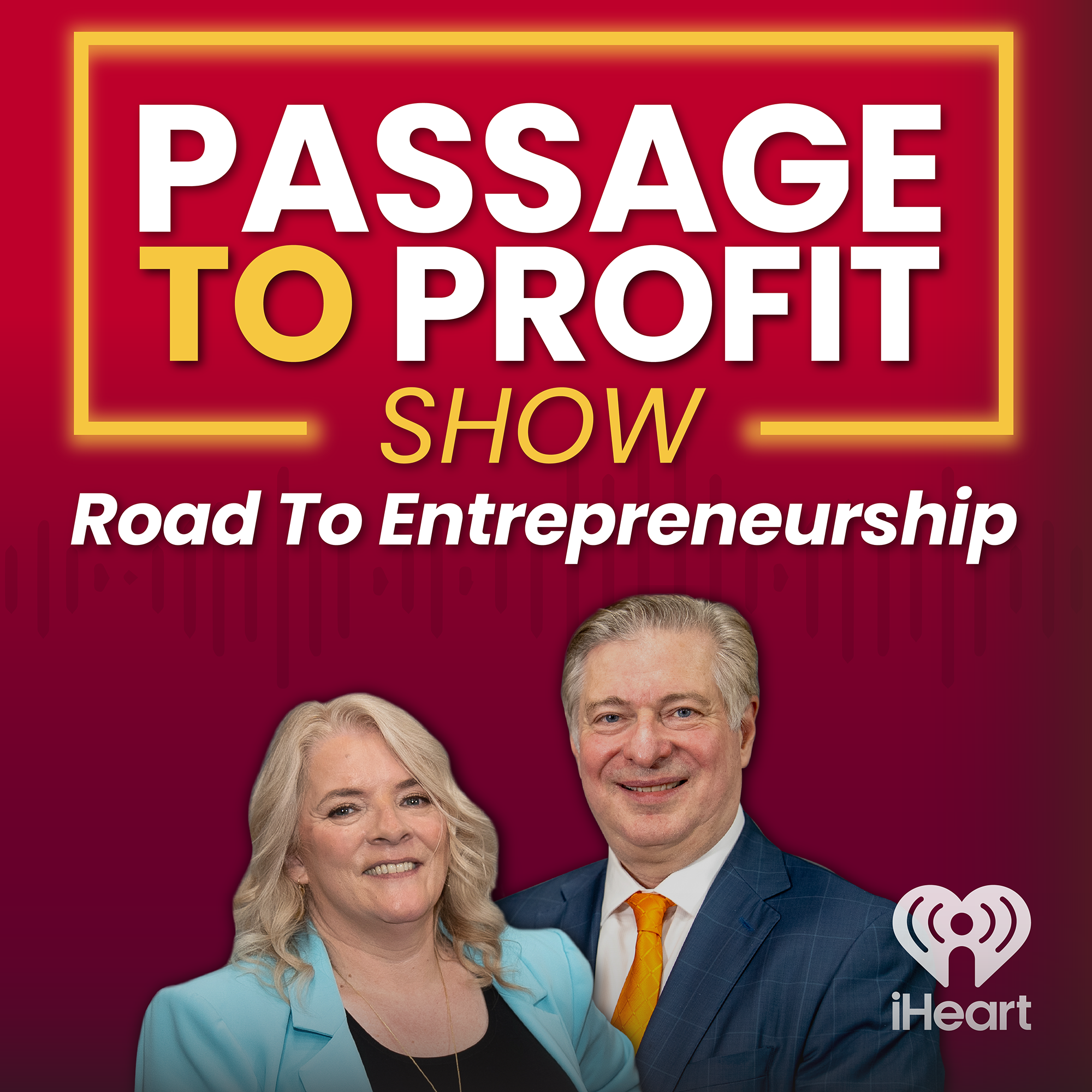
[00:00:21] Speaker B: It's Passage to Profit with Richard and Elizabeth Gearhart.
[00:00:26] Speaker A: I'm Richard Gearhart.
[00:00:27] Speaker D: Hi, I'm Elizabeth Gearhart and we're your hosts.
[00:00:29] Speaker A: Welcome to the Passage to Profit show, the Road to Entrepreneurship podcast. We have a few little things that we want to talk about. As you know, the US Government is releasing files about aliens.
[00:00:43] Speaker D: And you're pretty terrified, aren't you?
[00:00:45] Speaker A: Well, I'm confused. I mean, every time I think they're
[00:00:48] Speaker D: going to out you, Richard.
[00:00:50] Speaker A: I knew that was coming. We should have never done this topic. But no, no, it's just like there's so many different types of alien ships and sightings. It makes me think that, you know, they've got different size ships, they've got cones, they've got footballs, they've got saucers, they've got lights. How many different kinds of aliens are out there? Why do they have all these different kinds of ships? I would think maybe one or two.
[00:01:12] Speaker D: How big is your imagination? Because some people think this is all fictional. I don't know.
[00:01:17] Speaker A: Well, now they have some really, you know, credible sources here, like U.S. astronauts. They released some footage of U.S. astronauts talking about how they saw things floating outside their spaceship. Right. And then fighter pilots seeing cubes that were in glass spheres that were speeding along with their planes. Multiple pilots saw this. So, I mean, it's hard to make that stuff up. I mean, you can make it up, but. But it seems so.
[00:01:46] Speaker D: Did they release any new information that would prove or disprove that aliens are among us?
[00:01:50] Speaker A: No, it's just the same old stuff, just new stories.
[00:01:53] Speaker D: Clickbait, clickbait. Okay. Well, I have an actual experience that I thought was very cool for Mother's Day, Richard and I went into New York and we were walking up fifth Avenue, and I don't know if you guys have been in New York at 5th and 57th. I know. Robert, you have.
Louis Vuitton is redoing their building. They're remodeling, and instead of having crappy scaffolding on the outside, they had this facade made up that looks like Louis Vuitton luggage stacked up. It is the coolest thing.
And talk about branding.
[00:02:28] Speaker A: Yeah. And I wanted to file A design patent on that. As soon as I saw it, I just. The patent attorney in me just had to come out and say that.
[00:02:34] Speaker D: Yeah, it was so. I think that that was just such a smart move because I don't know how much it cost him. But their brand is so evident with that.
[00:02:42] Speaker A: Yeah. I mean, people, even though they can't go into the store, they'll come to see the building and come back when the building is open.
[00:02:50] Speaker D: Yeah, absolutely. Or just buy a Louis Vuitton bag somewhere else.
[00:02:53] Speaker A: Yeah, you could do that. They had a lot of them on the street. They were a lot cheaper than the ones in the store. I guess we're here for next Mother's Day.
[00:03:01] Speaker D: Their logos were a little off, though. They weren't quite the right color.
[00:03:06] Speaker A: Well, today we are celebrating National Receptionist Day. Woohoo.
No, I think receptionists are very. Somebody has to answer the phone, Right.
[00:03:16] Speaker D: I agree that it's important to find a person that you can talk to when you're calling someplace.
[00:03:20] Speaker A: Yeah.
Personally, I hate answering the phone.
It always goes to voicemail because I never know who's calling. And I have this great friend, his name is Spam. Likely. He calls all the time, but I never pick up. He's always got money for me, too. He's got. Oh, we've got a loan.
We can clue you in for a bunch of money.
[00:03:42] Speaker D: Well, so thank you to all the receptionists out there, especially the ones that can stay cheerful and nice because they get some abuse, I'm sure.
So then, on a little bit of a sad note, I watched this documentary, a special last night that Diane Sawyer did on ABC about Richard Simmons. Richard Simmons was a fitness guru, but he wasn't your normal fitness guru. He was this guy. He'd been fat. He'd been fat as a child and he.
[00:04:09] Speaker A: That's what we all loved about him, right? I mean, he wasn't like arnold, you know, Mr. Body Perfect.
[00:04:14] Speaker D: Right.
[00:04:14] Speaker A: He was, you know, he was just
[00:04:15] Speaker D: like every person and he loved everybody. And he would go hug these really fat old ladies and have them do the dances with them and he had sweat to the older oldies.
[00:04:25] Speaker A: I wouldn't want to make my living that way. But, you know, it worked for him.
[00:04:29] Speaker D: But he was a recluse for 10 years because he didn't like the way he looked as he got old. It was really sad. And then he fell down the stairs and got hurt and wouldn't go to the doctor right away and his heart gave out. So it was kind of sad. But I always wondered what happened to
[00:04:43] Speaker A: the guy right now we know.
Well, you should catch the. I'm sure there'll be reruns. I think it's going to be on Hulu.
[00:04:49] Speaker D: It's going to be on Hulu and Disney.
It was a really good program.
[00:04:54] Speaker A: So speaking of really good programs, you're listening to Passage to Profit. We're going to have Robert Tuchman, who says most businesses are already invisible and they just don't know it yet.
[00:05:04] Speaker D: And then we have financial freedom expert Giuseppe Gramatico, who is going to talk about franchising and how it can help you live your life a different way. And later on, we'll hear from our friend Alicia Morrissey, a great jazz singer. And we've got secrets of the entrepreneurial mind.
[00:05:22] Speaker A: And on top of all that, we'll answer the question, in the age of AI, do you own your own voice? But first, it's time for your new business journey. And we'd like to ask our panel, when you look back, what was the one decision or moment that most changed the trajectory of your business?
And what did it cost you to make that decision? Welcome to the show. Robert, tell us, what was one decision that changed the trajectory of your business?
[00:05:47] Speaker C: How much time do we have?
Well, first off, thank you for having me on the show today. I'm going to tell a quick story because it's a really good story, and it completely changed the trajectory of what I was doing and continued to do.
And my first business called TSC Sports and Entertainment, we'd create these packages to go to events.
So it was our first big event. It was the Super bowl in 2000. The Giants were playing the Ravens. If you could, anyone could remember back that far, I'm sure Ravens fans do because they won. But what happened is basically at that time, There was no StubHub. There was no Vivid seats. We had to buy tickets from ticket brokers. So to make a long story shorter, what happened was I or me and my partner had paid about 200, $300,000 up front to get 300 or so tickets for the game. We get a call on that Thursday, Thursday, prior game is Sunday. All of our clients, executives, they're down in it was in Tampa. They're golfing. They're, you know, they're going to go to the game Sunday. We get a call that he can only deliver six of the 300 tickets.
So my heart drops.
I literally fall back and I'm like, my reputation's gonna be ruined. I'll never work in sports. Maybe I'll go out To California, become a screenwriter. Okay, I gather myself and I call him back and I say, listen, we have to figure this out. We have to figure out how to get these tickets together. He's like, listen, I need $250,000 in cash down here in Tampa because I have to go on the street and go purchase all of these tickets.
So basically now I'm thinking we only had six people in the company at the time. This was our first big event. My brother, he's an artist, lives in Brooklyn, just got married. Least business guy, you know, call him up, he had to go to the bank, pick up the money, which they had to put together was all we had left in the bank.
His wife thought, I'm dealing drugs down in Florida.
Comes down, brings the money. I have to hand it over to this broker with everything. This is it, this is our business to get these tickets. Finally the broker calls us up, you know, I'm calling all weekend. No, no, calls us up Saturday into Sunday, probably 4:00am I got, I have all your tickets. I finally got them. I went and picked them up. We gave them to all our clients who never knew on Sunday morning prior for them going, going to the game. We ended up losing $300,000 on the event we're supposed to make all of our money on. We paid all of our salespeople. Our clients never knew. And the thing that changed everything there was those clients were my clients and they stayed clients for 20 plus years. We must have got paid back, you know, 50 times from everything and understanding, because there was a lot of other companies that just took off, left town, closed shop.
So that was the biggest story. I still have little nightmares.
I remember when I first came back, I was having nightmares that I was on this little island and it was sinking. And that's when I learned about Klonopin.
And that helped. So anyway, no, that sounds like that
[00:09:24] Speaker A: is a pivotal moment. That would be a pivotal moment. But it's great that everybody stayed with you after all of those years. So actually the disaster turned out to be an investment. Right. And so you can't beat that.
[00:09:36] Speaker D: I'm surprised you gave the same guy more money.
[00:09:39] Speaker C: Well, I had no choice because the situation was he was my only out because at that time there wasn't anywhere else to go. And he, I had already given him the majority of the money. So if even if I gave that money to someone else, they still wouldn't have been able to deliver all of those tickets. So it was my only option. And the funny thing was, after all this months later, he comes to my office and says, I want to make it back to you. And he brings out his little checkbook and he gives me a check for $10,000.
And I literally looked at it and just threw it back across the table. And I was just like, I'll never work with this person again.
[00:10:22] Speaker A: Oh, absolutely. At a minimum. Well, thanks for sharing. Giuseppe Gramatico, what was the one decision that you made that changed the trajectory of your business?
[00:10:31] Speaker E: I appreciate the question. As you're talking, I'm going through and thinking which had the biggest impact. And about 25 years ago, when I worked for the financial service in J.P. morgan Midtown, I met a personal lifestyle coach. His name was John Allen Mollenhauer up in northern New Jersey. Everyone calls him Jamie. And I remember him telling me this and it didn't really resonate, but he said, in any business, you have to almost create a media company.
What does that mean? Well, you need to be able to get out there and let everyone know you're there, whether It's a podcast, YouTube channel. I remember it just, it struck me, but I didn't really know what to do with that information.
Fast forward 20 years later, I launched my franchise consulting business and I was doing everything right. I brought a lot to the table, but just wasn't attracting enough people into my business.
And we started talking, we started talking back on LinkedIn. We had lunch together and I said, remember that media comment you made? And he goes, yeah. And he said, well, why don't you create a podcast? He said, you have a face for radio.
So it was an audio only podcast
[00:11:35] Speaker C: nowadays.
[00:11:37] Speaker E: Well, fast forward, we're in trouble, right? Fast forward eight months and we were on YouTube. So we lost my face. But in all seriousness, yeah, we launched on YouTube back in 2020.
So right before the pandemic, it just happened to work out that way. And I remember him telling me, you got to create this media company, whether it's audio, it's video, it's YouTube, whatever the platform is. You got to get out there and you have to educate, you know, you have to really resonate with people. So it's a high touch people business. And I just, it just struck me and launched a podcast franchise, Freedom, back in February of 2020. And it's just been over six years and about 300 episodes.
And that really catapulted the business. It really got my video out there, the information out there, the podcast. And yeah, it just completely changed the trajectory. We doubled our revenue within 24 months. And it's Been going really well since then.
[00:12:32] Speaker A: That is such great advice. Because today you gotta be out there and you gotta be heard, and you gotta get your message out to.
[00:12:39] Speaker D: I knew how to do it right, too. And they didn't quit. I mean, that's the hardest part is people do six episodes and quit.
[00:12:45] Speaker E: Yeah. The average is 10, I think 10 episodes and they quit. Right.
[00:12:48] Speaker A: So, Elizabeth, what is a decision that changes the trajectory of your business?
[00:12:53] Speaker D: So Richard was in corporate for a long time, and he was miserable. And I wanted him to start his own firm for a long time. And then they were doing another reorgan. We may have had to move to Boston, whatever. So he decided that it was time to start his own firm, which I was strongly in support of.
I didn't realize at the time that it wasn't just starting a firm. It was throwing ourselves into the entrepreneurial community and doing things entrepreneurial way.
And that has been so rewarding. And I think with now that I'm getting older, what I love most about it, we were at a conference. We saw a lot of people we've known for a long time. They're in their 70s. They're going. They're marching towards 80. They are not slowing down.
That's what I love. One of the things that they don't
[00:13:40] Speaker A: think they're slowing down.
[00:13:41] Speaker D: Well, they're not. Well, they don't. They might have slowed down a little bit. No, they still have vitality. They're smart. They're going. So that's one I didn't realize. We were getting into something where we could work on things we love working on for the rest of our lives. Really?
[00:13:57] Speaker A: Boy, that kind of sounds exhausting, but I agree.
[00:14:03] Speaker D: What else are you gonna do?
Sit around and worry we're gonna be
[00:14:06] Speaker A: wheeling our wheelchairs into I.
Recording radio shows?
[00:14:13] Speaker C: It's better than wheeling wheelchair into Bingo.
[00:14:17] Speaker A: Turning up his hearing aid.
[00:14:18] Speaker D: You know, just one quick thing about that. So you know how AI knows all about me and it taunts me. Like, it puts commercials in my feed for older ladies because I told Gemini how old I was. But our TV knows too. And so it keeps showing us, like, oh, these adult retirement communities and all this stuff. And that's what really made me think about it. It's like I'm never going into one of those.
[00:14:40] Speaker A: Well, for my decision that changed the trajectory of my business, I'm gonna put my goody two shoes on and talk about my morning routine. I get up at 5am and I work for, do some emails and I plan my day and Then I go out and I do my workout. And getting started every day, I fall asleep at 8:30. Right. Which is not. Not so cool.
It's kind of hard when we go out now to stay up, pass, you know, stay up with everybody else, but we don't do that so much.
[00:15:10] Speaker C: And.
[00:15:11] Speaker A: But getting up early, I think, has made a big difference. I do my best work in the morning when I'm fresh, get my exercise, have my breakfast. I think it's made a really big difference in my productivity in my organization.
[00:15:25] Speaker E: The morning is. You got to own that morning.
[00:15:27] Speaker A: Yeah, it's. It's so nice and quiet. I can really relate to that.
[00:15:31] Speaker C: I just got to get up before my teenage girls for a couple hours because as soon as, like, you know, 7:00am Comes, it's. That's my shirt. No, it's my shirt. That's my. And then everything. So getting in those. I have that same routine.
[00:15:47] Speaker A: Well, now it's on to our main guest, Robert Tuchman from Amaze Media Labs. Robert Tuchman has built and sold companies to Hollywood powerhouses like Creative Artists Agency and William Morris Endeavor. He's interviewed everyone from Kevin Hart to Alex Rodriguez and now says the biggest battle in media isn't creating content, it's surviving the brutal war for attention. So welcome to the show. And how do we survive the brutal war for attention?
[00:16:17] Speaker C: Yeah, it's difficult. You know, we all have to become media companies. That. That's really what has. Has happened. So now everyone has a way to basically have a podcast, be on YouTube, Instagram, put out this content, and there's great content out there. And I truly believe that it's a huge part, especially as an entrepreneur and building businesses, that you need to be out there and you need to put yourself out there. The hardest thing, though, is audience. How do you get audience? Because you could have the greatest content, greatest stories.
And I did. I hosted a podcast for Entrepreneur, and it was hard to grow audience at that time.
[00:17:04] Speaker A: How much audience does a small business need? I mean, of course, we would all love to have audiences of a million subscribers.
Each video, half a million views. We'd love to be Mr. Beast, but practically speaking, how big does an audience have to be for kind of a normal small business? What's a good ROI for a podcast?
[00:17:27] Speaker C: It's a great question. And because my company, Amaze Media Labs, we create podcasts also, and then we also grow audience. We always get that question.
And what I say, it's really not about the size of the audience. You know, you're not the Joe Rogan show or you're not, whatever, you know, millions of you're really looking, especially as a small business, you want a niche, right? You want a targeted audience. So if I can get a potential 250 people listening who could be clients of my business, I much rather have that than 25,000 people just listening because they're interested in, let's say, my voice, which probably not. So in any case, I think I have to agree.
[00:18:17] Speaker D: Can I just butt in here? Because, like, I'm involved with PodFest, I go to their conferences and one of the very first things they tell everybody is the riches is in the niches.
[00:18:28] Speaker C: I love that saying. I haven't heard that, but I love that saying.
[00:18:31] Speaker D: And it's marketing 101, right? It's finding the people that want to buy your product.
[00:18:36] Speaker C: It really is. And I think most importantly, if you look at it especially as everyone becomes their own media company and everyone is promoting something or creating something or selling something, you want the right people. So I look at it as, how do you create your podcast? How do you create your content?
So it's focused on those people who you want to attract. And it could be, you know, you could find the greatest thing ever is that you could put something out there. One person, let's say today could be listening to this show and say, oh, this guy Tuckman, he create amazemedia Labs, he creates podcasts. He could be the CMO of some major healthcare company. All of a sudden I get a call and we're creating. They become our biggest client, right?
So in any case, hopefully you're out there listening.
Call me, I'll give you my number.
But in any case, I think that's really the key.
[00:19:36] Speaker A: I think it's easy to kind of get caught up in the, in the likes and the listens and the subscribers.
And, you know, it becomes sort of a popularity contest and most businesses are going to have a narrower focus. You know, replacement windows. People need replacement windows two or three times in their life at the most, right? But when you're looking, you're looking and you're looking for content and you're looking for information, and you may not subscribe to that channel, but you may watch two or three of their videos and say, I gotta call this company and find out more.
[00:20:11] Speaker C: I think the key thing is it's not about the number of listeners, it's just finding those few that really are going to be your buyers. Everything else is just, is really noise.
[00:20:26] Speaker D: There are a lot of people listening to podcasts. Now and a lot of people on YouTube now. And do you feel like as a business, if you want to attract clients through YouTube, you should really be posting educational content, maybe even how to videos. So if you're now a patent attorney, you might do a video on why a patent search is important and what an attorney does when he does a patent search for you and why the USPTO wants one. Like, do you think those kind of videos could be attractive?
[00:20:54] Speaker C: Yes, I think that those are the best types of videos. It's not the self promotion per se.
What I like to tell our clients is we love to do these podcasts that we consider thought leadership.
So someone who's, let's say Richard, has a podcast and you know, it's all about patents and someone's listening or watching the clip and they're like, you know, this guy sounds really sharp, smart, they're going to be much more likely to work with you or to call you to work with you than if it was just self promotion. And we do this and we do that. So I think the educational videos, I think podcasts really where the growth is as well within podcasting. And even when you look at podcasts that are coming to Netflix and major entertainment companies, a lot of them, the majority of them are about learning about education.
So for sure, I think those clips, anything that you could do to teach others not to worry about giving away secrets. It's, it's, people want to work with you because they hear you and they realize that you know what you're talking about.
[00:22:08] Speaker A: Right now there's a lot of information that's available on LLMs. ChatGPT. Perplexity, Claude. Somebody wants to know how to do a patent search, they can just go to Perplexity and ask the question and they'll get a 30 second answer. So what's the advantage of creating content on YouTube or on a podcast if the information is already available from the LLMs?
[00:22:34] Speaker C: I honestly wish I had an answer to that question because it's very true that nowadays, and especially I know a lot of industries and a lot of people who, you know, work at law firms and saying instead of, you know, asking and going to an associate and finding out information, they're going on chatgpt, they're pulling it up, having the partner review that information.
But I think at the same time, what's really important is people do want help. They want, you know, it's, it's easy for me to pull something up on ChatGPT and learn how to do something or how to how to create whatever it might be. But when it comes down to it, now I'm gonna have to go do that, or I'm gonna have to go create a podcast, or I'm gonna. It could tell me how to do it. I want to work with someone who really knows what they're doing. So at the end of the day, I want to watch someone, I want to see them. And the reason I want to see them on YouTube or listen to them on a podcast is going back to that point of if the person sounds educated, smart, that you get a good vibe from them, you'll want to work with that person. So I think while ChatGPT and all of these other AI tools are great for learning and understanding, at the end of the day, it's hard to then go take that and go do all those things on your own.
[00:23:59] Speaker D: What I've been doing for the last couple of years is researching AI visibility for Gearhart Law.
So I don't know, probably a couple years ago when I was using ChatGPT, I saw people being quoted by ChatGPT. I'm like, okay, how do we get your heart law to do that?
Well, you can take a podcast and have a website. You need to have a website. You can get quoted by things that you do in your podcast. There's what I call the middle end. So, like, there's the front end part that everybody sees, then there's the part that the machines see. Right. And you can do that. It's called adding schema code. It's a lot of other. A lot of different things to make your podcast content look really appetizing. I call it appetizing because I feel like these answer engines, these LLMs, go and eat all of our content.
So you can make your podcast look like dessert to them. Right. If you do all these things in
[00:24:55] Speaker A: the middle end, definitely don't want to make it look like vegetables in the middle end.
[00:24:59] Speaker D: And then you're more likely to get quoted. And then if people say, oh, well, Gemini quoted Gearhart Law on this, I think that is a really good reason to do a podcast. What do you think?
[00:25:11] Speaker C: Absolutely. Great point. I think the really important part of it is always. It used to be you want to get quoted, let's say, in the newspaper, or you wanted to get quoted. Because I remember, you know, when I had a couple sports businesses, you'd go on CNBC or you would get quoted in the Wall Street Journal, and all of a sudden, you know, your clients thought you knew what you were doing, even though you probably didn't. I didn't. But in any case, I do agree that I think nowadays what's super important is search. Right. And we're not talking search when it used to be Google and where do I rank? And now it's also, hey, when I put in ChatGPT, you know, find me the five best patent law firms in New Jersey, how do I get listed?
[00:26:00] Speaker D: ChatGPT told me that having a podcast was influencing Gearhart Law coming up as the answer because it's fresh content. They're constantly looking for fresh content to eat. Right. And it's authoritative. And the fact for us that the Transcript is on iHeart and iHeart has
[00:26:17] Speaker C: this huge more credibility. Exactly.
[00:26:20] Speaker D: Yeah.
[00:26:20] Speaker E: And if I can add one thing, and this is also, I was. I was talking to someone that's building out AI and helping people show up on search. He said, keep things simple. You know, don't. Don't have a podcast and talk about 100 different things. AI is not that sophisticated. It gets confused. Doesn't know where to rank you, doesn't know where to quote you. Talk about one topic. Go deep and spread out your shows. And I've noticed a big shift. We're showing up on the. Not always on that front page, but showing up towards the top, showing toward Gemini Search and chatgpt. So keeping it going really deep on a topic and instead of just throwing up and just talking about everything about whatever the topic is for the day.
[00:26:59] Speaker D: Yeah, those days are gone, right?
[00:27:00] Speaker C: Oh, yeah, yeah.
[00:27:01] Speaker D: So I find. Well, we're going to talk about AI later, but it's a very linear thinker.
[00:27:06] Speaker A: One of the things that you do, though, is you do find ways to elevate podcasts and YouTube channels so that they do get more visibility.
And your company specializes in that. Can you tell us a little bit about how that works and maybe kind of some of the results that you've seen as you've helped creators elevate their content.
[00:27:26] Speaker C: Certainly love to talk about this. I think that, well, what had happened is the company that I had started, we really were a podcast production company, started in 2020, you know, right in the middle of COVID So we were creating podcasts for companies and I remember we create this great podcast for Ford Motor Company, and I figured they're going to put it on their social channels. So I thought we'd have thousands and thousands of people listening. We had 150.
So I quickly said, I mean, for
[00:27:58] Speaker A: Ford, they've got brand coming out the wazoo, right?
[00:28:01] Speaker C: I mean, mistake mistakenly, people you get more than 150 lessons, right?
You might just stumble on it because, you know, for some reason or other. But in any case, that was when I learned that if we don't figure out how to get audience for these shows that we're creating, we're definitely going to be out of business. And I also realized when I dove into it that this is the hardest thing within podcasting, without a doubt, is how do you get audience? Because, remember, there's millions of podcasts, right?
And what we learned was, and what we created was something called audience lift. And audience lift is really a technology.
And how it works is basically what I like to say is we kind of fish where the fish are for certain, you know, niche, let's say, shows. So for instance, if I'm doing a show on entrepreneurs, and how it works is basically that we have tons of publishers, we have our own DSP, so we have 25,000 top digital publishers from entrepreneur to Inc. To, you name it, where entrepreneurs are probably going to be reading articles.
And if your target demographics as the podcaster, if your target demographics match up with the person actually reading that right there on their phone, that article within that article, your podcast pops up. And then it gives you the option to listen to the trailer for that podcast to see if you're interested.
Now, if you're interested, you can press subscribe. You're not subscribing to the podcast. You're subscribing to allow us to send you push notifications. Because you're probably reading the article and you know what? I gotta go have lunch, whatever. 24 hours later, we send you a push notification that says, remember, you're really interested in passage to the profit show. Right? So basically, then all of a sudden it pops up. You go, you listen. And what happens is the key thing is the technology behind it is able to understand where the majority of people are coming from who are actually not only listening to the trailer, but then listening to the podcast. And then it does look alikes and it finds similar type articles. And the results are incredible. We are at some of these results we get for all different types of podcasts are you're looking at a few cents a download. You know, I was telling you prior to the show, we had someone that used it for a show out of her basement, basically, and got 4,000 downloads for $500, right?
[00:31:07] Speaker A: That sounds like a real deal.
[00:31:09] Speaker C: That's how it works.
[00:31:10] Speaker A: We're with Robert Tuchman and we're hearing about amazemedialabs.com and the amazing work that they do. We're going to hear more about it after this commercial break.
[00:31:20] Speaker F: Do you hear that? That's the sound of uncertainty lurking under your hood. You know the feeling? I know I do. That sudden sinking sensation when you see a check engine light or your car unexpectedly breaks down and you're faced with sky high repair bills. It's time to shield against unexpected repairs with Car Shield. Car Shield is America's most trusted auto protection company and has an A rating with the Better Business Bureau. Don't let the fear of a breakdown keep you up to at night. Trust the Shield Car Shield. And say goodbye to terrifying repair bills and hello to peace of mind. Your plan also comes with 247 roadside assistance, courtesy towing, rental car options, and so much more. Don't wait till it's too late. Call Car Shield now before a breakdown. Protect your wallet. Protect your car with Car Shield. Get our best protection ever. Call now. You'll thank me later. 8002-6121-7680-0261-2176. That's 800-261-2176.
[00:32:19] Speaker B: Have you outgrown your health insurance plan or just not happy with what you're paying for? The number one reason we all change our health insurance is price. Are you paying too much for your health insurance? Would you like to have better coverage at a better rate or at little or no cost to your you? Your life needs are always changing, but have you done anything to improve your health insurance for you and your family? Health insurance laws and coverage are always changing and getting better. It's impossible to do all the research yourself, but now it's all done for you for free. So regardless of your age or medical condition, take a few minutes right now and find out if you can save money or even qualify for zero health insurance in your state. Call now.
[00:33:05] Speaker F: Paid for by cheaper health insurance. 8006-5214-7080-0652-1470.
800-652-1470. That's 800-652-1470.
[00:33:19] Speaker B: Now back to passage to profit once
[00:33:21] Speaker C: again, Richard and Elizabeth Gearhart.
[00:33:23] Speaker A: We're here with Robert Tuchman from Amaze Media Labs and and he is doing some amazing work in helping creators get found out in the YouTube sphere and in the podcast arena. It's so important, I think if you're gonna generate content, you want views and listens, but you want the right views and listens. And so tell us a little bit about how your company can help the podcast and the Content get to the right listener, Sure.
[00:33:53] Speaker C: I think the most important thing is first off, you need good content. Right. Everyone. We can grow shows, we can get listeners, but the key is you want them coming back as well. So it's always important, just I like to say, to make sure that you have great content as well, which I'm sure you do, and most people do.
But the way we do it and how it works is really with Amaze Media Labs, we have our Audience Lift products product and Audience Lift is a way to grow your podcast via the audio platforms. So if you want to grow on the Spotify's or Apples or different platforms, or if you want to grow on YouTube, there's also the ability to use Audience Lift to grow on on YouTube and everything that is done and how we set it up, we have a DSP that has over 50,000 or so worldwide really high end premium digital sites that basically are where people are reading articles that might be relevant to your podcast. And what happens is that people are reading those articles and all of a sudden you're reading an article and you have a podcast that's specific to or contextually relevant to the content in that article.
And as a podcaster, you target a certain demographic because you want the right listener. So for that listener, that ad shows up and it's basically a trailer of your podcast. You listen to the trailer, press play and then it can take you to subscribe to receive push notifications, and then it could take you to actually go listen to the podcast.
And really it works incredibly well. We had to come out. You know, we created it out of necessity because it was so hard to build audience. You know, everyone was like, when am I going to go viral? How am I going to grow this? You know, the big I'm going to go viral. Well, I've got news. No one goes viral anymore. You know, there's that, that, that, those days, I mean, maybe the water skiing
[00:36:08] Speaker A: squirrel days are gone.
[00:36:10] Speaker C: Yeah, it's just too much content, too many people doing things. And it might be for, you know, a second. But how do you grow over a long period of time? It's just like if you were watching television, there's commercials, right? Why is the NFL putting a commercial on for Thursday Night Football? Well, everyone knows the NFL has Thursday Night Football. But if you don't remind the viewer or if you don't remind them that, oh yeah, this Thursday, this is the game people forget. There's too much information out there, too much going on in people's lives.
So audience lift really helps to grow these shows.
[00:36:49] Speaker D: Some of what you're doing has been kind of blending traditional marketing, I think, with podcasting and the new digital world. Because in old marketing, old school Google, as my girlfriend would say, Google's old school now, there were tech ways to target an exact audience. So you're taking that piece of it, but you're going a step further by being able to put the podcast trailer in the scroll, in the feed of people looking at news stories or whatever. That's new.
[00:37:19] Speaker C: And that is the biggest thing, because you want to fish where the fish are. And if I am reading an article, let's say the podcast is on AI and I'm reading an article on AI, there's a good chance I'm pretty much interested in AI. If I'm going through that, reading this article and halfway through I see this trailer. Now, the great thing about it is I could press that trailer and decide within 30 seconds if this is something that I'll be interested in listening. Not right now, although you can listen while you're still reading. But I can get a push notification so 24 hours later tomorrow, when I have more time that I can actually listen to that podcast. And it is really combining old school Google, as we say.
Thankfully, they created. I'm sure they're happy about Gemini to make sure they, they don't lose out there. But you know, as we talked about, interestingly enough, it's like I go to Gemini now for my search, right? Or chat GPT.
They realize that.
But the great thing about audience lift and what it does is we can grow any show because there's so much great content out there. But if no one knows about it or no one hears about it, they're never going to find it. Because the hardest thing in podcasting is discoverability.
[00:38:49] Speaker D: The trailer. Do you give people help making the trailer? Because you want the trailer to be super attractive. It's like going on a first date, right? So what do you do about the trailer for your clients?
[00:39:01] Speaker C: So, yes, the trailer you want it to be, you want to put on your best face. Let's say it's basically like, you know, we got the idea. We had sold our, me and my partner, our last business to Creative Artists Agency, and we saw how big movie trailers were in generating ticket sales for movies, and it wasn't really revolutionary, but like, oh, we should do the same thing in podcasting, right? So, but we do not actually help the client create. If they ask us to do it, we will work. We'll give them guidelines. Best Tips, but we don't want to be. Unless we are creating the show for the client, then we will create the trailer, but we don't want to be there and someone to say, oh, well, the trailer isn't good enough. Or it wasn't, you know. But we do give certainly tips on length, on how you should really promote it and how it should be. Right to the point. Correct. Quick, very clear.
There's a bunch of other things you need to do, but it's a great point.
[00:40:16] Speaker A: Robert Tuckman from Amaze Media Labs.
[00:40:19] Speaker D: How do people find you?
[00:40:21] Speaker C: Either go to amazemedialabs.com and there is a contact us and just say, I'm trying to reach Robert Tuckman and the good thing is I get all those emails, or you can go to Audience Lift and if you are interested in this technology to grow your podcast or to grow your content or your YouTube channel. If you go to audiencelift.com there is also a contact button that you can go on there and you can fill it out and ask to connect with me. I'm also on LinkedIn. I love getting messages on LinkedIn, I love posting on LinkedIn, and that's probably the best way to find me.
[00:41:07] Speaker A: Passage to profit with Richard and Elizabeth Gerhardt.
[00:41:10] Speaker D: Now it is time for real AI use cases, where I'm going to ask everybody for one way they're using AI, their most recent thing they did, or their favorite way, the most fun way. Giuseppe Grammatical, you have been sitting there so patiently. Why don't we start with you on
[00:41:24] Speaker E: this one, how I've been using AI. So, yeah, I mean, it starts from the very beginning. AI will scan our website, it'll scan all our social media and give us the topics we should be talking about with the hook already built in. So grabbing attention, giving a topic, and then from there, the AI will actually chop up our YouTube, our shorts and things like that. And then we have a human editor that'll go in and check the shorts, send it to me for approval. So. So it's, it's cutting down on the. On the content creation, the cost, the time it takes to do so, and it's giving us those hooks because what good is good content if the hook isn't there and you're not grabbing the attention?
[00:42:02] Speaker D: So, back to you, Robert Duckman.
[00:42:04] Speaker C: I love AI. I have been using it and using a certain AI that helps you create LinkedIn posts. And I will tell you, it has helped me just in coming up with interesting stories and then putting it together, and it's been incredible. Just the engagement I've gotten from when I was writing my own LinkedIn posts.
[00:42:30] Speaker D: Excellent. Richard Gearhart.
[00:42:32] Speaker A: I think we've been using AI to understand potential clients a lot better. As an intellectual property lawyer, most of the intellectual property of most companies is available online. You can go to places like Google Patents or the Patent Office and you can identify these databases. So if we're in the process of trying to woo a new client, one of the things that we can do is, is look at their intellectual property portfolio and we can analyze it and it makes it easy to identify gaps or maybe things that aren't quite as good as they could be. And based on that, we're in a pilot program now where we're approaching potential clients, much to the chagrin of their current law firms, but to really try to help them and just point out that there are some things here that could be done better. So without totally geeking out, we have something called a patent term extension, which is a real technical way of calculating how long a patent lasts. And we can go in and see how those are being awarded by the Patent office and if they can have patents, can have shorter term. So we're using AI to identify those kinds of things.
[00:43:44] Speaker D: And that was your idea. I know, we've talked about it for a while. That was brilliant.
[00:43:48] Speaker A: Well, thank you.
[00:43:48] Speaker D: Especially for the drug companies because for them, the longer their patent lasts, the more money they make because the generics can't come in and steal their research.
[00:43:56] Speaker A: Yeah, I mean, it's less important for entrepreneurs because they have an exit strategy usually. So the patent term is less important than getting it, but once it's been adopted by a larger company that has longer term view, then it becomes super important.
[00:44:10] Speaker D: Yeah. So me, Elizabeth Gearhart, I have been using it to really dig into YouTube shorts.
I know we've all been talking about that here today. So there's gemini within the YouTube channel and I've been asking it how to improve the shorts. So the main thing is you want people to watch it and not swipe away. And is it the title that matters most? What is it that matters most? And is it the time of day that you post? I've been doing my own research too, but yeah, I found out some interesting things. Now Robert tells me that they could be lies, some of them, which I probably, probably are. So I'm going to reinforce. I'm going to ask also Chat and Claude what they think about this advice from Gemini. But I'm really trying to optimize our YouTube shorts because if you post a video on YouTube, you get views. But if you post shorts, like, our shorts have these huge spikes in views, right? We're getting a thousand views per short. So I want to consistently post shorts, but I want to do it the right way without like, spamming people or whatever. So really working on that with the different LLMs to try to figure that piece out.
[00:45:14] Speaker C: Another just a key thing there that goes back to our conversation also with the shorts and with YouTube and what I've learned from Audience Lift. It's also not just about the numbers, kind of like we talked about. It's the engagement. Are people watching the entire short? And that's really one of the most important components.
[00:45:35] Speaker D: So I had Opus doing them. So I don't know if you guys know Opus. It's an AI program. And Google told me, well, you know, you wasted the first five seconds of this short. Nobody's going to watch it. So then you can trim it in YouTube. So then I went into YouTube and trimmed them based on what that said, and I think that that worked better. And then it said, well, you really should use Descript to generate your shorts. But I had tried that before.
Maybe it's better now. I didn't like it because Descript was like cutting off half a person's face and stuff. But I'm going to try it again based on what Gemini is telling me. But yeah, that is the most important thing for shorts is that people stay and watch it. Right. So I'm looking at.
[00:46:13] Speaker A: I'll watch like two and three times.
[00:46:15] Speaker C: Yeah. Well, then you see real engagement. And that also is super important.
When they see a really heavy engagement like that, then they send more and more people to those shorts.
[00:46:29] Speaker D: Real AI Use Cases Business Owners Roundtable. This has been edited. To hear our full discussion, listen to our podcast, Real AI Use Cases Business Owners Roundtable on YouTube and wherever you get your podcasts. Passage to Profit with Richard and Elizabeth Gearhart. Coming up, we still not have spoken to Giuseppe about his franchising company. And we have secrets of the entrepreneurial mind. So stay tuned to hear that.
[00:46:54] Speaker G: Here's a real life story that affects 50% of all of us out there.
It's called Divorce. If you've gotten divorced and now you're struggling to pay your bills and your credit card debts are completely out of control. You need to call this special debt relief hotline right now. We help people with all kinds of money problems caused by different life challenges. A divorce, a job loss, even heavy medical bills. All these life events can sometimes financially stress you out and cause you to get out of control. We help people get their lives back by showing them ways to consolidate and reduce reduce their debt in some cases for a fraction of what they owe. If your credit card balances are more than $10,000, call us and learn how to reduce your credit card bills and monthly payments. Now. Here's our number paid for by Debt.com.
[00:47:38] Speaker F: call now at 8008-1008-5780-0810-0857 800, 810, 0857. That's 800-810-0857.
[00:47:54] Speaker H: Learn how thousands of smart homeowners are investing about a dollar to avoid expensive home repair bills. John A former non customer said, my air conditioner broke and I had to spend $1,900 to fix it. Jeff A customer wrote, my air conditioner broke and I got a new one at no out of pocket cost. Mary A former non customer, wrote, my heating system stopped working running. I had to spend $3,000 to get a new one. Lisa A customer wrote, my heater stopped working. I got it fixed at no out of pocket cost. For about $1 a day, you can have all the major appliances and systems in your home guaranteed fixed or replaced. Call now. If the lines are busy, please call back.
[00:48:35] Speaker F: Call the Home Warranty Hotline now at 800-255-4940-880025-54940 800, 255-4940. That's 800-255-4940.
[00:48:53] Speaker C: Passage to profit continues with Richard and Elizabeth Gearhart.
[00:48:57] Speaker A: Quick shout out to our friends at WHSY 9:50am and 105.9 FM in Laurel, Hattiesburg, MO. Thanks for listening and if you're new here, Passage to Profit is a top ranked entrepreneur, podcast and radio show heard in 38 markets. It's a place where founders share what really works. Now it's time for intellectual property news. Well, it does seem if you're in the media or a media personality, your worst nightmares are coming true. A group of award winning journalists have recently sued Google for using their voices to train AI models such as Google Assistant and Gemini Live, among others. According to the lawsuit filed in Illinois, Google allegedly used thousands of hours of recorded human content without the speaker's permission, then incorporated those voices into its platforms. Google obtained voice recordings by scraping the Internet. The particular journalists were allegedly selected because they had optimal voices described as professional and studio quality. In a similar case in New York, Lerman vs. Lovo, a new York court ruled that a person's voice later used to generate AI clones could not be protected by copyright or by trademark. In this case, the plaintiff actors claimed they were tricked into providing recordings to lovo, unaware they would be used for cloning. Ruling against the actors, the court said that copyright law only protects original recordings and not new AI replicas. However, the court did hold that New York publicity and privacy law can protect against unauthorized commercial voice use. While the ruling did provide the plaintiffs with some potential relief, the ruling also made clear that there is no federal protection for AI voice cloning. And the toughest challenge in all of these cases for voice actors is that technology exists to automatically find and duplicate publicly available recordings such as YouTube, podcast, podcasts, broadcasts, etc. With its vast technical engine, Google and the LLMs can consume this content without the knowledge or permission of the owners. Because of the vastness of the Internet, most actors would probably never even know if their voices had been copied. Fortunately, a number of bills have been introduced into Congress to address the lack of federal protection for artists in the age of AI cloning. These include the no Fakes act, the TRAIN act, and the CLEAR act, which have received broad bipartisan support. Yet none of these acts have been formally passed by Congress. We hope that Congress does the responsible thing and enacts legislation to protect artists rights, and we will keep you updated on developments here at Intellectual Property News. And if you have an idea or invention you want to protect, the team at Gearhart Law helps entrepreneurs turn ideas into protected assets. You can visit learn more about patents.com or learn more about trademarks.com for a free consultation and practical guides to get you started later. Secrets of the Entrepreneurial what successful founders think about that most people never see.
[00:52:10] Speaker D: And now it is time for Giuseppe Gramatico with ggthefranchiseguide.com welcome Giuseppe. We've been talking quite a bit already, but we haven't talked about your company, so tell us all about what you're doing.
[00:52:22] Speaker E: So Gigi the franchise guy Giuseppe Gramatica is a mouthful. So we went with the initial. So if you've ever worked with a executive recruiter where they kind of help you find that perfect job, we do the exact same thing on the franchise side. So we really help individuals figure out if franchising and business ownership may be a good fit and if it is, what does that ideal franchise look like? And our rates are the same as an executive recruiter. There's no fee to you, so we're paid by the franchise company.
So we really, I think, help a lot of people escape that W2. But at the same time, we talk a lot of people off the ledge and maybe having them keep their job, because entrepreneurship is definitely not for everyone.
[00:53:05] Speaker A: So what makes for a good franchise?
Franchisee, I guess, you know, we always
[00:53:09] Speaker E: say there's three things you want to be coachable and be able to follow a process.
So the joke and the example I give is you don't buy a McDonald's to go in and change the menu. You're going to follow that menu, that system that actually works. You need capital. We always say you need a minimum. I would say about 50,000 liquid, about 150,000 net worth. This isn't a no money down 2am infomercial that you're hearing on TV. And I would say you probably want to have about a six month, six months to make a decision, not necessarily open the business, but if it's going to be, we'll call it two years out, one year out, that franchise may not be available anymore. So you want to have some, some distinctive time frame. So those are kind of my three general things I have people kind of consider before looking at a franchise.
[00:53:57] Speaker D: So do you have people that buy maybe one franchise? Like there's McDonald's everywhere. So do you have people that start with one McDonald's and end up owning 10 most?
[00:54:06] Speaker E: I would say about 50% of the people we work with. So we work with, with individuals all over the US And Canada. And a lot will either come in and say, I'll buy the rights to three McDonald's or three physical locations or three territories. We were talking about blue collar jobs and what AI wasn't going to take away. So the electricians, the plumbers, so they may buy three markets with two or three hundred thousand in population and, and they'll develop those over time. Others will just develop them later if there, if there's availability, basically.
[00:54:37] Speaker A: So are McDonald's still hot franchises?
[00:54:40] Speaker E: They are.
I wouldn't say they were on top of my list, you know, for nothing wrong with the brand. But I would say one characteristic a lot of people are looking for is zero employees to very few employees. And that is a characteristic. We call, we call it a characteristic or just something they really want that franchise to have.
So we work with a lot of brands, believe it or not, with zero employees, we have operators that own four locations of a franchise and have no employees.
[00:55:08] Speaker D: Like what kind of company would that be?
[00:55:10] Speaker E: So we'll see things as salon suites, so shared spaces where you won't even have a receptionist. They'll be able to come in through an app, log in and get a haircut, then get a massage and maybe remove a tattoo later on that you regretted from college. So the staff that's maintaining the property is a, is a 1099 contractor. So no staff whatsoever. You do have a physical location, but yeah, you rely on one 1099 contractor.
[00:55:38] Speaker D: I didn't even know those existed till like a month ago. And I have a hairdresser that comes to the studio actually to do people's hair and makeup, but they want to have it done before they record a video. And she said, can you come to me? And it was a salon suite. I had never seen those before. Are those really catching on?
[00:55:53] Speaker E: They're huge. Yeah. Some states, New Jersey being one, has some, some issues, licensing and the build outs and things like that, but they've been really big. Basically you have a footprint and you're looking to find 20 to 30 health and wellness professionals. So not just salons. And you're helping these individuals get out of the salon, the barber shop, and get into business for themselves and manage a small suite.
[00:56:15] Speaker A: So how is that different than owning an office building that has different suites in it?
[00:56:20] Speaker E: This is specifically health and wellness. On the franchise side, you're getting that support. So the franchise company, what they call the franchisor, will come in and every month they'll actually set up a mini website for each and every one of the tenants. They'll set up bill pay, they'll give them an app as well as a scheduling app. And what they'll do is they'll, they'll actually have workshops on AI, how to find your customers, how to have them come back. Right, what's that marketing strategy? What's the, the retention? We want to eliminate as much attrition as possible. So the franchisor will actually help the tenants. And that's something being offered as a benefit of owning the franchise.
[00:56:56] Speaker A: Well, that's pretty amazing. So how long does the take for the average franchise to start making money? So if you have you're putting in 50,000, how long does it take to get it set up and running and creating income?
[00:57:10] Speaker E: It's a difficult question to answer, so I'll answer it this way. Depending on what the franchise is, if it's a plumbing or painting business, even a better example, that business can be up and running in as little as 30 days. That business model relies on 1099 contractors, 0 to 1 employees. So those tend to cash flow a little bit quicker simply because you can get up and running in A month. And you have very, very little expense. Basically you have a marketing spend. So those could be profitable in that first year.
Once you get into brick and mortar, the salon suites, the gyms, the trampoline parks, they could take anywhere from one to two years to get open. So that's you sign the franchise agreement, wait a year or two to actually get open.
Those take a little bit longer. Because it's a membership model, you need to build up enough members. And what you do is while that's the locations being built out, you're bringing on those members to try to get you to break even. So in that two year mark, just say it takes you two years to get open. You could potentially be profitable day one if you have enough members.
[00:58:13] Speaker A: So if you're investing in a franchise, you need to be able to afford the franchise fees, pay the franchisor, and then you also have to be able to sustain yourself for a period while you're setting it up.
[00:58:25] Speaker E: Absolutely.
A franchise is a business on training wheels. So just like any startup, you want to make sure that you have the franchise fee. You pay that once per location or per territory and you want to make sure you have all the expenses. So what the franchisor will quote you is the startup is typically startup to the first 90 days of operation.
So you have that buffer. I always tell people, fast forward six months out, have that cash buffer in hand because if you are leaving your job to launch the business, who's paying your rent or your mortgage, your student loans and all your other expenses. So you want to have that financial buffer in any business that you start up. But yeah, factor in a franchise fee averages 30 to 50,000. There's definitely more, there's definitely less, but that's a pretty kind of the average, I'd say, across the board and then whatever build out when it comes to staff, to marketing.
[00:59:16] Speaker D: Yeah. So who owns the real estate for these brick and mortar ones?
[00:59:19] Speaker E: Typically in the franchise you are renting, McDonald's. Their business model is McDonald's actually owns the the land.
Most franchises they are, they don't own the building. If they do own the building, they are setting up a separate entity. Nothing wrong with that.
But we're seeing a lot of people instead of owning the building, they're buying the rights to five salon suites as opposed to owning the building and running one suite. So we're seeing a lot of that. As far as a trend, I would say less than 5% of the people we work with are actually owning the real estate themselves.
[00:59:52] Speaker D: Giuseppe Gramatico with ggthefranchiseguide.com what kind of
[00:59:57] Speaker A: work life balance does a franchisee have when they're starting the business? I mean, are they, can they expect to have like a 9, 9 to 5 job or is it 80 hours a week?
[01:00:08] Speaker E: It's, it's a great question, Great question. When I first started, it was a lot of hours. It was probably 80 hours a week when I launched. The business really depends on what you want your role to be. So you hear, and I'll simplify this, you have full time operators and then you have semi passive ownership. For anyone listening in that hears about passive ownership, it's bs, it doesn't exist. There's no such thing as passive ownership. Except for maybe a Shaquille o' Neal where he has a management team. He's passive, he has a management team that's really doing everything. So for those semi passive owners, you find a general manager and you are essentially managing that individual overseeing things. They call it working on the business. It is not easy. You're maintaining a full time job, but you can run that business on the side until you're ready to leave your, your nine to five. If you're running it full time, there's really no cap. I mean you, you could pick the business based off of lifestyle. So business coaching may be more of a 9 to 5, Monday to Friday type of business.
Water and smoke mitigation is 24 7.
Not that you, the owner are going to get those calls, but you have a dedicated employee which can always leave. Right? Let's be honest, let's call it what it is, but you can have that. That person may leave, but it could be a 24, 7 gig. But the goal with the franchise is to have those systems in place utilizing the AI, the marketing, the call center, so you're not glued to the business 247 Robert Tuchman.
[01:01:35] Speaker C: You have people coming to you and looking to get into owning a franchise. Obviously you sit down with them, I'm sure, talk to them. If you feel, for instance, that you know what, this person's gung ho, they want to do this. But three months from now they're going to be out the door. Like, how do you handle situations like that?
[01:01:56] Speaker E: That's a really good question. Because at the end of the day, if I were to lie to them and say, yeah, that's fine and just be a salesperson, the franchisor is going to pick up on it because you know, we don't actually sell anything. We introduce each and every one of our Candidates directly to the franchise brands. And the franchise brands will say, yes, you are a good fit or not. So we know, you know, we were talking about who's a good fit, that every franchise has an avatar. This is someone, for example, you need to be the mayor of the town for this restoration brand because you need to network and talk to the plumbers and the electricians and things like that. You don't have to know anything about restoration. I worked on Wall street and I got into building services. I knew nothing of building services, but I knew how to network. I knew how to keep relationships. So we'll tell them, hey, you know, these are the things that are needed. You're very soft spoken. You're afraid of your own shadow. But you're great at manag management. There are franchises that require a soft skill set of management. Right. You don't have to be a salesperson. So we'll break down, make sure they financially qualify, that they're asking the right questions. If they're asking, how quickly can I make, you know, am I going to make money? Or I can only work two hours a day, and they're being very selective, I'll come back and say, this is probably not a good fit. These aren't necessarily the right questions to be asking. Maybe these are some better questions to ask. And if I feel like, okay, you know, I think they'll be a good fit. We introduce them to the brands, and it's the brand's job to really dive in to those financials, give them the franchise disclosure document.
[01:03:22] Speaker C: How'd you go from Wall street to this business?
[01:03:25] Speaker E: I've been an entrepreneur my entire life, so in high school and college, I detail cars. I delivered.
[01:03:31] Speaker C: So did I first job.
[01:03:33] Speaker E: And I hate doing it now, which is funny.
[01:03:36] Speaker C: I work for my friend's brother, tg. They made us work all the time while we were. I don't know what they were doing, but we were detailing cars.
[01:03:45] Speaker D: Yes. I want to say, by the way, not only did they, these two guys both do the first same job, they're both dressed very similarly today.
[01:03:53] Speaker E: I'm afraid to say anything else, but yeah, detailing cars. I delivered flyers. I worked at a restaurant. My family set the bar high. They're from Italy. I'm first generation. We owned an Italian restaurant for 40 years. I learned the business, but a restaurant wasn't for me. Nothing against a restaurant or the restaurant business.
[01:04:12] Speaker C: That's such a tough.
[01:04:13] Speaker D: That's a tough one.
[01:04:14] Speaker C: I have so much respect for.
[01:04:16] Speaker A: How do you characterize the risk associated with starting A franchise versus starting a non franchise business, sort of a regular small business or you know, launching a new product or software company, there's always a risk.
[01:04:32] Speaker E: It's a business, you're making an investment.
I think the risk is a lot less. But it's how you go about if you lie to the franchisor, yes, I'm great at sales and you're not.
Maybe they're newer and they don't catch on that you're not good at sales. But if you really spend the time and you do a deep dive as to what you're good at, realistically, what you can invest without, you know, stretching yourself too thin. I work with a lot of people, they're like, yeah, I can come up with another 50,000. Well, where is this money coming from? If you're going to open up day one and worry about bills and not be able to make that first, no payment, you're going to fail, just you're going to stress yourself out. But if you, if you truly spend the time, meet with the franchise or meet with the founders and actually validate, talk to at least five to 10 franchise owners. The odds, I truly believe the odds of making this successful are extremely high. You got to put the time in. This is still a business. They're giving you the systems. It's a business in a box. And, but you still have to like, hey, you have to do 10 cold calls and go to five chamber of commerce. Very easy to write down. But if you don't do it, you're going to fail. So don't bother.
[01:05:37] Speaker D: I want to talk about the money a little bit. So who does the taxes? Do you have to hire your own bookkeeper if you're a franchisee? How much does a franchise provide in terms of infrastructure and those kind of service professionals? And how much is on your own?
[01:05:50] Speaker E: Yeah, so there's about 4,000 franchise companies in the US a lot less in Canada. We're hearing more and more. We work with a handful of brands that will actually do all your bookkeeping for a flat fee, which is, I would definitely take that on just because they're simply, the books are in order. It's one less staff member and they can alert you much faster. If your cost of goods or something is off. They can alert you much quicker. It benefits them. They know their royalty payments that they're getting, let's call it what it is. But they're also keeping you up to speed. But there is a small percentage, but I see that number growing.
But for the most part you are responsible for your bookkeeping. They'll give you the accounting software chart of accounts to follow, and then you'll find a great accountant to help you, which is hard to find. Yeah, believe me, very hard to find. I got a good one. If she's listening.
[01:06:41] Speaker D: So what's her name?
So how can people find you, especially if they want to franchise or talk to you about that? What's the best place to go?
[01:06:49] Speaker E: Yeah, so our service is free, so I encourage everyone. If you've got thought about owning a business, just want to learn more, go to Gigi, the Franchise Guide. And that's G U I D E. But if you misspell it and write gui, you could still find me. I've got everything kind of forwarded. So G.G. the franchise guide. You can download our free Franchise Freedom, which is my exact blueprint to helping you find a franchise. We have about 300 episodes covering every topic. It's also called the Franchise Freedom Podcast and we have FAQs, we have blogs.
Quite frankly, my best advice to you is just book a call. It's 20 minutes. We'll sit down, figure out remotely and figure out together, unless you're in the New Jersey area, if franchising may be a good fit. So I encourage you, at bare minimum, no silly questions, we'll help you figure it out within 20 minutes.
[01:07:39] Speaker D: Excellent. We have two seasoned, well, I shouldn't say two, four seasoned entrepreneurs here. So we're going to do a more in depth discussion about the challenges facing entrepreneurs and how you keep going. It can be tough.
[01:07:54] Speaker A: Lots of caffeine.
[01:07:55] Speaker D: Well, caffeine, wine.
So I guess we can start with Robert. What do you think when you hit rock bottom or close to it, what, what picks you up again and keeps you going?
[01:08:08] Speaker C: It's funny being on, on my third business, being an entrepreneur. Small businesses, growing them, selling them, it never changes. It's so hard. You know, you go through all of these challenges and it's. It's a roller coaster because one day you'll have a great call or sale and you're on top of the world. And the next day you're like, how are we gonna make payroll? You know, or whatever it might be. Every entrepreneur and I had the pleasure of hosting a show with 200 entrepreneurs. It seems like every single one went through that. And I really think, most importantly is that what it comes down to is having grit, resilience, really being able to keep taking that next step forward. The next day, you might go through a week of bad days, but all of a Sudden you get a good day, and that kind of energizes you. And I really feel that it's just the ability, at least what I found personally, just to keep going because I've seen so many people who just throw in the towel. And I could have easily thrown in the towel hundreds of times and may have been a better idea. But, you know, at the end of the day, I really just think that it's about getting up. If you have a routine like Richard does or whatever it might be, and I have one, and just putting yourself out there and continuing on one foot in front of the other. To me, that is the difference between success or having a chance at success and failure.
[01:09:54] Speaker D: What about you, Giuseppe?
[01:09:56] Speaker E: Yeah, I mean, it's the why. And I challenge everyone when they're looking at a franchise or any business. This is a lot of work.
It's time investment, there's sweat equity, there's financial. So for me, it was time freedom. We didn't see my dad. We owned a restaurant for 40 years. We never saw or we were open seven days a week at one point. We never saw dad unless we worked there. And that's why I worked at the restaurant, to see my. My father. Plus, I wanted to learn the business. So for me, when I got into business, I said, I'm not going to get into that type of business. I learned a lot. So it was time freedom, so I can see my kids. So I started in, oh, seven. This is what I recommend you start, and then you find that you have a baby on the way, and then. And then you just have to make it work. And that's kind of, you know, it kind of what happened. In the same year started my first business, my son was born, and I said, he's not going to remember the first few years. I'm going to bust my butt going to get the business up and running. Because for me, success was not the money. The money's been great. But for me, I became a soccer coach and never missed the soccer game, never missed a Girl Scout meeting, never missed any school event.
My wife was president of the PTO for a while. I got to help. They weren't as fun back then, but now I kind of miss them. That the kids are grown, but for me, define your success, Define your why you're going to get beat up. There's been some rough days where I wanted to quit as well. But have that why and also structure your calendar so that you own your calendar. My rocks are the personal stuff. The soccer, the life events, the Birthdays and then work comes afterwards. For anyone listening in, if you see I'm out, maybe I'm doing something. Personally, they don't see my actual calendar, what I'm doing, but that's the important stuff. And then work is always second. And that's how I operate day by day. But it is a roller coaster ride, as Robert was saying.
[01:11:39] Speaker C: I do love that because the one real nice benefit about this at this point, especially having kids and we have me and Giuseppe, kids kind of the same age. It's about being another thing in common. Yeah, I get to my daughter's play lacrosse and it's 3:30 in the afternoon, the game 4O'. Clock, I can, you know, it's funny, everyone's like, well, you own your own business, sure, I can drive up, can watch the game and you know, but then I'll go back and I'll work. But, but it does give you that freedom of calendar and being able. And I do look at that when, you know, you work in corporate America and, and even now I was talking to someone where a lot of people work virtually.
I remember I never wanted to leave even when I was the boss or own the company, I didn't want to leave early because then it was just like, then everyone's, you know, which.
But now it's kind of like, hey, I could put in those hours, but I could still go watch my girls play. And another thing is I've been talking to them, but my oldest daughter said she has to graduate. I want to be assistant football coach at the school. You know, that's end of the day, it's a couple hours, it's a few months. And like, that's why I love being an entrepreneur. But at the end of the day, you have to put the hours in somewhere, right. At some point.
[01:13:05] Speaker E: And it's always a. This idea of time freedom is not this. You open a business in day one, there's time freedom, right? There's no freedom, there's more. You're putting more hours.
[01:13:15] Speaker A: You can work as, as long, long as you want. Right?
[01:13:17] Speaker E: You get to choose.
[01:13:18] Speaker C: You get to choose.
[01:13:19] Speaker A: You can start as early as you want and you can leave as late as you want.
[01:13:22] Speaker E: Exactly right. You're clocking in with yourself. So it's.
[01:13:25] Speaker D: I will tell you though, when Richard left to start his own firm, our son was a teenager.
I was so glad that Richard was home. He was working from the attic. Because I'm telling you, wild teenage boys can be a handful and they need a dance touch. But Richard has Also had like this whole, well, we've been through it together. This whole thing about, well, if I leave early, everybody else is going to leave early, right?
[01:13:50] Speaker A: Yeah, you have to. I mean, that's all just, you know, part of management, I think. Well, first of all, the love of a good woman goes a long way in, you know, you know, dealing with the ups and the downs. And having some sort of support system I think makes a big difference. And I think too, diversifying your supports is also a good strategy. So part of it is having a calendar, part of it is having a support system.
Part of it is maybe having a personal way of taking a step back and putting things into perspective. Another part of it may just be taking a break for a while. But if you have different ways of coping with the difficult situations, then maybe one of them will work. Right. And so having all of those different things, I think makes a big difference. Getting enough exercise, I think is another way. Lots of times I'll be upset about something and I'll go get some exercise and I'll come back and I'll feel like, what was I upset about? Right.
[01:14:50] Speaker C: You know, so you need that. I am a huge proponent. Exercise each day, meditate, journal. I have to do all of those things or I just wouldn't be able to even operate. Sometimes it's grabbing a tequila, you know, after. Yeah, after work or whatever it might be. But really more so a lot of the healthier stuff, being able to. You talked about it like at the beginning of the show in terms of, you know, I'm in bed, I'm going to bed, nine, 30 or 10, I'm exhausted, working hard, but like, if I don't get the sleep, if I don't do all of those things, it's so hard to operate as it is, just with all responsibilities you have outside of being an entrepreneur with. Whether it's kids or challenges or just everyday human challenges. If I wasn't dialed in on that, I just don't know how I would be able to really run a business or do a lot of these other things.
[01:15:51] Speaker A: That's what makes it so challenging. I think when I was worked for a corporate, in a corporate environment, I wasn't like the tip of the spear. The entrepreneur is the tip of the spear. You know, they have the incoming from all directions, right? You have the clients, the accounting, the marketing, whatever, you know, getting the work done, all of that stuff. And when you're working for the company, when the advantage is kind of sheltered from all of that, really what you're usually responsible maybe for one thing, but then there are other people who are also sort of responsible for it. So it's not really entirely your responsibility.
It's really internal politics drives the whole thing.
[01:16:31] Speaker E: Right.
[01:16:31] Speaker A: When you're an entrepreneur, there's no politics.
[01:16:33] Speaker C: No.
[01:16:34] Speaker A: There's no fallback. But you have to like that you do.
[01:16:37] Speaker D: I do want to say, I think one thing that helps a lot is having a coach or a mentor. So I have a coach, and she's great when I get stuck. Like, she helps me get unstuck. And we have the income from the law firm, and I do work at the law firm, so it's not like I'm not helping there, but I have the luxury of kind of trying to decide exactly which of these activities I want to do. And so she's always trying to help me focus on. And that keeps me going because otherwise it would be easy to just throw your hands up and say, I'm so sick of this. I'm just gonna go to bed and.
[01:17:07] Speaker C: Making sure you find the right person, because there's lots of people I know who will hire coaches or try and find coaches, and obviously that's a personal decision, but making sure they're giving you the right guidance.
[01:17:19] Speaker D: Oh, absolutely.
[01:17:21] Speaker C: You find the wrong one and. And then, you know, that could set you back. So.
[01:17:25] Speaker D: Yep.
[01:17:26] Speaker E: Coaches and consultants boomed after Covid. I think they quadrupled consultants and coaches. I think, yeah, everyone was a coach or a consultant or both really.
[01:17:34] Speaker C: True.
[01:17:34] Speaker D: Giuseppe Gramatico with ggthefranchiseguide.com Robert Tuckman from Amaze Media Labs. Passage to Profit with Richard and Elizabeth Gearhart. Don't go away because secrets of the entrepreneurial mind is coming up. And I know these guys have some pretty good secrets. Secrets to tell. We'll be right back.
[01:17:54] Speaker F: Do you hear that? That's the sound of uncertainty lurking under your hood. You know the feeling. I know I do. That sudden sinking sensation when you see a check engine light or your car unexpectedly breaks down and you're faced with sky high repair bills. It's time to shield against unexpected repairs with Car Shield. Car Shield is America's most trusted auto protection company and has an A rating with a better Business bureau. Don't let the fear of a breakdown keep you up at night. Trust the shield. Car Shield. And say goodbye to terrifying repair bills and hello to peace of mind. Your plan also comes with 24. 7 roadside assistance, courtesy towing, rental car options, and so much more. Don't wait till it's too late. Call carshield now. Before a breakdown, protect your wallet. Protect your car with Carshield. Get our best protection ever. Call now. You'll finish. Thank me later. 8002-6121-7680-0261-2176. That's 800-261-2176.
[01:18:53] Speaker C: It's passage to Profit.
[01:18:55] Speaker A: Alicia Morrissey is our programming director at Passage to Profit, and she's also a fantastic jazz vocalist. You can scroll to the bottom of the passageprofitshow.com website and check out her album.
[01:19:09] Speaker D: It is time for Secrets of the Entrepreneurial Mind.
So, Robert Tuchman with AmazonMediaLabs.com what is a secret you can share with our audience?
[01:19:20] Speaker C: Complete focus. If you are going to be an entrepreneur, it's complete focus on that one business.
I don't know if that's a secret or if it's something to say.
I will say a nice secret with AI is that if you can utilize it now, like I said, where there's multiple variations of this and you want to get out there for your business, it's great with LinkedIn posts and working on LinkedIn posts and getting engagement. So that is the one secret I will use or give as my secret.
[01:20:01] Speaker D: That is a secret. Giuseppe Gramatico with ggthefranchiseguide.com what's a secret you can share with our audience?
[01:20:09] Speaker E: I like Robert's Secret. I actually like that one better than mine. So I'm actually gonna kind of continue with that, going all in. I agree with that 100% but also not figuring out the how. And I think that's where a lot of people get stuck. And I got stuck as well. I've owned multiple businesses. How am I gonna do that? It was the wrong question to ask. There's a book out there called who not how by Dan Sullivan from Strategic Coach. Very simple 20, 30 minute read. And it talks about finding the right individuals that can help accelerate things. The people that have the right experience to get you to where you want to be. So I think you know, going in full force, but also to speed things up and talking with those relevant individuals. But be careful in that who, not how in that book. It also talks about being very careful of who you ask that advice for. So Uncle Frank at Thanksgiving, who's never owned the business, may not want to ask Uncle Frank, you know exactly how to go about hiring and firing individuals or what that looks like, or HR questions. So talk to those relevant people. They can really get you in front of other people, speed things up. And I'LL piggyback off of what Robert said.
[01:21:18] Speaker C: I like that point.
[01:21:19] Speaker D: Yeah. Richard is a big dance solvent.
[01:21:22] Speaker E: My five freedoms I live by.
[01:21:24] Speaker A: Absolutely.
Five freedoms. I mentioned those often, by the way.
[01:21:28] Speaker D: Yeah. Richard Gearhart with Gearhart Law. What's a secret you can share?
[01:21:32] Speaker A: I think the wave of the future is going to involve getting to know people on a personal basis face to face. I think we're getting AI fatigue, deep fake fatigue, automated YouTube video fatigue. And I attended a conference yesterday and I met people face to face in a networking environment and it made a huge difference. And I was able to learn things that I wouldn't learn necessarily, watching YouTube videos, because you have the chance to ask people questions and follow up, and then you can enjoy the moments and the relationships that are coming. So get out there and meet people. It's the only way nowadays, you know, that it's real.
[01:22:13] Speaker C: And building relationships, like, that's what I've learned too. I, I was at a couple of trade shows recently, conferences, and there was one woman I was talking to I had a chance to meet. And, you know, it was always, let's reschedule the meeting. Let, you know, call, let's reschedule. And then when you finally talk to someone face to face, you have a good conversation, it all of a sudden it just opens a door. And that, that's why I think, like, with AI and with, you know, it started with COVID and Zoom and, you know, whatever it might have been, I think what Richard said is so important for progressing within your career or as an entrepreneur is really that face to face meetings, talking to people, building those relationships, it's important.
[01:23:00] Speaker D: So for me, Elizabeth Gearhart with Gear Media Studios, I'm going to go the other way. Back to video.
[01:23:06] Speaker C: Hey, maybe video is better. Tell me.
[01:23:09] Speaker D: No, no, I think in person, person is definitely better. If you can do it, it's a hassle. It takes time. It takes travel. It's better if you can do it.
[01:23:17] Speaker C: Though I will say I would never have been able to build my business because I never would have been able to travel this podcast business to all of these places. And if it didn't come around zoom at that time, it is super important in certain ways.
[01:23:31] Speaker D: So I have been having long discussions with Gemini and working on YouTube shorts because I hadn't really started doing anything with YouTube shorts till a few months ago when I started doing the Real AI Use Cases podcast and playing around with that on YouTube.
And one little tidbit that Google told me that Gemini told me that you, you had talked about before, Robert, is YouTube will only give three notifications about your videos in a 24 hour period. So if you post five YouTube shorts on a certain day, it won't notify people about those and in fact it will be diluted. So instead of putting all its energy to the one really good short you should be doing in 24 hours, it has three of them to deal with now. So it's going to spread out the energy so you're not going to get the traction on the short. So what Gemini says for shorts, do one really good short.
And I was taking it from Opus and it had all this extra junk at the beginning and it's like no dive into the middle where the person's really saying the salient point of the whole thing and start there and have the question. Like you can have the question written on the short if they're answering a question. So one really well produced short a day at the most. Because otherwise you're like spamming the people that are subscribed to you. So that's my secret.
[01:24:59] Speaker A: And that was a short answer. And that said, that's it for today's Passage to Prophet show. If you enjoyed this episode, subscribe to the podcast and leave a quick review. Also, follow us on Facebook, Instagram, TikTok and X and subscribe to our YouTube channel for bonus content. Tune in next week for another episode of Passage to Profit.