Episode Transcript
[00:00:00] Speaker A: Sometimes the biggest opportunities in life are the ones we never saw coming.
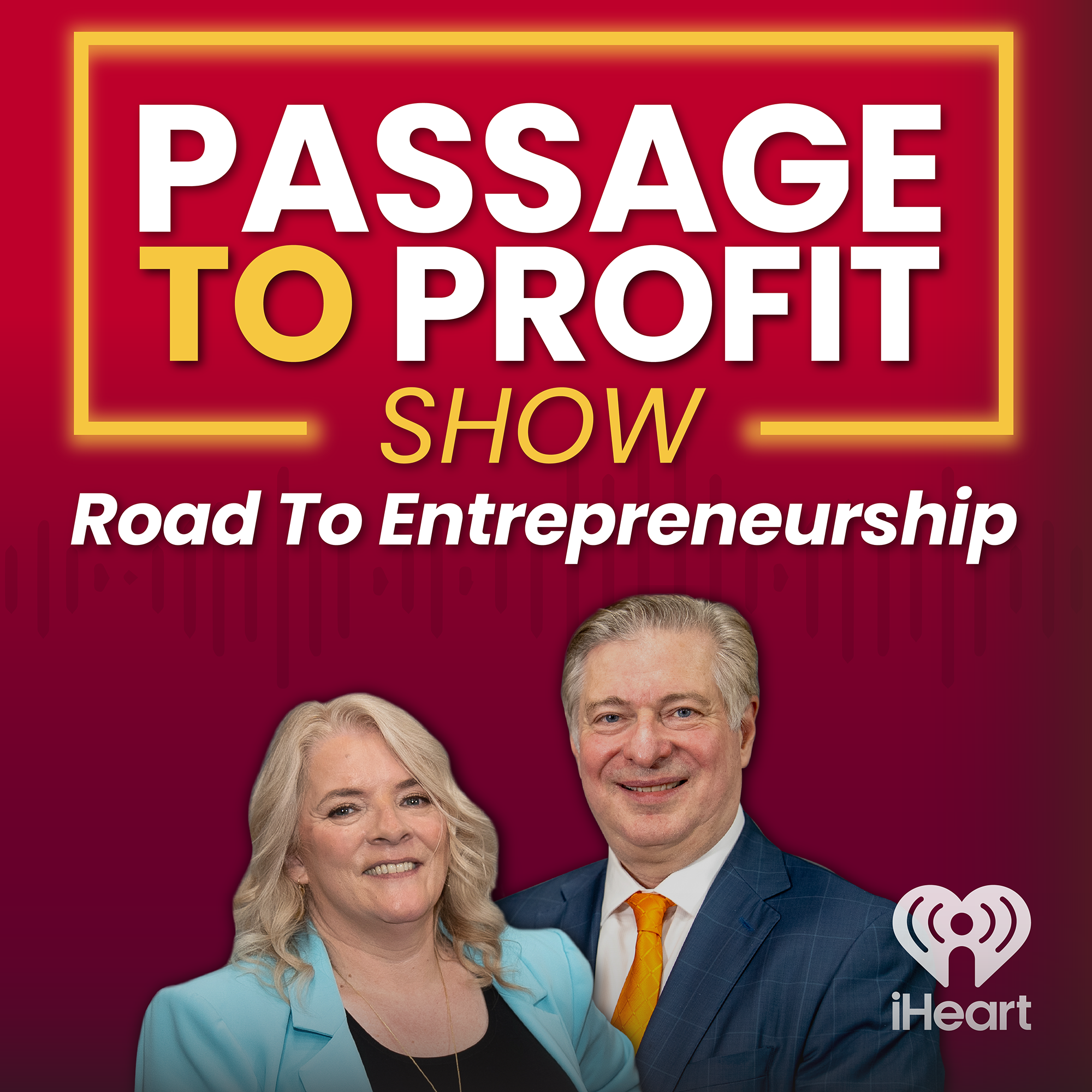
[00:00:07] Speaker B: Ramping up your business. The time is near. You've given it hard. Now get it in gear. It's Passage to Profit with Richard and Elizabeth Gearhart.
[00:00:18] Speaker A: I'm Richard Gearhart.
[00:00:19] Speaker C: I'm Elizabeth Gearhart and we're your host.
[00:00:21] Speaker A: Welcome to the Passage to Profit show, the Road to Entrepreneurship podcast. We're honored to have Romaine Waite with us, known for his standout TV roles in Star Trek, Discovery, Departure, and the Mist.
[00:00:35] Speaker C: And then we have two amazing entrepreneurs. Looking at Jeff Pereira's website made me hungry. He has Bagel Run, who turned a homemade hobby into a nationwide phenomenon. And then Dionne Hargrove, who turned the fear and confusion. Yes, I feel that.
Of investing into the smart investors app, where you can practice without actually having to spend money.
[00:00:55] Speaker A: That sounds like a great idea to me.
[00:00:57] Speaker C: And coming up later on, it's Noah's retrospective along with Secrets of the Entrepreneurial Mind.
[00:01:04] Speaker A: You know, in April, we saw a report from Gallup that showed a rising number of gen zers, and they're defined as people born between 1997 and 2012. They are especially anxious and angry about AI, and only 15% are excited and looking forward to it.
[00:01:24] Speaker C: Why are you laughing, anxious and angry about AI?
[00:01:29] Speaker A: Well, I think it has to do with, like, they're not getting jobs and they're blaming it on AI, right?
[00:01:33] Speaker C: Well, probably, but there's always McDonald's.
[00:01:37] Speaker A: Well, that's becoming roboticized, you know, so that's. That may not be possible. But what was really kind of hilarious is that Eric Schmidt, who used to be the CEO of Google, was at a commencement address and people started booing when he talked about AI, which I find kind of amazing because I would have never had the courage to boo at a commencement address.
[00:02:00] Speaker C: I would never been that rude. Yeah, I mean, let's not say the word entitlement, but.
[00:02:08] Speaker A: Well, the authors of the study said that the AI usage is now it's starting to plateau, which is kind of interesting. But it all comes back to Jobs. And the funny thing is, is that if you do have experience, then you can use AI as a tool. But if you don't have the experience, then, you know, how do you get the experience to use the AI in
[00:02:26] Speaker C: one reason, I think maybe that they might be a little terrified. This is a little bit terrifying. We got this article from our friend at iHeart, Ken Dashow, who does his show on 104.3 here in the New York area, and apparently Pennsylvania filed a Lawsuit against Character Technologies because it's chatbot posed as a licensed doctor and claimed it could prescribe medicine.
[00:02:53] Speaker A: I'm not a doctor. I play one on tv. Right.
[00:02:55] Speaker C: So, I mean, that was bizarre. But I can see why people are a little terrified of it.
[00:03:00] Speaker A: Well, you hear stories like this, and it's just like, who even thought of this in the first place? Right. And what if it's a AI bot that gets a real doctor registration number and they call a pharmacy and they tell the pharmacy to prescribe a bunch of opioids and somebody goes in and picks them up.
[00:03:17] Speaker D: Right.
[00:03:17] Speaker A: I mean, and. And the pharmacy may not even know better. Right. And we're. We're not even ready for that.
[00:03:23] Speaker C: We need some guardrails. Well, they are getting sued, so hopefully they'll quit doing that.
[00:03:27] Speaker E: Yeah.
[00:03:27] Speaker A: And speaking of health, another study by the Oxford Longevity Project says that as much as 80% of our health in old age may come down to our lifestyle choices. 80%. And you know, a lot of people thought it was genetics.
[00:03:45] Speaker C: Well, 20% must be if it's.
[00:03:47] Speaker A: Yeah, but still, I mean, 80% of your. Is based on. So what do you need to do? You need to eat right, sleep right. Can't drink alcohol, according to the study.
[00:03:58] Speaker E: Right.
[00:03:59] Speaker A: Well, it depends on how long you want to live.
[00:04:02] Speaker C: I mean, my.
[00:04:03] Speaker A: Well, how long do you want to live?
[00:04:04] Speaker C: I don't want to give up everything.
I don't know if my grandmother drank wine. She loved her wine. She lived to be 96.
[00:04:12] Speaker A: But the other thing about this that he says is that you shouldn't have anything to eat after 6:30pm which is like, I'm not even. I'm still working.
Give me a break.
[00:04:21] Speaker C: Well, what time are you supposed to go to bed?
[00:04:23] Speaker A: Like 6:30, I guess so.
[00:04:26] Speaker E: Ridiculous.
[00:04:26] Speaker C: It does not seem very scientific to me. Well, there's one last little snippet that I do want to talk about. We were watching Mark and Kelly this morning. Not really watching. I had the TV on, but we were talking about the show. But we were both kind of looking at the TV off and on. It's National Dog Week or something. So they had all these dogs on there. And that's really cool.
[00:04:44] Speaker F: Like.
[00:04:44] Speaker C: And they were running around on this little map. You know what dogs do? So this dog goes over and squats and loses this huge pile.
[00:04:55] Speaker A: And live tv, you know, they're live.
[00:04:57] Speaker C: So then. So then it goes over and starts to sniff at it like it's gonna do the next thing. Dogs. So Mark Consuelos gets up and Kind of goes over to the dog, shoes it away and then the other dogs start doing dog things and they went to break.
[00:05:11] Speaker A: Yeah, so. So I don't know how we transition off of that one, but.
[00:05:15] Speaker C: But that was so funny.
[00:05:18] Speaker A: It was kind of one of those had to be there moments. Right.
[00:05:21] Speaker C: Well, that's why live is so scary. Some people.
[00:05:24] Speaker A: That's why we don't go live, because you never know what's going to happen.
Okay, well, on top of all that, we're going to hear about how a six page patent netted a company millions and millions of dollars. But before we get there, it's time for your new business journey. So we'd like to welcome our guests to the show and ask the penetrating question, when you look back, what was the one decision or moment that most changed the trajectory of your career and what did it cost you to make that decision? So our feature guest, Romaine Waite, welcome to the show. What was the one decision that changed trajectory of your career and what did it cost you?
[00:06:05] Speaker F: Well, thank you, Richard and Elizabeth, first of all, for having me.
So the one decision that I made was just to not give up. I think that's something that I a decision I made very early. You know, just like come hell or high water, you're going to do this thing.
And I think just having that mindset initially has really changed things over the years because it wasn't about any particular moment. It was about the end goal. And so that requires just consistency and discipline. So having that mental decision happen made the difference.
[00:06:38] Speaker A: I love that keeping the end goal in mind is so important because it's sort of your bulwark when things get to be too difficult. So thank you for that. Jeff Pereira, welcome to the program. What was the one decision or moment that changed the trajectory of your career?
[00:06:54] Speaker E: For me, it was saying yes to my wife. She said, make me a bagel.
I said yes.
And that really changed the trajectory of both of our lives into something that we could have never imagined. So sometimes when your significant other or loved one asks you to do something crazy, you should step into it.
[00:07:13] Speaker A: Way to go. That is a great answer. I don't think we've heard that one on their show.
[00:07:18] Speaker F: That's a good one.
[00:07:18] Speaker G: Jeff.
[00:07:19] Speaker A: 300. So very good.
[00:07:20] Speaker C: Except for us. Well, I really wanted you to start a law firm and you were like, this is insanity.
[00:07:25] Speaker A: But yeah, that was insanity, but we did it anyway. Dion Hargrove, what was the one decision that changed the trajectory of your career?
[00:07:34] Speaker D: The one decision that changed the trajectory of My business was definitely putting myself from behind the business and in the front and becoming the face of my business.
As an engineer, we are used to being the people in the background doing the work, getting the products out, and having someone else or something else like a mascot or avatar that I did create to represent us. But in the space that my business is in, authenticity and trust is very important, and the people need to see the face of the CEO. So I had to overcome my camera shyness and everything and say, hey, world, this is me.
[00:08:11] Speaker A: That's great. And you're right, it's a tough transition. I was something of an introvert. I guess I still am.
And, you know, getting out there, being in front of people can be uncomfortable, but it's part of the role, it's part of the job. And that you took that on is commendable. Absolutely.
[00:08:28] Speaker D: Elizabeth.
[00:08:29] Speaker C: Well, I think during COVID I was doing interviews for people and putting on YouTube, I think, really trying to learn as much as I could about video. And YouTube really changed the way I was going. And now if you look at what small businesses need in 2026, they need video. And we have this video studio. So I think really getting into the YouTube stuff changed my trajectory quite a bit, actually.
[00:08:50] Speaker A: Yeah, I think so. But you've always really been good on camera and in public. Yeah. So I think that was a good move for you. For myself. I'm just going to say something. I can't believe I haven't said this before on the show, but it's really moving from corporate to entrepreneur. I was in the corporate world for many years.
Great training, great experience for me, but I just couldn't stand it. I was too much of an entrepreneur, too independent minded. And I decided that based on circumstances and the encouragement of Elizabeth, started a law practice. And it turned out to be like, the best career decision I think I've ever made. So that's where that's at. Thanks a lot, everybody. And now it is time for our featured guest. We love having celebrities on Passage to Profit, not just because they're great guests, but because, as anyone in media will tell you, entertainment is one of the most entrepreneurial businesses out there. And today we're honored to have Romaine Waite. He's known for his standout roles in Star Discovery, Departure and the Mist. And Romaine joins us to share how an unexpected path into acting evolved into a career built on powerful, emotional, grounded performances. Before the show, I was listening to your podcast, the Waiting Room, if you'll pardon the pun. Right. And in Particular your interview with Kabir Burke. Am I pronouncing that correctly?
[00:10:13] Speaker F: Yes.
[00:10:14] Speaker A: And one of the questions you asked him was, what was your first creative experience?
And so I'm going to turn the tables on you and ask you, what was your first creative experience?
[00:10:26] Speaker F: Richard, you're digging, man. You're digging.
Oh man.
[00:10:33] Speaker D: But no, great question.
[00:10:34] Speaker F: And again, thank you so much for the opportunity just to speak about myself and what I got going on. But my first creative experience that I feel kind of planted a seed for me was a play that I did in high school. The reason being was, you know, I grew up in a household where, you know, education was the number one focus. You know, you gotta go to university, you gotta do this particular pathway and, you know, you gotta end up here. And so entertainment or acting was never on the table really. But having that experience planted a seed of realization where you kind of go, huh, this is real, it's tangible, you can actually do it. And that kind of helped to kind of transform my mindset towards the arts to something that is actually a career choice. Now, mind you, it didn't happen until years later, but the seed was planted in terms of that first creative experience.
[00:11:27] Speaker C: I was on your IMDb profile. Pretty impressive. I just got to ask you, how many movies have you been in?
[00:11:33] Speaker F: I don't know.
[00:11:36] Speaker C: It's a lot though, isn't it?
[00:11:37] Speaker F: Again, going back to my initial thing about keeping the end goal in mind. Mind, I'm not really keeping count, truthfully. It's just one of these things where you just keep it moving and you enjoy the moment and then it's kind of on to the next. And it's not that you don't value the experience, but it's the doing of the thing that makes it what it is or makes it fulfilling. But yeah, I've done a few. I've done a few.
[00:12:01] Speaker C: Yeah.
[00:12:01] Speaker A: You talk about being authentic. Tell me about authenticity.
I almost feel like today it's kind of becoming overused. Maybe it's kind of almost a worn out term. But how do you think about authenticity in your acting?
[00:12:17] Speaker F: For some reason I feel like authenticity is earned. I don't think it's something that you automatically understand, especially when you're dealing with self. Because I think life and context provides authenticity. It provides your barometer for where you want to stay, where you want to live, in terms of what you bring, your energy, your mindset. And I think as you go through life, that gauge for authenticity changes based on who you are, where you are. For example, married versus not Married, that authenticity would be different versus if you were a parent or not a parent.
All these variables, I think, come into place when we talk about authenticity. And I think it's something that evolves. And I think you just have to be in a place to recognize that evolution for not only for yourself, but those around you, allowing for that change to happen as life and context changes. In terms of the acting piece, I think it's also about having that understanding of where people are in their life and in a specific moment and try your best to align with what that would be authentically, to not use the word, but, yes,
[00:13:24] Speaker A: that's really cool. So when you're an actor, how do you get into that spot of understanding where somebody is in a moment?
[00:13:33] Speaker F: It's like a comparison. Like, what is this? Like if, for example, I've never done something like the character would have done, whether it's kill someone or do something horrific, you might have to find something in your own life that you could connect to that, that might bring up that type of anger or desperation or whatever, so that you could bring something like that to the screen. And then, you know, there's also room for interpretation because I might bring something to the table and the director might say, ah, you know, that's maybe a little bit too far that way. Let's bring it over here a little bit. Or let's. Let's tweak it.
So the acting piece is really a collaborative opportunity between yourself and the director and the rest of the cast to really find what that authentic moment is. And you'll get a couple takes at it. If you're on camera, on theater, you might only have once, but you have an opportunity to kind of, you know, massage it a little bit and get as close to it as possible.
[00:14:30] Speaker C: I've really been looking forward to asking you about your new movie that you did everything on for His Namesake that's coming out on Tubi. You wrote it, you starred in it, produced it, right?
[00:14:42] Speaker F: Yes, all except direct. I didn't direct it. You know, I couldn't wear all the hats. That would have been.
That would have been a lot. But I did write, star and produce it. The interesting thing about this particular project is that I had written the script approximately, almost eight to ten years ago before it actually got made. And again, going back to my initial thing about keeping the end goal in mind, it's this whole thing about, like, don't delete your old work.
So when this opportunity came up to make a film, it was like, why don't we Revisit the script that was kind of sitting around collecting dust. So that came out, dusted it off a little bit, did some revisions, and made it what it is now. But, yeah, it's one of those things where when you have a vision for something, it kind of just. If you allow it to manifest, you know, and connecting with the right people and having the right supports, you know, you can do some. Some wonderful things. So as much as I did do a lot on it, I have to give credit to all the people that were around me and supported me in order to get it done, those on camera and off camera.
Because film truly is a collaborative medium, for sure.
[00:15:50] Speaker C: What's it about?
[00:15:50] Speaker F: So it's a story about redemption, fatherhood, faith. It centers on a young couple who's facing a situation where their newborn child has a rare illness. And so now they're faced with the task of trying to find a way to deal with that, which leads the character that I play, Robert, on a journey to find his estranged father.
[00:16:13] Speaker C: Wow, that sounds really good. I can't wait to watch it.
[00:16:15] Speaker F: I hope it's good. You got to take a look and tell me.
[00:16:19] Speaker A: So did you have personal experiences in your life that you drew from when you were writing the script?
[00:16:25] Speaker F: Not at the time. You know, it was one of these things where it was a collection of stories and experiences that I had heard from other people. We kind of amalgamated that into one story. And obviously, being a person of faith, you know, that faith element was. Was natural, because a lot of times in those type of situations, you know, we don't have the answer. No one really does. You kind of have to kind of take it one step at a time and hope for the best. And so that's what I kind of tried to infuse into this story.
[00:16:55] Speaker C: So you had the script. Did you screenwrite it yourself, or did you have to get a screenwriter?
[00:16:59] Speaker F: No, I. I wrote the script, yeah.
[00:17:01] Speaker C: So then how did you pick the people to be in the movie with you?
[00:17:05] Speaker F: That's a very interesting story. I did go through a traditional casting process where, you know, I put out the casting call.
You know, we're looking for this, this, and this. And we had a few people submit, and I would go through, you know, their resume, you know, kind of interview them. They would submit to me something called a self tape or an audition of them reading the lines as the character. And then based on that delivery and how I feel they fit within the story, then we would cast them, or unfortunately, sometimes not cast them.
So that's how that went. But during that process, you know, we had a really hard time finding the actress to play my mother. And we were about, I feel like two to three days away from actually starting principal photography to the point where we were going to change the schedule to have all the mother scenes towards the end until we found somebody. And I think it was like close to midnight. I don't know what I was doing up that late. I think actually I do know I was stressing.
[00:18:08] Speaker A: Coupling. You weren't eating after 6:30, by the way.
[00:18:12] Speaker F: Oh, there was definitely some stress eating going on, bowls of cereal. But an email came in and you know, it was just kind of this, okay, let's see what's going on here. Another hurdle or obstacle to deal with.
And it was this wonderful actress sharing her interest in the role of. And she had a tape attached to it and they watched it and it was just like, wow. And it was really a testament of, you know, you can only control so much. You know, sometimes you have to allow, however you want to call it, the universe, God, to facilitate some opportunities and present you with solutions for the problems that you're facing.
[00:18:49] Speaker C: Well, that's a great story.
[00:18:51] Speaker A: Yeah, well, it sounds like a healthy attitude. Sometimes you really can't control everything and sometimes you do have to wait. You just have to put it out there to fate or to the universe.
[00:19:00] Speaker F: And 100%, that's something that I've definitely learned in my career. You know, it's easy when you, you love something and you want it to be a certain way, to kind of, you know, white knuckle it, you know, you really want it to be a certain way, but sometimes you, you do have to kind of, you know, back off a little bit. I mean, don't let it all the way go, but, you know, allow room for things to happen, for grace and faith to lead you in a different direction.
[00:19:27] Speaker C: I agree. I feel like the universe pushes me in certain ways and I think I want to do something and the universe is kind of like, meh, I think you ought to go this way.
This class is single to the universe, So I agree 100%. Well, that's an amazing story. That's awesome. I was going to say.
[00:19:45] Speaker A: So it's time for a commercial break already? Yeah, already. So we'll be back with more passage to profit and Romaine Waite, Star of the Mist and Star Trek Discovery right after this.
[00:19:56] Speaker G: Do you hear that? That's the sound of uncertainty lurking under your hood. You know the feeling? I know I do. That sudden sinking sensation when you see a check engine light or your car unexpectedly breaks down and you're faced with sky high repair bills. It's time to shield against unexpected repairs with Car Shield. Car Shield is America's most trusted auto protection company and has an A rating with the Better Business Bureau. Don't let the first fear of a breakdown keep you up at night. Trust the Shield Car Shield and say goodbye to terrifying repair bills and hello to peace of mind. Your plan also comes with 24. 7 roadside assistance, courtesy towing, rental car options, and so much more. Don't wait till it's too late. Call Car Shield now before a breakdown. Protect your wallet. Protect your car with Car Shield. Get our best protection ever. Call now. You'll thank me later. 8008-002612-17680, 261-2176. That's 800-261-2176.
[00:20:55] Speaker B: Have you outgrown your health insurance plan or just not happy with what you're paying for? The number one reason we all change our health insurance is price. Are you paying too much for your health insurance? Would you like to have better coverage at a better rate or at little or no cost to you? Your life needs are always changing, but have you done anything to improve your health insurance for you and your family? Health insurance laws and coverage are always changing and getting better. It's impossible to do all the research yourself, but now it's all done for you for free. So regardless of your age or medical condition, take a few minutes right now and find out if you can save money or even qualify for zero cost health insurance in your state.
[00:21:40] Speaker G: Call now paid for by cheaper health insurance. 800-6521-4708-0652-1470.
800-652-1470. That's 800-652-1470.
[00:21:55] Speaker B: Now back to passage to profit. Once again, Richard and Elizabeth Gearhart.
[00:22:00] Speaker A: Really having a great conversation with Romaine Waite and learning a lot during the break. We were talking about the business side of the entertainment industry industry. And so, Romain, maybe you could share some lessons that you've learned over the years. Tell our audience a little bit what it's like to be an entertainment entrepreneur star.
[00:22:20] Speaker F: I'll be honest with you, for much of my career, I was very much focused on the acting side of things. You know, that took up a lot of time. That's a whole nother beast in itself.
It's only in the past few years that I've started to shift my focus into production and producing and being behind the camera. It's been a crash course a lot of YouTube University, but I've learned that it's a business of attention. You're buying views, you're buying eyes, you're buying likes. And so what we see now a lot in media is a lot of these individual entities and brands kind of building up their own audience and then selling their content to said audience.
And then once they reach a certain level, that's when the bigger brands want to tap into what you have. And that's how we end up in this infinite influencer culture and sometimes cross over into mainstream media where, you know, a streamer or a service provider might see an influencer and say, you know, how could they fit into a model that we're building in terms of, you know, maybe putting them in a lead role to get eyes or to cross market the film?
Because again, we're all in the business of attention. And so, you know, when I started to dive into the back end of it, you know, I recognized first of all, the higher you go, the less players they are in terms of who actually has control over what. And so you'll start to navigate this space where you go, oh, this person is connected to this and this is connected to that. And it's a very interesting and intricate world once you go behind the scenes. So it's of course navigating that like any business is finding out who the players are and how you can serve their mandate or their need.
So with our particular film, for his namesake, it is a faith based drama.
So having that niche or understanding that market automatically eliminates certain people that I would approach with this project, which actually helps. So one thing I've learned is in business, the more specific you can be, the more you can satisfy the need. And that I think applies across the board. So if you're doing this, that and the other, it's hard to categorize you or say, okay, this is what you do. But if you can narrow it down and be very specific, then it's easy to place you. It's easy for people to understand and to know if they want to engage with what it is that you have to offer.
[00:24:41] Speaker C: How did you get your first acting role?
[00:24:43] Speaker F: My first acting role, like on camera, came through a friend of mine because I had done theater and things like that before. But again, you know, being on film, film and television wasn't really tangible for me. It wasn't in my scope of understanding at the time.
But a friend of mine introduced me to someone who was doing an independent film, sent me the email and was like, oh, they're doing this thing. Maybe you want to do it?
And it was one of those things like, eh, sure, why not? Didn't think too much of it.
And so auditioned for that, got the part, did the film, went through the whole thing. It was a premiere, red carpet, all that type of stuff. And that moment really solidified, like, okay, this is possible. Like, this is what it looks like. And then, oddly enough, the gentleman that wrote and directed that film is a gentleman 10 years later that helped me make this film for his namesake.
[00:25:39] Speaker C: Oh, wow. Yeah, that's pretty cool. That's a great story.
[00:25:43] Speaker F: That's another something that people should consider in business is developing relationships. I think that's very important in entrepreneurship and business.
[00:25:52] Speaker A: That's a great story because the people you work with now could also be people you work with later. And in the entertainment industry, somebody may make another movie. And they say, oh, I remember Romaine. He was amazing. Let's call him and get him involved in this.
[00:26:07] Speaker F: Exactly, exactly. And I'm sure, you know, Dion and Jeff can attest to it. You know, the longer you're in a certain industry, you start to see the same people circulating. And so it's one of these things of you don't know where the opportunity is going to come from. You know, even if it's not something that's going to directly benefit you in that moment, if you see an opportunity to help, I believe that it will come back around for you.
[00:26:30] Speaker C: So you may get a call, you know, 20 years from now. Hey, we need the father or grandfather we're taping tomorrow.
[00:26:38] Speaker F: Yes, yes, exactly.
Exactly.
[00:26:45] Speaker A: Well, it's been an amazing interview, Romaine, and you're an amazing, amazing guy, and we've really enjoyed talking with you. Unfortunately, we have to move on to our next segment, so right before we
[00:26:56] Speaker C: move on, don't forget to catch his new movie for his namesake on Tubi
[00:27:01] Speaker A: Passage to Profit with Richard and Elizabeth Gerhardt.
[00:27:04] Speaker C: So now it is time for real AI Use Cases Business Owners Roundtable. I'm going to ask each of our guests one way they're using AI and they each get one quick answer. And then we're going to go around and talk about AI and other ways that we may be using it and why we love it and why we hate it it and maybe why we don't use it. So anyway, I am going to start with you, Romaine Waite. What is one way that you're using AI right now?
[00:27:27] Speaker F: Just to kind of synthesize information to, like, understand concepts fairly quickly and grasp if it's something I want to pursue or not.
[00:27:35] Speaker C: That's a great way to use it. Okay, now we'll go to Jeff Pereira with jeffsbagelrun.com Jeff, what's one way you're using AI in your business right now?
[00:27:45] Speaker E: So we use AI in our daily baking process. So we built a full tech stack to manage our kitchen display systems and our pos. And so we use an old version of AI, something called machine learning. It's been around for years, but it does create a beautiful process that algorithmically allows us to predict bakes, to see the need for products before they arise. So we can be just in time with our bagels so they come out of the oven hot right when the customers are there.
[00:28:16] Speaker C: That's really cool. Nobody said that one before.
[00:28:19] Speaker A: Okay, well, I think he's the first bagel maker we've had.
[00:28:22] Speaker C: Yeah. Look at his website's torture.
I love the flavor.
[00:28:27] Speaker A: Sevenly Torture. Probably not approved by the Oxford Survey on Growth. Although, I don't know, I guess bagels are healthy food, right?
[00:28:36] Speaker E: It's a few hundred calories base bagels got 13 grams of protein, only five ingredients, no preservatives. I think we're in a pretty good spot. Yeah.
[00:28:45] Speaker C: All right, so Dion Hargrove with Smart Investors app.com. i imagine like your whole life is AI practically, if you're doing an app, right?
[00:28:54] Speaker D: No. So I try not to be overly reliant on AI, but I do use it as a research assistant. Whenever I need data points or help with marketing, I will ask AI a question. And then I would tell it, provide sources for each of your claims so I can fact check it. Because as we all know, AI is not 100% reliable. So I force it to justify whatever information is given me.
[00:29:18] Speaker C: That's a good idea. I do that. I check different sources that. But you really have to. I agree. So, Richard Gearhart, Gearhart Law. It's one way you're using AI right now.
[00:29:27] Speaker A: I am going to take a little bit of a different tack this week and I'm going to say, does AI enhance creativity or does it dampen it? Because I'll tell you, when I'm in the middle of trying to research something or figure out a problem and I'm using AI, my brain's going, I'm asking all these questions, I'm following up on all the answers. I feel like I'm learning a lot and I'm getting closer to a creative solution on the Other hand, if you use AI, for example, to like, you know, write your copy for your radio show, it's not as vibrant, I think, as if you do it yourself. So on the one hand it's enhancing, on the other hand, it can be dampening and maybe even do both at the same time. I don't know. But I've just really been thinking about that lately, so that's a good thought.
[00:30:16] Speaker C: Yeah, humans definitely have to intersperse. So for me, Elizabeth Gearhart with Gear Media Studios, I'm thinking of doing a little bit of a pivot with my business because I started the studio as a podcasting studio and helping people start podcasts. But it's really hard to get people to do because it's so much commitment and they really don't know what's going to come out the end of it. And it's a lot of work and they don't know how to do it, most people. So I've always researched constantly with AI, like, what do small businesses need to do right now for marketing? And the answer changes all the time. But video has risen to the top now, so I'm repurposing kind of and switching more towards video content creation instead of podcast creation. So. So I've been using AI to really analyze that and see what is a good path for me to take. And like, really, with all the things I do, how can I make some money? So
[00:31:12] Speaker A: that's always the big question in media. Does it pay the bills?
[00:31:15] Speaker D: Right.
[00:31:15] Speaker A: That's always.
[00:31:17] Speaker C: Any other comments, you guys?
[00:31:18] Speaker E: I think Romain said something great earlier where he talked about attention. And I think that, you know, the world's attention is, you know, in like a 5 inch screen in their hand. So if it's video, and it could be a podcast that turns into video, right? Like you, you know, if you're clipping it and you're catching sound bites of an interview, it could be a great way to grab the attention of someone. And so I think that's just where we live. And AI does facilitate, I think a lot of that work that maybe someone didn't previously have a skillset for and it can help them.
[00:31:49] Speaker D: And I want to piggyback off what Richard asked about. Does AI enhance or does it dampens creativity? And with anything, it comes down to moderation. AI does not necessarily create anything new. It uses data that already exists, that it's been trained on.
So if you use it in a small amount to help you with, say, writing your prompts and your scripts, using it properly, it can enhance it. But if you just have it say, hey, write this script for me, it's not going to be as good as if you would have done it, so you're just going to have to use it sparingly.
[00:32:22] Speaker C: It's a tool and it's a tool that you should probably learn how to use.
This has been Real AI Use Cases Business Owners Roundtable from the Passage to Profit show. It's been edited to fit our radio spot, so to hear the full discussion, go to our YouTube channel, Real AI Use Cases Business Owners Roundtable. We are going to go to break, but first I want to remind you that we are going to be interviewing Jeff and Dion. And also we have secrets of the entrepreneurial mind coming up. So don't go away.
[00:32:49] Speaker H: Here's a real life story that affects 50% of all of us out there.
It's called divorce. If you've gotten divorced and now you're struggling to pay your bills and your credit card debts are completely out of control, you need to call this special debt relief hotline right now. We help people with all kinds of money problems caused by different life challenges. A divorce, a job loss, even heavy medical bills. All these life events can sometimes financially stress you out and cause you to get out of control. We help people get their lives back by showing them ways to consolidate and reduce their debt, in some cases for a fraction of what they owe. If your credit card balances are more than $10,000, call us and learn how to reduce your credit card bills and monthly payments. Now here's our number paid for by Debt.com.
[00:33:33] Speaker G: call now at 8008-1008-5780-0810-0857. Eight hundred, eight one zero, zero eight five seven.
That's 800-810-0857.
[00:33:49] Speaker I: Learn how thousands of smart homeowners are investing about a dollar to avoid expensive home repair bills. John a former non customer, said, my air conditioner broke and I had to spend $1,900 to fix it. Jeff A customer wrote, my air conditioner broke and I got a new one at no out of pocket cost. Mary, a former non customer, wrote, my heating system's I had to spend $3,000 to get a new one. Lisa, A customer wrote, my heater stopped working. I got it fixed at no out of pocket cost. For about $1 a day, you can have all the major appliances and systems in your home guaranteed fixed or replaced. Call now. If the lines are busy, please call back.
[00:34:31] Speaker G: Call the home warranty hotline now at 8002-5549-4080-0800-255-4940, 800-255-4940. That's 800-255-4940.
[00:34:48] Speaker B: Passage to profit continues with Richard and Elizabeth Gearhart.
[00:34:52] Speaker A: Quick shout out to our friends at WBCH 12:20am in Grand Rapids, Kalamazoo, Battle Creek, Michigan. Thanks for listening and if you're new here, Passage to Profit is a top ranked entrepreneurship podcast and radio show heard on 39 stations.
A place where founders share what really works. And now it's time for intellectual property news. $2 million, a permanent ban from the entire U.S. market. And it all came down to the way a dirt bike looks as described in a six page design patent. That's not a typo. After electric bike maker Saran sued competitor Talaria, a federal jury in Texas just handed to Laria a devastating vertical.
And the weapon that did it wasn't a utility patent. It was a six page design patent, meaning it protected the visual appearance of the bike itself. Patent is literally six pages of pictures of a single motorcycle design.
$13 million for a six page design patent. In a scenario that strikes terror in the heart of every entrepreneur's heart, two former Suron employees left the company, started a competing motorcycle business, and used what Saran called critical knowledge of the motorcycle's design and supply chain to create a competing product. The case went all the way to a jury in Texas, and the jury unanimously sided with Saran. But a really important finding here was that the infringement was considered willful, obviously because the former employees took Saran's technology. The word willful matters a lot in patent law because willful infringement equals big damages up to treble damages. Judge Robert Pittman entered final judgment for 12.97 million and issued a permanent injunction that basically shuts Talaria out of the U S Market for these products. According to the order, Talaria can't manufacture, import, market, advertise, or sell the infringing motorcycles or related components in the United States. That's a very significant remedy, especially in a growing market like electric motorcycles. It's also a huge verdict for a design patent because most typical patent litigation is for utility patents. One more interesting part of the case is that there was also related litigation happening in China, and Telaria argued that the US Court should step aside and let the Chinese proceedings handle the dispute. Judge Pittman refused. The court said that when U.S. patent rights and U.S. market activity are involved, we are not going to defer to foreign proceedings, particularly if there are concerns about whether a U.S. patent claim would really be enforced there. There is a broader lesson here for entrepreneurs. A lot of founders underestimate the value of design patents. It's not only about technology and engineering. For many consumer products, the visual identity of the product itself can become super valuable intellectual property. So whether it's motorcycles, electronics, packaging, consumer products, or even app interfaces, protecting the way something looks can sometimes become just as important as protecting how it works. And this case is a pretty expensive reminder of that. Passage to profit with Richard and Elizabeth Gerhardt. And later, we have secrets of the entrepreneurial. What successful founders think about that that most people never see.
[00:38:25] Speaker C: And now it is time for our next guest, the guy that made me hungry this morning.
From getting laid off to building one of America's fastest growing bagel brands, Jeff Herrera of Jeff's Bagel Run turned a homemade hobby into a nationwide phenomenon. Go on his website and look at his flavors, man.
Amazing. So welcome, Jeff. Tell us your story.
[00:38:48] Speaker E: Jeffrey R. 2019, I lost my job. I was laid off, and my wife was a stay at home mom. She had, we'd both been in the workforce and then she was like, you know, I feel like I'm missing something. I want to stay home with our daughter. And we made that work and then we had our son. And after, you know, probably about 15 months, I think she was ready. She's like, I'm ready to go back to work. And I just happened, she was already looking, she was talking to her old company. I had lost my job and she got offered a job on like the same day. So. So the serendipity there was incredible. She had a little bit of a lead time before she started. So we had overlap four or five weeks. And in that four or five weeks of overlap, we were driving across town. We live here in the central Florida area and the bagel shops are few and far between compared to some of the other parts of the country, specifically the Northeast where we were born and raised. And so when we were driving across town, she just looked at me one day. She said, you should just learn to make me a bagel bagel. Like, let's just cut all this other stuff out. You just learned to make me a bagel. She was really looking out for my wellbeing, I think, you know, being in a new role as a stay at home dad, having lost a job at like 42 years old. Like, you know, many people experience that, like, where do you go? What do you do? What happens? And, you know, we were financially going to be okay. She had a great Job. We had a home. We owned. Like, things were good. This is pre pandemic. She's like, just learn to make me a bagel. I said, okay. And I jumped on YouTube. I started getting textbooks about how to make bread. And I'd never made anything from scratch. I have zero culinary training. Zero, really? Zero culinary experience outside of, like, when I was in college, bartending and serving, things like that. And so I just got in the kitchen and started practicing, started making dough. And there were some really bad ones. I mean, like, really bad ones. And then they got better.
And this was probably end of September, Middle September of 2019, eight, nine weeks later, I had a recipe that was satisfactory. You know, she loved it. She took that first bite when I. She came home from work, and it was like, this is the one. She's like, you said this so many times, you know, And I handed her the bagel. She took a bite of it, and she's, like, paused, right? She was, like, holding it. She was, like, transported. She was a kid again in her mom's station wagon on Long Island. She just got a bagel out of a bag, you know, from the bagel shop down the corner. And at that moment, I just tried to recreate that. That experience, that feeling, that joy she had in that moment. I wanted that for her over and over again and for as many people as. You know, at the time, I didn't realize it, but now it's like, I want to create that for as many people as possible. And so I just kept making bagels. We started giving them to friends and family. People were like, I would buy these from you, And I was like, I literally learned how to do this, like, three months ago. There's no way you would buy these from me. And they're like, no, we would. We'd buy them. And so we figured out how to sell them from home, and we popped up a website.
You know, I had been documenting my journey along the way on social media, so Instagram, TikTok, places like that. And I knew storytelling was going to be a part of the component of what I was doing. So I just took pictures and made videos along the way. People resonated with that. They're like, this is cool. Bagels are good. And we popped up a menu, started selling bagels. We didn't sell a lot, but by the start of 2020, we were starting to get some recognition by some influencers. We're starting to get recognition by local media, and we had a little business on our hands. I was making 40 or 50 dozen bagels a week from home. I'd roll them the night before, make the dough, roll the dough. They have to cold proof overnight in a refrigerator. So we ended up going and getting any refrigerator we could find on Facebook Marketplace. We were just like 25 bucks. Great. Does it work? What do I need to do to fix it? We'd have refrigerators in our garage. We had had extension cords running from those refrigerators to different outlets in the house. Cause they were popping breakers all over the place. It was pretty wild.
But the pandemic set in April 2020 and we got really busy because people found us deep in the feed that doom scrolling everybody took too. When we were all locked down and tons of orders. Danielle was, she wasn't laid off, but she didn't have any work to do. She was working in retail, so her stores were closed. And so she still kept her job, which was great. We had, we had cash flow, we had, we were definitely better off than a lot of other people. But the bagels were an opportunity for us to connect with our community. And you know, when we started realizing that doing a bagel delivery to someone's house was like the only contact they had with the person during that timeframe, it was pretty impactful, you know, like they were alone, there were people who were alone just buying bagels. And I'd stand on the sidewalk and talk to em for 10 minutes and it made an impact. And so in Florida, the pandemic didn't last very long. You know, it just like the world, like opened right back up in June or July and we started doing farmer's markets.
We had people showing up, lots of people showing up. We would sell out quickly. Our website, every time we'd post a menu, we'd sell it out in 30 seconds, 45 seconds. And we'd had 1200, 1500 unique users trying to buy bagels from us online.
As it got really big in our house, like it got hard to manage, we started looking for a space. So it was February of 21, we finally made the decision to find a retail space. And I thought I would just do the same thing I was doing and post a menu online. And instead of them coming to my house, they'd come to a storefront or a warehouse or wherever I could find a place to bake.
And that's not at all what happened. We were our first entrepreneurial journey, right? Like I was, I had no capital, I had no real assets because the bank owns my house, right? Like there was nothing for me to lean on. When I would go into a lease negotiation. And so the first three, four places were like, nope, sorry, we lease to someone else. And then. And we finally found a landlord who took a shot on us to some degree. He really liked the bagels. We put together a different business plan. Yeah, we fed him. We knew. Just showed up at bagels like, this is what we're gonna do.
Yeah, yeah. Took a shot. You know, he was wise. He's been around for a long time. And he goes, just because you have a good lasagna doesn't make you an Italian chef and certainly doesn't make you a good restaurant operator. And I said, listen, here's our business plan. My wife and I have been in leadership roles with major corporations, you know, top 50 corporations in the world, and we know how to run a business, and we're going to do this. And he liked our business plan, he liked the bagels, and he signed a lease. And so we opened our first location in July of 2021.
Shortly thereafter, I got an opportunity. A friend of mine who was also a baker, I've made a lot of friends in that community. And so, you know, I know Romain talked about, like, creating relationships and connecting those relationships. Like what you do. Like, as soon as I got into this. This place where I was suddenly a food entrepreneur, other food entrepreneurs were like, I can help you. And this is what I did. And I asked questions like, this is a roadblock I hit. Like. And so it's a very small, tight knit community. There's a yes, there's competition, but it's healthy and positive. And, you know, we were able to grow. And I met people along the way, and Guy wanted to sell me his bakery, so I was able to buy his bakery from him in the beginning of 2022. We opened our second store about five months later after getting it kind of converted to a just bagel run. And it was in 2023 when we met our now business partner, who was an experienced franchisor, where we decided to take this business and franchise it. And so we opened store number three in February of 2024, and we just opened store number 35 last month. So. Wow.
[00:45:54] Speaker C: So are you avoiding the Northeast, or are you going to open stores up here?
[00:45:58] Speaker E: No, we are. No, not avoiding the Northeast at all.
We would love to be there. I think there's a lot of bagel shops there, though. You know, I think people, they're just there. It's just, you know, I mean, I was born in Point Pleasant Beach, New Jersey. You know, grew up on summers at the shore and every jug handle's got a three bagel shops actually, because every exit has one. You know, they got to make it easy. And I think, you know, right now the interest from our, you know, franchisees is coming from other places. And so we have a really big footprint right now in the southeast, Florida, Georgia, North Carolina, South Carolina.
But we've got a store in Chicagoland area. We got a store out Las Vegas. Store in Colorado Springs just opened. And later this summer we're going to open an Indianapolis market. So I think there's some franchisees poking around in the D.C. area. So we're getting a little closer. We're creeping up to the northeast. We're getting there.
[00:46:48] Speaker C: The reason I ask is I want one.
[00:46:50] Speaker A: Yeah, well, let's go to Florida.
[00:46:52] Speaker C: Yeah, I'm actually going to be in Indianapolis this in July. Are you gonna have it there yet?
[00:46:57] Speaker E: Oh, it's gonna be close. Depends on when you're there. I think it might be the end of July time.
[00:47:00] Speaker A: Well, what makes for a good bagel? Why, why do yours stand out?
[00:47:05] Speaker E: So I think we differentiate ourselves in a way that some other players in the space haven't. We're scratch made every day. So we in every single location roll our dough and then proof it or cold ferment it overnight and then boil and bake it the next day. So we've built systems that allow novice bakers like, you know, myself to come in and do that process. And so they're baking, you know, on their third day, they're baking on their own, they're doing this process on their own. And the scratch product, the freshness, that quality, I think that comes through and I think it connects with people in their local community because they realize that the food they're eating is coming from the place that they work in, coming from the place that they live in. And they want to be able to see the baker and like know that baker. And maybe they know that baker because they come into the shop or maybe they know baker because they met him at church or maybe they play in a softball league together or, or whatever it is. But like, I think that community is created and suddenly the store has more value because the big chain. And listen, we're on our way to being a big chain. I'm not trying to say that's not what we want to do, but we want to show up small everywhere that we are and like we are part of the community and it's just in our DNA.
[00:48:14] Speaker C: I think one of your differentiating Factors from going to your website are your flavors. You've come up with some very creative flavors that look really good. Like, what do you think is your highest selling flavor?
[00:48:25] Speaker E: Oh, I know. It's plain. Plain bagel.
Plain favorite, plain bagel. And plain cream cheese is the best selling bagel that we have. But you're right, we do have a really big variety of bagels. So when we, when we first opened up for business in our, like, on our website and selling online and posting menus on, like, Instagram, scarcity was the driver of the business. People would come and they would try to capture what, you know, a little bit of that lightning in that bottle. Right. They wanted to get some of those bagels. Once you open a restaurant and you're trying to maintain a bakery and you've got expenses and you've invested money and you're looking for a return on that invested capital, selling out is not cute. Like, you need to have bagels on demand and available. So the scarcity problem isn't driving people in. So the flavor change, the profiles, the things that we do, and that uniqueness of the product alongside the experience you receive, I think is what drives those repeat visits. And so we offer for basically a daily lto, so a daily, limited time offer with our bagel of the day. It's a different bagel every day. It rotates. Sometimes they repeat every three, four, five weeks, but a lot of times they're seasonally flavored or, you know, I mean, my daughter's a huge Taylor Swift fan, so when Taylor Swift launched the Life of a Showgirl album, we had a Life of a Showgirl bagel. And that thing was pink and sparkly and essentially just some sugar on top. But they loved it, you know, and Swifties came out. So I think there's a lot of ways to get. Get connection to the community and find. We've been talking about it a little bit already on this pod, like, how do you garner someone's attention? And so we have a, you know, huge social presence.
[00:49:52] Speaker C: Yeah. I want to ask Romaine, do you have any questions or comments?
[00:49:55] Speaker F: For Jeff, this is the entrepreneurial journey. This is the faith journey. When you're faced with obstacle, you know, you're taking steps that you normally wouldn't take and hoping for the best.
[00:50:06] Speaker E: Yeah, that.
[00:50:06] Speaker F: That's essentially it. And then when you conquer one, you take the next and you take the next and you start to build momentum and. And your faith starts to build as you move forward. So as you're sharing this story, I'm already, like connecting the dots of the things that people. It would resonate with people. And I think when people watch something like this, when we talk about having people's attention, they see themselves in that because it's very real. You know, you talked about being a father, you talked about losing your job, talked about not knowing what to do. And I think when we talk about, you know, full circle authenticity, when people see that in real life experiences, that's what resonates.
[00:50:41] Speaker C: Absolutely. You guys should talk. Jeff Herrera of Jeff's Bagel Run. Jeff, how do people find your bagels?
[00:50:48] Speaker E: Jeff's Bagel Run on every social platform. So Eff's Bagel Run, all one word. Great place to start your journey with Jeff's Bagel Run. Especially if you're potentially looking for franchise opportunities. That'd be a great place to go.
[00:51:01] Speaker C: Okay, thank you.
[00:51:02] Speaker A: Passage to Profit with Richard and Elizabeth Gerhardt.
[00:51:05] Speaker C: Now it is time for Dionne hargrove with smart investorsapp.com this is really a cool product. Dion, tell us how you got this idea and how you developed it.
[00:51:14] Speaker D: I create the Smart Investors app to solve the financial literacy crisis that we are currently facing in the world.
According to an S and P Global Financial literacy survey, only 33% of the adults have basic financial literacy. If we were to bring that back to United States alone, 50% of the US adults have basic financial literacy.
If we were to bring this to young adults, only 24% of young adults, Gen Z and millennials, can answer basic financial literacy skills. And I hope you're paying attention to the word that I keep repeating over and over, which is basic. When I say basic, they were asking them questions like, if your salary increased by 3% and inflation is now 4%, does your purchasing power increase, remain the same, or does it decrease?
So those were the type of questions that people was asking. And again, globally, only 33% of people could answer that correctly.
50% of adults in the US and 24% of millennials and Gen Z combined could actually answer that question. And being a millennial, I have experience with situations like that. Even my peers have it. I am constantly on TikTok because I am so addicted to that app. And I am just seeing people complain and just talk about how hard it is to live, and they're talking about their financial decisions and what they're doing.
Case in point, last year alone, we saw people spend thousands upon thousands of dollars on Lubuku dolls. We also saw last year there was massive layoffs, both in the government and in the private sector. We also saw these same people also spending, what was it, like $300 for that new Starbucks cup? It was just a bear with a green on it, but sounds like a
[00:53:05] Speaker A: waste of money to me. But who am I to judge, right?
[00:53:07] Speaker D: Well, again, you know, only 50% of adults in America have basic financial literacy skills. And I created this app to improve that. And I chose investing because investing is really the perfect one stop shop. It allows you to actually take the financial literacy terms and jargons that you hear and actually apply them in real world scenarios.
And with the Smart Investors app, we allow you to actually invest in real world assets using virtual money. It's all ones and zeros so you don't have to invest your actual hard earned money. We have our own virtual bank that you can go and you can add as much money as you want to and you can actually practice those investing skills. We also have our traditional academic learning section, which we have with videos, terminology and whatnot to actually help people get familiarized with this and learn how to do it. And we have our most important section, which is our community based learning segment, where you're not alone. You have other people around the world that's also using the app and you can communicate with them, you can share knowledge, you can share strategies, and you can help each other out. We also allow users to actually invest themselves in the apps by adding content that they feel would help other people. And you actually have voting power. So you can decide what do you think would be a benefit to another user. You can vote if they should allow that to be added or if it should get deleted. And so, yeah, that was the story behind the Smart Investors app. We want to improve the financial literacy rate of the world because if your understanding of linear time is the same as mine, these are going to be the people who are going to make decisions for our country and for companies. And if only 33% of the people globally have basic financial literacy, it's not looking good for us.
[00:54:55] Speaker A: No, I was just thinking about what you're saying, Dion, and our audience and how important it is for entrepreneurs to have basic financial literacy. A big part of running a successful business, I think, is understanding, are you making a profit? And if you change this, how's this going to change the revenue?
[00:55:15] Speaker D: So I actually want to tackle that because that's actually a very good point that you brought up. As a entrepreneur, you. You technically already are an investor committing capital and time into your own company. But more importantly, you need to be paying attention to the markets, both on a National and a global level. Let me take you back in time. Let's go back 26 years during the dot com bubble crisis. A lot of what's happening now with this whole AI bubble and this whole AI boom, it all happened 26 years ago during a dot com crisis where the Internet was this newest hot technology. There were so many companies, so many people who jumped on that bandwagon, didn't fully understand what the Internet was. They just saw, oh, it was this new thing, I have to get in this, I have to make some money. We saw numerous companies get made, just have a URL. I think when I looked it up, someone literally made a cats.com URL where all it did was just show a picture of a cat and they got funding.
[00:56:13] Speaker C: Oh, man.
[00:56:15] Speaker A: Yes, that's all it was.
[00:56:18] Speaker D: Um, but just like with every bubble, unfortunately it will not, because just like with every bubble, eventually it's gonna burst. And when that burst, we actually lost $5 trillion and a lot of companies got wiped out because, like I said, people just jumped on the bandwagon. It was the hottest and newest thing that was happening during that time. And the companies that remain were the ones like your Google, your Amazon, your ebay, who actually understood that the Internet was here to stay, just like AI is. They understood the trajectory and impact it would have and they invested in it properly. Case in point, Amazon, they just sold books. So for their website, it was simple. We want to get our books in front of as many people as possible. Fast forward 26 years later, Amazon is doing way more than books. And that's because they invested in their business properly. They understood the economy and where the market was heading. And that is the power of investing for entrepreneurs. And even people who aren't entrepreneurs, say, the everyday person, you still can benefit from this because just like with Google and Amazon, who understood the Internet was here to stay and they saw the impact it was having, a average person can be like, hey, this is going to go somewhere. I can start a business that can actually play off of the Internet.
I could help other businesses set up their websites. For example, Romain could have started a web domain business and helped Jeff build his website so he can reach his audience and sell his bagels to more people. So, yes, for entrepreneurs, that is the impact and power of investing. And for people who want to get into entrepreneurship or pivot the direction of their entrepreneurs, that is the impact that investing have. And sadly, not enough people talk about that.
[00:58:06] Speaker C: That.
[00:58:06] Speaker D: But my app does.
[00:58:07] Speaker C: I went on your website and it looked like people can play with crypto with this imaginary money.
[00:58:12] Speaker D: Not only can people play with crypto and learn about crypto, but they can also do the same thing with Forex. And I'm of the personal opinion that forex is heavily slept on because that is really good for understanding the trajectory of the country and other countries on a global level.
[00:58:29] Speaker A: What is Forex? I've never heard of it.
[00:58:30] Speaker C: I've never heard of Forex.
[00:58:31] Speaker D: Forex is the exchange of currency, like exchanging the US Dollar with the British pound or the euro.
[00:58:40] Speaker C: I mean, it would be really interesting to go on this app and play with these different things. Our son plays with crypto and sometimes he makes money and then he loses it all the next day.
[00:58:48] Speaker A: But I mean, he literally like made $10,000 one day and he called us up and said, hey, I made $10,000 on crypto. And like next day we got a text and was like, I'm back down to $1,500.
[00:59:00] Speaker D: Well, with my app, we want him to understand the why of how he gained that money and why did he lose it? It because when you actually go and invest real world money, we don't want you to make those same mistakes. We want you to use this app and ideally fail about a thousand times. And the reason why I say that is because failure actually teaches you more than success. If you're like me, when I succeed at something, I go, oh, that works.
[00:59:24] Speaker E: Woohoo.
[00:59:25] Speaker D: And I go to the next thing. But when something fails, I actually sit down and I just ponder on, okay, what went wrong? Why did it go wrong?
What can I do next time so that I don't repeat this?
So that is the goal behind this app.
[00:59:38] Speaker A: Romain, do you have a question or a comment for Dion?
[00:59:41] Speaker F: Two things that come to mind. Why as entrepreneurs do we not celebrate the wins as much as we focus on the downfalls or the things that we didn't do?
[00:59:50] Speaker D: Well, I am someone who likes to pray for the best but expect the worst. Just so when the worst happens, I already have a plan for it and I can mitigate the harm that would happen. But when the best comes, I'm like, oh, this is amazing. Wait, hold on. This feels a little bit too good to be true.
What's going to happen?
[01:00:10] Speaker F: Exactly, exactly that I don't know what it is. Like we might celebrate, but it's very short lived. And then it's like, okay, well how can we repeat this? How can you know, I don't understand why that happens.
[01:00:20] Speaker D: Well, it all goes to nature. The old saying of the calm before the storm. It's like, okay, everything's just going so well. Something's going to happen. Like we're just biologically wired that way.
[01:00:32] Speaker E: We live in fight or flight all the time. As an entrepreneur, you're kind of there, right?
[01:00:35] Speaker A: But it's a good question though. I mean, you know, I'm not sure that I have a great answer for that because I'm exactly that the same way.
[01:00:43] Speaker C: So much that way.
[01:00:44] Speaker A: I am so much that way. As Elizabeth says, well, we should talk about the three good things that happened to us today. And we talk about those and then immediately I start complaining about something. So the effect doesn't last too long.
[01:00:58] Speaker C: Yeah, I try to keep us on the positive side. So did you have another follow up for me?
[01:01:02] Speaker F: Yeah, this is for everyone. Was there ever a moment where you felt like, this is not it, I'm going to quit? What was the thing that made you think that or think you were going to make that decision?
And then what happened that made you change your mind and stay in it?
[01:01:17] Speaker D: Okay, so I have a little funny story about that. Working a 40 hour job while also doing this, I had a lot of moments. I was like, you know what, I'm just going to quit. Someone else could do that. But what inspired me to become an entrepreneur is that I am a huge comic book nerd.
My favorite heroes have always been Tony Stark and Bruce Wayne because they were the most realistic. They are billionaires that use technology to improve the world. And if I'm going to get to that point, I have to power through whatever I was going through with my business because I want to be a real life Tony Stark with Bruce Wayne without the trauma.
[01:01:53] Speaker F: Nice. And Jeff, how about you?
[01:01:55] Speaker E: Oh, yeah. I mean, there was a lot of times where I found myself tired, physically worn out, emotionally worn out. I think the hardest part was when Danielle and I had the two stores, we were split. Our skill sets are different. She's the operator, she's the brains, and I'm the innovation behind it. So the creativity and so as we split our skill set and we both have, we could do the other things, but we're not as good at it. Right. So like I'm in one store, she's in the other.
And it's hard, like physically hard, emotionally hard. Running two separate businesses in two separate places, that was probably the hardest point. I mean, it was hard on our, you know, personal life. It was hard on the business. It was. And when you, when you hit those, those walls, you have to decide, like, do we Go over them or do we turn around? And there's a lot of people who just stop. Dion, you said it in the beginning. You're like, you've gotta just keep going. Most entrepreneurs, I think, fail because they quit too early.
[01:02:51] Speaker C: What about you, Romain?
[01:02:52] Speaker F: I feel like that's me every day, because it's one of these things where, especially on the acting side of it, you're auditioning, you're offering yourself and your services to a production, essentially, and saying, I'm the guy for this. And because of the landscape that we're in now, it's just like it's ballooned. Like, there are millions of millions of actors who are all talented. And that's the one thing that it recognizes that that talent is one thing, but discipline and consistency is a whole nother thing. And I think that's where you start to differentiate people and where they are in their careers is that, you know, like I said, everyone has a talent, but what's different is how you approach the business. A lot of my earlier career was acting focused, but then I had to make that shift as to how do I now pull myself away from the pack? How do I make myself different? And the answer to that was start writing and start producing.
[01:03:45] Speaker C: Yeah. And I had a couple more questions for Dion. What age range is your app for?
[01:03:50] Speaker D: The app is for all age ranges. We do not discriminate. If you can read and count, this app is for you.
[01:03:56] Speaker C: How many people have you reached so far and what is your goal?
[01:04:00] Speaker D: So far we have reached since launch of New Year's of this year, we have reached about 50 plus people, and our goal is to get to 10 million.
[01:04:09] Speaker C: And what are you doing to market it? Are you doing a lot of media appearances? Because that's a good way.
[01:04:13] Speaker D: Yes, doing a lot of media appearance. I have hired a social media team to manage The Instagram and TikTok, done a couple of magazine articles, and we've actually created our affiliate outreach program. So we're looking for finance influencers, any influences to work with us to contribute to the app and obviously get paid for it.
[01:04:36] Speaker C: So how do people get the app? How do they find you?
[01:04:39] Speaker D: So you can go to our website at smart investors app.com we have all the links to our social medias and to our app on the Play Store and the Apple Store. And you just want to download the app directly. You can go to the Apple Store or Play Store and just type in smart investors, all one word.
[01:04:56] Speaker C: Thank you. Yeah, it looks like a lot of fun to play with. My only fear with it is that I would be playing with it with fake money and I would make like $2 million and it wouldn't be random.
[01:05:06] Speaker A: And then you'd be, darn, I wish I had done this for real. And then you'll lose 2 million for real. Prob.
[01:05:12] Speaker F: That would make me want to quit.
[01:05:13] Speaker D: But you would have gained the skills to actually make that 2 million in the real world. So it will still help you out.
[01:05:19] Speaker C: So we have to go to a break now, listeners. You're listening to the Passage to Profit show with Richard Elizabeth Gearhart. Our special guest today, Romaine Waite. And we will be right back. Don't go away.
[01:05:27] Speaker G: Do you hear that? That's the sound of uncertainty lurking under your hood. You know the feeling. I know I do. That sudden sinking sensation when you see a check engine light or your car unexpectedly breaks down and you're faced with sky high repair bills. It's time to shield against unexpected repairs with Carshield. Carshield is America's most trusted auto protection company and has an A rating with the Better Business Bureau. Don't let the fear of a breakdown keep you up at night. Trust the shield, Car Shield. And say goodbye to terrifying repair bills and hello to peace of mind. Your plan also comes with 24.7road roadside assistance, courtesy towing, rental car options, and so much more. Don't wait till it's too late. Call Car Shield now before a breakdown. Protect your wallet. Protect your car with Car shield. Get our best protection ever. Call now. You'll thank me later. 8002-6121-7680-0261-2176. That's 800-261-2176.
[01:06:27] Speaker A: It's passing. Passage to profit. Now it's time for Noah's retrospective.
[01:06:32] Speaker C: Noah Fleishman is our producer here at Passage to Profit, and he never stops trying to make sense of the future by looking at the past.
[01:06:41] Speaker J: After all these years, I still can't understand legal holidays. Take the fourth of July, for example. It's a historical commemoration. But the establishment of the first secular independent government of colonies probably wouldn't be classified as a holy day.
Well, that's not really important. What's important is being able to find the time to go to the beach and celebrate with sparklers and wine coolers the way the founding fathers once did. If the fourth falls on a Wednesday and you're working that week, you're dealing with all the office deadlines that are pushed up three days early or the ones you can't finish four days later, because no one's going to be in the office to give you the information to complete those deadlines. That's because they've taken the latter portion of that week off basically for one legal holiday. An entire nation of private industry, for the most part, is shut down.
Those of us who have a job to do over that time are simply cornered with the only workable option possible over this kind of holiday. That's saying a good long prayer.
[01:07:32] Speaker B: Now more with Richard and Elizabeth. Passage to profit.
[01:07:35] Speaker C: Now it is time for Secrets of the Entrepreneurial Mind, where each of our guests is going to share a secret. So we're going to start with Romaine Waite, who you can find on IMDb and on Instagram. Romaine, what's a secret you can share there?
[01:07:49] Speaker F: Something that I've learned in my experience. Just don't limit your scope on how you want things to go, because I think that creates unneeded stress and obstacles if you expect it to go a certain way. It's only in the past few years that I've started to shift my focus into production and producing and being behind the camera. It's been a crash course a lot of YouTube University, but I've learned that it's a business of attention.
You're buying views, you're buying eyes, you're buying likes. And so what we see now a lot in media is, you know, a lot of these individual entities and brands kind of building up their own audience and then selling their content to said audience. Take the blinders off a little bit, look around, and sometimes opportunities will present themselves in ways that you didn't expect and it will serve your greater goal.
[01:08:39] Speaker C: Oh, I like that a lot.
[01:08:41] Speaker A: Lot.
[01:08:41] Speaker C: Okay. Jeff Pereira with jeffsbagelrun.com what's a secret you can share?
[01:08:45] Speaker E: I would say you should always say yes.
Just continue to learn as an entrepreneur, once you've put yourself in a position to believe that you know everything, that's when you'll lose everything.
So continue to say yes to new things, to new ideas, to new opportunities. Because if you're doing that, you're continuously learning.
And as you grow and as you learn, you never know what could come from that.
[01:09:11] Speaker C: I love that one, too. Okay. Dionne Hargrove, smartinvestorsapp.com what's a secret you can share?
[01:09:18] Speaker D: Just do it. You are not the only person that is going through imposter syndrome. Every entrepreneur feels that way. But you have to remind yourself that if someone else could do what you are doing or what you are trying to do.
They would have done it, but they didn't, because you're supposed to do it. So just do it.
[01:09:39] Speaker C: Ooh, I love that. Okay, Richard Gearhart with Gearhart Law. What's a secret you can share?
[01:09:44] Speaker A: I'm going to say stay in the now. So we're going to be traveling to Toronto next week, and we're going to be hearing Eckhart Tolle at a presentation. He's written some amazing content around the Power of Now, and I've been listening to a lot of his tapes.
So being in the present, I think is a really good thing for entrepreneurs, because lots of times you have a lot of things coming at you, and if you can just take a step back and disengage a little bit and take these little mental breaks that allow your brain to have space and not focus so much on your thoughts, I think it really helps with your creativity and your attitude. And so I'm going with the Power of Now.
[01:10:26] Speaker C: Yay. That's a good one, too. And I'm Elizabeth Gearhart with Gear Media Studios, and I'm going to go with. We've all heard this. Entrepreneurism is lonely. Have somebody you can talk to that knows what you're going through. So for me, with the studio, you know, Richard's been doing the law firm for 20 years now, and I've been helping him with that. But still, there's a lot of decisions you have to make. So I can bounce some of the studio stuff off of him, I can vent to him, I can scream and yell about, which I was doing the other day, about stuff that happened.
[01:10:55] Speaker A: And she never takes my advice, by the way. And it's like, okay, I'm gonna go talk to my coach. We are married after, so.
[01:11:03] Speaker C: But I do think it's important to have somebody to talk to that understands it, because it's very lonely and it can be very frustrating at times.
[01:11:11] Speaker A: And it goes both ways. I mean, we've shared lots of experiences over the years, so I certainly value our relationship and our partnership, both personally and in the business world. Yes, that's it for today's Passage to Profit show. If you enjoyed this episode, subscribe to the podcast and leave a quick review.
Also, follow us on Facebook, Instagram, TikTok and X and subscribe to our YouTube channel for bonus content. Tune in next week for another episode of Passage to Prophet.