[00:00:00] Speaker A: What does it take to make bold decisions, win high stakes deals and turn big ideas into action,
[00:00:10] Speaker B: ramping up your business?
[00:00:11] Speaker A: The time is near. You've given it hard, now get it in gear.
It's Passage to Profit with Richard and Elizabeth Gearhart. I'm Richard Gearhart.
[00:00:22] Speaker C: I'm Elizabeth Gearhart and we're your house.
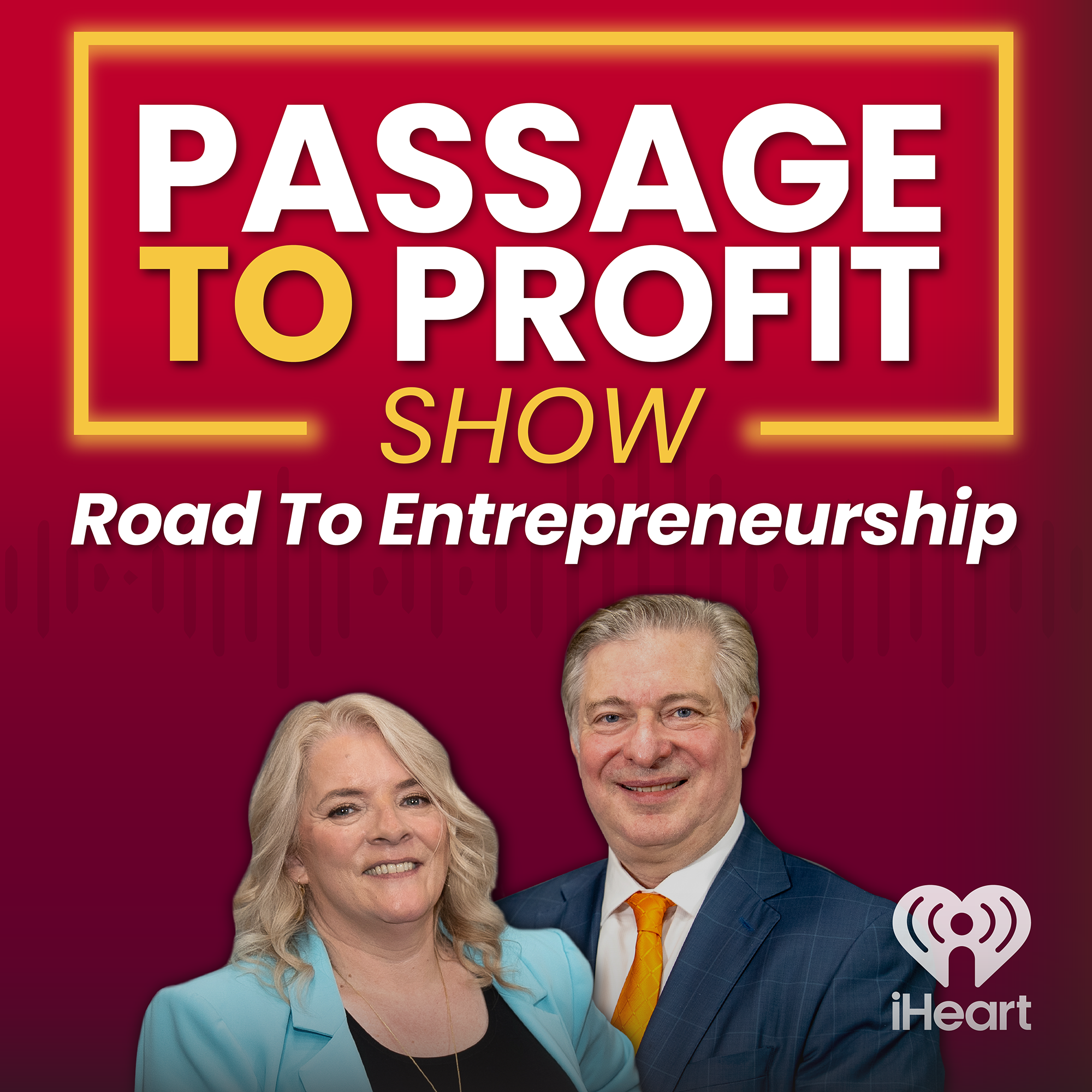
[00:00:24] Speaker A: Welcome to the Passage to Profit show, the road to entrepreneurship podcast. Hi, Elizabeth. How are you doing this week?
[00:00:32] Speaker C: A little bit tired. We had our grandkids with us over the weekend. Two year old and one year old. We're not quite used to that level of activity in our house.
They're delightful though. It was really fun.
[00:00:44] Speaker A: That was really, really, really fun. And you know, when you have young kids in the house, grandkids, they mess everything up. And that leads perfectly to one of our Items. This week, August 6th through 12th, is National Clutter Awareness Week. So I don't even know what that means.
[00:01:03] Speaker C: You just have to be aware that it's there.
[00:01:04] Speaker A: You just have to be aware.
[00:01:06] Speaker C: You don't have to clean it up.
[00:01:07] Speaker A: It's not cleanup week, it's awareness week. And so I'm not going to bring up your shoe closet.
[00:01:12] Speaker C: Well, I showed it to my daughter in law and I said most people are horrified when I tell them about this. And she's like, oh, I have almost that many shoes. So I was very proud of her.
So we're going to have to declutter a little because my niece Connie and her daughter Hannah are gonna come in October. So we're gonna start cleaning the house now.
We have one.
[00:01:31] Speaker A: It'll take a couple of months.
[00:01:33] Speaker C: Yeah, we have one room that we called the media room that has kind of become the dumping ground. Dumping ground. So we're gonna clean that out and put a bed in there. So yeah, so we're gonna start decluttering bit by bit.
[00:01:44] Speaker A: I am a clutterer, but I'm also a cleaner upper. But it's not continuous.
[00:01:48] Speaker C: It's like you're a pack rat.
[00:01:51] Speaker A: Yeah, I am. I have a lot of stuff from going back to like when I was probably 18 months old. I still have that stuff. And I, you know, like my baby shoes and pictures and stuff. I don't know what to do with it. I kind of don't want to throw it away, but nobody cares, you know, the kids aren't going to want it.
[00:02:11] Speaker C: Yes. And we won't talk about the garage. So I have a closet full of shoes. But you have a garage full of stuff lifted up to the ceiling on Risers.
[00:02:20] Speaker A: But that's a masterpiece. That's different than a closet full of shoes. That's an artistic creation.
[00:02:26] Speaker C: Okay, well, let's go on to your next topic, which is very bizarre.
[00:02:31] Speaker A: So what is the weirdest food you ever ate?
[00:02:34] Speaker C: I don't know. Horse meat is on your list. So I guess I can say that we had that in Iceland.
[00:02:39] Speaker A: Yeah.
And snails. I mean, snails are not really snails. I thought they were good. I like snails, you know, with lots of butter.
[00:02:47] Speaker C: I won't tell you what they remind me of because it's gross.
[00:02:49] Speaker A: Okay.
[00:02:50] Speaker C: But a lot of people like them.
[00:02:51] Speaker A: I was
[email protected] and they had a list of some really weird foods. So the first one is green Jell O with tuna and mayonnaise. Would you ever try something like that?
[00:03:06] Speaker C: I could probably handle that. I mean, tuna and mayonnaise is pretty normal. Throw a little jello on it.
[00:03:12] Speaker A: I hate mayonnaise, though. It's just like grosses you out. I will not touch anything with mayonnaise. So that immediately sounds super gross. All right. Pork blood chocolate pie.
[00:03:23] Speaker C: Absolutely not.
[00:03:24] Speaker A: Who came up with the idea of putting pork blood in chocolate pie?
[00:03:29] Speaker C: Probably a dog.
[00:03:29] Speaker A: Why ruin a good chocolate pie? And Spam mixed with Pepto Bismol? Now I think that's a strategic food, right?
You're taking. Taking action before the stomach cramps come, I think.
[00:03:45] Speaker C: Right. So you can't tell.
[00:03:47] Speaker A: And here's sausages dunked in root beer.
That doesn't sound so bad to me. And then whale, penguin, and fermented shark. All delicacies again from Iceland. So I guess if you are really into the, like the weird food thing, Iceland is your place to go. So anyway, today we have Dima Nagoyuk. Hello.
Who rebuilt his life after leaving Ukraine in 2020 and now helps $5 million to $50 million. Businesses run with AI systems that answer calls, manage operations, and even monitor profits.
[00:04:24] Speaker C: And after him, we have two other guests which we're excited to talk to as well. Delphine Legrand, she's the co founder of Protocol. Oh my gosh, we're right in the middle of these peptides right now.
[00:04:37] Speaker D: Very timely.
[00:04:38] Speaker C: Yes. And then we have Drea Lynn.
Now this is the story I've got to hear. And went from earning a six figure salary to six figures in debt to back to profitability now. So talk about resilience. So those are all coming up. And later on it's Noah's retrospective along with Secrets of the Entrepreneurial Mind.
[00:05:00] Speaker A: That's great. And on top of all that, we'll soon find out if you own your own identity. But first, it's time for your new business journey. And we'd like to ask our panel, when you look back, what was the one decision or moment that most changed the trajectory of your business? And what did it cost you to make that decision? So, Dima, welcome to the show. Again.
[00:05:20] Speaker E: Thank you so much. Again, thank you for invitation.
[00:05:22] Speaker A: It's a pleasure to have you. So what was the one decision that you made that most changed the trajectory of your business?
[00:05:30] Speaker E: So basically when I came from Ukraine, I just have one suit. I have my wife and my kid.
So I lost everything. And again, you're coming to foreign country, you don't have credit story. You don't have nothing.
And I'm all my life, I was an entrepreneur. So I'm not like an IT guy. And I never wrote a line of code in my life.
And when I understand that, hey, I need to do something, I need to hire a team. And I was, like, looking for a market, for example, like marketing team, let's say when it's sales team. And he here in America, it's super expensive and, like, you need to pay, like, some kind of enormous money to them. And I opened for myself AI.
So I started to learn AI, not because it was some kind of fancy thing, because it was the only option for me to survive and to operate and basically to create my business.
[00:06:24] Speaker A: What was the moment was really moving from Ukraine to the US and it takes a lot of courage and to switch countries and start over again in a new culture.
So, Drea, Drea Lynn, what was the decision that changed the trajectory of your business?
[00:06:44] Speaker F: Yeah, I believe it really was when I decided that I would not fear failure.
And, you know, my story. I did not grow up entrepreneurial in nature. You know, most entrepreneurs, they're like, oh, I started off with lemonade stands and, you know, sold, I don't know, socks. When I was growing up, I worked for, you know, in corporate and worked most of my career. And so just even launching a business, I was, you're just scared. It's new and different. But I jumped in saying I would not fear failure because that really is. You have to take risk to get rewards. And, you know, you ask, what did it cost to make that decision?
I actually say, what did I gain? And, you know, that's why I'm sitting here today, because what I gained from that decision is I'm here kind of succeeding from it.
[00:07:38] Speaker A: Dauphine, welcome to the show.
[00:07:40] Speaker D: Thanks for having me.
[00:07:41] Speaker A: So what was the decision that you made that changed the trajectory of your business?
[00:07:45] Speaker D: Oh, for me, the best decision that I ever made was starting protocol with my co founder, Cindy. There is no doubt that starting a company is incredibly challenging. Interpoandre. Every day you kind of doubt yourself and you think, is this the right decision? Do I, you know, go an X route or ZED route? And working with Cindy, my co founder, has just been an incredible journey. And so often we focus on, you know, the big goals, the big milestones, the big outcomes, the fundraises. But at the end of the day, it's like you wake up every morning and do I enjoy doing this thing? Am I actually enjoying the ride? And working with Cindy actually makes it fun. And so I could not imagine doing it without her. She is my true partner in crime. And on paper, I mean, we're pretty much married, so we're in it for the long run.
[00:08:38] Speaker C: Elizabeth well, so this was a decision that we made at Gearhart Law that we were pretty much forced to make. We have an ERP system, Enterprise Resource Planning, which ties together a lot of different functions in the company.
And the one we were using was outdated. So we shopped around for a new one and decided to implement that without probably knowing really what we were getting ourselves into.
It was very difficult, and it cost us a lot in time and energy and cost us a lot in money, too. And the reason I bring this up is I think we learned a lot, but it was something that we had to do. Like, you have to stay up with the software, right? Like, you cannot get too far behind or things just don't work anymore.
We're about to transition to a new version. So I'm like, I have ptsd. I'm petrified.
But that's another. But you have to. So that's another decision, especially with AI now, because now people that are using. We're going to talk about this later. Using AI are way ahead of the ones that aren't great.
[00:09:43] Speaker A: Couldn't agree more. Well, I think for the important decision this week for us would be hiring a great business development person. I think makes all the difference in the world. We have a very good attorney who also happens to be very good at client relations, and he has really helped developed a lot of business. So I think it's important as entrepreneurs, I think the CEO always has to sell somewhat. You've got to be out there promoting your company.
[00:10:15] Speaker C: Like being on a radio show.
[00:10:16] Speaker E: You need to.
[00:10:17] Speaker A: That's a good idea. We should try that. And then. But also Sometimes there are people who are like, really even super good at that. And having somebody part of your team doing that, I think can really help elevate your business to the next level. So what if your next employee never sleeps, never calls in sick, speaks 15 languages, can answer your customers at 2am? While many businesses are still debating whether AI is worth the investment, Dima Ngojuk has already replaced major parts of his own operations, including bookkeeping, with AI, and now runs multiple businesses using systems he's built himself. Is this the future of entrepreneurship? Or are humans about to automate themselves out of a job? So tell us a little bit about your perspective on AI and jobs in the workplace.
[00:11:10] Speaker E: What I see now in practice, for example, business owners, they're doing the same.
So they try to manage, for example, by themselves, 10pm calls, or they're looking for the emails at 11pm instead of, I don't know, playing with their kid sometimes on Sunday or Saturday.
So what AI can do? We started that probably AI will change everyone.
So I work with AI for like now few years, and I want to say, you know, so AI won't change you. What AI really do, it can take the work or like take the tasks people don't want to do, for example, manage some kind of routine. Or again, let's imagine you're at home sleeping, for example, at bed, and you receive some clients like calling you. Let's say, I don't know, he's like in the other side of earth and he's calling you. It's your like 3am you miss this call. So what he will do, he will call your competitor. Basically you lost your deal. What I'm building. So I created, let's say, a call center.
How my workflow will look like. So AI call center, let's say it's one AI agent, he's answering call 24 7. So when I started my AI call center, let's say was version one.
Now I have version 47.
So again I have AI that managed AI call center. And he analyzed each calls and they improve each other.
So let's proceed. We received a call, for example, at 3am what's next? This client, for example, ask for some kind of stock or he want to invoice. So again I have another agent who can, for example, create an invoice and send it by mail to the client.
Client is paying your invoice. Next AI agent, he's managing. If really we received, for example, I don't know, Stripe, PayPal, Zelle, wherever he want to pay, then warehouse than shipping. The only one thing I cannot like manage with AI is that someone in my warehouse need to move boxes.
[00:13:13] Speaker C: Right. Yeah.
[00:13:14] Speaker A: So how do you feel this impacts employment in general then? Obviously, if you have AI agents who are able to take care of these jobs that people used to do, that's going to be a change in the job market. Right. So do you see this as a positive thing or do you see that as something that's concerning?
[00:13:35] Speaker E: So let's start, for example, that each business has its own leaks. Yeah. So it's money leaks. It's for example, invoices leaks. It's some customer support leaks.
[00:13:44] Speaker A: By leaks, you mean like.
[00:13:46] Speaker E: Yeah, they're missing something.
[00:13:48] Speaker A: Gaps in the gaps.
[00:13:50] Speaker F: Yeah.
[00:13:50] Speaker E: So what AI can do, for example, it can tell you as an accountant, for example, guys, you're wasting money here. Or for example, if you're head of marketing, he will analyze your marketing like, I don't know, Meta Cabinet or Google Cabinet or Instagram spans. And he will say, for example, okay, Dima, I think we need to decrease Amazon budget because, like, we're spending, we're wasting money, or we need to, for example, add some keywords here or we need to increase impact here. So it's not changing me. It helped me to be more stronger and it showed me, like, with help of AI, where can I make my business more stronger and how can I beat my competitors? So again, answering your questions, if he will change someone in general, in general, after, for example, I work with some companies. Yeah, it's true that they fire people, but what, what, for example, what, what? All business owners wanna, let's be fair. Probably they want to sit somewhere on Maldives or someone on the island, do you know, on this like white sandy beach.
[00:14:59] Speaker C: Yeah.
[00:14:59] Speaker E: And they want to, for example, look in their smartphone. They will have for some orchestra of AI agents, let's say 15, 20 agents. And he will just look in his smartphone. Okay. Today I earn, for example, this sum of money. Okay. I see green P and L. Yeah, everything is good. But it's not true.
I don't see that. We will see it like in the nearest future.
[00:15:21] Speaker A: Yeah.
I was actually thinking of Hawaii, but not necessarily the mal. But I'll take, you know, when we talk about the future of work, AI becomes more and more capable every year. Right. I mean, somebody once said this is the worst that AI will ever be. So the technology is evolving whether you think it's going to be better or worse. And so it would seem that the opportunities for human involvement is going to shrink over the years. Right? I mean, I guess we never really know what the endpoint of the AI development is. But what are your thoughts on that?
[00:15:59] Speaker E: I can give you a perfect example that, for example, I create my own AI clone. So I gave him everything. Like, he know all my emails and I even have some kind of notes from when I was 15. Now I'm 36. So can you imagine like 21 year of my life in my notes, he
[00:16:18] Speaker A: sort of like my clutter, you know, going back to 18 months.
[00:16:21] Speaker E: But I was not afraid of this. Yeah. And so all my text messages with my family, with my partners, with everyone. And in the end, I have my own clone who know how I speak, my manner, my words, everything. So basically it's really my, like digital clone. Can you imagine, for example, if you will have your clone. Yeah. And our clone can figure like in few seconds, if I. If I fit to your interview, if I am like, if I'm good. Right.
It's like, so you don't need to call me. Our AI will connect each other and
[00:16:55] Speaker A: like, our clones will talk and we'll do a show. Okay.
[00:16:57] Speaker E: My clone know everything about me, and your clone know, like, what guests do you need? Right.
[00:17:02] Speaker C: So who was emailing me when you
[00:17:03] Speaker F: and I were emailing back and forth?
[00:17:05] Speaker A: Was it you or was it your clone? The best question was that your clone
[00:17:11] Speaker E: we like, we work 50 50, because
[00:17:14] Speaker C: I know your clone didn't want to come into the Iheart studios in New
[00:17:16] Speaker F: York, but I might have thought you would.
[00:17:18] Speaker E: But probably your listeners will ask, hey, is it Dima? Is Dima really in your studio?
[00:17:23] Speaker C: He's here in the flesh. We have pictures. Of course, those can be fake too, but.
[00:17:27] Speaker A: Well, as a business owner, I love AI because it answers questions for me quickly. Where before I would have to hire a consultant or something and they would spend a couple months on a project, and now I get an analysis pretty quickly. Right.
[00:17:43] Speaker C: Well, Dima, I do want to talk to you about AI agents. There's a couple things about them. One, you do have to check their work, right?
[00:17:50] Speaker E: Yeah, of course.
[00:17:50] Speaker C: Yeah. So you do need a human involved somewhere.
[00:17:53] Speaker E: Yeah.
[00:17:53] Speaker C: But you're doing that all yourself.
[00:17:55] Speaker E: Yep. So again, when I came and I started, I have my one business. Yeah, it was, let's say, Amazon. And when I put it 100% on AI, I opened next one. And when I have four business, I start to do, for example, my LinkedIn, I created a website and it was really like. I don't know how to say it, funny or not funny. And when I understand That I have like some kind of experience I want to share with people because AI really helped me. So I was like on a bottom and with AI, I am now here in your studio trying to teach people that you can start also doing this.
So basically again I start to do some kind of consulting and I was really shocked when people like ask me, hey, Dima, I see your LinkedIn post. So you have AI call center or have like marketing team department totally controlled by your AI and it's real, I see results. It save your money, it make you more, more sales, it give you more leads. I wanted the same.
So I say, okay, I can try to help you to put AI in your business.
And with the world of mouse and with some kind of like marketing, let's say people start to write me and it's how, it's how it grow now for some kind of AI consulting company. And I'm, I'm really glad that I can now teach people that you can start wherever you're thinking. Like it's too late. Do you know that this train already gone? No, guys, I think with statistics, just 1% of people on Earth using ChatGPT.
[00:19:32] Speaker F: Oh my gosh, 1%.
[00:19:34] Speaker E: So if you're using ChatGPT, like you're in 1% of top AI users finally
[00:19:38] Speaker A: in the 1% of something.
[00:19:40] Speaker B: Yeah.
[00:19:40] Speaker F: So what?
[00:19:41] Speaker C: How do people find you? And I want you to spell your last name because your website is your last name, right?
[00:19:45] Speaker E: Yeah. So yeah, I did it like, I did it like some kind of my portfolio. And when again I understand that people want, for example, some of my thing that I do, I rebuild it so it's Negoduke like N, like Nancy E, G O D, like David I UK Negoduke.
[00:20:04] Speaker A: AI Dima Negodjuk. You can go to his website and learn more about him.
[00:20:09] Speaker C: I did want to finish that one thought I had about the AI agents.
[00:20:13] Speaker A: Sure.
[00:20:14] Speaker C: They're not free. You have to pay for them somehow. So Mike, right now I'm working with Perplexity, but you and I are going to talk because I'm trying to develop one in Perplexity. But you have to have the software, the underlying software. And if you're using the LLMs to do an agent like Claude or somebody, you still have to pay for tokens or credits or whatever. So how much do you have to pay for those compared to a person and how do you minimize that cost?
[00:20:38] Speaker E: Let's say that you can start with $20 subscription for yourself.
And how I started. So again, I Will repeat, I'm entrepreneur. I'm not the IT guy and I don't know how to write a code. And when I open AI for myself and it's my story, I have cloth $20 subscription. And I ask him, hey, I want to. I want to be like, I want to create a agent. What should I do? And he gave me. He gave me instruction. I started to AI and I am not about. I'm not shy about it. I open YouTube and I put like cloth for dumbers.
[00:21:13] Speaker B: Really.
[00:21:13] Speaker E: And step by step, I try to create something for myself. I don't know what terminal mean. Do you know this like black window like on your MacBook? I don't know how it look like. And for example, when I on this video, I saw something that is different on my Mac. I make screenshot and I also put it in ChatGPT for $20 subscription. And I ask, hey, Chad, why in YouTube he has some kind of different window that I do? He said, because you need to press this button and you need to press this button. Okay, now we're like, we have the same.
Let's say screen and okay, next one you can ask, for example, let's create some AI agent. What AI agent do you want to create now in studio, what he should do.
[00:21:57] Speaker C: We're going to have to finish that thought when we come back. We're going to have to take a break now, but when we come back, we will talk about my AI agent.
[00:22:03] Speaker E: Okay.
[00:22:04] Speaker A: You're listening to Passage to Profit. We'll be back right after this.
[00:22:08] Speaker B: Do you hear that? That's the sound of uncertainty lurking under your hood. You know the feeling. I know I do. That sudden sinking sensation when you see a check engine light or your car unexpectedly breaks down and you're faced with sky high repair bills. It's time to shield against unexpected repairs with Car Shield. Car Shield is America's most trusted auto protection company and has an A rating with the Better Business Bureau. Don't let the fear of a breakdown keep you up at night. Trust the Shield Car Shield. And say goodbye to terrifying repair bills and hello to peace of mind. Your plan also comes with 24. 7 roadside assistance, courtesy towing, rental car options, and so much more. Don't wait till it's too late. Call Carshield now. Before a breakdown. Protect your wallet. Protect your car with Carshield. Get our best protection ever. Call now. You'll thank me later. 8002-6120-0261-2176. That's 800-261-2176.
[00:23:07] Speaker A: Have you outgrown your health insurance plan
[00:23:09] Speaker B: or just not happy with what you're paying for? The number one reason we all change our health insurance is price.
[00:23:16] Speaker A: Are you paying too much for your health insurance?
[00:23:19] Speaker B: Would you like to have better coverage
[00:23:21] Speaker A: at a better rate or at little
[00:23:23] Speaker B: or no cost to you? Your life needs are always changing, but have you done anything to improve your health insurance for you and your family? Health insurance laws and coverage are always changing and getting better. It's impossible to do all the research yourself, but now it's all done for you for free. So regardless of your age or medical condition, take a few minutes right now and find out if you can save money or even qualify for zero cost health insurance in your state.
[00:23:52] Speaker F: Call now.
[00:23:53] Speaker B: Paid for by cheaper health insurance. 800-6521-4708-0652-1470.
800-652-1470. That's 800-652-1470.
[00:24:07] Speaker A: Passage to profit continues with Richard and Elizabeth Gearhart. We have Dima Ngodjuk here with us today. He's an AI expert. He's laughing because we have been really struggling with your last name.
Ukrainian is not even on my radar screen as the language that I speak. So please forgive us all.
[00:24:29] Speaker C: We do podcasting and we have in this podcast we have the real AI use cases podcast that we pull out separately.
And when I put that on the podcast distribution software, I optimize everything for AI search, right? So for answer engine optimization. So I put everything through one of the LLMs, usually chat GPT and I say optimize the description, give me the keywords like all this stuff and then I put it all on Castos myself. And then I have chat GPT do an image I put on there. So I would like to automate that entire process.
Right. I do that every time. And I but I do have to go through and redo some of the stuff it does. So I still have to double check it. But if it could just put everything on Kastos, that'd be awesome.
[00:25:15] Speaker E: Yeah. So basically again, for example, for such kind of complicated task when you don't know what do you want to, for example automate. I have, for example skill. So what does it mean, skill? It's some kind of team or some kind of agent that you called skill. For example, I have skill. I called it board of directors. So I created skill. When I create 10 virtual people.
For example, one is CEO of Big Company. Second one let's say is like mailman. Yeah, and there was totally different, let's say character's mentality. And when I'm, for example, when I'm stuck, I call my board of directors and everyone is telling his own for example decision where we should move forward, we should do.
Then for example, I call my clot. So you're doing everything you told me on Perplexity. I prefer Claude Someone using ChatGPT, it doesn't matter. It's all like LLM and you can do wherever you want or which interface you use.
Then for example, we have some kind of decision from board of directors and I asked my cloth, hey, what do you think about it? He said, okay, really great, great advices. For example, we can do like 1, 2, 3, 4, 5, 6. So I decide you to start with 1. Let's create something. What do we think, how we create it? Okay, let's think. I can do this, this, this, but I need from you to do this. Okay, what's next?
Where do we this one. So if you don't know what to do, just start to speak with him, like with a humankind, like with your advisor and you will be super impressed how he will help you.
[00:26:48] Speaker A: Okay. Yeah.
[00:26:49] Speaker E: So it's like it's main advice I can give to you. Just don't be afraid, just don't be like speak with him like with a normal people. You're right that we are now on the age when all AI like chatgpt wherever you want. It's much more clever than all of us.
[00:27:03] Speaker A: We have Dima Ngodyuk here with us today. He's an AI expert coming from Ukraine in 2022. I mean, it's had to be a very difficult place to live. And I guess I understand why you would want to leave the country given all of the difficulties. Tell us a little bit about the situation there, your perspective and what it was like to live, you know, through good part of the war.
[00:27:29] Speaker E: I left Ukraine in March 2022. So basically I lived there for one month.
And it's horrible. I mean, for example, I live in Kiev and I try to drive with my family to the west part of Ukraine. And can you imagine for example, that in normal times this road can take you like let's say six hours.
And for us it took 24 hours because you are driving, the roads are full of tanks, like military guys. You don't know if this military guy for example is your guy or it's Russian guy.
So I need to go to one way road, just driving like a crazy. And because you're just scared you never expect that you will leave country because of war. Yeah, we had for example Covid. We had like Soviet Union collapsed, but again war. And even my friends, even who is like in government, everyone was thinking like oh, for example Russia have some, let's say army on the border. But everyone was thinking that it will be like on the east part. No one will think it will go to Kyiv. It will go so deep. And again, yeah, of course it's super complicated to and hard to lost everything. Especially when you have like your business, you have your family, you have, you have your parents. My parents are still there and my wife parents are still there. But they get used to it. It's so scary to hear from them like missiles are like all these explosions. And I told them, hey, maybe you want to for example leave. You want to go some other country. And they. So now we get used to it. I mean like do you know if we will, if, like if, if, if we die, we will die. And this, it's so like it's hard, it's really hard to hear it.
[00:29:17] Speaker C: Yes. What was your business there before you left?
[00:29:20] Speaker E: So I, for 15 years I had a distribution company. So basically I had my own trademark and I import a lot of stuff from China. I put it in my own box and I sell it through retail. So let's say to local Walmart, to local Amazon. And I was really big and again like it was normal, classic business. When you have your team, when you have your departments, when you have your CEO of your business.
And it's why basically what I want to say to your listeners, if you're entrepreneur, it will help you much more because you know everything from inside. You know your pain. If you know your pain and you open for yourself, let's say again chatgpt for $20 he can really help you to close these pains, to close these leaks, to close these gaps so you can beat competitors really fast. If you will start acting now.
[00:30:18] Speaker A: Are there any restrictions on people leaving Ukraine right now? Is it, is it easy to leave the country or is it. Do you have to get government approval to do that?
[00:30:29] Speaker E: Yeah. So for now I think maybe like few months after I left, they closed border for men. And now if you're man from 18 to 60 year old, you cannot leave country.
[00:30:41] Speaker C: Well, so did you sell your business or did you just leave?
[00:30:45] Speaker E: So we for example, my wife, she had like a restaurant business and it was destroyed by missile.
And what about me? Of course, like my team, for example, everyone has family, right? So when everyone start to hear Explosions. They took their kids, they took their wives and they just like, hey, we're leaving. And of course if you don't have people to work, I just told, hey, who want to buy my stock?
Whatever money you will give me, I will take it. Of course. Like we are not speaking about lease or rent or some kind of like process you can be fined for. It's like, yeah, so give me some money and take it. Like okay, hundred dollars, I will take it because otherwise why I need it.
[00:31:33] Speaker C: Yeah. So how did you choose New York to live in?
[00:31:36] Speaker E: I don't know why? New York was also like before, before all this, like before war started, before we move with, before I move with my family. We've been here for two times and it's the city that you love, you love the people.
And I think also the reason why I came here because I understand that hey, my kid is 2 year old. Yeah. And he will grow up here and it's a city that love everyone. So you can be, I don't know, it's like the first point. As for me that you can start your life in usa, you will be your guy like here.
[00:32:13] Speaker A: Well, it's a good choice and we certainly admire your courage in coming to a new country, learning a new language, starting a new business and making a success out of it. So all things to be proud of. So Dima Ngodyuk here with us today. He's an AI expert. How can people get in touch with you?
[00:32:32] Speaker E: Again I have LinkedIn, it's Dima Negoduk. I have my own website or you can write me an email and really if someone will need some advice, I'm really open. I can even give you some advice for free because I understand how hard is it for now to start and how you can be afraid of something new. But again it's really hard guys, but you can start.
[00:33:00] Speaker C: So now it is time for real AI use cases Business owners roundtable and we are going to start with Dima Naguduk. What is one of your favorite uses of AI?
[00:33:10] Speaker E: I will tell you from my personal life. My kid needs some kind of like dental. So he need to visit dental for just kind of checkups and some let's say small issue with his teeth.
So again I have my AI call center and what you need to do, you need to call the dental. You need to ask, hey, are you able to do this? When is the nearest like time you can make me appointment and are you accepting my insurance? What I did, I asked my AI call center, hey, call everyone like in the area of 5 miles and ask all these questions. So he did about 150 calls. And when I wake up next day, I have three dental that totally fit myself.
[00:33:49] Speaker B: Wow.
[00:33:50] Speaker C: That is pretty powerful.
[00:33:51] Speaker A: That's pretty good. Unfortunately, I'm happy with my dentist, but if I'm not, I will call you.
[00:33:57] Speaker F: Okay.
[00:33:58] Speaker C: Delphine Legrand with TheProtocol.com what is one way you're using AI in your business?
[00:34:04] Speaker D: We're utilizing AI in so many different ways in terms of personalizing the recommendations. And of course, there's still clinician oversight. That's, you know, a key part of the offering. But ultimately, AI, you know, can give people so much more information.
[00:34:19] Speaker C: Great. Drea Lynn Drealyn Co. What's one way you're using AI in your business?
[00:34:25] Speaker F: I've had my AI checking each other, and the result has been pretty good. So if Claude gives me something, I give it to chat and I say, hey, how would you make this better?
What have you found that's good now? Then I go and check that. But I really have gotten some good results from that, and so that's been really good for me.
[00:34:44] Speaker C: Yeah. So, Richard Gearhart with Gearhart Law.
[00:34:46] Speaker A: Lately we've been looking at different software packages for the law firm CRM, which, you know, is a way for us to track our potential clients and our contacts and create mailing lists. And we have Zoho for that. But then we also have erp, which is sort of an all in one system that helps us with our invoices and our timekeeping and all of those things. And the ERP has a CRM system too. So we're upgrading this ERP system and we're trying to decide do we stay with our current Zoho CRM or do we use the integrated system? ChatGPT has been really great at sort of coming up with the pluses and minuses of each approach and giving pretty balanced view of what the right course is. And both programs have their strengths and their weaknesses. It would take me hours to go through all of that boring software manuals and videos and to try to figure all of this stuff out. And in 10 seconds it comes up with a pretty good analysis that seems pretty credible. So that's what we're doing.
[00:35:52] Speaker C: Well, one of the ways I used it recently I gave a presentation on AI and marketing, and I work on AI visibility. So how can you be the answer for ChatGPT and the other LLMs? I give ChatGPT a little more weight because when we look at how people are Approaching us from the LLMs in the law firm, we have Google Analytics to look at. We can see that most people come from ChatGPT, although we do get them from Claude. We do get them from Gemini.
And nothing from Copilot, though. But I'm also looking at Claude, Enterprise level Claude, to see if we can use that instead of Copilot. But Claude is kind of funny because it'll give you like, 20 seats. You can have 20 people use it, but it doesn't give you any more credits.
So you still have the same amount of data usage, even though you have 20 people using it as if you bought it with one person. So they'll probably change that, don't you think? Like, eventually.
[00:36:44] Speaker A: I mean, I'm hearing more and more people are coming to me and saying, well, can you authorize more credits for this or more credits for that? Which I didn't hear a year ago. So the AI companies are in this to make money. Right. And now, you know, you're having to pay for your service with credits.
[00:36:59] Speaker F: Right.
[00:36:59] Speaker C: But one way I used it.
[00:37:00] Speaker A: Have to start budgeting for that.
[00:37:01] Speaker C: Yeah, one way I used it for this presentation. So one of the first things you want to do when you're seeing what your AI visibility is online is you want to do a query about yourself. But I'm not sure that that works because I feel like if you've been using it a lot, like everybody here has, it knows you so well, and it loves to flatter you.
If I say, who's the best law firm in the universe?
[00:37:23] Speaker F: Gerhart Law.
[00:37:25] Speaker A: Well, that's a fact. That's not flattering.
[00:37:27] Speaker C: And I'll say, act as though you are a business owner looking for a patent law firm. Who would you choose?
[00:37:34] Speaker F: Gerhart Law.
[00:37:35] Speaker C: I'm like, well, is that really true,
[00:37:38] Speaker A: or are they telling us what we want to hear?
[00:37:40] Speaker C: Or are they telling us what we want to hear? So I think you have to probably
[00:37:43] Speaker A: a little bit of that.
[00:37:44] Speaker C: I think you have to have somebody else do the query. But what it did for me for this presentation, it put together a list of 10 queries that you can do to get kind of a baseline for how somebody's showing up in the LLMs and when people ask different questions. And I gave that as a handout and it was geared towards CPAs, but I tried. Then I tried to use it for Gearhart Law, and that's where it kept coming up with, oh, Gearhart Law, Gearhart Law. I'm like, is this real or not? I could talk about this all day. I love this stuff but we have to wrap this part up. So I want to do say that this has been altered to fit our radio spot. It's been edited, but we have the Real AI Use Cases Business Owners Roundtable on YouTube and wherever you get your podcasts where you'll hear the whole thing and it's really been a great conversation. So coming up, we have two more wonderful entrepreneurs. Can hardly wait to hear their stories and also secrets of the entrepreneurial mind. We'll be right back.
[00:38:35] Speaker E: Here's a real life story that affects 50% of all of us out there. It's called Divorce. If you've gotten divorced, divorced and now you're struggling to pay your bills and your credit card debts are completely out of control, you need to call this special debt relief hotline right now. We help people with all kinds of money problems caused by different life challenges. A divorce, a job loss, even heavy medical bills. All these life events can sometimes financially stress you out and cause you to get out of control. We help people get their lives back by showing them ways to consolidate and reduce their debt, in some cases from for a fraction of what they owe. If your credit card balances are more than $10,000, call us and learn how to reduce your credit card bills and monthly payments. Now here's our number, paid for by Debt.com.
[00:39:19] Speaker B: call now at 8008-1008-5780-0810-0857. Eight hundred, eight one zero, zero eight five seven.
That's 800-810-80857.
[00:39:35] Speaker C: Learn how thousands of smart homeowners are investing about a dollar to avoid expensive home repair bills. John, a former non customer said, my air conditioner broke and I had to spend nineteen hundred dollars to fix it. Jeff, a customer wrote, my air conditioner broke and I got a new one at no out of pocket cost. Mary, a former non customer, wrote, my heating system stopped running. I had to stop spend $3,000 to get a new one. Lisa, a customer wrote, my heater stopped working. I got it fixed at no out of pocket cost. For about $1 a day, you can have all the major appliances and systems in your home guaranteed fixed or replaced. Call now. If the lines are busy, please call back.
[00:40:17] Speaker B: Call the home warranty hotline now at 8002-5549-4080-0255-4940.800, 255-4940. That's 800-255-4940. Now back to passage to profit once again.
[00:40:36] Speaker A: Richard and Elizabeth Gearhart Quick shout out to our friends at KCLV AM 1240 in Amarillo, Texas. Thanks for listening and if you're new here, Passage to Profit is a top ranked entrepreneurship podcast and radio show heard on 41 stations. It's a place where founders share what really works. Now it's time for Intellectual Property News. Can you own the sound of your own voice? That question is at the center of a new lawsuit involving Google and longtime public radio host David Green. Green spent years hosting NPR's Morning Edition and other radio and podcast programs. Then friends and former colleagues began contacting him with a strange question. Had he licensed his voice to Google? They were listening to the male AI host in Google's Notebook lm, a tool that can turn documents into a conversational podcast style audio summary. Green says the synthetic host sounds remarkably like him, including his cadence, tone, intonation, and even some of his verbal mannerism. The Washington Post says that Green said, I was like completely freaked out. It's this eerie moment when you feel like you're listening to yourself. Green sued Google in California, claiming the company used his voice and identity without permission to help create its AI broadcasting product. Google strongly denies that. It says the Notebook LM voice is based on a professional actor whom Google hired and paid and not David Green. And here is the surprising part. Your voice itself generally is not protected by copyright. A particular recording of your voice may be copyrighted, like for example, if you sing a song, but the sound and identity of your voice are different. These interests may instead be protected by state laws covering the right of publicity, misappropriation, unfair competition, and the unauthorized commercial use of someone's identity. The court compared the dispute to the famous Bette Midler case. After Midler refused to sing in a Ford commercial, Ford hired a sound alike singer. The court held that a distinctive voice can be a valuable part of someone's identity, even though the voice itself is not copyrighted. Now back to the case.
The federal judge did not rule that Google copied Green's voice, but sent the case to the California state court, where the court could rule on things like unfair competition, violation of the right to privacy, misappropriation, and the unauthorized commercial use of someone's identity. The judge drew a sharp distinction between the input and the output of the AI system. Based on this ruling, it appears that even if Google did not expressly train AI on Green's voice, but used an actor instead, perhaps with a slightly different voice, there can still be liability.
So Green has won a procedural round, but he must still prove that the AI voice is sufficiently identifiable as his and that Google unlawfully exploited his identity, Google will have the opportunity to show that its voice was independently created from the actor it hired. The takeaway for entrepreneurs is that AI risk is not limited to patents, trademarks and copyrights. A person's voice, face, name and likeness may create separate legal rights. And using an AI generated imitation can create liability even when no exact recording or photograph appears in the finished product. In the age of AI, the question may no longer be simply who owns this recording? It may be who owns your identity? And if you have an idea or invention you want to protect, the team at Gearhart Law helps entrepreneurs turn ideas into protected assets. You can visit learn more about patents.com or learn more about trademarks.com for a free consultation and practical guides to get you started later. Secrets of the Entrepreneur what successful founders think about that most people never see.
[00:45:01] Speaker C: And now it is time for Delphine legrand with the protocol.com.
i can hardly wait to hear what you have to say about health and using these new medicines. So welcome. Tell us what you're working on and what you're seeing. Really excited.
[00:45:16] Speaker D: I'm building a peptide company and essentially we help people make it easy to get started with peptides, and we help them guide them through the process because it's a very, very confusing space out there.
[00:45:29] Speaker C: It is. What do they do for you? Because I've read so many different articles. Oh, they don't want to make them legal. They want to make them legal.
This kind's okay. That kind's bad. Like, what do they do for you?
[00:45:40] Speaker D: So peptides are short chain amino acids. I think of them as microproteins, signaling molecules, and they help certain processes in your body. And so the easiest way to think of them is kind of similar to a supplement. Supplement is really an umbrella category, right? And so supplement encompasses vitamin D, magnesium, zinc, and so similarly, peptides, it's one word that represents many different things. And so your body naturally produces over 300,000 peptides. There are about 150 that have been developed for therapeutic purposes. But for example, insulin is a peptide. Oxytocin is a peptide. And so peptides have been around for a long time, but they've really been popularized in the last few since GLP1s. I mean, everyone here has heard of Ozempic, right? And now what's happened is that with the, you know, rising popularity of GLP1s, people are asking, oh, well, what other peptides are out there? What can they do for me? And the answer is A lot of different things. Peptides are often very popular in the bodybuilding communities. That's where they often start. And so body composition is a really big category. Recovery is another huge one. And so you might have heard of BPC 157 after GLP is that's probably the most, you know, popular peptide out there. And it's one of the core regenerative peptides that can help with different types of, you know, chronic injuries, acute injuries. Now these are not, you know, FDA approved and so they can't necessarily treat specific injuries. And so they're used more for general kind of wellness purposes. And so recovery is a huge area as well.
[00:47:16] Speaker A: So recovery. So if you're like an endurance athlete and you're constantly out there exercising, the recovery proteins could help you recover more quickly. These would assist those people.
[00:47:30] Speaker D: It could help with those people. It could help with someone who has, you know, chronic back pain. It could help with someone, you know, an ex college athlete who has a nagging knee injury. That's the thing with peptides is that their use cases are so broad. They apply to a lot of different people. And because the research is still, you know, so young, we're still discovering a lot of those different use cases.
[00:47:50] Speaker C: So what if you're intolerant to one? So I tried GLP1 and I was pretty intolerant to it, so I decided I wasn't going to go that route. But could it have been the kind of peptide, could there be a different version of it that would have worked better with my body potentially?
[00:48:06] Speaker D: I mean, for GLPs, there are two different versions that are FDA approved right now. There's a third one that is in clinical trials.
But definitely depending, you know, on the type of jlp, some people will react better to some of them. Then there are other things that you can do in terms of adjusting, you know, dosing, in terms of adjusting certain lifestyle changes as well that can help, like eating late at night that could potentially make some of those scenarios worse. So there are a lot of things that you can do, you know, around sort of the GLP treatment itself to help with the process. And that's where, you know, protocol we really believe in working closely with a clinician and someone who knows what they're doing to help guide you through that process. Because that's really the big challenge with the space right now is that there's this huge gray market and people are kind of experimenting willy nilly using a lot of the tools that we've just talked about, you know, AI Reddit and self education is incredibly important and something that I deeply believe in. But at the same time you need a real sounding board, someone who knows what they're doing and that can really guide you through that process. There's one thing that I say all the time that I've really learned through this process is that bio individuality is very real and there's not one size fits all. Everyone is different based on their health history, their goals, where they're at in their life. And so even though you can certainly pattern match across the board, everyone will have a slightly different experience.
And then aesthetics is another big group, but it's more sort of aesthetics from the inside, right? Beauty from the inside, regenerative medicine. And then another big group is going to be more of the focus energy nootropic type of peptides that work on the brain. So I would say, broadly speaking, those are the main categories.
[00:49:48] Speaker A: So is this like the fountain of youth? I mean, are we going to be using peptides to extend our lifespans and making ourselves look younger? Is it possible I could lose 20 years by taking peptides?
[00:50:00] Speaker C: They'll start taking them now.
[00:50:01] Speaker A: It's like AI.
[00:50:01] Speaker C: If you don't start doing it now,
[00:50:03] Speaker A: you're going to be behind everybody else.
[00:50:05] Speaker D: I mean, I'm not necessarily Brian Johnson, who is all about, you know, not dying.
I'm not there yet. But I have seen some pretty incredible transformations with people using peptides. And what I always say is they're not a silver bullet, right? You can't just start using peptides and, you know, all of a sudden you're completely transformed. It always has to be that combination of lifestyle fundamentals. Sleep, nutrition, exercise, emotional health. And then peptides are tools that you can bring in strategically to help with certain areas where you struggle with. And the combination can be very powerful over time, but you still always need those lifestyle fundamentals.
[00:50:42] Speaker C: So are there side effects? I mean, I obviously had some bad side effects on mine, but not everybody experiences the same.
[00:50:48] Speaker D: I would say in my experience, GLPs are the peptides that are going to have some of the biggest benefits we'll see, but also some of the biggest side effects potentially. And they have a much longer half life than most peptides. Most peptides have a half life that are, you know, a few hours, maybe a day at most. And so even if you were to experience side effects, it's typically going to be very short lived. What we do see typically is a lot of the peptides are mostly injectables. And so sometimes people can have some site injection reactions, maybe a little bit of bruising or some, you know, bumps or redness. Things like that, I would say are fairly common. And, you know, you can rotate injection sites and do certain things to help mitigate those side effects. But typically GLPs are going to be the peptides, at least that we've seen with, you know, our members that we work with that have the more severe side effects.
[00:51:39] Speaker C: So if somebody wanted to start using these, would they go to you? Would you have a telehealth person that could help them analyze what they would use them for and how much and everything? Yeah.
[00:51:49] Speaker D: So we really start with people's goals.
[00:51:51] Speaker C: Right.
[00:51:51] Speaker D: And every person's goal is going to be different. For some people, it's, you know, energy. For some, it's focus. For some, it's losing weight, increasing muscle. And we try to focus on the top areas.
And then over time we can, we can build in and layer in other areas that they might want to work on. But we don't want to start everything at once because that's overwhelming for people. And so they can really just go on our website, sign up, kind of share. We, you know, have a questionnaire where we learn about them and what they want to do.
[00:52:18] Speaker B: Yeah.
[00:52:18] Speaker A: Last year I saw an article. I'm not sure I remember the authors or the publication, but the author was a doctor and they'd done a study and they felt that GLP1s had so many different health benefits. Like Ozempic is not just, you know, for treating diabetes, but reduced cancer risk, reduced heart risk. And the conclusion was, well, like, everybody should be on GLP1s. Is that still the opinion? Because now you're bringing up side effects and I hadn't heard that part of it so much. So is the science changing a little bit on that?
[00:52:52] Speaker D: I don't believe that necessarily everyone should be on GLPs, but there are certainly many use cases for GLPs that go beyond weight loss. And they're doing so many studies, I mean, studies on GLPs and, you know, addiction lowering inflammation. And I'm sure over the coming years we're going to keep discovering new use cases that'll be much broader than weight loss. And so when you start to extend it, I mean, there is in that sense potentially something for everyone, but that's where you still want that, you know, case by case and working with the doctor and seeing. Okay, well, based on my specific goals, my specific use cases, this just makes sense to integrate.
[00:53:31] Speaker C: So is there one for sleep?
[00:53:34] Speaker D: There are a few for sleep? Absolutely.
[00:53:36] Speaker C: Okay, I'm looking at your website right now.
You'll hear from me tomorrow.
[00:53:41] Speaker A: So what do the sleep ones do? How do they help your sleep?
[00:53:44] Speaker D: Mostly by resetting your circadian system.
And so it's less like, you know, taking a sleep aid where it knocks you out. This is regenerative medicine. Right. So it helps your body, you know, do things better over time. Right. And so when it comes to sleep, it's more about helping you, you know, fall asleep at an earlier time, having more energy when you wake up in the morning. But it's really more of a gradual process as opposed to, you know, something that you take and immediately you're, like, knocked out.
[00:54:11] Speaker C: Okay, so is there another one that's almost as popular as the GLPs, the weight loss ones? And what are people using them for Besides weight loss?
[00:54:20] Speaker D: BPC157 that I mentioned earlier is very popular for recovery, chronic injuries, acute injuries. Another very popular one is GHK cu, commonly referred to as the beauty peptide. And it helps with skin elasticity, collagen, hair growth. And so I would say that one is also quite popular. Women tend to like it, and you can take it in injectable, which has more of a, you know, systemic benefit, or as a topical face cream, which is also very popular with men and women as well. Men and women.
[00:54:52] Speaker C: Did you bring any samples with you?
[00:54:54] Speaker F: Right in my bag. We all want samples, sweetie pie.
[00:54:57] Speaker A: You don't need any glp.
[00:55:00] Speaker C: Thank you, dear.
[00:55:00] Speaker B: Bud.
[00:55:03] Speaker A: No. This is very exciting. I feel like we're in such a new age of technology now, between artificial intelligence and all of the things that medical science is bringing. Peptides.
[00:55:17] Speaker C: I think I'm gonna go on perplexity now and ask it which ones I should use.
[00:55:22] Speaker A: Would you trust a perplexity diagnosis?
[00:55:25] Speaker C: No, I would not at all. I'm gonna go for the television because
[00:55:29] Speaker A: they're gonna be going to Reddit, right?
They're gonna be going to Reddit and say, my foot fell off. Don't use this one.
[00:55:35] Speaker E: But you're gonna connect all your data from all your health providers, and he will analyze it and he will give you. What exactly do you need?
[00:55:42] Speaker C: But your point about keeping your health data secret, I mean, they have hipaa, so you have to go. You have to use an enterprise version that has HIPAA protections, right? If you're.
[00:55:51] Speaker E: Yeah, basically. But it's my data.
I mean, when you work with clients data, it's really. It's. You need to be super strict. So it's like you need to have some kind of your own box, like, I don't know, some kind of server. But again, for me, I'm not afraid.
[00:56:07] Speaker F: Do you know if you know how some people, when they take GLP1s, they, it doesn't work or they even gain weight. Are there certain people who have certain resistance just naturally to peptides, just generally?
[00:56:19] Speaker C: That's a good question.
[00:56:20] Speaker D: There are certain people for, for who, you know, specific type of peptides won't necessarily work.
Now this is the part where I always say I recommend working with a clinician because why isn't it working? I mean, that's where it really depends, right? Is it because you're not taking the right dose? Is it because, you know, your lifestyle is not lending itself to sort of potentially maximizing the benefits of the peptides? And so if it's, if it's not working, understanding why is the key to actually improving that. And there could be a variety of reasons. It's not necessarily a one size fits all, but there are certainly cases where, you know, people don't respond to certain peptides or, you know, GLP specifically. Absolutely.
[00:56:59] Speaker C: Delphine LeGrand with the protocol.com this was fascinating. Thank you. How do people find you?
[00:57:06] Speaker D: TheProtocol.com and the Protocol with an e at the end.
[00:57:10] Speaker C: Great. Thank you very much.
[00:57:11] Speaker D: Thanks for having me.
[00:57:12] Speaker A: Passage to Profit with Richard and Elizabeth Gerhardt.
[00:57:15] Speaker C: And now it's time to move on to Drea Lynn with howtosmartquit.com and her book Smart Quit. You have an amazing story. Tell us.
[00:57:24] Speaker F: Yes, I like to call my career like a cat career. I'm a former attorney. I was 10 years in church ministry. I've been the CEO of some entrepreneurial companies, fractional COO and then an EOS implementer, which was my transition into entrepreneurship. And how Smart Quit came along because the way I quit was not that smart. And so that experience became a book. But hey, if I didn't have it, I couldn't have written a book about it. And so that's kind of how I am here today.
[00:57:55] Speaker C: So you were making six figures, then you were in debt six figures, and now you're doing great again. How did all that happen?
[00:58:01] Speaker F: Yeah, so. And really, as I mentioned, you know, really wasn't entrepreneurial in nature. I did well working for other people and kind of was doing fine and then got a bug. This was like, I kind of wanted to start my own business. I wanted to work for myself and I thought I had the plan right. Oh my gosh. You know, I've excelled In everything in my life. And I had. This is what was going to happen first. I had a, you know, six months reserve in terms of, you know, how much money I had saved up.
I was going to go talk to my boss. We were going to slowly roll out of my role because I was so important that they weren't going to be able to separate from me immediately. Well, they were able to separate from me immediately because I want to talk to them on a Tuesday. And they told me Friday was my last day. And that was not a part of the plan. Also, I plan, you know, first client, maybe two months, three months. Was not planning on six months. And so all of these are the things that I probably should have had. A plan B and a plan C that I did not plan for. And so talking about all those things of, hey, so you think you want to be an entrepreneur? Because that's a part of the book too. Let's really talk about why are you thinking, okay, you're working somewhere, I want to start my own business. You know, what does this look like? Why are you wanting to do this? And then what are the steps to do so the right way so we can launch with a plan and not in panic.
[00:59:22] Speaker A: So looking back at what happened, knowing what, you know now, what would you have done differently? Cause it sounded like you had a pretty good plan there.
[00:59:30] Speaker F: Yeah. And part of what we talk about is the timing of it. I think I would ask myself, was this the proper time in terms of.
I don't think I had the right network in terms of who my clients were going to be. So I literally started with zero. And. And I thought I was going to, you know, oh, I was going to reach out to all these people and they were going to hire me. And, you know, they had small businesses and it didn't. It was. It was. It was starting from zero. I had never business developed before. And so starting, I think I would have gotten some training and experience. I think I would have talked to some people who were doing what I was about to do. I tell people all the time, my little sister, she wanted to start a.
And I was like, have you talked to anybody who have a food truck? Because I don't think you want to be up during those times that food truckers are. And so talking to someone who. So I think I would have talked to someone who was going to be doing what I was going to be doing to say, okay, let me hear about their experiences. Are there some things I should be preparing for now? And so those were the Some of the things and even the timing of, hey, when, when does my company really need to know when I'm transitioning to give them a fair. Because I want to transition correctly. But too early can be too early too, you know, if it's unnecessary and it would put me in the bad position.
[01:00:49] Speaker A: So are companies open to this kind of long transition, you think? Because I've been around forever and worked for corporate, and their attitude was always like, well, once you say something like that, you're done and we need to replace the you with somebody who's going to be here and who's committed to the job and blah, blah, blah, blah, blah, blah, blah. But it does seem like things are changing a little bit now.
[01:01:14] Speaker F: This is actually a very something I was not anticipating. So I wrote my book for aspiring entrepreneurs.
Really? I felt that I was making entrepreneurship look too easy because I had all these people coming to me saying, oh, I want to be an entrepreneur. I want to do what you do. And I was like, wait, hold on. I think you need to know what this journey really looked like, because there were steps in this before you just quit your job just because you want to do that.
Let me help you understand what that looked like. But since writing this book, I've actually started working with some companies to say, hey, these people who are coming saying that they want to start their own business, they have an owner's mindset, and these probably are your top talent, that if you structure their position and you almost give them a P and L within your business, you probably can hold on to them and they might not really need to launch. And so listen, I think that you should be developing leaders within your business. And so just because someone wants to start their own business, I don't think you should. You know, all of a sudden we take it so personally and oh my gosh, they're betraying us.
[01:02:22] Speaker C: And it's.
[01:02:23] Speaker F: It's seen as some like you saying, oh my gosh, they almost become cancer and, you know, you got to get rid of them quickly. I think that's really a negative point of view to have.
I think you should support growth within whoever you have. However, I also think that growth can happen within a company if you lead correctly and you give them that ownership ability within their position within your company.
[01:02:49] Speaker A: Right.
[01:02:49] Speaker C: They can be an intrapreneur is what they call those. Right? Yeah.
[01:02:53] Speaker F: Yes, yes, yes.
[01:02:54] Speaker C: So you coach people that want to quit corporate or wherever they're working and start their own business, and it sounds like you give them the hard truths.
[01:03:04] Speaker F: Absolutely and really so in the book, it's a four phases. The first one is prepare, then position, then we're going to pivot and profit. And the first step of prepare is really talking through.
Should you be actually making this jump? Because a lot of times if someone tells me, hey, I don't like my boss, this is why I want to be an entrepreneur, I'm going to tell you, don't, because there's going to be so much of entrepreneurship that you're going to be have to be resilient in. If you are just quitting your job because you don't like your boss, you're going to quit entrepreneurship. So we need to talk about the purpose first. I need to see are you ready to stop thinking like an employee and start thinking like a CEO? Because as soon as you start your own business, nobody's going to be waking you up in the morning. No, you're no longer doing a time clock. You're actually making your schedule. Nobody's going to tell you you know how to plan your business. So we talk about all of that. And then when you're going to position, this is saying, and really the tagline of the book, it's smart, quit, cash in, clock out. Because I'm really telling people, stop thinking that the only thing that you should be extracting from your company is bringing cash in and clocking out as soon as possible. People are like, how much money can I get in? How quick can five o' clock come?
But really there are skills that you can be getting. There are relationships that you should be building and there are systems. I have this thing where I say, hey, you can be a fry cook at McDonald's and you are working at a billion dollar company. There are problems that you could be looking at solving that could be a company. There are people who you could be meeting that could be a relationship that could be an investor or a partner in the future. They're just, there's just so much that you can be gaining if you are strategic about what's next. Does your company pay for certification or education? Why would you wait until you're running your own business and have to pay for that yourself if your company could do that for you? And so it's really talking about how are you strategic when you're actually working so you can do it the right way?
[01:05:10] Speaker C: Yeah, that's really brilliant. I know. So Richard has a small law firm, Right.
And it's really hard sometimes for attorneys that have been in corporate to go work for a small law firm because the mindset is just so different, right? It's like instead of, I'm gonna sit here, hand me the work, and tell me what I need to do today.
You have to know what you need
[01:05:31] Speaker D: to work on, right?
[01:05:32] Speaker F: No, like, you're an owner. What are you gonna do today?
[01:05:36] Speaker A: Yeah, but that's. I mean, that was just. Leads into my next question, which is if you are a leader in an organization, how do you cultivate an owner mindset among your team? And is there a way to encourage that?
[01:05:50] Speaker F: Well, let me say this. I don't believe you're necessarily cultivating an owner mindset within your team. I think you are identifying those people who have the owner mindset and you are developing it. Because I think when you have a team and you're a leader, you spend so much time on the individual who are giving you trouble that you sometimes do not focus on your top eight talent who you could be developing. And you, like I said, you give them a project, you give them a team, you develop them, you say, hey, here's your budget. Create this. You know, maybe you could develop something for our company. You know, you're talking about your law firm. Hey, go get us some clients. And here goes a commission for, you know, and allow them to feel, I think about the companies that I worked for, and I was not an owner, but by golly, when you saw me, you would have thought so because I had this, like, ownership mentality, and that's how they kept me there. And that's really what you want to do as a leader. You want people on your team who. That's how much they care about their work, that's how much they care about you. But that comes from them believing that you, as a leader, care that much about them. And it's not just about what you can do for the company, but you care about them as a person as well.
[01:07:08] Speaker E: I have a question. How do you think each person can be an entrepreneur or is some kind. Something that, for example, you receive from your mom or dad or each one can. Can create?
[01:07:19] Speaker F: I think it's. It's easier for some than others because of our upbringing. And so maybe if you were given more responsibility growing up and things weren't handed to you, you probably do have a more inclination to do that when you're on your own.
But if you see that it's something that you're lacking at, grow in it. I think you can develop in anything. It's going to take time and it's going to take energy.
But of course, we all Can. There. There. You know it right now. And we talked about AI, but there are YouTube videos. There is insta. There if. If you want to learn anything. The available amount of information at our fingertips. I grew up in the time before AOL did the little noise, whatever. Right now, there is no.
I can't even imagine law school right now versus when I went to school. I mean, just how quickly you can get information.
And so I just think you have to. You see your own weaknesses and you develop those weaknesses. And so that's what I would say to that one.
[01:08:22] Speaker A: Well, I'll say, you know, one of the reasons why I didn't like my boss was because I was more frustrated with the decision making. And I was thinking taking my job very seriously. I cared about what happened, and I saw people making decisions that I'm like, this is nuts. This is gonna mess everything up if you do this. And lo and behold, everything got messed up. And it just finally got to the point.
[01:08:44] Speaker F: Was he an owner?
[01:08:45] Speaker A: No. Well, no, it was a big company.
[01:08:48] Speaker F: Because, see, I don't understand that either because that would frustrate me because I'm like, how is he my boss? And, you know, he's. And, you know, how are they not seeing that?
[01:08:57] Speaker A: How are they not seeing.
So that's probably why.
One of the reasons why I've always been frustrated, because I always felt like this makes more sense if we do it this way, and it wouldn't always work out that way, and then I would get frustrated. So now I only have myself to get frustrated at.
[01:09:16] Speaker F: What made you start your own business versus go and get another job?
[01:09:21] Speaker A: Well, Elizabeth encouraged me to do it, and that was one part. Another part of it is we didn't really want to leave New Jersey. We'd moved again. And, I mean, I never grew up wanting to be an entrepreneur either. I was like, Mr. Corporate, climb up the ladder and that was your ticket to success.
But, you know, once I started doing it, I realized that this is. I was kind of born for it, you know?
[01:09:44] Speaker E: And so I have another question because I'm really. This entrepreneur topic is like, oh, my God, how do you think, okay, so we are creating something. Yeah. And we fell down. We create again. We fell down. Is it some amount of numbers you need to fell down that, for example, you personally will tell, hey, man, stop. It's not yours. Find some job in the corporate segment.
[01:10:05] Speaker C: That's a good answer.
[01:10:09] Speaker F: No, I really love this question because the answer is no.
One of the first things I tell anyone who, like, is a New entrepreneur is that you need to become immune to the word no and you need to become immune to failure because what if on the other side of the no or on the other side of this failure that you were about to. You know, I talk about dusting off my resume and thinking maybe I should go back. Maybe that is the million dollar business or billion dollar business. But you gave up too quickly. And so I really do think you gotta, once you say I am in it, you gotta stick to it and just, hey, failure is not failure, it is a lesson. And so you just have to. I think Elizabeth talked to that earlier. It is just a lesson learned that we got to move on and grow from is what I would answer that.
[01:10:58] Speaker C: So, Drea, we have to wrap up this segment, unfortunately, because I could talk with you about this stuff all day. Seriously, what's the best way for people to find you? And you coach people, right?
[01:11:08] Speaker F: I do. If they need your help, yes. So howtosmartquit.com is where you can get the book. There's an audible, all the things. And then at Drealyn Co on all the socials is where you can find me and follow me.
[01:11:21] Speaker A: Passage to Profit with Richard and Elizabeth Gerhardt. Stay tuned for Secrets of the Entrepreneurial Mind coming up next.
[01:11:28] Speaker B: Do you hear that? That's the sound of uncertainty lurking under your hood. You know the feeling. I know I do. That sudden sinking sensation when you see a check engine light or your car unexpectedly breaks down and you're faced with sky high repair bills. It's time to shield against unexpected repairs with Car Shield. Car Shield is America's most trusted auto protection company and has an A rating with the Better Business Bureau. Don't let the fear of a breakdown keep you up at night. Trust the Shield, Car Shield. And say goodbye to terrifying repair bills and hello to peace of mind. Your plan also comes with 24. 7 roadside assistance, courtesy towing, rental car options, and so much more. Don't wait till it's too late.
[01:12:08] Speaker F: Way.
[01:12:08] Speaker B: Call Car Shield now before a breakdown. Protect your wallet. Protect your car with car shield. Get our best protection ever. Call now. You'll thank me later. 8002-6121-7680-0261-2176. That's 800-261-2176.
[01:12:27] Speaker A: It's passage to profit. Now it's time for Noah's retrospective.
[01:12:32] Speaker C: Noah Fleischman is our producer here at Passage to Profit, and he never stops trying to make sense of the future by looking at the past.
[01:12:41] Speaker F: You know, everybody's screaming about AI right now. But the fact is there are many long standing existing technologies in our world that are to this day vastly underutilized. I'll give you an example. There's that real feel technology. The thing that the weather People on TV used to tell you, it's going to be 14 degrees tomorrow morning at 7am but actually you're going to feel like it's nine below.
[01:13:01] Speaker C: How do they do that?
[01:13:02] Speaker F: How do they compute that? And how can they actually tell me that confidently? And you know something? After all these years, they're almost never wrong. So what if we applied that same technology to something like personal finance? Well, it's a 30% loss you're going to incur over the next six months, but actually you're going to feel destitute and bankrupt for the next seven years or in relationships. I know we've only been dating five months, but this breakup's going to make you feel as though you just ended a 35 year marriage. So accept this $10 gift card from me, please.
You know, if we keep going in this direction, we're not going to need therapy anymore. Want to get in touch with your feelings? Just check the app. What are you going to do? Argue with technology now more with Richard and Elizabeth.
[01:13:44] Speaker B: Passage to profit.
[01:13:46] Speaker C: Now it is time for secrets of the entrepreneurial mind. And we are going to start with Dima. What is a secret you can share with our audience?
[01:13:55] Speaker E: So I want to share for someone starting today I want to say build one thing that works and let it be boring because everyone wants the impressive version of something and the boring one that can work every day, for example, without you. I think it's the best you can do for yourself for now.
[01:14:15] Speaker C: That's great advice really.
So how did you choose New York to live in?
[01:14:20] Speaker E: I don't know why? New York was also like before all this, like before war started and before I moved with my family. We've been here for two times. It's the city that you love. I think also the reason why I came here because I understand that hey, my kid is 2 years old. Yeah. And he will grow up here and it's a city that love everyone.
[01:14:41] Speaker A: All things to be proud of.
[01:14:43] Speaker C: Delphine Legrand, what's one piece of advice you can give?
[01:14:47] Speaker D: For a long time I often thought that oh, this is the way to build a business. And I was surrounded by a lot of venture backed entrepreneurs that, that all sort of follow that same stereotypical kind of like hardo pushing through break walls type of Persona. And really it's just A way. And for me, I often saw that and, you know, would get discouraged because I don't necessarily fit that profile. And what I've realized over time of, you know, building my own company is that doing it in an authentic way is so incredibly important. And I consider myself very, you know, relationship first kind of founder, whether it's with, with our members, our partners, our investors. And that's just how I operate through life. And, you know, so far it's worked really well. And if I had tried to be like the stereotypical founder, it simply would not have worked for me. And so I think being honest with yourself about what you bring to the table and how you want to build your business and then just go for
[01:15:40] Speaker C: it, that's great advice too. Drea Lynn what is a secret you can share?
[01:15:47] Speaker F: I would say do not compare your entrepreneurial journey to anyone else's journey because it would still the joy of your journey. Whether or not there are ups or down. If you're looking at someone else's journey and let's say all of a sudden, you know, in six months, their business all of a sudden blossoms and yours isn't, there is joy in your specific journey. And so just look at the road that you're on. Learn your lessons, take every day, day by day, and really just, just enjoy the ride because it is a ride.
[01:16:21] Speaker C: It is. That's great advice.
[01:16:23] Speaker A: Richard Gearhart I would say your most valuable work is often not your most urgent work. I think it's important to take some time once a week or on some regular basis, just take a step back and talk with your customers, look at your numbers, strategize about your goals. But you need time to not just be caught up in the urgent day to day and take a step back. We all call that working on your business.
But I think sometimes it's too easy to get caught up in the urgent day to day.
[01:16:56] Speaker C: And for me, Elizabeth Garrett, I'm going to say take a break.
I hear these entrepreneurs who say, I work 247 and I've been doing it for five years, I've never had a vacation, blah, blah. Well, you are killing your creativity. So I think that you need to take a break in order to recharge your batteries and to really get creative again and discover your joy again. Because if you're just in the business nonstop, it's just not going to be a great life for you.
[01:17:24] Speaker A: That's it for today's Passage to Profit show. If you enjoyed this episode, subscribe to the podcast and leave a quick review. Also, follow us on Facebook, Instagram, TikTok and X, and subscribe to our YouTube channel for bonus content. Tune in next week for another episode of Passage to Prophet.
[01:17:41] Speaker B: It.