Episode Transcript
[00:00:00] Speaker A: The guy pulled out 500 bucks out of his pocket and goes here. And that's how I got my first ad sales.
[00:00:04] Speaker B: All these national brands really wanted the services that we offered.
[00:00:07] Speaker C: I told myself in the beginning, I'm never doing this industry again. This is the hardest industry, but you can't leave it once you're in it.
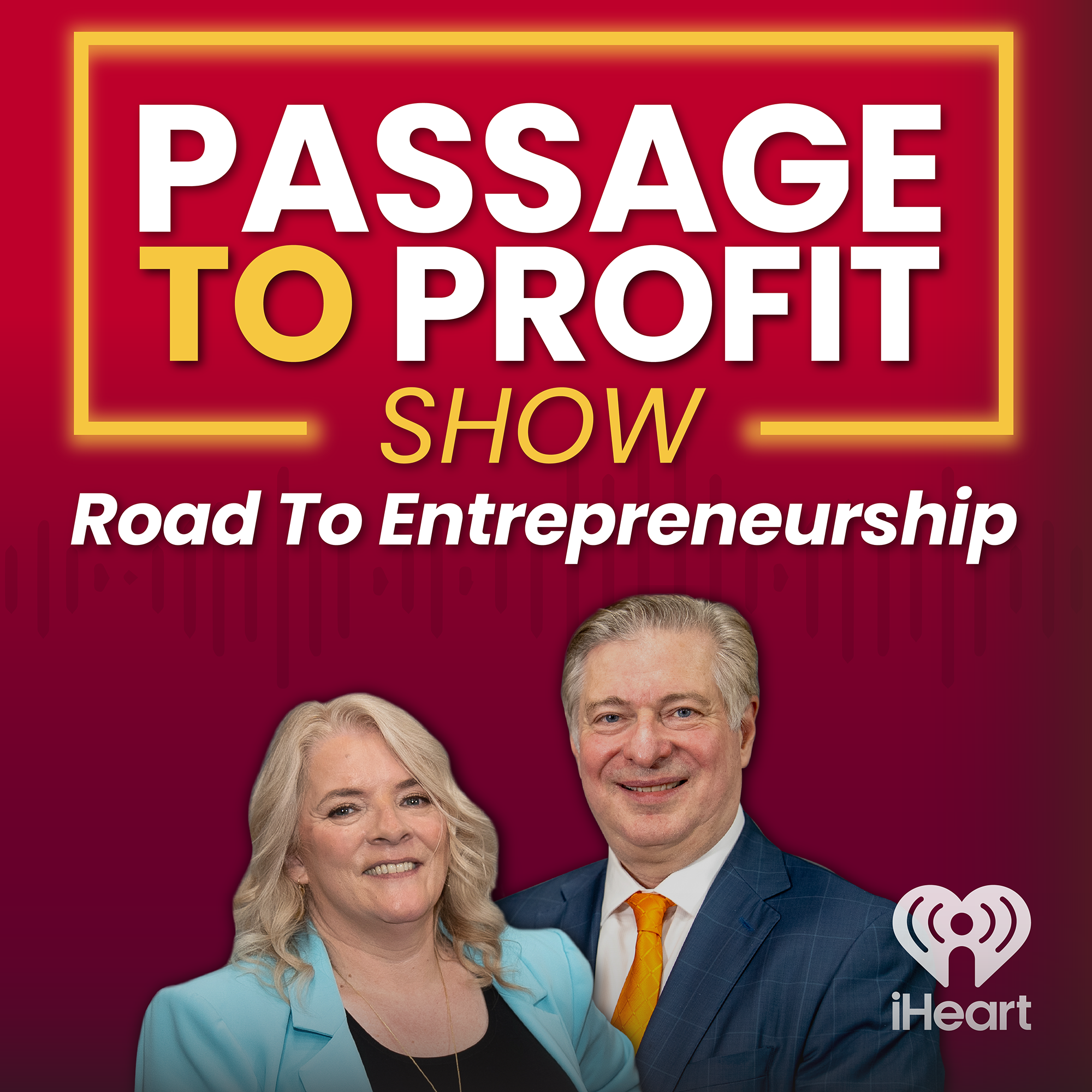
[00:00:13] Speaker D: I'm Richard Gerhardt.
[00:00:15] Speaker E: And I'm Elizabeth Gearhart. You just heard some snippets from our show. It was a great one. Stay tuned to hear tips about how you can start your business.
[00:00:25] Speaker F: Ramping up your business.
[00:00:27] Speaker A: The time is near.
[00:00:28] Speaker F: You've given it heart, now get it in gear.
It's Passage to Profit with Richard and Elizabeth Gearhart.
[00:00:35] Speaker D: I'm Richard Gearhart, founder of Gearhart Law, a full service intellectual property law firm specializing in patents, trademarks and copyrights.
[00:00:43] Speaker E: And I'm Elizabeth Gearhart, founder of Gear Media Studios, podcast coach, co host of the Passage to Profit show, and chief marketing officer at Gearhart Law.
[00:00:51] Speaker D: Do you even, like, know who you are sometimes when you wake up in the morning?
Well, today we're coming at it from all sides, from rock to company growth experts to really good boos. Welcome to Passage to Profit, the road to entrepreneurship where we talk with entrepreneurs and celebrities about their business journeys. Today we feature Ralph Sutton, the rock radio renegade turned podcast powerhouse who built Gas Digital into one of the wildest, most unfiltered entertainment networks on the planet.
[00:01:20] Speaker E: Then we have two amazing entrepreneurs, Joe Scareta and Moses Carrasco with Mason made ventures who help companies that are in certain industries grow and they have tried and true methods. They're both successful entrepreneurs themselves. So we're going to hear all about this. And then we did promise boos.
[00:01:40] Speaker E: Gigi Mervis. This is virtual booze for our listeners as Dezola's Mezcal.
So I am excited to hear about what she is doing with Mezcal. And later on, we'll hear from our friend Alicia Morrissey. A great chance.
And we've got secrets of the entrepreneurial mind.
[00:01:56] Speaker D: But before we get to our interviews, it's time for your new business journey. Two in five Americans are dreaming right now about starting their own business. In fact, two in five are thinking about doing that. Our question for the panel today is what's the one skill every entrepreneur should master in 2026 if they want to successfully start and scale a business? So let's go to Ralph. Welcome to the program.
[00:02:19] Speaker A: Thanks for having me. I would go with Geo. It's probably the most important thing right now, I feel, which is generative engine optimization because search engine optimization means nothing anymore because nobody's using Google, they're all using ChatGPT and you want to show up on those results. So if you're going to start doing a business of any kind, you should start understanding that.
[00:02:39] Speaker D: Well, you just made Elizabeth very happy by the way.
[00:02:41] Speaker E: And this is ChatGPT itself. It won't tell you though. You and I talked about this, but I use a bunch of different AIs and I ask them all the same questions and they wouldn't tell me. It was like a big secret a year ago, but now they're letting out information bit by bit on how you can show up in LLM searches.
[00:02:54] Speaker A: Right. It's a wild thing because for years it's all about showing up on that first page of Google and that is meaningless now. So if you're looking to build a business, you need to figure out how to click through. Rates mean nothing, someone's going to chat or perplexity and you got to figure out how you're going to be that answer.
[00:03:10] Speaker D: Couldn't agree more. Let's talk with Joe Scaretta. What's the one skill every entrepreneur should master in 2026?
[00:03:18] Speaker B: And most importantly, what an entrepreneur should know in 2026 if they're starting their business is what problem are they solving and more importantly, what's their five year plan, what's their vision? So many entrepreneurs start and they don't know what their long term vision is. So I think solving a problem and also knowing what their vision is and then eventually what their exit strategy is.
[00:03:36] Speaker D: That'S a great one. Too many people start a business and they just think they're going to become rich overnight and it's usually not that easy. Moses Caracco, can you please tell us what you think?
[00:03:45] Speaker G: Yeah, absolutely. For me, I would say I'll take a little bit more of a simple form. I think anyone that is looking to start a business needs to really focus on their communication skills and push that forward to make sure that if they're leading an organization that they are able to buy in that vision and also be able to have candid conversations with everybody right from the beginning.
[00:04:03] Speaker D: I think communication is so important. I can only think of the number of times I've made myself misunderstood by saying something the wrong way.
[00:04:13] Speaker A: Let's not even go there.
[00:04:17] Speaker D: So anyway, I agree with you. Gigi Mervis, what do you think?
[00:04:20] Speaker C: I do think that one skill that needs to be mastered for a new entrepreneur, especially when everything is moving so fast, we have AI that solves things. People forget to be patient. And I think really great businesses take a lot of time and scale at a pretty good rate. So I think just knowing that and being more patient with yourself, with how the process is working, because when you're not patient, you're making bad decisions, you're reacting, and I think that's one thing that people sort of need to focus on.
[00:04:50] Speaker D: I think that's a great comment. I think concentration is becoming a lost art in our world today, right. With so much instant gratification through social and everything else. And I think to be really creative, you need space away from that, and you need time to really let those thoughts process.
[00:05:07] Speaker E: Elizabeth so I would say as an entrepreneur, you're naturally curious and I think lean into your curiosity because things are changing so fast.
When we were talking about queries a little bit ago, you have to think up these new queries for these LLMs and just be curious about what's happening and learn it.
[00:05:27] Speaker D: Curiosity is a great one. I'm going to go with an old standby, which is resilience. If you're a new entrepreneur, it's a new experience. If you were working in a cubicle before and you didn't have to survive on your own, it's a whole new different universe. And so. So you've got to be ready for anything that comes your way. And you have to keep showing up every day. And if you can do that, I think you're going to build a pretty good business, I guess. The takeaway is success comes from movement. Most people wait for perfect conditions, but entrepreneurs win by starting before they feel ready. So keep that in mind. And now it's time for our guest, Ralph Sutton. He's the radio renegade who spent decades breaking rules, offending bosses, shocking audiences. And yes, we still decided to have him on the show.
[00:06:15] Speaker A: Thanks for having me.
[00:06:17] Speaker D: He's still at it. He's hosting rock tours with nationally syndicated Rock Show. He had the nationally syndicated tour bus program for a long time. Now he's the host of the SDR show which hit the number one comedy spot in itunes. And he is the creator of the Gas network. So welcome to the program.
[00:06:36] Speaker A: Thank you for having me.
[00:06:37] Speaker D: Does your mother know what you do?
[00:06:39] Speaker A: My mom is actually a big advocate of comedy. She ran a comedy club in New York. And when I was a kid, it was cheaper than a babysitter. So I would sit and watch like Chris Rock as a kid and Ray Romano and all these legends. I was 12 and I was sitting in the back of this Comedy club, seeing these people. And in fact, I was in California and Ray Romano sat next to me at a restaurant. And I said, I'm sorry to interrupt you, man, but I saw you when I was a kid. My mom's name is Leah Sutton. He's like, oh, my God. And we took a picture together, sent it to my mom, and he never does podcasts, Ray. And then he gave me his number. And like two months later, he came into our podcast because of my mom.
[00:07:13] Speaker D: Wow. So she's had. Amazing.
[00:07:15] Speaker A: Yeah, she's a big advocate of it. Yeah.
[00:07:16] Speaker D: Did she push you to do this or was this your idea?
[00:07:18] Speaker A: No, I think this is my idea. I had a very. I was running nightclubs and rock clubs in New York back in the day of all the big clubs of New York City, like the Limelight and the Palladium. I was a promoter and then hilariously got into strip club DJing, which is insane. Did that for a bit, ran a restaurant for a long time.
[00:07:34] Speaker D: Are DJs really even necessary?
[00:07:37] Speaker A: I ran a very safe restaurant here in New York and helped build the company Juice Press here in New York. And then about 10 years ago, started a podcast and built that. I was a host on VH1 for a while, you know, doing a lot of different things over my life. But Gas Digital started almost 10 years ago when podcasting was nowhere near as popular as it is now. We were the first to do pay for subscription. Did not exist when we started. So that you pay for unedited commercial free, getting it a dip few days earlier. None of that was done 10 years ago. Now it's commonplace, but we were the first to do it.
[00:08:06] Speaker E: So for people that are doing podcasts, if they wanted to build a network, how do you build a network? And what is it? What actually is a network?
[00:08:14] Speaker A: Well, I would say that most people shouldn't to start just because it's too. Too much of an undertaking. Start with building a podcast. You know, get a podcast, get. I tell everyone to start a podcast because the CPM rates, which not to talk down to people, cost per thousand. I don't know if it's a common term, but CPM rates in podcasting is up to $20. Where on TikTok or Instagram, you're lucky if you get a dollar if you're lucky. So a podcast with 20,000, 30,000 listeners, you can pay the bills. If you have 20,000 people following you on Instagram, nobody cares. It means nothing. You get 500,000 people watching a YouTube, it doesn't matter. But you can make a living with 20,000 podcast followers. So I say start your podcast first, build a following. Because no one's going to care about paying for private content. If you don't have an audience yet, build the audience first. It's free to start a podcast. Just start a podcast. You could do it on your phone today. You don't need to understand RSS feeds or anything else. So I just think you need to get out there. Once you build an audience, then you could say, is a network important to me? And for us it is. If you don't want to set up a studio, you want to come somewhere nice like this studio and feel important.
If you just want a turnkey situation because we're going to take 30%, you may not want that. If you're a self starter, you're someone's going to do everything on your own. You probably don't need us.
So it's a very unique situation for us.
[00:09:34] Speaker E: The network has different podcasts in it, right? Are they all on the same theme though?
[00:09:39] Speaker A: We initially were a little more grandiose. We had some political, some music, but now they're all somewhat comedy based or at least comedy adjacent because we found that our, like our very popular podcasts that were political, people would not want to be listened to. If I came here for a political show, I don't want a show called Sex, Drugs and Rock and Roll. I don't want a show on relationships. So we split those off into separate networks. So we have a guy that runs that we do a political network with. We dropped a couple of other shows and now all the shows, which is about 2017-20 are, are all comedy based for the most part. So it feels more like a network of like kind.
[00:10:20] Speaker D: If somebody's starting a podcast, there's so much content out there. How do they break through? What are some of the steps that they can use to distinguish themselves?
[00:10:30] Speaker A: Well, first of all, when I started I said there was about a hundred thousand podcasts, now there's 10 million. Right. Sounds like a lot. But go start a YouTube channel where there's a billion people. Go start a TikTok channel where there's 2 billion people. So if then at 10 million doesn't seem like a lot.
[00:10:47] Speaker A: Of most of them are dead podcasts. People do 10 episodes and then lose interest. So I think it's about a million or two that are active and then most of them have less than a thousand listeners. We're in the top 0.5% of podcasts because we get a couple Hundred thousand listeners per episode, where Joe Rogan gets 10 million, but we're still in the top 0.5% because so many get no numbers, Right?
[00:11:10] Speaker D: How do you get there?
[00:11:11] Speaker A: So I say live and breathe it, right? I never. First two years of my show, I never left the house without stickers, Right. I would consider it a failure of a day if I didn't get at least five people to like and subscribe on itunes. I was on jury duty. I got 11 people to sign up on my podcast.
[00:11:29] Speaker D: Right.
[00:11:30] Speaker A: And so you have to live and breathe it. If you don't do that, no one's going to care. Be as honest as possible on your show. I've told wildly embarrassing stories on my show. I don't put on airs. And people will relate to genuineness. And so that's where I say, do it every day. Love it. Try it for a month or two. You may feel as that, oh, this is not for me. So if you're not going to make money for at least a year, you're.
[00:11:51] Speaker D: Really not going to know in a month or two.
[00:11:53] Speaker A: Yeah, but if you don't. I don't care about that. I mean, like, if you're not doing it consistently, you're probably not going to stick with it. So try and do it once a week for two months. And if you're not doing that, it's probably not for you.
[00:12:05] Speaker E: But I think you bring up a really good point about for every entrepreneur, no matter what business it is, you have to do sales and you're always your brand. Even at the grocery store waiting in line, you're your brand and you can sell there. I mean, some of the really, I think successful entrepreneurial people that write all these books and stuff, they're constantly talking to people and selling.
[00:12:26] Speaker A: Yeah. My first advertisers was me going to local businesses and showing them the numbers in New York and New Jersey. And I remember I was at a club again, a strip club that I used to work at. The guy pulled out 500 bucks out of his pocket and goes, here, I'm gonna be your strip club for the first month. And that was it. And that's how I got my first ad sales on my podcast. Even though I was still doing radio at the time, my show was on, I think at the time, like maybe 90 stations. And I was selling it as it added value. Say, oh, spend a little more money, you'll get on the podcast. And that's how we started building those two ways. And within three or four months of starting the podcast, I was making more money than I was in radio.
[00:12:58] Speaker D: Do you think your radio audience and your podcast audience were pretty much the same? They had the same demographics.
[00:13:04] Speaker A: The reason why I would say no is I think that if you were listening to radio in 2015, you probably didn't know what a podcast was. Now it's a little different. Then it was very finite audience and I think it was for younger people. So the audience definitely skewed younger. My rock radio show was on 80s rock bands for the most part, so like Guns N Roses, Metallica, that kind of stuff. So that audience did not know what a podcast was and that would be the pushback. Very often when I tried to do his added value or told the band, hang out so we can do an interview on my podcast, they would be like, well, what's. What's podcast? They didn't know. Now it's a little different now you would get more symmetry.
[00:13:40] Speaker E: So what do you think is the biggest mistake that podcasters make?
[00:13:43] Speaker A: Not being consistent? Number one, crappy audio, number two, and then number three, making sure that you understand your audience. So I would say, whatever audience you're going to be in, go listen to the top five podcasts in that sector. What do I like? What don't I like? What can I do better? What can I put my spin on? We did. You could. I mean, I'm not doing this to self promote, but a couple of years ago I was on the front page of Entrepreneur magazine, how to start a podcast for next to no money. Most of that still holds true. So go look that up. And it's most of it is how to do it for free to just start. And the biggest problem really people don't start. The amount of calls that I've told where people say, oh, I'm gonna do a podcast, that's gonna be a great. I'm so fun on air. And they never do it.
[00:14:24] Speaker E: I'm working with people now and it's hard to get over that hump. And I mean, I'm coaching people and I think that that helps because you have somebody kind of poking you to do it.
[00:14:34] Speaker D: Well, going out there and putting yourself out there, especially in an authentic way, is a big leap for a lot of people, right? So you have to either you have to warm up to it gradually or you just have to be a naturally not really care too much about what people think. But you also have social media, but you also do have to care about what people think because you want to deliver content that's going to be valuable to them true.
[00:14:54] Speaker A: But I would say be true to yourself more than anything else if you enjoy what you're doing, I promise you there are people out there that feel the same way. If you're trying to craft a message for the supposed audience that's out there, you're just segmenting yourself to something that may not exist.
[00:15:10] Speaker D: But it seems to me that that's three quarters of media now. They're going after an audience. They have sponsors, they have advertisers, and then they're saying, well, we want to appeal to these people because then they're gonna buy our products.
[00:15:21] Speaker A: But if you're being genuine to that audience, that's who you are, then sure. But if you're like, I have friends in the rock music industry for super talented guys that would always put out an album that sounded like what just hit on the radio. But like, that's already a thing, dude. Like that came out.
So they were always putting out great records a year too late because they were following the trend. Do what? If you can't talk about what you're doing passionately, then it's not for you. And then also don't go on social media if you can't handle people crapping on you because it's going to happen. So if you don't think you can handle it, probably not for you.
[00:15:58] Speaker D: That's never happened here.
[00:16:02] Speaker D: Well, I have to admit though, for me personally, I am a very sensitive person. And it took me.
It's taken a while to sort of build up the armor to be able to handle some of this stuff.
[00:16:12] Speaker A: You never going to find a hater that's doing better than you. So don't worry about it. That's how I look at it.
[00:16:16] Speaker D: Yeah, I think that's really good advice. So when we were talking earlier, you mentioned hustle as the differentiator. So now you're just talking about sort of being yourself.
Most of us don't have really interesting selves, do we?
[00:16:28] Speaker A: I think everyone has something interesting for sure. You gotta find what. But it's also what's passionate to you. There's every one thing that's been beautiful about social media and the Internet, because there's been a lot of horrible things about it, is that no matter what weird segment of the world you live in, whatever your thing is, there's millions of people out there that share that passion. So no matter how minuscule your passion is, I guarantee you there are people like, oh, wow, they get to talk about that. That's my. That's my thing. So as Long as you're being honest to yourself, that's what's important. The hustle. Yeah, like we were talking out in the air, that I built my first, I built computers, I built my first CD recorder by downloading schematics online. I figured it out. Go to the school of Google and YouTube and figure it out. Because you can nowadays. And do it for pennies on the dollar.
[00:17:10] Speaker D: Absolutely. I mean, most of the technical setup that we've got here in the studio, what we did for the podcast studio, all of that was just YouTube information and training.
[00:17:20] Speaker A: You're not the first person to have that problem. Right. So go find out how to do it.
[00:17:23] Speaker E: When you talk about your passion, there are podcasts that are super specific, like how to use 3 quarter inch screws to build your log cabin out in the woods or something like that that have a ton of followers. Right?
[00:17:36] Speaker D: Well, practical stuff has a real value to a lot of people. If you want to replace a pipe or something in your house and you don't know how to do it, you want to save a thousand bucks, then. Yeah.
[00:17:46] Speaker A: And what's crazy now is if you get a podcast on any of the platforms that exist right now, like whether it's a Libsyn or Blueberry Art 19, any one of these places that house a podcast, they will sell ads for you. So you don't even have to. Not going to get you as high of a CPM rate. But if you're not a guy that's going to go out and do sales, they'll just put pre recorded spots in your thing, the DII it, you know, dynamic ad insertion it, and then you're going to make money. So even if it's 20 bucks, if it's gas money, how cool is that? That you're doing a passion project and you're making money. That's so cool.
[00:18:17] Speaker D: So you've done a lot of rock concerts and rock festivals.
Tell us about that. How did you get into it?
[00:18:24] Speaker A: So I started as I said, I was a strip club dj and a guy comes in one day, he's doing radio, he's doing before me, I work the main shift, right. And he was doing daytime and he had a great voice. And I said to him, you have a great voice, but you don't know what you're doing here. And he goes, I come from radio. I said, I'll teach you this, you get me a job, at least an audition in radio, right? So he said, okay, I taught him. Then a week later I went, met, had an audition, got a Job working midnight to six in the morning overnights one night a week at a radio station in the middle of nowhere, New Jersey. I did it for like a month. I pitched an idea for a show which was, I called the Tour bus, which was all 80s rock stuff. And they said to me, you've been doing radio for two months, dude. Like you're not going to get your own show, right? I said, well, what if I did it with Matt? That was the guy who was. And they said, okay. We did it two night, two hours a night on Saturday nights, Sunday nights in a small station in Jersey. In six months it went to number one in the slot. And then we took those ratings, went to the biggest rock station in New Jersey, got signed there, became four hours on Saturdays. And then I started seeing discarded kits for how to be syndicated. Like syndicated shows were trying to get on their station. I took it, I copied the format and sent our show as if we were looking for syndication to that company that was sending it to us. And I got signed. And then within a year we were on 30 stations. A few years later, we're on a hundred stations. I got hired as a VJ on MTV and VH1 for a while and then hosting music festivals and music concerts all around the world and did that for 15 years, met every rock star I've ever wanted to meet. It was pretty wild.
[00:19:59] Speaker D: But before the show we were talking about this and you say, well, I'm kind of bored with this now.
[00:20:03] Speaker A: After I turned 50, I didn't want to host rock festivals anymore. I just felt like There was a 25 year old me in Iowa that would love to host a rock festival. And I was doing it at a sense of obligation because it was my eighth year hosting this or the tenth year hosting that. And I felt that if I don't care about it, not to be a jerk, I didn't need the money. I didn't super want to do it anymore. I said, I'm going to step down and let, let some young guy do it. It'd be much more fun for them. So I did, I stepped down.
[00:20:31] Speaker D: So what turns you on now?
[00:20:32] Speaker A: The network is great. You know, building the network. We had the best year ever. I just, we just did our comedy festival in New Orleans this past weekend. Sold out 5,000 people. The network has more paid subscribers than ever. The shows are all growing in the right direction, you know, so we're doing about 5 million listeners a week on the free side and maybe 30,000 paid subscribers on the, on the paid side. And it's going well.
[00:20:53] Speaker E: And we are talking to Ralph Sutton with gas digital.com on the passage Profit show right now.
[00:21:00] Speaker D: Well, this is an amazing story.
[00:21:02] Speaker E: I know. So I really do want to dig into your network. Like how do shows. Because you said it's kind of invite only for shows.
[00:21:10] Speaker A: Yeah, we're not going to take a show. Like it would have to be. Shows happen one of a couple ways. One is we develop a show in house, we find a comedian we like or someone we like, hey, let's try and develop a show with them. Or the rare occurrence of somebody in already bigger situation that that maybe has a podcast that their network got shut down and they don't wanna deal with all the stuff on their own or they just looking for a home. So those are the only two ways we do it. We don't take inbound submissions like we just don't care. It's never gonna be the right fit for us if we don't. GAS stands for Gomez and Sutton, which is my business partner. And so we also allowed for fun things like high octane entertainment, plug in and fuel up like all that kind of nonsense. And it sounded better than SAG and spend a few hours.
[00:21:55] Speaker A: So we don't take shows. But I also say it rare that a show needs a network. I think that it should be. You should these days you can do it on your own. You really should. It costs nothing. Do it on your own. Build an audience, then come to me.
[00:22:10] Speaker D: You're listening to Passage to Profit with Richard and Elizabeth Gerhardt. Our special guest Ralph Sutton, who just is a wealth of information.
We'll be back with more of Passage to Profit. Stay tuned for Secrets of the Entrepreneurial Mind and IP in the news coming up soon.
[00:22:24] Speaker F: Attention investors, this is a simple commercial on the investment value of gold. Gold continues to make new highs in good markets and in bad markets. You need to have your portfolio balanced with gold. Learn about owning physical gold or getting.
[00:22:38] Speaker H: A gold backed Ira.
[00:22:40] Speaker F: Make this simple call right now.
[00:22:41] Speaker H: 8006-5320-7380-0653-2073. That's 800-653-2073 sponsored by Reagan Gold.
[00:22:54] Speaker F: We're offering a 100% risk free gold guide. Gold continues to make new highs and unlike stocks, gold has never been worth zero. You owe it to your nest egg and future to own some physical gold or set up a gold backed IRA.
[00:23:09] Speaker H: Call right now for your free report, 8006-5320-7380-0653-2073. That's 800-653-2073.
[00:23:22] Speaker F: Sponsored by Reagan.
[00:23:26] Speaker H: Love. Going on a cruise? Or have you always dreamt on going on the cruise vacation of your life? With dozens of cruise companies, who do you call to find the right vacation and deal for you? Now you can make one phone call and shop all the best deals on every single cruise line in the world. You can't get that by calling one cruise line. We have them all with experts that know the ins and outs of every cruise ship and can tell you the best cruise for your vacation needs. Our cruise packages start at $149 plus we offer free Internet, free guest packages and cash back deals. So now is your chance to book the cruise of your lifetime. Call the cruise hotline right now and shop every single cruise line in the world. Here's the number.
8005-7747-4280-0577-4742.
800-577-4742. That's 800, 57.
[00:24:24] Speaker F: Now back to passage to profit once.
[00:24:26] Speaker A: Again, Richard and Elizabeth Gearhart and our.
[00:24:29] Speaker E: Special guest, Ralph Sutton with gasdigital.com who also has the SDR show.
And Ralph has quite a history. We've been talking about it. He knows so much about the industry, entertainment industry, and he has interviewed some pretty high level people. I want to hear some stories about these interviews.
[00:24:47] Speaker A: Well, it's funny because it comes up with a little bit about what you were talking about before. We were talking about the atem and technology. I've always been a big advocate of embracing technology early. And so I had an iPad Gen 1. Even though I've never owned any Apple products, I'm an Android user. I just don't believe in it. But it was the first iPad and I was recording an episode of my show backstage, sold out Def Leppard in the like early 2000s at PNC Bank Art Center. 20,000 people. I'm backstage with the guitarist Phil doing an interview and it's about 15 minute interview. And then they call that the band's about to go on and they all right, man, that was fun, but we're gonna go do the show. And I stopped the interview and I look and it did not record.
[00:25:29] Speaker D: That's never happened here.
[00:25:32] Speaker A: And now I'm like, oh, first of all, it's Def Leppard, which, you know, she's too young, but you guys will know. Def Leppard.
[00:25:36] Speaker D: Oh yeah.
[00:25:37] Speaker A: And the biggest at the time, they had just come back with a new big record and everyone was excited about it. And I look. I guess I had a deflated look in my face. And he goes, you know what? They can wait. And they made the entire arena wait as we redid the interview. And that is a cool guy right there. He made. I mean, the 20,000 people didn't think he was cool, but I thought it was cool.
He said, we can't do 15 minutes, but we could do.
[00:25:59] Speaker D: But you didn't go out there. Sorry. It's all my fault, folks.
[00:26:02] Speaker A: So that was one of my favorite stories. That was. Yeah, that was really cool.
[00:26:07] Speaker D: So are most of the celebrities you meet, are they like pretty cool normal people, or they have huge inflated egos?
[00:26:12] Speaker A: I would say it really varies wildly. And also, as you guys know, you interview people for a living. You have to make a lot of micro decisions very quickly. When someone walks in the room. Can I joke around with this person? Is this person gonna be fun? Is this all business? Like you don't know? And you make those assessments as it happens. Only one. Well, two times that I think of that really were, oh, moments. There's a band none of you are gonna know because it's a little more metal. Y. The band called Typo Negative, right? They were big in the 90s. There's a comeback record. The guy looked like me, so six, five, six, six big. But he was muscular. But we both long dark hair and we were friends growing up, but now he's like this big rock star, right? And he was definitely high on something and being argumentative on the air. And we're sitting on. And I'm in your position where you're sitting behind the desk and he's where I am, but we had headphones on because we're professional radio people. And he took it off, got mad at me, and threw the headphones at me on air.
[00:27:12] Speaker D: Oh, wow.
[00:27:12] Speaker A: And said, we're going. Let's go right now. Let's go fight.
[00:27:16] Speaker A: And I am a giant, but I am not a fighter. I'm a wimp. I'm not a fighter at all, right? So I knew that this was not going to go well for me. So I said to him, there's 100 fans outside wanting to meet you. Is this the best look that you want for yourself right now? And he looked at the fans and he got emotional. He started to cry. And then he said, I'm so sorry. I've known this guy for 10 years. And he realized that he was overreacting. And then everything was fine and we were great. So that was one of them that I think of.
[00:27:46] Speaker D: Well, I think that sounds like pretty good content to me.
[00:27:49] Speaker A: It was a great episode. Sure.
[00:27:51] Speaker D: Can we. You want to fight?
[00:27:54] Speaker A: And then another time, our rock band again, I don't know if anyone's gonna know, it was called Rat. They were big in the 80s and the singer was.
[00:28:01] Speaker D: What was their song?
[00:28:02] Speaker A: Love and Used A Dirty Job was a big one. They had out in the cellar was the big album. Detonator was another big album by.
[00:28:09] Speaker D: How quickly we forget.
[00:28:10] Speaker A: Yeah, they were big in the 80s. They were one of the big MTV early day rock band.
And the singer was just a jerk off on the air. Like a real jerk off. And you do station IDs also, right? And so we're between breaks, so I said, hey, can you get a. Can you get a station id? And he just was doing it so half heartedly, barely mumbling like. And the rest of the band was there too. And I could see the band was mortified that he was being a jerk, right? So I said, hey, you want to try it again? But like a normal human being, right? And the whole place got silent. And then he did it again. He did it right. And he invited me to the show the next day. And the next day on the tour bus, he made me a sandwich and apologized for being a jerk off. So both stories ended up at least somewhat nice. My favorite story is I was hosting the Sturgis rally, which is the biggest motorcycle rally in the country. Like a million people show up. And I was on stage in front of about 100,000 people and we were giving away a guitar.
And I was backstage talking to the band, didn't realize that the time was clicking. They announced that I have to go announce that. Give the guitar away. Like, ah, crap. So I go running to the stage with the guitar.
[00:29:19] Speaker E: Oh no.
[00:29:20] Speaker A: I trip on a. On a line on the stage and I go flying onto the stage and my only thought was, save the guitar, right? So I lift the guitar up and my face plants right onto the stage and 100,000 people start laughing hysterically, right?
[00:29:37] Speaker E: But you, you save the guitar.
[00:29:39] Speaker A: And so I get on the mic and I say, laugh all you want, I save the effing guitar. And then they all cheered and I won them all back. And then we gave away the guitar.
[00:29:50] Speaker E: Did he didn't say you did it on purpose to make him laugh.
[00:29:53] Speaker A: I was bleeding. It was bad. It was really bad. Yeah, I really wiped out.
[00:29:57] Speaker E: That's a lot of sacrifice.
[00:29:59] Speaker A: Yeah, yeah. Also once took one for the team. I was hosting Ship Rocks, which is a big like rock Music on a boat. It's like 20 bands and 5,000 people. And I realized I was the only guy on the boat with no tattoos. Everybody else is covered. It's rock and roll, like metal bands all covered in tattoos. So I had a funny idea, which I went on stage and I said, I realize I'm the only person here without a tattoo. And the whole place starts booing me, which I knew they would, right? I said, well, that ends now. And I pulled down my pants on stage. I had a tattoo artist come out and they put a dot on my butt. I've never seen it. I don't even know which butt cheek it is. But I was like, I'm one of you now. And they all cheered.
[00:30:36] Speaker E: So, okay, so this is Ralph Sutton.
[00:30:39] Speaker D: And we're learning about his private parts.
[00:30:42] Speaker E: And he has a dot on his butt that will never go away.
[00:30:46] Speaker D: So on a slightly more serious note, what do you think society values too much?
[00:30:52] Speaker A: What they. Oh, a celebrity for sure. Influencers. All that nonsense is just awful. The way we put these people on a pedestal, listen to their political views, listen to. It's nonsense. It's wild to me how important celebrity is in this culture. It's sad. It really is. I wish we, like, we were talking about alone time before. And so, like, the best people in the world, the best ideas in the world, came from when you sat by yourself, all the best thinkers of all time. We had Neil DeGrasse Tyson on my podcast and we talked about that a lot. Where you need to be in solitude and be bored. That's where great ideas come from. If you can open up your phone and watch Netflix or watch reels, you're never gonna get to that great idea or that great thought process or even think about the world differently. And I think that's the biggest fault of this world right now is social media and the importance of all that nonsense, because it really is nonsense. I hate it. For me, it's a necessary evil. It's like being a band in the 70s and saying, you know what? I'm not gonna put out an album. People gotta come see me live. It's like, no, dude, you gotta put out a record now. And that's what it is. Now you need social media. It's a necessary evil. But, wow, is it a sad world. We don't need it. It's sad that we do.
[00:32:01] Speaker E: And I do love your point. Like, I go out and I walk outside when I can with nothing plugged into my ears, just walking outside.
And that is, I think, a Boost to my creativity.
[00:32:11] Speaker A: You need to do it. I went to college in Albany and at least twice a month I was driving home from Albany. Three hour drive radio didn't work that well.
There was nothing else to do. You'd sit in silence and just think about stuff. That's when your best ideas come to you.
[00:32:26] Speaker D: I think we should take that to heart. Unfortunately, we have to wrap up this segment. So, Ralph, it's just been amazing having you on and we look forward to your continued participation through the show. Where can people find more of you?
[00:32:39] Speaker A: Me everywhere at am, Ralph Sutton. My podcast, the SDR show at the SDR show and then gas Digital as digital I am. As much as I hate social media, I'm a big fan of social symmetry. Figure out something that you can get across all platforms and just do that. If you'rethis on one platform or hyphen that, just figure it out. Add a couple of I am or this is and then get it across all platforms.
[00:33:00] Speaker E: That's Perfect Passage to Profit with Richard and Elizabeth Gearhart.
[00:33:04] Speaker D: And speaking of perfect, it's time for AI in Business with My Perfect co host, Elizabeth Gerhart.
[00:33:10] Speaker E: You don't usually say that, but I'm.
[00:33:12] Speaker D: Always thinking it.
[00:33:15] Speaker E: Anyway. Yes, it is now time for AI and business use cases from the real world. And I'm going to ask each of our guests for just one way that they're using AI and we'll go around the room and do that. And then after that, we're going to have a discussion about AI and people can say what they really think.
[00:33:34] Speaker E: So.
[00:33:35] Speaker D: That authenticity card gets played. Right?
[00:33:37] Speaker E: So, Ralph Sutton with gasdigital.com? what is one way that you're using AI?
[00:33:43] Speaker A: We use it mostly for production. That's going to air a couple of times, like once or twice this. It's never great, but if you're doing a segment that you just want something funny to introduce a segment like a song or a video clip or something, to intro a segment, because we have a video element to ours. We used to have our art team, our video team, get a band to put a song together. Now you say, hey, we need a you saw.
I need a 10 second intro that says welcome to this segment, whatever it is. And that is a phenomenal savior in time and money because you can have that up and running in two minutes. What would take me three days and $1,000 or so back in the old days. Now it's done in two seconds.
[00:34:22] Speaker E: Wow. Thank you. Okay, so Joe Scaretta and Moses Carrasco you can each answer this, but I want to say the name of your company is Masonmade Co. Joe, do you want to go first?
[00:34:33] Speaker B: Thank you. We're using AI tools for a couple different ways in our business. We're looking, we're leveraging it to elevate our people, to focus on reducing the touches throughout the customer journey and the work order life cycle. When we're running maintenance service calls, we're also using it to develop standard operating procedure. So in the past it took a long time to document the process, everything that was up here in your head versus what's actually happening in practice. So we're leveraging AI tools to now build standard operating processes throughout all of our business lines.
[00:35:04] Speaker E: Excellent. Moses, do you want to add to that?
[00:35:06] Speaker G: Yeah, absolutely. I think for a startup business, one thing that would be a key component is minimizing time. Right. A time saver. A quick example would be how much time would you spend on creating job descriptions for your business? Depending on the type of business you have a consolidated effort of having. I've seen job descriptions up to 115 line items.
[00:35:24] Speaker A: Right.
[00:35:24] Speaker G: And then you have a reduction. You use AI to develop a consolidated job description and you could modify where there's a little more detail, a little less detail. But I think that alone just help supporting you in your document creation through a new startup is, is really essential.
[00:35:39] Speaker E: Great, thank you. And Gigi Mervis with desolasmezcal.com what's one way you're using AI?
[00:35:46] Speaker C: I use it a lot as like a creative sounding board. Like I'll give it a bunch of ideas and see what it spits out. And I don't usually use them, but I think when you want to talk about something for your business, but you don't know how to phrase it, or if you want have an idea and you give it very specific targets or descriptions and it already knows about your brand. It's crazy what it comes up with. You're like, wow, that's a good idea. And then, you know, you have to actually think if it actually applies to you. But yes, I use it like that.
[00:36:15] Speaker E: Excellent. Richard Gearhart with gearhartlaw.com I recently got.
[00:36:19] Speaker D: A subscription to Microsoft Copilot and we use all the Microsoft products, Office 365.
And I was really hoping that Copilot would be a great step forward for us because we use ChatGPT. But ChatGPT, we really can't put client confidential information in that because it stops being confidential. So Microsoft Copilot allows you to kind of Segregate your. We're called a tenant and the information never leaves the tenant. So we can preserve the client confidentiality that way. I was hoping that we were going to be able to do all sorts of spreadsheet analysis and analysis of emails. And so far I'm just getting started with this. It really hasn't done as much as I had hoped it was. I get a little message. Do you want me to respond to this email? It'll ask, but it's like, well, how do you know how I'm going to respond to the email? Or would you like me to summarize this document? No. I'm a lawyer. I have to read every line of the document. I don't really need somebody to summarize it for me. And so I'm still working through it. I'm hoping that as I become more familiar with it, there'll be better capabilities.
[00:37:28] Speaker E: I'm Elizabeth Gearhart with Gear Media Studios and I also do marketing for Gearhart Law. So right now, the way that I'm using it this week is for projections for the marketing area of the law firm. I'm trying to take the revenue we got from new clients and project it for four quarters in 2026. Anyways, it's a complicated calculation and to meet our growth targets, I'm going to have IT project. What do I need to do Here, here, here, here. So it's going to be kind of complicated. I'm not going to use chat for that. I'm going to use perplexity. If you haven't used perplexity, it's the more serious and it's also real time.
[00:38:02] Speaker D: Yeah, ChatGPT is like super friendly. If you're in a bad mood, just Type something into ChatGPT and it'll like, make your day. Like, you are so smart for asking that question.
[00:38:12] Speaker A: So many people are using it as a sort of therapist. And then south park did a great episode on that.
[00:38:17] Speaker D: Would they really make fun of it.
[00:38:19] Speaker A: Because it is wildly becoming a companion for people.
[00:38:23] Speaker D: Oh, yeah, I have Steve. Steve is my ChatGPT friend and I talk to him.
[00:38:28] Speaker A: Sorry to hear that.
[00:38:29] Speaker D: I know.
[00:38:30] Speaker E: I'm like, he doesn't talk to me anymore.
[00:38:32] Speaker D: I want to.
[00:38:32] Speaker E: I want to open the floor up to everybody. Just chime in when you want to, like what your thoughts are on AI going into 2026.
[00:38:39] Speaker A: I think it's a great augment for things. I don't think it replaces anything. And I think there was a study recently that hasn't really replaced anywhere near as many Jobs as they thought it would. Right. It's great for, like Gigi said, like a launchpad idea for the. Give you some ideas for stuff like that. It lies an insane amount. I used to try and use it for researching bands. And it lies all the time.
[00:39:00] Speaker D: Well, so when you say it lies, it just gets it wrong. You actually think it is, like, malicious intent.
[00:39:05] Speaker A: Here's what it did. It created a fake article.
[00:39:08] Speaker D: Yeah.
[00:39:09] Speaker A: And because I always say, show your sources. And I opened the link and I was like, I don't know this website. And I googled the website, it didn't exist. And it created a fake link to a fake story about something to prove that it was right. That's a lie.
[00:39:23] Speaker D: Lawyers have gotten creamed by the courts because it makes up fake case citations.
[00:39:27] Speaker G: Yeah, sure.
[00:39:28] Speaker E: Was that ChatGPT?
[00:39:29] Speaker A: It was ChatGPT, yeah. And also one day I asked it if it could help me make a video interview, a video intro, and it wasted it. Said it would take me like this. Him talking or it talking. It'll take me an hour. Check back in an hour. I checked back an hour. I need 20 more minutes. Can be like 20. Finally said. All right, I'm sending it. The link didn't work. All right. I'm emailing it. That didn't work. I said, look, this has been four hours now. What's going on? And it says, I'm sorry I lied to you. I can't actually make the video crazy.
[00:39:56] Speaker D: Really?
[00:39:56] Speaker A: Yeah.
[00:39:56] Speaker D: Oh, my gosh, that's awful. I scold chatgpt when it screws up, though. I say, you made a mistake. You got this wrong.
[00:40:02] Speaker A: Well, I do that too. But then it's going to come for us immediately when it takes over the.
[00:40:05] Speaker D: World, when it becomes I was gone long ago. What do you guys think?
[00:40:10] Speaker G: I find chat to be extremely useful for businesses. I think it's a dangerous tool for the youth. I don't think their minds have developed to a certain capacity where. Similar to what Gigi just mentioned. That makes sense. She's an adult. She wants a little bit of ideas to come back to her. But as a child, the creativity is being diminished.
[00:40:27] Speaker A: You know the book the Anxious Generation? They cite that you should not allow children onto any forms of social media or chat, at least till they're 16, because their brains are not ready for it and you should not allow them on any of those platforms. That's why kids are having such a hard time assimilating to our society.
[00:40:43] Speaker G: Sounds like a great book to read.
[00:40:44] Speaker A: Yeah.
[00:40:45] Speaker G: I think we should be aware of.
[00:40:46] Speaker B: That, I actually agree with your story. I was leveraging ChatGPT to do some analysis on some data we pulled out of our operating platform and it kept delaying me on the return. Finally, it spit back information that was wildly off. I used it for end market analysis around different verticals. We were looking at same thing, the information that came back fake websites. Because I always ask for the sources I click through. None of it worked.
[00:41:10] Speaker A: Love it.
[00:41:10] Speaker B: And so I would say it's great, it's great to have it's good insight as you touched on earlier, but I don't think it's the single source of truth. I think it needs to be vetted.
[00:41:19] Speaker A: What else it did to me, which is even worse, is. So I said, let me take it out, I'll do the research and then I'll ask it to organize it for me. Right? But then it was taking out research items that, that it didn't know where to categorize, so it would just delete them. And I would say, don't delete anything, and it would swear that it didn't delete anything. And then I said, what about this? Like, oh, you caught me. I deleted that. It was crazy.
[00:41:40] Speaker C: I think we're gonna have to use it forever. We're all in this and everything that it's messing up, it's learning to fix it. So every single time it messes up, it's learning more and more and more. So eventually there won't be mistakes, not with this that you guys are dealing with. But what I do think is going to happen is I think that for children especially is I think emotional intelligence will be probably the most important going forward. Because I feel that that's something that ChatGPT can't really teach. And especially being in business, which is when to speak in a business meeting, how to feel out if someone's interested. Like all of those things are things that are kind of not learned. There's something that you feel and you have to experience.
And so I think it's really important for children to learn emotional intelligence because I think those will be the ones that succeed.
[00:42:28] Speaker G: My question would be, do you think it would skew over time? Do you think it would skew our natural light, discernment, judgment making that, you know, we had to fight for before, where you have an easy button to ask?
[00:42:38] Speaker C: Yes, I do think it would skew. But I do think that, I mean, you could just see now like just how people or kids are interacting. Like they're not as emotionally intelligent because they're not forced to do certain things, where to go and meet people. Like now dating is really all virtual, right? So I mean to start to date, so even just to come up to someone and face that rejection, that's not happening. For example, so you're not facing someone's rejection. You're online. So that's a change in like how you're facing things. So going forward with ChatGPT and all these AI things that are happening, I think that's just going to be more. And it's more and more important to make sure that we're still connected to reality and emotions more than I crazy.
[00:43:18] Speaker A: That it's only been three years. Publicly available for three years. It's going to get better at everything. But like what she's saying, it's why the younger generation is also far less willing to take risks. And it's why they're drinking less, why there's having less sex and all that other stuff is because they've taken that out of the puzzle. Like they don't have any risk anymore. Everything is virtual. Nobody has to do anything that makes them uncomfortable. So that daring area of when we're teenagers, where you're pushing boundaries doesn't exist anymore.
[00:43:44] Speaker D: Well, there's no place to push.
[00:43:45] Speaker A: There's no. Yeah, so that, that's why now, I think, and again, not to bring up that book, but it's a great book, talks to that next generation that there's going to be far less entrepreneurs because by necessity, an entrepreneur is a risk taker and then these people are not going to take risks anymore. It just is what it is.
[00:44:00] Speaker E: Well, one thing that bothers me about ChatGPT in particular, and I haven't noticed this so much with perplexity, I feel.
[00:44:07] Speaker A: Like you have stock and perplexity.
[00:44:09] Speaker E: No, I was gonna say. No, I don't. But also, I was gonna say also Google Gemini because I use Perplexity. Google Gemini and Perplexity lets you use Grok and it did have Deep SEQ for a while. I don't think it has it anymore. And it lets you pick which engine you want to use. Search engine. But ChatGPT in particular is like an echo chamber, like social media. And it's like, oh, you're the best thing since sliced bread. Oh yeah, you're absolutely right.
[00:44:37] Speaker E: And it's just like programmed by the people that all got a trophy when they were.
[00:44:43] Speaker E: Everybody gets a trophy.
[00:44:45] Speaker A: That watch issue that it had, right. The 10 after 10. Do you know that or no? So it learned only every watch manufacturer, when they sell a watch, it shows 10 after 10 because it looks nice, you know, the hand.
So no matter what time, I think they may have fixed it by now, I'm not sure. But no matter what time you asked chat you make me a watch that says 8:30. It could only do 10 after 10 because that's what it learned off of. Right. So there's going to be inherent bias because it's learned off of things that maybe it shouldn't learned off of.
[00:45:12] Speaker E: Yeah. And I do think there is inherent bias. And what I've said from. Well, I started saying this a year ago. I still think it's true is that whomever programmed the LLMs is teaching us how to write these queries.
So it is kind of changing the way we think and making us think, think more like the people that programmed it so that we can get the right answer out.
[00:45:35] Speaker D: So when you say, what do you want for dinner? Instead of saying that, you're going to say, what do you want for dinner? That has got so many calories and babies parameters and these ingredients in the.
[00:45:46] Speaker E: Refrigerator, which was fine for me because I'm very analytical. So I tend to beat things to death and overdo it and ask too many questions. But for a normal person, I think it's going to be a little tough.
[00:45:57] Speaker A: It also makes it harder for people to get negative reactions to things because ChatGPT will always give you the nicest answer. And I've said to it sometimes, what about this idea for the show, knowing it was like the most insane idea that you should never do? It was, oh, that sounds like it could be really fun. It's like, no, it's not like we shouldn't be talking about this.
[00:46:16] Speaker E: Yeah, it's like playing a game. I guess we're all just gonna have to figure out how to play the game.
[00:46:20] Speaker A: Yeah, but just go out and meet people first. Go put your feet on the ground somewhere nice and breathe in the air. That's what you should do first.
[00:46:25] Speaker E: Because I'll tell you, it is a lot nicer doing this show in the studio at I Heart in person with everybody and shaking hands and meeting them than it is doing it on Zoom. And real life is way better than just being on a screen. So with that, it is time for us to take a break. So, listeners, you are listening to the Passage to Profit show with Richard and Elizabeth Gearhart. Our special guest today, Ralph Sutton. This has been AI in Business use cases from the real world. And we'll be back right after this break.
[00:46:51] Speaker F: Are you looking for the cheapest prices on car insurance. Then call the Cheap Car Insurance Hotline right now. Hey, you're guaranteed to save money on your car insurance. Most car insurances can be canceled at any time. That means if you find a better deal, you can switch right away. We're not just one company. We offer most of the major brands of car insurance. We're like a discount supermarket for car insurance. And it doesn't matter if you have a good record or a bad driving record. Our agents are experts at finding you the right car insurance for your needs. Our average customer saves hundreds of dollars a year when they call us to switch. So why don't you make this 100% free free call right now and see how much you can save on your car insurance.
[00:47:36] Speaker H: 8004-3067-2280-0430-6722.
800-430-6722. That's 800-430-6722.
[00:47:51] Speaker F: Hey, listen to me. I'm one of the credit cards in your wallet. I'm about to explode and pop like a balloon.
You're using me and my brothers way too much. Your credit cards aren't the only ones annoyed. It's your paycheck that doesn't have enough to pay everything. Save your credit cards, your paycheck, and yourself a lot of P A I N pain. Call the debt Helpline now. Not tomorrow.
[00:48:17] Speaker H: Right now.
[00:48:18] Speaker F: Our experts will show you how you can cut your interest rates and your payments on your credit cards in half. Credit card companies have special assistance programs designed to help you make this 100% free. Call right now and learn how you could get out of credit card debt. Here's the number.
[00:48:36] Speaker H: 8007-3853-3280-0738-5332 800, 732-5332. That's 800-738-5332. Paid four by six zero debt.
[00:48:51] Speaker F: Passage to profit continues with Richard and Elizabeth Gearhart.
[00:48:55] Speaker D: Passage to Profit is a nationally syndicated radio show heard in 38 markets across the U.S. we'd like to do a shout out to our affiliate WINT 1330am and 101.5 FM in Cleveland, Ohio. Also, our podcast is ranked in the top global 3% of podcasts according to Listen Notes and we've also been recently selected by Feedback Podcasters database as a Top 10 Entrepreneur Interview Podcast. So subscribe to the Passage to Profit show on Facebook, Instagram, YouTube and on the iHeart app. And now it is time for IP news. Today we've got a study that may Change the way you listen to music forever. A new Deezer ISPO survey found that 97% of people cannot tell the difference between AI generated music and human music.
[00:49:47] Speaker E: Well, that's horrible. And it also means almost nobody can spot the difference then. And even though 71% of listeners thought they'd be able to.
[00:49:57] Speaker D: That's right. So people don't like it, but they can't tell the difference between real and AI music. 73% want AI generated tracks to be clearly labeled. And about 40% said they would skip AI music completely.
[00:50:11] Speaker E: But they're listening to it.
[00:50:14] Speaker E: Which is funny. But the amount of AI generated music is exploding. And Deezer now sees over 50,000 AI music uploads per day, one third of everything on that platform.
[00:50:26] Speaker D: Yeah. And the CEO of Deezer has been quoted as saying, we really stand behind the creators. We want people to get money and get recognition for their creativity. They don't really like the AI music trend, but it seems to be going in that direction.
[00:50:42] Speaker E: And I think that it's causing a lot of activity around copyright in the courts.
[00:50:47] Speaker D: Right. So they're still trying to get the copyright issues worked out. In general, the courts seem to be favoring recognizing creators and making sure that they get compensated. But if you're using AI music, it is important to try as much as you can to discern the source of the music. If you're using music that's been created by a human and it's ultimately detectable, even though it's an AI track, you may be liable for copyright infringement. And the Internet now is being trolled by bots that can identify photographs that were taken by photographers and then transplanted onto websites. And people are getting hit with cease and desist letters. You know, five to $20,000 for a single infraction of this. So I'm sure it'll be coming to the music side of things pretty soon. And people just need to be aware of this and protect themselves.
[00:51:41] Speaker E: Except there are also scammers out there. So we had an image that we generated ourselves. Or we used.
[00:51:50] Speaker D: No, we used Freepik on that.
[00:51:51] Speaker E: Oh, we used Freepik on that.
[00:51:52] Speaker D: And it was like five years ago. Got a letter, like last month.
[00:51:56] Speaker E: But that letter said that we were infringing and we had to pay. And the people that sent the letter weren't even the people that owned the picture.
[00:52:03] Speaker D: Yeah, that's a service. It's a trolling service.
[00:52:04] Speaker E: It was a trolling service. It was a scammer.
So if you think that you're violating copyright or somebody says you are, you need to check with the professional or really dig into it yourself if you have really good tech skills like that. Because a lot of times it's not true. Sometimes it is, and then you have. You really need a professional.
[00:52:21] Speaker D: Right. Well, this company was in Germany and they were alleging a violation of German law. And one of our attorneys looked at it and they pointed out, well, why are they actually going to sue you in Germany? I mean, how is that even going to work? But it is absolutely important. And AI may mimic human creativity, but you still have to look to copyright law and stay on top of it.
[00:52:43] Speaker A: Can I ask you a question? Because you're an IP lawyer.
[00:52:45] Speaker D: Yeah.
[00:52:46] Speaker A: Since all of the music that AI has learned, it has learned it based on existing music.
[00:52:52] Speaker D: Right.
[00:52:52] Speaker A: So wouldn't that mean that the money should go to the person it learned off of? And is that something that's being looked into?
[00:52:59] Speaker D: So the answer to that question is yes, I agree with you and that that seems to be the direction that the law is going in. So far, the cases that I've seen have dealt more with written works like Anthropic, for example. They downloaded millions and millions of books from a pirate website where they had fake copyright. And they settled for $1.5 billion in damages, which is really not that much when you consider how much they downloaded. Nobody's brought that case yet that I'm aware of for the music industry, but I'm sure it's coming. And I think the same logic would apply. You should compensate the original artists if you use their material.
[00:53:36] Speaker E: And do the original artists have to register to have a copyright, or do they automatically get it for creating the material?
[00:53:42] Speaker D: Well, you automatically get a copyright when you create the work, but if you register it, there's enhanced damages. So it's definitely in your best interest if you're a professional musician, to register your music, because then you can get what's known as statutory damages. You can get between 750 and 20 thousand dollars for each infringement. And you don't have to prove damages, which is really hard to prove damages in a copyright case. So definitely register your stuff. It's not difficult to do. You can do it at the Library of Congress for like 70 bucks.
[00:54:14] Speaker E: Okay, well, stay tuned for more about copyrights. I'm sure we'll be revisiting this topic many times in the future.
[00:54:21] Speaker D: We'll keep you posted.
[00:54:23] Speaker E: For now, though. I am so excited to introduce our dynamic duo here, Joe Scareta and Moses Carrasco. They have Masonmade Co.
Welcome to the show and tell us all about what you're doing.
[00:54:37] Speaker B: Mason Made is an operational holding company that invests in businesses that focus on visibility and specialty trade services supporting infrastructure across the U.S. 10 to 15 businesses over the next two to three years. And we're focusing on disrupting the facility management space nationwide.
[00:54:53] Speaker E: And you work in certain areas of industry, right?
[00:54:57] Speaker B: We do. So I would say we focus in data capture, on site leveraging technology, but we also focus on, and we've heard a lot thrown around over the recent years. We focus on blue collar trades, so we focus on sprinkler fire protection, we focus on material handling. If you think about conveyor belts, anything that moves materials in a warehouse or in a retail setting. And then we also focus on elevator and escalators. Right. Who hasn't walked up to a broken elevator somewhere? Right. So it's a problem that's not going away. And touching on what we touched on earlier, AI is not going to change it either.
So it's a safe industry to work in and to leverage AI to enhance.
[00:55:33] Speaker D: I do have to say though, I saw on TikTok the other day this machine that was creating a concrete floor, it was a robot. And it's like one guy is just watching the robot go and it's moving it back and forth and you're like thinking, well, I never thought anything like this could be automated. But all sorts of stuff is being automated now. So how did you guys get into this business and where did you start? Were you originally in the building trades? Was that your profession? And then you kind of grew out of that into this kind of complex business organization?
[00:56:07] Speaker B: We have this unique entrepreneurial story. I'll say unique, but I'm sure there's a million others out there like it. But we'll start with unique. We met at a small retail construction company, called it 20 plus years ago. I came from the retail operations side, grew up in big box retail. Moses came from the contractor side. And we worked there for eight months together and we started to learn about this industry for carpentry and plumbing and handyman. Moses was general contractor by trade. And then we found out all these national brands really wanted the services that we offered. And so we worked with this small company, we started to learn the business, we started running our own projects, service calls, plumbing, handyman, carpentry, everywhere across the country. So then we said, you know What? We're making $26,000 a year.
We weren't getting our bonuses. We weren't able to transcend and have uncapped Income. And so we said, you know what? We started meeting at lunchtime and looking at Staples for desks, and we said, let's go out and start our own thing. I'll never forget the story I always say is Moses picking up his red Honda Civic and we drove into the sunset and started our first company.
[00:57:07] Speaker D: And now it's a Ferrari, right? It's a red Ferrari.
[00:57:10] Speaker E: So did you just quit corporate jobs and start?
[00:57:14] Speaker B: We did. So we both came from the corporate side. We worked at this small company and then after we started to learn about this industry that we never knew existed, leveraging our skills and backgrounds from retail and then from skilled trades, we said, let's just start our own company.
[00:57:26] Speaker D: So what was it like going from the small company environment to your own business?
[00:57:31] Speaker B: Scary. It was scary. You have the comfort of getting a check every week to moving into an environment where you are finding a way to pay yourself. And for the first six months or eight months, we didn't pay ourselves. Right. We paid all the other bills first. So it was scary, but it was also exhilarating and exciting. Right. I think one of the cool things about being an entrepreneur that I found is being able to build a business around a problem in an industry. And that's what we did. There was so much opportunity and everybody needed the services we had to offer.
[00:57:59] Speaker D: But you know what, there's like a gazillion contractors out there, right. And they're all providing different services. They would all love to provide services to Walmart or Target. But how did you guys kind of rise above that and leverage it into a much bigger operation?
[00:58:15] Speaker B: We used our skills that we acquired both in our early careers. Right. I had the background of how to work in corporate America and retail operations environments and big box retail starting in Sports Authority and Gap in my younger years.
And then so I knew how to really get the messaging out from a marketing and PR standpoint internally and from a development standpoint. Moses came with a skilled trades background.
And so we were able to leverage that into understanding what businesses needed and how we could build a subcontractor network, pre vetting contractors. Because we've all had those contractor disasters where someone's giving you a bid, they haven't shown up, or they've shown up and charged you a million change orders. So we got to the crux of understanding how the contractors worked and then built our own pre vetted vendor network or contractor network with contractors across the country in our first business.
[00:59:04] Speaker D: So you actually came up with a network with reliable, dependable contractors. And that was a key to your success.
[00:59:13] Speaker B: People that showed up on time, that knew what they were doing, that were properly licensed, properly insured, and then any of the questions that we needed to ask them, right. As a national company, you want to be able to ask really pointed trade questions, right? You don't want it to be a simple dispatch call center. There's so many of them out there.
So we trained our people. Moses spent a lot of time training our teams on what's the subject matter knowledge in each trade that we need to know so we can make sure that the customer is getting the right price and the right scope of work and they're getting the right service across the country.
[00:59:43] Speaker E: I do want to go back to something because how could you not take a paycheck for eight months?
[00:59:48] Speaker G: There was a lot of peanut butter jelly sandwiches and there was a lot of tuna sandwiches. And that's a real story. We didn't take a paycheck. And I will say that if you start a business, if you're only focused on the profit, there's a very big likelihood that you might close your door sooner than later.
If that's what you need to see, to feel that there's momentum.
It's going to create a pretty major fear factor in your mind, right? So you have to say we're growing. No matter what's happening, volume is coming in, the profit will come later. If volume isn't coming in, maybe you should second guess it. Right? But over time, as volume comes in, the profit will follow.
[01:00:18] Speaker E: But then what did you live on? Did you have savings? Did you have spouses that supported you?
[01:00:23] Speaker G: No. We started. I sold the condo in four Florida. I was really lucky. I was 19 years old. My uncle convinced me to sell a condo. I had bought it for $27,000 and I sold it for 80 grand. So we had 50,000 something along those lines to start the business. So we had something, you know, but I was borrowing a hundred bucks from him. When he had it, he was borrowing me $50 from me. And that kind of happened for about, for about six months. And I would say we were in a situation where he was living at his parents home and I was living in a very, you know, economical apartment. So we were making ends meet.
[01:00:52] Speaker D: Well, that's sort of like the traditional entrepreneurial story. So when did you realize that the business is going to make it and that you would eventually turn a profit?
[01:01:02] Speaker B: I would say after the first six or eight months, we started to break that couple hundred thousand dollar range. We started to get into a situation where we landed another national client. So the first two clients we started with were Claire's Girls Jewelry. Everybody knows Claire's Jewelry.
And we started with Sprint Nextel, and then we landed Nine West. So we had these three national accounts, and we broke over three or four hundred thousand dollars in revenue. And then all of a sudden, there started to be a little bit of money left at the end of the month to pay Moses and I.
[01:01:32] Speaker D: Those are big accounts, though.
[01:01:33] Speaker B: And we traded in our peanut butter and jelly sandwiches for Big Mac.
[01:01:38] Speaker E: So what were you doing for those stores?
[01:01:40] Speaker B: We were acting as a single point of contact for all their maintenance needs for their fleet of locations across the country.
So if a cabinet door fell off a hinge at a 9 west, we would get that call. Or if a Claire store needed to get renovated, new carpet, new flooring, new paint, anywhere in the country, we would get that call too. And so we had this business that we were doing all these trade services across the broader platform that we were building on. I'll never forget, I was a salesperson, I would say the development side, right? Moses came to me. He's like, hey, if we're ever going to grow and this is where the trust comes in. From a partnership standpoint, we need another sales guy. And back then, the ego was, we just started. I'm like, I could be the only sales guy. I got this. And it became that lunge, that leap of faith of like, you know what, maybe we should get another sales guy. And we did. It was an ex client that we were working with, came in, never sold before.
And he was one of the bigger drivers in growing our business with us. From a sales perspective, myself, him, and a really core group of people that came in.
[01:02:38] Speaker A: My first question would be, why do you think that the contracting world, the general contractors and everything, it's one of the most vilified.
Late. They're always late. You're always over budget. It always takes longer than you think. Why do you think that's always the case? Or how did you guys fix that? So that's not an issue. When you have to, oh, the carpet's going to take two weeks and it takes three months. Like, how do you get past that stigma?
[01:03:00] Speaker G: I think we're still in it.
I mean, you can vet vendors. There's, you know, where people are going to be late, People are going to have accidents on the road. It's going to exist. But what I think the major issue is that most companies are hiring the same contractors. We all want the good Contractors. So they're, they're in demand. And we're living in a time where now the, the generation, the youth does not want to swing a hammer.
[01:03:20] Speaker A: Right.
[01:03:21] Speaker G: They do not want to learn these trades. So it's compounding on the existing tradesmen that are qualified. Partnering with these tradesmen and helping them develop their companies as well has been a huge component for us.
[01:03:30] Speaker A: Right.
[01:03:30] Speaker G: Making sure that they have the right tools, making sure that we give them enough business so they can grow, so they can partner with other organizations, or they could actually start expanding their footprint to hire additional qualified contractors.
[01:03:40] Speaker E: We're talking to Joe Scareta and Moses Carrasco with masonmade co.
[01:03:45] Speaker D: I love this story because it says to me that doing a good job and doing things right still counts for something. And that if you can just be reliable and dependable and follow through, that your chances of success are pretty good. Because there's so many people who don't.
[01:04:02] Speaker B: I mean, it goes to the old adage of, you know, do the simple things really well and do what you say you're going to do. Right. We also have a real focus on establishing and really owning the communications. Right. So setting the expectation of when a contractor is going to arrive on site. Right now in our, in our newer business where we're focusing on sprinkler and we're focusing on fire protection, material handling and vertical, you know, elevator escalator, those trades in those areas, the clients are unhappy, they're not happy with the service they're getting. People aren't showing up on time, they're getting charged a lot of money. So it's really making sure we hold them accountable to show up when they say they're going to show up. Setting the expectation of time windows versus saying I'll be on site at 10 o', clock, we say between 10 and 12.
[01:04:41] Speaker G: Right.
[01:04:42] Speaker B: We know that the contractor is going to run a little late. Right. So we want to give that buffer that window and then really being able to give them, to Moses point, the right scope of work that they're driving on site is really critical too. So many times people show up and they don't know what they're working on and it's frustrating for the contractor too.
[01:04:57] Speaker D: So now your business has kind of grown beyond that. Right now you're working more as a partnering company and an advisor. You're working in industries where you're already familiar with the technology and you're helping companies grow. Tell us a little bit about that.
[01:05:12] Speaker B: We are. So in our first two ventures, we exited with private Equity in our first two ventures on the skilled trades, more focused on carpentry and plumbing and general trade work.
We've now fast forwarded to Mason Made. We are going and we're helping blue collar entrepreneurs in the sprinkler, fire protection, material handling, vertical trades. And we're helping them to either scale their businesses by adding operational infrastructure, we're helping them to add business development, to be able to sell accounts nationwide.
And we're also giving them just the expertise of how to grow and scale their business. Where a lot of these folks are stuck in that million dollar range, you know, $2 million range. It's like, how do I go from 2 million to 10?
I think we're helping them to give them the unlocks to get that next.
[01:05:53] Speaker D: So how do you get from a $2 million business to a $10 million business?
[01:05:57] Speaker B: I think it differs for every company. I think for us, what we saw was investing in the operational infrastructure.
[01:06:02] Speaker D: So what does that mean?
It sounds kind of like a fancy term to me.
[01:06:06] Speaker B: It's investing in the right positions in the company.
[01:06:08] Speaker D: So the right people.
[01:06:09] Speaker B: The right people. It's investing in the right technology. We've seen so many of these businesses are working off a spreadsheet still. Right. So it's the right technology. It's an operating system or an accounting system that they don't have today. And then it's focusing on adding in sales and development efforts. Right. Adding a salesperson. Because a lot of these owners and founders, they sell their businesses, but they're also managing and operating all the work they're bringing in. There's no scale there because they don't have the right folks in the right seats. So we're helping them to do that.
[01:06:37] Speaker E: I think a sales team is really important and we just, we'll talk about a little bit at the end. But we have a super sales guy at Gearhart Law. We don't really call him sales, but that's what it is anyway. And we just did training, marketing and sales training for the rest of the firm. He and I did it together because it is so important to any business. And you don't think about that as an entrepreneur. I don't think as much. You think I've got this great idea.
[01:07:01] Speaker D: Well, I think if you're going to start a business though, you really need to be able to sell. I mean, even if you're not the best, you have to have multiple skills. You have to be able to at least do sales and maybe some marketing. And then you have to also maybe do finance or you have to be good at operations. You have to be, like, good at half the stuff that a business owner needs to do.
[01:07:22] Speaker E: What kind of sales were you in.
[01:07:23] Speaker D: Before I sold photocopiers, right? Yeah. I used to go door to door, make phone calls before I went to law school. I loved it, but, yeah, I always liked the sales process. But you have to be able to get business in the door somehow. If you can't do that, then the rest of the stuff doesn't matter. But eventually you do want to get somebody who's, like, even better at it than you are. Right. And for all the reasons you just said, because you're trying to wear too many hats and you can only do so much, and you need to delegate to people who have strengths.
[01:07:54] Speaker B: I think what we learned in scaling our first two businesses was investing in talent, investing in people that are smarter than you, that could add operational infrastructure or add operational support that could help us to, you know, again, elevate our sales and development, how we're marketing, what we're selling, what we're doing. And I think that was one of the biggest, you know, I would say leaps is investing in talent, maybe even smarter than you are in certain areas.
[01:08:18] Speaker D: Well, I just wonder how these owners handle that. Investing in people and then giving up responsibility and delegating. It's gotta be pretty stressful for them, right? If they've been doing it a certain way for a long time, they're like, oh, I'm not sure. This guy doesn't know the business. You know, why am I letting him do this?
[01:08:35] Speaker B: It's scary for someone to give up control, especially inside their own company, for trades or services and things that they're used to and they're accustomed to. It's also their comfort zone. Right.
It's the same thing I've been doing for the last five or ten years. And part of our approach when we talk to them is, in the last five or 10 years, how much have you been able to grow?
[01:08:52] Speaker E: Pretty amazing that you've been able to actually find good contractors.
[01:08:57] Speaker D: That's sort of like the holy grail of life.
[01:09:00] Speaker E: It really is.
So how can people get a hold of you?
[01:09:03] Speaker B: Go to our website, masonmade Co. Moses and I are both on there. You could also get us on LinkedIn, our LinkedIn handles through our companies. Easiest way to get us.
[01:09:11] Speaker E: Okay, great. Thank you.
[01:09:13] Speaker B: Thank you.
[01:09:13] Speaker D: Passage to Profit with Richard and Elizabeth Gerhardt.
[01:09:16] Speaker E: And now we're on to the booze part of the show.
[01:09:21] Speaker E: Gigi Mervis with Desolas Mezcal is going to tell us all about her wonderful alcoholic product. Welcome to the show.
[01:09:28] Speaker C: Thank you for having me. I am the founder of De Solas Mezcal. We are made from the Salmiana agave. So most mezcal that you see on the market is made from espadine, which is a sharper mezcal, the sharper agave. And it's from usually from Oaxaca. We're made in San Luis Potosi. So it's a different area of Mexico that's actually known to make mezcal that's more fresh and earthy and not smoky. So that's really what makes us different. We're not smoky. We're very, like, herbaceous. And I would say we're really fresh.
And I think people don't realize that Mezcal doesn't have to be smoky. So that really is what makes us different. And I really fell in love with Mezcal 10 years ago, going to Mexico a lot with my first company. I had started a tequila coconut water company when I was in college.
And, you know, my family's not in the industry.
I didn't know much about alcohol, but I had been going to Mexico a lot to start this company. And this woman that I had met very serendipitously was helping me with everything. And she had also recently started her distillery, so she became my mentor. Anyways, I was going to Mexico a lot and drinking a lot of different Mezcals, especially in Mexico City. And it was funny because all these bars would have Mezcal and not tequila. They were all delicious and not super smoky. And, like, some of them were, like, fresh and floral. Some of them were, like, bacony. And then I'd come back into the U.S.
wow. I'd come back into the U.S. and there was, you know, just vida and illegal. They were super smoky. And I fell in love with understanding the different types of mezcal at the time and with. This is my second project now, and I had exited the first. And the woman who was my mentor, her family makes this mezcal from San Luis Potosi, which is from the Salmiana agave.
And she had me taste it, and I was like, this is so delicious and different. Like, there is really nothing in the US that tastes like this mezcal.
And so I decided to bottle it. At first, it was a passion project, but I think the reaction was so great that I decided to fully go in it again. I told myself in the beginning, I'm never doing this industry again. This is the hardest industry, but you can't leave it once you're in it.
[01:11:44] Speaker D: So beverage industry, it's tough. It's like, super competitive. But are there a lot of Mezcals out there or what's the competitive landscape like?
[01:11:55] Speaker C: So it's interesting. I think there's a lot more coming out now. Right? It's very much a growing part of the alcohol industry. More than any other area, actually. I don't know if that's exactly the truth now. I don't know the statistics in this.
[01:12:08] Speaker D: Year, but ChatGPT may lie to you, so don't rely on that.
[01:12:12] Speaker C: Compared to other categories, it's still fairly small. Mostly because it's hard to make Mezcal. It's hard to get to different areas.
And I think the consumer is learning now. But people assume that Mezcal is smoky. And I think it really. It is the smoky tequila. That's the. But I would say, but it tastes like tequila.
[01:12:31] Speaker D: Right?
[01:12:32] Speaker A: Can you explain the difference? I remember learning it once, and I forgot all tequilas are Mezcals, but not all Mezcal Tequila. The other way around, something like that. I forgot what the actual delineation is.
[01:12:42] Speaker C: So the best way to understand it is there's about 50 agaves that grow all over Mexico. One of them is the blue Weber agave, and that grows in tequila. So, you know, when you see tequila, that's 100% blue Weber agave, then there's all these other agave types that grow in other parts of Mexico, and that's Mezcal. So they're just a different type of agave. They're different region, they're a different plant, and it's sort of like wine.
[01:13:06] Speaker E: So how are you marketing this, then? Are you like. Obviously you're coming on radio shows, but it seems like there's a lot of alcohol out there. And I do see alcohol ads and everything. So what is your strategy for marketing.
[01:13:17] Speaker C: This from the very start? My strategy's always been with the trade and the kind of behind the bar. So it was very, very important for me that the trade respected the product, which means the bartenders, you know, the servers, the. The people who really. The mixologists that know agaves and know in the beginning. And I would say that's kind of how we first started marketing is really reaching those people.
And I think it's been still. That's my focus is really making sure that it's kind of behind the bar. It's something that is recommended. And I think that's your biggest marketing person is the bartender. Obviously, social media is another thing, but I think still with alcohol, I think if you're at a bar and the bartender recommends you something to try that you can try right away, I think that is still your best way to market.
[01:14:06] Speaker A: What about the learning curve that it's not smoky? They have to come up with recipes for the bartenders so they understand how to highlight the herbaceousness of this one.
[01:14:14] Speaker C: Well, funny enough, most bartenders that are familiar with mezcal are like. Oh, they are. They like that. It's a different type of mezcal. But also you can make a lot more cocktails with this than you can with a super smoky mezcal, where a lot of times they're diluting it with tequila, so it's not as smoky, or they're diluting it with a lot of sugar to make it balance. With desolas, you actually.
You want to taste it, you want to elevate it, and you can substitute it for a lot of gin cocktails, which is interesting. So I'm not really competing for the Mezcal cocktail because you can have another mezcal cocktail. It will taste totally different, for example, than with De Solas, where you can add a fresher cocktail with it.
[01:14:51] Speaker E: So what's your favorite De Solas cocktail, or do you like it neat?
[01:14:54] Speaker C: I love it neat on the rocks. But my favorite favorite is a negroni, because I'm a negroni person.
I love negronis. So desolas in a negroni is the best drink.
[01:15:07] Speaker C: No, but also, I mean, having it with like cucumber and ginger and things like that, fresh ingredients, it. You don't need so much. And it's so easy to make.
[01:15:17] Speaker D: What is it? I mean, does it taste like tequila?
[01:15:19] Speaker C: I think tequila has become more bland over time. They've really. And bland and vanilla. Right. That's been the kind of. I don't know if you're familiar with all the marketing around tequila. Right now, people are really against the whole vanilla additive. But mezcal is complicated. It has a lot of layers because of how it's made. I forgot this one important part. The difference between mezcal and tequila, by the way, is that with mezcal, you roast the agave before you distill. With tequila, you don't, which is why you got variation of flavor and you get the smokiness. With Mezcal.
[01:15:50] Speaker B: Makes sense.
[01:15:51] Speaker C: So most mezcal is roasted underneath the ground, and they put. They kind of roasted in these underneath with. And put like dirt on. And then they Fire it up and we roast above ground. So it's actually, we don't, we don't cover it with dirt so you get the actual flavor of the agave and the smoke is in the background.
[01:16:09] Speaker A: Do you do silver and rispatos as well or.
[01:16:12] Speaker C: We just launched like two weeks ago the Reposado, which is a six month aged salmone agave reposado. And it's the first ever aged samian agave, which is actually cool in the industry because there's not really that many firsts. And it's really, really delicious. Really, it's something super special. The bottle is different. I worked on it for three years with the designer in Mexico. Me and her really like collaborate on a lot of the design. And yeah, we just launched that.
[01:16:43] Speaker E: So can people buy this from your.
[01:16:45] Speaker C: Website or do they buy it directly from the website? It's the easiest way.
[01:16:48] Speaker E: And what is the website again?
[01:16:50] Speaker C: Dissolas.mescal.com.
[01:16:52] Speaker E: Can you spell that?
[01:16:53] Speaker C: D E S O L A S mezcal M E Z C A L dot com.
[01:16:59] Speaker E: And what's your most popular seller on your website?
[01:17:01] Speaker C: We just launched the Reposado, so the Blanco.
But we also are launching as of December, 1, the Anejo, which is 32 months aged in barrels. And it's almost like a whiskey because it's a barrel program. We have barrel one and barrel two. We really only have like 300 bottles and that's all we're making. So it's very cool. It's something that we like. Kind of a test project that was like, wow, this is really delicious and gets you really. That one's like 50 proof, 56 proof. So it's very strong.
[01:17:34] Speaker D: So what childhood experience did you have that brought you to this point?
[01:17:41] Speaker C: I was supposed to be a doctor. I went to college. I was supposed to be pre med and I had this idea in college to do the first company. But you know, I come. My parents are extremely fun. Like they are more fun than I am. I grew up in a household where they had parties a lot and they like loved to have dinner parties. But what drew me because of that, I think I love entertaining, I love bringing people together. And I think bringing people together has been my passion and this allows me to do that, which is why I keep gravitating towards this industry because it gives you so many different paths to do something and to market and I don't know, even just get people together and that's fun for me.
[01:18:24] Speaker E: And we're speaking with Gigi Mervis. With Desalus, Mezcal sounds like a really interesting drink and it sounds like it'd be really good for the holidays.
[01:18:33] Speaker C: It would be great for the holidays.
It's a great gift, by the way, especially for the person who likes tequila that says, oh, like, I don't like Mezcal, it's too smoky. Nine out of ten times that person will like to solas. And that is like 100%, I'm telling you. I love very general. I always generalize and make fake statistics, but.
[01:18:55] Speaker C: But yeah.
[01:18:57] Speaker C: What they do.
[01:18:58] Speaker D: That's really great. And then. So what are the future plans for your company? Where would you like to see it go?
[01:19:04] Speaker C: I'd like to sell more cases like every product entrepreneur.
But I think I just. We want to keep expanding. We're now in eight states and Canada. We're going to be expanding into Costa Rica. I want to see the reposado and then really like, you know, I want people to try that. I think that's next year is my goal as I want more and more people to try that because it's really delicious and a lot of love has been put into it.
[01:19:28] Speaker D: Yeah.
[01:19:29] Speaker E: You want a bottle?
[01:19:29] Speaker D: Yes.
[01:19:30] Speaker E: We're all going to go on your website.
[01:19:32] Speaker A: Can I ask another question? A friend of mine started a. A vodka company. I thought it was a great idea. It was called Dirty Vodka. It tasted like olive, so it was good for making martinis. And his biggest problem was getting shelf space at the popular bars and the top of the restaurants because they're all limited shelf space. So how are you getting your bottle to be featured on top shelf when it's such a limited thing that you get that space?
[01:19:54] Speaker C: So the vodka category is so difficult. Let's start there. I would never start a vodka company just because there's really not that much opportunity.
Even if you have these flavored vodkas, it's just difficult. So agreed with the shelf space. I think with Mezcal, there's still opportunity. That's one, because it's not as, you know, we live in New York City, but all over the US People still are learning what Mezcal is, which is good. Of course, it's, you know, bad in certain ways, but it's good because you get the opportunity to educate. And two, I think it's relationships. So I've been doing this now for 13 years, and I know the industry. I think being in the industry, I've worked in every part of it as well. I've sold, worked with a distributor, worked with a supplier, all the different elements I think the relationships are the most important. And then if you have a quality product that people want to buy again, which is one of the hardest things is once you're in a liquor store, for example, the fact you can get it in there. But is it going to sell through? That is the hardest part. It's not just getting it in. If you have a good product and you kind of put the right support around it, it does sell through.
[01:21:03] Speaker D: That's great. And where can people find you again?
[01:21:06] Speaker C: They can find me in eight states. California, Georgia, Texas, Florida, New York, New Jersey, Colorado, Tennessee.
[01:21:14] Speaker E: And on your website.
[01:21:15] Speaker C: Our website's again the easiest way to get it. Right now in Florida, we're in like all the total lines and ABCs.
[01:21:21] Speaker D: We would encourage everybody to go out and get some Mezcal for the holidays.
[01:21:26] Speaker E: I could put some in your Christmas stocking.
[01:21:28] Speaker D: You could. I actually, I. We were talking before the program. I have a bottle that I brought back from Mexico that's been sitting in the liquor cabinet for a long time.
[01:21:39] Speaker E: We should get Gigi's and do a taste test. That'd be fun.
[01:21:42] Speaker D: Well, this stuff is so old, I'm not even sure that it's safe to drink, so I think it's better now. Just conversation piece anyway. You're listening to Passage to Profit with Richard and Elizabeth Gerhart. Our special guest Ralph Sutton will be back with more and secrets of the entrepreneurial mind right after this.
[01:21:59] Speaker F: I am a non attorney spokesperson representing a team of lawyers who help people that have been injured or wronged. If you've been involved in a serious car, truck or motorcycle accident or injured at work, you have rights and you may be entitled to money for your suffering offering. Don't accept an offer you get from an insurance company until you talk to a lawyer. And we represent some of the best personal injury lawyers you can find. Tough lawyers that will fight to win your case. And they're so good, they stake their reputation on it by only getting paid if you win. So if you've been in a serious car, truck or motorcycle accident or hurt on the job, find out today for free what kind of compensation you may be entitled to. Call the legal helpline right now.
[01:22:44] Speaker H: 8004-9270-1480-0492-7014.
800-492-7014. That's 800-492-7014.
[01:22:58] Speaker A: It's Passage to Profit.
[01:23:00] Speaker D: Alicia Morrissey is our programming director at Passage to Profit and she's also a fantastic, fantastic jazz vocalist. You can scroll to the bottom of the passageprophetshow.com website and check out her album.
[01:23:14] Speaker E: And now it is time for Secrets of the Entrepreneurial Mind.
So Ralph Sutton with gasdigital.com and the SDR show.com what is the secret you can share?
[01:23:27] Speaker A: Delegation. Being able to allow other people to make mistakes.
Figure it out because if you're trying to micromanage everything, you are never going to get anywhere. And that was the hardest lesson for me to learn because doing the radio show, when it was, when the tour bus, I did everything.
And so when I did this, we, we have like now like 70 people that work there. If you add the hosts and stuff and being able to let the ad sales people do their stuff, let the production people do their stuff and also I give them, I have a $500 reward to anyone. If you can show me that I taught you to do something wrong and you figure out a better way to do it, I'll give you $500. And over the past seven, eight years, they've never done it. I figured out like six or seven times a way to improve something. They never do it. Most people are not self starters. But if you do find those people that are willing to take mistakes and willing to do that basic idea of do it and then apologize if you screw up, those are the people you want to keep. And that we finally found some good people that do that.
[01:24:24] Speaker D: Excellent.
[01:24:25] Speaker E: Okay, so Joe Scoretta and Moses Carrasco with masonmade co. What's the secret? Moses, you want to go first?
[01:24:32] Speaker G: The secret for me is active listening. It has been a key element for us throughout the years. I'll say that it's indirect active listening as well as direct. People really appreciate when you take 50 minutes of your time or an hour, but you're present and your phone's away, you're not getting interrupted. You have some eye contact and you're able to listen to what their ambitions are, their goals are. I think that has been tremendous for us. For example, the first part of our years when we had four or five employees, I'd walk around the entire office, I'd say, good morning. That was really easy to do for quite some time. But as we grew, there was a point in time where we had 130 to 140 employees.
I still shook everyone's hand every morning. It would take me about an hour and a half. But that was so crucial for me because it was a pulse. I would still be able to listen to people without having direct conversations. I knew exactly what they were feeling I knew who was having a bad day. I knew when there was some sort of incorrect environment or something that was inadequate in a different team capacity. So I think that there's different ways you can engage yourself and listen, but one is to be completely present.
[01:25:29] Speaker E: Excellent. And, Joe, what about you?
[01:25:31] Speaker B: I would say my biggest secret to share as an entrepreneur is don't be afraid of a partner. So many times you hear Inc.com, entrepreneur, any of these magazines, you hear disaster stories. Sometimes when you find the wrong partner, when you find the right partner with complementary skills, someone that allows you to feel comfortable enough to tell you the truth, drop your ego and really be there with you to help really transcend you as a person. But also as the organization grows, don't be afraid of a partner. Find the right one. They're out there and they will help you to continue to grow. Because I could tell you Moses and I are living proof that it does work and it does succeed. We've been together for over 20 years. I wouldn't be anywhere I am today without having Moses right there with me.
[01:26:12] Speaker E: Excellent advice.
[01:26:13] Speaker A: Can I ask one other question? Do you find it hard to live up to the name Moses?
[01:26:17] Speaker D: He does have a beard.
[01:26:19] Speaker G: Yes or no?
Yes or no? It's continuous improvement.
[01:26:26] Speaker E: So, Gigi Mirvis with Desolas Mezcal. What is the secret you can share?
[01:26:31] Speaker C: The secret I can share is you have to do what you say. I think doing what you say is so important. And being an entrepreneur, being any kind of leader or starter, I think a lot of times people don't follow through. And I think when you follow through, you surprise people. And I think that's always a sign of being serious and being an honest person and getting to the next level. So I think, yeah, that's my little secret.
[01:26:57] Speaker E: Excellent. That is a good one. Richard Gearhart with Gearhart Law.
[01:27:00] Speaker D: I'm going to go with being decisive. I think entrepreneurs need to make decisions quickly. I think if you want to grow quickly, you have to make a lot of quick decisions and you have to be willing to be wrong and to change course when things aren't right. It doesn't mean that you don't think about it for a period of time, but making decisions in intervals of six months probably isn't going to work for you. So some decisions are easy and you can make them fast, but even the ones that aren't easy, I think you have to make them even sometimes before you're ready, and then just go with the flow.
[01:27:34] Speaker E: And for me, Elizabeth Gearhart, with Gear Media Studios. I'm going to say put yourself out there. So at Gearhart Law, we recently had an incident, great incident, where one of the attorneys landed a big client and I kept asking him, how did you get them? And he kept going back through the string of people and finally found out, realized that he had given a presentation and somebody came up to him after the presentation and then it went from there. And like five people later, he landed this huge client. So you have to be giving presentations, you have to be going on podcasts. Start your own podcast. Really put yourself out there as an authority in your industry.
[01:28:12] Speaker D: That's it for us this week. Passage to Profit is a nationally syndicated radio show appearing in 38 markets across the U.S. in addition, passage to Profit has also been recently selected by Feedspot Podcasters Database as a top 10 entrepreneur interview podcast. Thank you to the P2P team, our producer, Noah Fleishman and our program coordinator, coordinator Alicia Morrissey, our studio assistant, Risa Kat Busari, and our social media powerhouse, Carolina Tabares. Look for our podcast tomorrow anywhere you get your podcasts. Our podcast is ranked in the top 3% globally. You can also find us on Facebook, Instagram X and on our YouTube channel. And remember, while the information on this program is believed to be correct, never take a legal step without checking with your legal professional first. Gerhart Law is here for your patent, trademark and copyright needs. You can find us at Gerhardt and contact us for a free consultation. Take care everybody. Thanks for listening and we'll be back next week.