[00:00:00] Speaker A: What separates the people who dream about success from the people who actually build it?
[00:00:07] Speaker B: Ramping up your business. The time is near. You've given it hard. Now get it in gear.
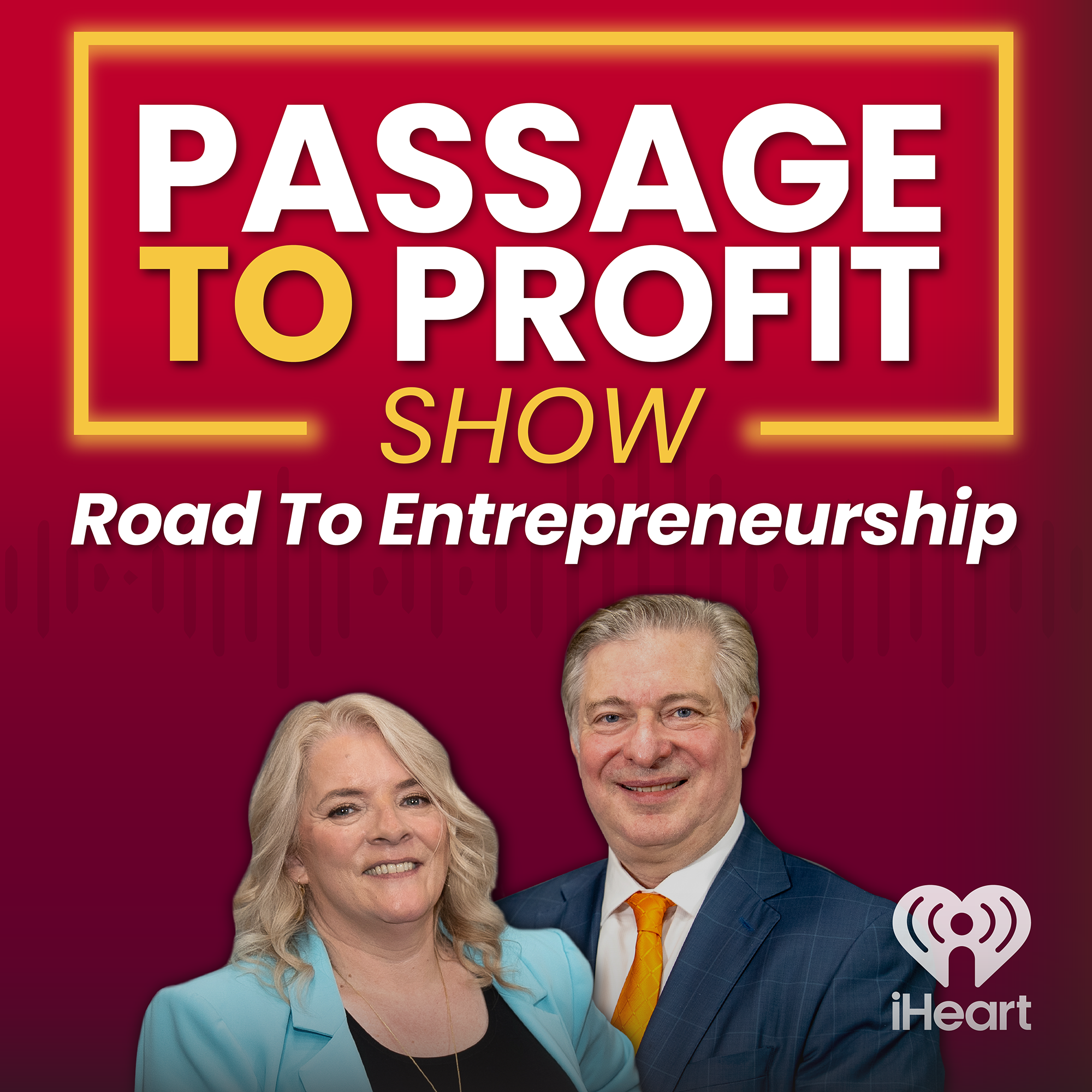
It's Passage to Profit with Richard and Elizabeth Gearhart.
[00:00:18] Speaker A: I'm Richard Gearhart.
[00:00:19] Speaker C: I'm Elizabeth Gearhart, and we're your hosts.
[00:00:22] Speaker A: Welcome to the Passage to Profit show, the Road to Entrepreneurship podcast. Well, if you're listening to this in June or July, we're in the midst of FIFA fever in the New York, New Jersey area. And one of the things that goes with FIFA fever is FIFA fever. Traffic.
[00:00:41] Speaker C: Traffic all over the place of fever traffic.
[00:00:44] Speaker A: I mean, it just gets crazy after a while.
[00:00:47] Speaker C: New York's insane right now.
[00:00:49] Speaker A: Sane, and you can't get anywhere or do anything.
And so I was browsing the Internet and I found an interesting article by a young man named Zach Helfand. It was in the New Yorker magazine. And he decided that he was going to canoe to MetLife Stadium instead of drive, and he wanted to see if he could save some time doing that. He and a friend got a canoe and they. They had to walk like four miles with this canoe in order to get to the Hackensack River. If you've ever seen anybody carry a canoe, you have to flip it over and put it on your head.
And walking four miles like that in the New Jersey summer had to be a very unpleasant experience. In any case, they got to the river, they paddled upstream for 15 minutes, and then they got out. And then he walked to MetLife Stadium from there. But the whole trip took about three hours. So I don't know if he came out ahead. You have to go back, too, at the end of the day, which I think is a little bit more challenging.
[00:01:50] Speaker C: It came out a little ahead because we're talking about.
[00:01:54] Speaker A: Well, he said in the article he didn't see any bodies, you know, which. The Hackensack river is kind of famous for that, so.
[00:01:59] Speaker C: And also in the news. So I like to watch Kelly and Mark in the morning to get inspiration. I had to know about this one, guys. They said that pets can get sunburned.
[00:02:10] Speaker A: I don't know about that. Our cats, they're out in the sun all the time. They never complain.
[00:02:14] Speaker C: But maybe it's different for dogs. Maybe they were talking more about dogs. Yeah, our cats go and they'll lay out in 100 degree weather outside on the deck in the sun and just roast themselves. I don't know why, but anyway, I
[00:02:26] Speaker A: wonder if they get frostbite.
[00:02:27] Speaker C: Yeah, probably. But Anyway, what I found interesting about that is, of course, there's a solution to the sunburned pets problem. So there's like this cottage industry that has sprung up around this with people selling all sorts of things now to keep your pets from getting sunburned.
[00:02:43] Speaker A: Oh, like can you imagine putting lotion on a cat? Or spray? You know, I've tried.
It doesn't work very well. Yes, well, it wouldn't be a show about entrepreneurism if we didn't talk a little bit about the SpaceX IPO. I guess. The shares were priced at $135 each. It raised $75 billion and has a valuation of over 2 trillion. So that's a pretty big IPO as they go. And, you know, it's all about data. Satellites, rockets. I guess they want to put data centers up in space, or at least their power sources for that. Right?
[00:03:21] Speaker C: The sky. Well, no, space is.
Sky's all out of space. I don't know. But yeah, it'll be interesting to see how many rockets they blow up before they finally get something.
Didn't the rocket just blow up last week?
[00:03:33] Speaker A: We'll be getting our Amazon packages by reentry vehicle. You know, I think that's the dream right there.
[00:03:39] Speaker C: But speaking of IPOs, so for those of us that use AI, anthropic is Claude AI and OpenAI is ChatGPT.
And the two of them are going neck to neck with their initial public offering filings. So if you don't know what an IPO is, instead of trying to raise investor capital from billionaires or funds, you get to issue stock directly to regular people. And you can get more, apparently get more money that way because that's why they're doing it.
[00:04:06] Speaker A: So anyway, well, if they do the IPOs at the same time. Right.
[00:04:12] Speaker C: Well, almost.
[00:04:12] Speaker A: Who do you invest in? Or can you invest in both?
[00:04:15] Speaker C: You can invest in both. So they have now confidentially filed for US IPOs anthropic on June 1st and OpenAI a week later. They do different things. People use them different ways. So, yeah, I would invest in both if I were. They're like the new Google.
[00:04:30] Speaker A: Do you have any money?
[00:04:31] Speaker C: No.
[00:04:32] Speaker A: Let's mortgage the house for a fourth time.
[00:04:34] Speaker C: What if you had invested in Google's initial ipo? I don't know.
[00:04:38] Speaker A: So anyway, that's a good point.
[00:04:39] Speaker C: But they're. So SpaceX is valued at 2 trillion. They're at anthropic 965 billion and OpenAI at 852 billion. Yeah. What's a billion here or There.
[00:04:51] Speaker D: Yeah, they're about equal.
[00:04:52] Speaker A: Pretty soon, you're talking. Talking real money.
[00:04:55] Speaker C: So anyway.
[00:04:57] Speaker E: Yeah.
[00:04:57] Speaker A: So, well, today, speaking of massive successes, today we have Ryan Stana, who's made a career out of producing the impossible, and we'll hear about his entrepreneur journey.
[00:05:08] Speaker C: Okay. And then we have Joey Stiver, who bootstrapped a healthcare and telehealth empire to more than 1 billion in revenue without raising a single dollar of venture capital.
I didn't even know you could do that.
Okay, we did this story.
[00:05:23] Speaker F: Yeah.
[00:05:24] Speaker C: And then what if you get divorced? Like, it's kind of lonely, Right? So Ron Platt set out to build a national organization for people that get divorced to help each other. I think that's pretty cool.
[00:05:36] Speaker A: Why didn't we think of that?
[00:05:37] Speaker C: Because we're not divorced.
[00:05:40] Speaker A: That's probably a reason. But before we get to that, two different rums with the same names.
So you might get confused, and it's all tied into trademarks.
[00:05:50] Speaker C: And coming up later on, it's Noah's Retrospective along with Secrets of the entrepreneurial mind.
[00:05:57] Speaker A: But first, it's time for your new business journey, and we'd like to ask our panel, when you look back, what was the one decision or moment that most changed the trajectory of your business, and what did it cost you to make that decision? So welcome, Ryan Stana. What was the decision that most changed the trajectory of your business?
[00:06:19] Speaker F: As far as what changed the trajectory of RWS Global was probably after 21 years of bootstrapping the business, deciding to bring in private equity to the business to move us into the future. That would probably be the biggest change that I decided to move our business forward.
[00:06:39] Speaker A: What was the cost of doing that? Because on the one hand, you get the money, but don't you also give up some control?
[00:06:43] Speaker F: Yeah. I mean, the cost of doing that was giving up a percentage of the business. I still have my majority ownership, but I think what's key to know is, for me, selling off that portion of the business, it allowed the business to grow further. And I believe as the business has grown, you have to start taking care of your employees and taking care of your employees to move the company into the future past my time on this earth. So I thought, what is the best way to do that? And selling off part of that business allows me to have a foundation, also a board that allows to make sure all our I's are dotted and t's are crossed to make this a legacy business.
[00:07:22] Speaker A: Absolutely. That's great. Joey Stiver, welcome to the show. What was the decision that changed the direction of your business?
[00:07:29] Speaker E: I think mine was actually starting the business itself. In my situation, I was coming out of a bad early 20s convicted felon, and I think society expected me to kind of stay in that box.
Instead, I took a $8,000 credit card, all the debt I could kind of get together at the time, and built my first website that was all the stock, the inventory, and kind of just jumped both feet in and, you know, took the risk. So I guess taking the risk was the main part of it.
[00:07:58] Speaker A: Wow, that's great. And you were a convicted criminal.
[00:08:01] Speaker B: Yeah.
[00:08:01] Speaker A: Is that.
[00:08:02] Speaker C: Yeah.
[00:08:02] Speaker A: Well, I mean, if you're in that spot, starting your own business seems like it could be a good strategy. Ron Aram Platt, tell us, what was the decision that changed the trajectory of your business?
[00:08:13] Speaker D: It was when I went to an investor that I was working with for three months to help us launch our company and they said, if it's such a great idea, why hasn't somebody else done this before? And I thought, well, since we modeled ourselves after AARP, if AARP has 36 million members, why hasn't somebody competed with them? And they said, yeah, we get that, but we're going to go ahead and pass. And I had spent three months going back and forth with these people. I'm driving home and I realize I either have to put up or shut up. And it was a matter of me sitting down with my husband, who's risk adverse, and saying we need to mortgage the house to start this business. And he asked for a worst case, best case scenario. The best case was that we create a billion dollar business and give 3/4 of it back to society to help them grow. The worst case is our mortgage payments, $1,000 more a month. And he said, we can live with that, so let's do it. And we went ahead and borrowed, started the company. And I felt that once I started it, other people would start coming and saying, hey, I want to be a part of this. And that's what's happened. And something we had worked on, which was our insurance product for years, that we were unable to get done. Once we started the company, somebody approached us and said, I want to underwrite that product that you've been wanting to underwrite for the last 30 years.
So it was definitely persistency. And it was a matter of, like I said, put up or shut up. You got to put up your own money sometimes to make something happen.
[00:09:28] Speaker A: Absolutely, Elizabeth.
[00:09:29] Speaker C: I was focused on helping people start podcasts and video podcasts. And I realized my true passion was this AI Visibility that I've been doing for Gearhart Law as CMO for quite a while. So I had a meetup group that I had started. Podcasts and YouTube creators community that I had started with somebody else. And we have a 5,000 person email list. But I decided it was time to give that up because I just, I can't. I don't have time to do everything, you know, So I was really torn about giving that up, but I just couldn't do it anymore. And you know what? The universe provides, right?
So I found someone to do last night's session as a guest. And he's a descript expert. Descript is video editing software for those of you that don't know that. And I said, you know, this is going to be the last one because I just can't do it. He's like, oh, well, I have groups. Can I take your group over? It's like, yes. So that was awesome because I felt like I took my baby and gave it to somebody who will take really good care of it.
[00:10:28] Speaker A: He adopted. He's amassing an empire.
[00:10:33] Speaker C: So it was a tough choice, but I think it's the right choice because I'm so swamped with so much that I have to do, and I do think that it's in safe hands.
[00:10:40] Speaker F: So.
[00:10:40] Speaker A: Yeah. Well, that sounds amazing. We're glad to see that happening. This week, I'm gonna talk about something that may seem kind of minor, but it really did have a big effect on our law practice. Several years ago, we switched from hourly rates to fixed fee rates. And that may not seem like a huge deal, but it actually turned out really, really well for us. And there's a couple of reasons for that. The clients really love the idea of a fixed fee for legal service. Right. Give certainty to it for us. It allows us to collect the fee in advance of doing the work, so it reduces a lot of the time that we have to spend following up with people on invoices. So it turned out to be a real win, win for everybody. And it turned out to be a very good decision for us. So there you go. Well, imagine being responsible for making magic happen on a cruise ship, in a theme park, or at a sporting event and for some of the world's biggest brands, all at the same time. Well, Ryan Stana turned that challenge into a business empire, growing RWS Global from a startup in his living room into one of the most influential companies in live entertainment. So again, Ryan, welcome to the show. What makes for great live entertainment?
[00:12:00] Speaker F: Well, first of all, what makes for great live entertainment is making sure the audience is engaged every step of the way, and that live entertainment tells a story.
And the story doesn't have to be detailed. It can just be simplistic. A beginning, middle, and an end that engages the audience.
[00:12:18] Speaker A: So, for example, if you're putting on, like a big spectacle, like the UFC thing at the White House lawn recently, how do you keep an audience's engagement for 3, 4 hours? However long the event ran, we probably
[00:12:32] Speaker F: wouldn't have been doing that event at the White House lawn that we'll start there. Second is you keep that engagement by making sure there's a welcome, there is a middle part and an end to that story, and making sure the music is engaging and moving everything forward.
[00:12:49] Speaker C: Yeah, I've noticed you've done a lot of these for really big name things.
[00:12:53] Speaker F: Yeah.
[00:12:53] Speaker C: I'm just curious. Yeah. How did you get into this? What made you start this? It seems like it'd be hard to just one day say, okay, I'm going to do this whole production for a cruise ship internationally.
[00:13:03] Speaker F: Sure, sure. So I grew up in a small town outside of Pittsburgh, Pennsylvania, and I was a theater kid. And when I was a theater kid, I loved seeing shows in theaters, but I also loved going to see shows in my local amusement parks. And when I would go to the local amusement park and see the shows, I thought they were incredible.
And then towards the end, I thought, wait, there could be a business in doing these shows.
And I started being a director, writer, and choreographer of those shows in theme parks. And then I realized there was a way forward to provide theme parks, attractions, cruise ships, a turnkey element where we provided the performers, VIP and the show creative, all in one paycheck. And that is how the business began when I opened it, when I was 21 years old out of the corner of my New York apartment.
[00:13:58] Speaker C: Wow. Like, I've never heard of somebody taking a theater degree and doing that. That's amazing.
[00:14:06] Speaker F: Ye. I mean, listen, I think. I think when you're in theater, you learn how to work as a team. You learn how to communicate well.
And those two items helped me immensely in building this business to where it is today.
[00:14:18] Speaker A: How did you go about actually scaling the business? Are there things that you can share for entrepreneurs and entrepreneurs in waiting where there might be some valuable advice?
[00:14:28] Speaker F: Sure. I think, first of all, I never spent money that I did not have.
So when I started the business, I never took out a loan, I never took an investment, I never borrowed money. So if we would get a contract for $200,000. I would make sure I had enough money to pay the people and to make enough profit for myself. So that is number one on how the business scaled. And that's how I was able to go multiple years bootstrapping it and without taking in investment.
But really, from there, I really focused on my vision and what I wanted that vision to come out to be. And scaling little by little and having a focus was the most important.
[00:15:15] Speaker C: So I noticed on your website, incredible
[00:15:17] Speaker E: website, by the way.
[00:15:18] Speaker A: It's really cool.
[00:15:19] Speaker C: Yeah, it is. But I noticed that you're hiring performers for around the world. You're in a lot of countries.
How did you start out hiring performers? Did you put an ad on Craigslist or. I mean, like, what did you do?
[00:15:32] Speaker F: Yeah. So currently we hire over 8,000 performers and technicians a year across the world in 50 countries.
So what we started to do was run auditions in New York City. They have specific publications that allow people to know when auditions are happening. Then performers would start showing up. But when you're casting 100 performers, that's easy. When you're casting 8,000, how do you scale that?
So in 2016, we bought one of the largest casting offices in New York City that cast Broadway shows, film, TV and commercials. And what that did was allow someone that is working at Six Flags for us to know, hey, if I do well working for RWS Global, I can work at Six Flags. I can move and work a resort in Cancun. I can then go and work on a cruise ship. And if I do well, I can be in a musical on Broadway or film and tv. And that is how we grew that. And our current casting team is made up of 36 staff members that travel to 150 cities throughout the world. And you have to know those 8,000 people that we hire.
That means that our team has to see close to 100,000 people across the world to be able to hire those 8,000 thousand people, because you only get about 10 to 15% of the people that actually get the job. So they are constantly traveling every week finding the most talented people in the world.
[00:16:57] Speaker A: Sort of like American Idol on steroids, right? I mean, you're doing a lot of you.
[00:17:01] Speaker F: It is definitely American Idol on steroids.
[00:17:04] Speaker E: Wow.
[00:17:04] Speaker C: But what a great way for a young person starting out to make it. Maybe onto TV eventually, right? Or onto Broadway.
[00:17:12] Speaker F: 100%. And listen, at the end of the day, it's all about working hard and staying connected. And that is who we are as a business. And if you work hard for us Talent is the given, but if you work hard, you will pave your way to success. Working under our umbrella.
[00:17:28] Speaker A: Well, that's great. I think a lot of the challenges that entertainers have faced, and we've had a few on the program, they have challenges. Finding work, staying connected. It sometimes seems almost a matter of luck. But when you've got an internal system that once you get in and once you prove yourself, it sounds like it's easier and you don't have to focus as much on the business part, you can focus more on cultivating your talent and your skills.
[00:17:54] Speaker F: Exactly. I mean, listen, any performer needs to be as business savvy as they are talented. But we hope to take some of that workload off of you when you come and work for our business.
[00:18:05] Speaker C: So we're talking to Ryan Stana and he has Art WS Global. Com. If you are a performer, go to his website, look at what he's looking for.
[00:18:15] Speaker A: What was your most favorite event that your company has done? What sticks with you the most?
[00:18:21] Speaker F: There's many, many favorites that I have and it's difficult to pick just one. But I would say probably the most awe inspiring for me is when we produce the sports presentation for the Paris Olympics. A few years back when we did that, it was something way upon any dream that I ever had in my life. And being there in Paris and seeing all of our employees on the ground building, that was something very special. So it has lived with me for quite some time now.
[00:18:50] Speaker C: Did you build the sets and the lights and everything and bring all the mics and all that stuff yourself?
[00:18:57] Speaker F: Yeah. So everything we do is a complete turnkey operation. For the Paris Olympics, we only did the sports presentation. We did not do the opening ceremonies or the closing ceremonies. What we do is every sports presentation, sports match in between the opening and closing ceremonies. So I believe it was close to 390 events that we produced. And that is everything from lighting to microphones to scenic to stage managers to scripting, graphics, AV, et cetera.
[00:19:29] Speaker C: So you must have a huge technical team then.
[00:19:31] Speaker F: Yeah. So from a technical standpoint, for events like that, you're 2,000 plus individuals on the ground.
[00:19:38] Speaker A: Well, we're coordinating a party for Gerhard's Law's 20th anniversary. We've got 100 people coming and I thought that was a big deal.
[00:19:46] Speaker F: Yeah, no, but listen, doing any event or party is stressful.
[00:19:51] Speaker C: So what's your favorite part of the job?
[00:19:53] Speaker F: Seeing our team members or our performers garner success.
That is my favorite part of the job.
[00:20:01] Speaker C: Oh, that's awesome. So we're talking to Ryan Stana and he has rwsglobal.com if you are a performer, go to his website. Look at what he's looking for.
[00:20:12] Speaker A: Passage to profit with Richard and Elizabeth Gerhardt will be back right after this.
[00:20:17] Speaker G: Do you hear that? That's the sound of uncertainty lurking under your hood. You know the feeling. I know I do. That sudden sinking sensation when you see a check engine light or your car unexpectedly breaks down and you're faced with sky high repair bills. It's time to shield against unexpected repairs with Car Shield. Car Shield is America's most trusted auto protection company and has an A rating with a better Business bureau. Don't let the fear of a breakdown keep you up at night. Trust the shield Car Shield. And say goodbye to terrifying repair bills and hello to peace of mind. Your plan also comes with 24. 7 roadside assistance, courtesy towing, rental car options, and so much more. Don't wait till it's too late. Call Car Shield now before a breakdown. Protect your wallet. Protect your car with Car shield. Get our best protection ever. Call now. You'll thank me later. 8002-6121-7680-0261-2176. That's 802.
[00:21:16] Speaker B: Have you outgrown your health insurance plan or just not happy with what you're paying for? The number one reason we all change our health insurance is price. Are you paying too much for your health insurance? Would you like to have better coverage at a better rate or at little or no cost to you? Your life needs are always changing, but have you done anything to improve your health insurance for you and your family? Health insurance laws and coverage are always changing and getting better. It's impossible to do all the research yourself, but now it's all done for you for free. So regardless of your age or medical condition, take a few minutes right now and find out if you can save money or even qualify for zero cost health insurance in your state.
[00:22:02] Speaker E: Call now.
[00:22:02] Speaker G: Paid for by cheaper health insurance. 8658-0065-2147-0800-652-1470. That's 800-652-1470.
[00:22:16] Speaker B: Now back to passage to Prophet. Once again, Richard and Elizabeth Gearhart and
[00:22:21] Speaker C: our special guest, Ryan Stunnet. And Ryan is responsible for all those wonderful events and acts that you see, like on cruise ships and the Paris Olympics.
[00:22:32] Speaker A: He keeps us entertained.
[00:22:33] Speaker C: He's amazing. So he built this huge global company. We want to talk to him now about his story. Like, what do you do every day you're managing like thousands of people.
So what does a day look like for you?
[00:22:48] Speaker F: Sure. So first of all, my favorite day of the week is Mondays.
It's really about starting fresh. I think of the energy of the week, especially where am I traveling to.
But I wake up usually every day, 4:35 in the morning, right when I get out of bed. I work out right away, very focused on cardio, always.
And then my day typically begins around 7am with meetings, because I am working around the world. So I have early morning meetings where I'll really collaborate with colleagues. I'll brainstorm creative strategies with our clients and really discuss upcoming partnerships with clients.
And then the day progresses and I really dive into the heart of our operations, traveling to see work on site, forging new relationships. And then really the afternoons are filled with more meetings. We strategize, we problem solve, we ensure the work stays on track and exceeds expectations.
And then I usually work until about 7pm and then if I do not have plans, I unwind and I watch sort of trash television like Bravo, Bravo tv.
And we'll go to bed very early. So my bedtime's usually around 8:30.
But because of my schedule, I'm not always having that. So usually I have a 6pm dinner and an 8pm dinner every night and then I'll be in bed by 11.
But really this business is 247 because we have offices all over the world.
So I'm always there for my team members to make sure we are successful.
But you might hear that and you're probably like, geez, this guy has no work life balance.
And I have to say, really, I learned work life balance is very different for every individual. And I tell our team members this, that what works for you might not work for me.
And for me, I love to work. And that is my balance. I love time with my family, I love time with my friends. But I can't do that 100% either because I miss working. So really we value each individual having their own work life balance. But that is sort of a quick overview of what my day is like.
[00:25:19] Speaker C: Richard has almost the same schedule, except he usually, well after dinner. So he gets up at like 4 in the morning and he works out and stuff. And then after dinner he's still working. He's got like double monitors up in the family room and the TVs over here and he's. Yeah, he's editing video or doing something.
I'm more of the night owl, but you know, we tried to go on vacation for a Couple days and we're like, we're not going to talk about work. And we couldn't not talk about.
[00:25:51] Speaker A: Well, I just think, you know, if you spend, you know, weeks and weeks and years and years working umpteen hours a week and then you just try to turn it off for a couple of days, I mean, maybe you could do that when you were in college, but now that it's just such a habit to be thinking in work mode is you just can't like flip a switch and then.
[00:26:12] Speaker F: Yeah, but if you love what you do, it's never worked. And so my mother always says to me, you're so lucky to have a job that you love. And I don't feel that I've ever worked a day in my life, even though I work hard, but I'm so lucky to do what I do. But I think there is being an entrepreneur, you have to understand that the highest highs you're going to experience as an entrepreneur that someone that is not an entrepreneur will never understand.
So you'll have the highest highs ever, but you also have to know you will hit the lowest lows. And you have to accept that as well. So that is the balance of being an entrepreneur. But the goal is always to stay high and go further.
[00:26:53] Speaker C: Right. And what, what you're doing is important. I want to just shift gears what we're talking about, because especially after Covid, like, I do think people really enjoy interpersonal relationships. And I love going to, in fact, we're going to go to the theater for Father's Day. I love the emotion that you get when you're watching something and the joy that you get from the music is important to human beings. Robots don't care. AI doesn't care. But we care, right?
[00:27:19] Speaker D: Correct.
[00:27:19] Speaker F: I mean, the human connection is more important than everything. Now, coming out of COVID we found prior to Covid, a lot of our clients were trying to move to more technical driven experiences and where you wouldn't have to spend money on labor. Now, coming out of COVID those technical driven experiences need to have labor added back in. So you're providing the emotional connection on a daily basis with those experiences.
[00:27:49] Speaker A: After Covid, I really noticed a difference between meeting with people in person versus virtually.
And I'm not sure I really appreciated the difference as much.
But there's so much more communication when you're there. Face to face with somebody. It's just like to me, it amps it up. Right. And you get, especially if you're comfortable with the person, I think you get a stronger feeling and a stronger connection, I guess. And you know, especially now with so much digital content where we spend so much time in our phones and on screens. And now with AI, it's you're not even sure what's real and what's not.
Right. And so at least if you're there, you can be sure that it's real. Unless it's a hologram, of course, but it's a real experience. And I think we're migrating back to that just almost as a reaction to all the other stuff that we're seeing digitally for sure. Anyway, I mean, this has just been amazing. Ryan, thank you so much for joining us. Where can people find you?
[00:28:55] Speaker F: You can go on our website, rwsglobal.com you can also visit me on LinkedIn and search name. Ryan Stana, and I'm the executive chairman of RWS Global.
[00:29:06] Speaker A: Awesome. Well, thank you so much. And now it's time for real AI
[00:29:11] Speaker C: Use Cases Business Owners Roundtable. So I'm going to ask each of our guests one way that they're using AI or if they're not using it, they can say that too. And then we're going to have a roundtable discussion about AI. So I am going to start with ryan stonett with rwsglobal.com what is one way or your favorite way or your most recent way that you're using AI in your business?
[00:29:34] Speaker F: I would say our business is based on creativity. So we use AI to enhance our creative capabilities, not replace them, which is really important. So every story we tell, every experience we design is driven by that human insight, imagination and intent. But we're really then on the streamlining side of operations.
We're using AI to speed up workflows and reduce that manual lift.
Then it allows our team members to be able to have higher impact, do more meaningful work and also focus on that creative outcome.
[00:30:12] Speaker D: Excellent.
[00:30:13] Speaker C: Yes. And Joey Stiver with joinamble.com, what's one way you're using AI?
[00:30:19] Speaker E: I think in a couple different ways, I think AI has helped us work harder, faster and perhaps more efficiently on the coding side, you know, kind of the development and workflow kind of like Brian Client said. On the patient facing side, though, when someone comes to our website for care or they need, you know, to ask a question, that's the last thing they want to see, right? They, they don't want to feel like there's a barrier between connecting with a doctor with like a care member or practitioner. So AI is like a big turnoff when it comes to the patient experience on the front end of the website. And then I guess the third point is, through my foundation, the Dismiss Accelerator, we're actually using AI and kind of leveraging that for individuals grants to teach them these higher value skills so that hopefully they can go out into the workplace and leverage some AI or tech background to perhaps get a better job.
[00:31:09] Speaker C: Yeah, that's excellent. So, ron Platt with NASDF.org, what's one way you're using AI or not when
[00:31:17] Speaker D: you are a solo entrepreneur? Of course I have other people that I'm working with, but you have to come up with creative ideas quickly and as creative as I am, sometimes when you reach out to AI and said, I need to put a commercial together that does this, or I need to put an ad together that does this, and it gives you possibly better ways to market the product that you're trying because it sees it from a different perspective than you do. Especially if I'm going after family law firms or if I'm going after people who are getting a divorce or single families. Each one of them is a separate category and it helps me to clarify the marketing towards that specific category. So it has been helpful in that regard.
As I said before, my co founder absolutely hates it. So I have to go into hiding when I do it. And I have to make sure she's not looking over my shoulder because then she gives me a whole lecture about it. But it has been helpful.
[00:32:06] Speaker A: What does she say we want to hear?
[00:32:09] Speaker D: You could Google it or you could. There's other ways to research it. You know how much resources AI takes. And she's right. The amount of resources it does take, the amount of water it takes, everything else that, the electricity, all the stuff, I get it. And I do use it on a limited basis because I also don't want my own brain to rot. I like to know that I can still come up with creative ideas, but it does give me a different perspective that I might not see or that I might not have thought of and that I appreciate.
[00:32:33] Speaker A: Yeah, I think there's something to be said for using your brain.
[00:32:37] Speaker C: Richard Gearhart, what's one way you're using AI lately?
[00:32:40] Speaker A: Oh, lately. I mean, we're looking for a new CFO and looking for somebody who's like good at financial modeling and projecting. And so we've talked with some people, we've asked them to give us redacted spreadsheets showing their modeling, trying to grow the law firm. And so we think this kind of information would be helpful. And, you know, instead of actually like looking at the models, I just plug them into an LLM and I say, well, which of these models best reflects what would happen at Gearhart Law and what we would need to do in order to scale the business? And it does a comparison analysis. I don't even look at it.
So on the one hand I think that's great, but to Ron's point, I didn't look at it. So how do I even know it's right and it needs to be double checked.
[00:33:25] Speaker D: Right.
[00:33:25] Speaker A: And I'm losing skills because I'm letting ChatGPT do something that maybe I should be doing. I don't know.
[00:33:33] Speaker C: And how do you know it's not full of AI sloth? So anyway, for me, Elizabeth Gearhart with Gear Media Studios, which I'm going to be calling Gear Media Labs, I think I'm giving a presentation in July. I did a lot of research on it and it's kind of a basic presentation on how to use AI for this certain group that I'm speaking to. But I thought I should put a little bit about AI visibility in there for them anyway. So I've been doing this research and using Gemini and Claude and ChatGPT and getting their information, putting it in, and my own insights from being CMO for Gearhart Law. And I'm having them look at the presentation, all of them, and give me feedback and say, I'm asking all of them, is this accurate? Like, what do you think? Well, I have one slide in there that they all hate and they're all
[00:34:20] Speaker F: like, take that slide out. I'm like, no.
[00:34:24] Speaker C: And it's a slide on AI slop.
It's like, you don't think these things have a personality. They're like, don't leave that AI slop slide in there. It was crazy. So anyway, this has been Real AI Use Cases Business Owners Roundtable from the Passage to Profit Show. It's been edited to fit our radio spot. So to hear the full discussion, go to our YouTube channel, real AI use Chase's business Owners Roundtable. Don't go away because we have two amazing entrepreneurs still to present and we have secrets of the entrepreneurial mind.
[00:34:54] Speaker H: Coming up, here's a real life story that affects 50% of all of us out there. It's called divorce. If you've gotten divorced and now you're struggling to pay your bills and your credit card debts are completely out of control, you need to call this special debt relief hotline right now. We help people with all kinds of money problems, problems caused by different life challenges, a divorce, a job loss, even heavy medical bills. All these life events can sometimes financially stress you out and cause you to get out of control. We help people get their lives back by showing them ways to consolidate and reduce their debt, in some cases for a fraction of what they owe. If your credit card balances are more than $10,000, call us and learn how to reduce your credit card bills and monthly payments. Now here's our number, paid for by
[00:35:38] Speaker G: Debt.com call now at 8008-1008-5780-0810-0857 800, 810, 0857. That's 800-810-0857.
[00:35:55] Speaker I: Learn how thousands of smart homeowners are investing about a dollar to avoid expensive home repair bills. John, a former non customer said, my air conditioner broke and I had to spend nineteen hundred dollars to fix it. Jeff A customer wrote, my air conditioner broke and I got a new one at no out of pocket cost. Mary, a former non customer, wrote, my heating system stopped running. I had to spend $3,000 to get a new one. Lisa A customer wrote, my heater stopped working. I got it fixed at no out of pocket cost. For about $1 a day, you can have all the major appliances and systems in your home guaranteed fixed or replaced. Call now. If the lines are busy, please call back.
[00:36:37] Speaker G: Call the Home Warranty Hotline now at 8002-5549-4080-0255-4940,800, 255-4940. That's 800-255-494.
[00:36:54] Speaker B: Passage to profit continues with Richard and Elizabeth Gearhart.
[00:36:58] Speaker A: Quick shout out to our friends at WHSY 9:50am and 105.9 FM in Hattiesburg, Laurel, Mississippi. Thanks for listening. And if you're new here, Passage to Profit is a top ranked entrepreneurial podcast and radio show heard on 38 stations. It's a place where founders share what really works. And now it's time for intellectual property news. If you order Havana Club rum in the United States, you'll be drinking one company's rum. But if you order Havana Club outside the United States, you'll be drinking a different company's rum. And that's where trademark law gets interesting. Because this week Bacardi, the famous rum maker, lost another round in a long running US Trademark dispute with the Cuban government over the Havana Club trademark. This is not just a fight over a label on a bottle. This dispute involves decades old history, geography, politics, family, legacy and who gets to tell the story behind the brand. In the United States, Bacardi sells a Puerto Rican made rum under the brand Havana Club. But in the rest of the world, Havana Club is sold by a Cuban joint venture involving Cuba Export and Perrinade Ricardo. Same name, different rum, different owners, different stories in different countries. Before the Cuban revolution, a Cuban family business used the Havana Club name. After the revolution, the family assets were seized by the Cuban government. Family left Cuba for the US and sold the rights to Bacardi. Meanwhile, the Cuban government registered the Havana Club trademark in the United States. Bacardi has been fighting the legitimacy of the Cuban owned trademark ever since. In this latest round, Bacardi argued that the mark should have expired because Cuba Export failed to timely pay a maintenance fee in 2016.
Companies have to routinely renew their trademark registrations and pay a fee. If they don't, the mark goes abandoned. At the time export controls were in place that prohibited the Cuban government from transferring funds to the U.S. cuba eventually got a waiver from the U.S. government to pay the fee, but by that time the period to pay the fee had expired. For entrepreneurs, the takeaway is simple. Your brand name may become one of your most valuable assets you own, but it only stays valuable if you protect it, maintain it, and understand who else may claim rights to it. Paying maintenance and renewal fees is important and cause a loss of rights if you don't pay attention.
One big advantage of working with a law firm on your trademarks is that the law firm will help track and remind you of renewal dates as they become due. And here's the practical lesson. Trademark disputes don't always come from someone copying your logo yesterday. Sometimes they come from decades old business history, old assignments, government action, missed deadlines, and renewal paperwork. So the next time someone says it's just a name, remember Havana Club. Because in business, sometimes the most expensive thing in the room is not the product, it's the name on the label. And if you have an idea or invention you want to protect, the team at Gearhart Law helps entrepreneurs turn ideas into protected assets. You can visit learn more about Patents.com or learn more about Trademarks.com or a free consultation and practical guides to get you started.
And later, secrets of the entrepreneurial mind what successful founders think about that most people never see.
[00:40:37] Speaker C: And now it is time for Joey Stivert with joinamble.com so Joey bootstrapped a healthcare and telehealth empire to more than a billion dollars and he's going to share with us his secrets. Because this is a really Regulated industry. I don't know how you did that. Joey, welcome to the show. I am dying to hear this.
[00:40:54] Speaker E: So I started out in 2014 with that $8,000 credit card that we talked about in a little 600,000 DOL square foot office space that I lived above in a 800 square foot apartment. That $8,000 credit card was the website, the inventory, and about 10 boxes of things to sell. So in the early days it was, you know, we had to sell $8,000 had become 16, 16 had become 32, et cetera. Those first couple years in business were incredibly painful. First month couldn't pay my rent. I think that was kind of a pivotal hard point for me. I had to go back to my family and borrow twelve hundred dollars to pay my rent. At the time, you know, the silver lining was I didn't have any other opportunities. There's nothing to fall back on. There was no safety net. Failure wasn't an option.
So in those early days and for the better part of 10 years, it was, you know, four hours a night of sleep. You work, you work, you work. And then when you're done working, you go figure out, you know, more opportunities of how you're going to make money, how you're going to grow the business and how you're going to scale it. And that seems to compound over the better part of 10 years to the point where someone looks at it and it's like, oh, you're an overnight success. That happened so quickly, you know, but I think I lost about probably 10 years of my life and health through that decade of work to get me to that point. Although it looks like, you know, a compressed little sweet story, the timeline's a lot longer.
[00:42:16] Speaker C: Yeah. So what do you think was your biggest challenge?
[00:42:19] Speaker E: Coming from my background and situation, you know, I wasn't bankable. No. No institution wanted to touch me. If the starting line was here, I was 50 yards behind it at ground zero to start the business. So I really had to go out there and prove to everyone that I was doing things the right way, that my business was real and that I wasn't some fly by night company or entrepreneur that was trying to take a shortcut in building these businesses. And like I said, those early days of growth are painful. When you don't have outside capital, you can't buy a forklift, you can't lease, you can't sign a five year lease for a warehouse. You are your lawyer, you are your researcher. You don't have, you know, you don't bring in a CPA or accounting or software you don't need. So you, you have to do everything yourself. That's probably the rough part of the entrepreneurial journey that, you know, I think a lot of people forget now because, you know, a lot of new entrepreneurs, they want, you know, an office space. You know, who's going to be my accountant? You know, I'm going to sub out the design and hire this firm.
But when you're bootstrapped, I think this kind of resonates with, you know, Ryan a little bit. You, you have to do all that yourself.
[00:43:28] Speaker A: I can certainly empathize with that. That's pretty much how your heart law started too. And we went through the same process.
You know, you had to do everything yourself, and sometimes it was tough. You had to do, you know, the marketing and the sales and the work and the collections. Tell us about your business, though. What does it actually do? What, what products do you provide to people? How does your structure facilitate that?
[00:43:52] Speaker E: Yeah. So 10 years in, I founded Join Amble, which is Amble Health, on kind of the backbone of MinuteMD, another telemed that I own. Covid really propelled telehealth. And we took a model that we understood and Amble made it better. Just more connection to access to doctors, cheaper pricing. At the time in the market, all of our competition, they had a bunch of hidden fees, kind of deceiving price structures. We got rid of all that. It was one price. This is what you pay. This is all you ever pay.
Really streamlined the process for our patients. And we came in and just disrupted the market at a time when, you know, patients were kind of being passed around from company to company, one offer to the next, bad offer, and slowly kind of turning into a bad patient for how they were being treated. We really kind of, you know, stepped in there and, you know, like I said, really disrupted the industry.
[00:44:49] Speaker A: But your company then is a telehealth company, which means rather than patients going into seeing a doctor, Right. They can see the doctor remotely. And so your company provided the computer support, the digital support, security, record keeping to make that happen. Is that right?
[00:45:07] Speaker G: Right.
[00:45:07] Speaker E: We're a facilitator. Right. So we're, we're a glorified shopify that connects all of the pieces together. So a patient comes to our website for whatever treatment modality they need, whether it's hormone, anti aging, weight loss, obviously a hot subject right now. We connect them with a licensed doctor in their state, and that licensed doctor then treats, you know, at their discretion, prescribes it, then goes to A pharmacy partner of ours. Pharmacy partner makes the medication or dispenses the medication direct to the. To the patient store, to their patient's door.
[00:45:42] Speaker C: So.
[00:45:43] Speaker E: Yeah.
[00:45:43] Speaker C: How long does it take to get the medication?
[00:45:46] Speaker E: Some medications are specialized and need to be compounded or made. Others are ready dispensed. So next day, second day air. I mean, we have patients that come in midnight on a Saturday night, see and talk to a doctor within 50 minutes. They're prescribed at 1am in the morning, pharmacy makes the medication the next day, and it's landed at their doorstep in 48 hours.
[00:46:09] Speaker C: But they could get the medication from their own drugstore too, right? If they want to, they could.
[00:46:13] Speaker F: But there's.
[00:46:14] Speaker E: There's a lot of hurdles with insurance PBMs.
All kind of the nuances. You know, you still have to find time, go to your doctor, pay a copay, get referred out for lab work. If they don't have it in their office, go to a pharmacy to fill it. Pharmacy doesn't have it or your insurance doesn't cover it and it needs a prior authorization. We've kind of cleaned all that up for our patients.
[00:46:35] Speaker A: So what is your client demographic like? I. I guess, you know, older. Older folks have more medical problems, but they might be a little less comfortable using technology. So how does that balance out?
[00:46:47] Speaker D: You would think.
[00:46:48] Speaker E: But I. Like I said, I really think Covid just propelled telehealth by like push it 10 years in the future with its kind of use case. Our demographic is 18 to 70. I mean, we have, we have patients all shape, sizes, colors. For us, our entire mission was affordable, accessible medication. I think now more than ever, people are a little bit frustrated with big Pharma, the cost of drugs. Everything seems to be more about the money than it is the actual patient care. There seems to be kind of a wealth gap in, you know, accessible and affordable medication. And that's really what we set out to fix.
[00:47:23] Speaker A: What if the patient, though, has an issue that's not really addressable through medication, but maybe surgery is appropriate diagnostic testing. What happens at that point?
[00:47:33] Speaker E: There's always going to be a situation where someone gets referred out, but you know, through a pretty robust dynamic intake, connecting with the doctor. We only work with MDs, so no PAs. NPs.
Highest. Highest level, you know, medical doctor. You know, I think in most cases the doctors can kind of discern and use their best judgment to say, hey, there's too many potential contraindications or concerns to treat you via telehealth. You just need to be seen in person for X reason, but that's part of it.
[00:48:04] Speaker C: So how does it work? Do they go to your website and fill out a form?
[00:48:08] Speaker E: They go to our website. It starts with an intake that's, like I said, it's dynamic. So question A, if you answer a certain way, you know, prompts a different question. It's. It. When you look at it from like a development coding back end, it's like a giant just spider web of thousands and thousands of possibilities for every way that a different question can go into the next. And, you know, at that, at that point we gather, you know, identification, any prior prescriptions, any drugs they're on, and kind of bundle that up nice and clean. For a doctor when he's reviewing it and connecting with the patient, he already has everything in front of them. And at that point, that's kind of like the second layer where the doctor looks at it then and says, okay, based on these questions or these answers you had, answer this for me, you know, or I need, I need confirmation of this prescription. Send me a picture because I need to see what dosage you're on. And that kind of is how the, I guess treatment kind of continues to a point of potentially being prescribed something.
[00:49:03] Speaker A: I'm just looking at our show copy here. It says that there's a category anti aging and wellness. And it looks like there's five different types of treatments for different aspects. It's NAD plus injections, seramorelin therapy, glutathione injections, lipo B and lipo C. Can you tell us a little bit about those and what they treat and are they effective?
[00:49:28] Speaker E: Well, yeah, everything has a varying level of effectiveness. A lot of it is, you know, by way of how you ingest it. I'll give you an example. Oral glutathione, whether it's liposomal or how you take it, almost completely destroyed by the gut. Glutathione, you know, most people call it, is the master antioxidant. Helps your skin, detoxification, oxidative, stress in your body. All really good things. However, when you're taking the liposomal tab or capsule that you buy on Amazon, it's just not terribly effective.
The next level of that would be an intramuscular subcutaneous injection, which is what you're looking at on the site, obviously available only via prescription, you know, a little bit different than the, the dietary supplements online. Whereas that, via that administration, the effectiveness is just you're, you're bypassing the liver, you're bypassing the gut. All of a sudden, the drug is, is able to work. And the other side of what I'm getting to is glutathione via IV is even more effective. Obviously we can't, you know, give someone an IV in their home, but all these drugs, depending how they're, you know, ingested, injected, put into the body, work in different ways.
[00:50:34] Speaker A: Ryan, do you have any questions for Joe?
[00:50:37] Speaker F: How did that original idea evolve over time for yourself starting amble?
[00:50:42] Speaker E: We, we were one of the, the first to move on kind of the weight loss craze with, with MinuteMD in like 2019. This is, this is before the, the Kardashians were talking about the GLP1 medication. It was on the front page of every magazine. You know, we came out, we captured a lot of the market next to one or two companies. And then we just saw this flood. Like There was like 500 new companies overnight just like that. And by that point we were in it for, you know, a year plus already. And, and we knew all the pain points. We're like, hey, this sort of lab testing is cumbersome because patients are sending back these test kits and they're clotting and then they have to redo it or patients, the queue is too long and they're, they're signing up and they're not hearing from a doctor for two days and they're canceling. So we took all the pain points in the business and just went and knocked ourselves off. You know, technically we went to compete with ourselves. Like, and I guess the, the philosophy was for every one patient we would lose from, from the original MinuteMD business, we would take nine, nine patients from our competitors. So we knocked ourselves off, made a better version of our site, better pricing, better process and that's, that's kind of where we fit in the market.
[00:51:53] Speaker C: I love telehealth because when I feel really sick, last thing I want to do is get in a car and go wait in a doctor's office.
[00:52:02] Speaker E: Yeah, I mean, I mean Most things like 98% of things can be diagnosed to be like a phone call or like digitally. Like there's really not a lot of things your doctor actually needs to see you in person for short of like hands on, touching, physical, even blood work. They can, they can just send a requisition. You don't necessarily need to go in and sit there with, with 10 sick people, you know, for an hour in the middle of your day to get that done.
[00:52:25] Speaker A: It's interesting because while Elizabeth and I share the same general physician and she's older school. She generally likes to see us. I try to get a telehealth visit anytime I can because, you know, I can sit there and do emails while I'm, I'm waiting for her to show up. The meeting takes 10 minutes and then we're done. So from my perspective, being a busy person, I don't really want to take the time to go through and do all of that. But she seems to be a little reluctant to fully embrace the telehealth model. I'm just wondering, is there, are you aware of any reasons for that other than just that's the way she's always done things or is have something to do with insurance or anything like that?
[00:53:09] Speaker E: It's a mix of everything, right? I think people are creatures of habit. If your PCP is a little bit old school, you know, or been in practice for a long time, telemedicine was a scary place. In 2010. If a prescription drug showed up at your door, you'd probably call the DEA or the police, you know, just seemed wrong. It's like, how did this get here for a lot of primary care? I think, I think it's maybe like I said, a couple, maybe twofold, right? If they don't have a relationship with a good compounding pharmacy or a good distributor, they don't have any place to send these, these scripts through to kind of facilitate the telehealth portion. The other side of it is if they're scripting compounded medication like a Walgreens Rite Aid, you know, traditional pharmacy can't make that, so that doesn't fit. And if you're calling in just a generic or brand name drug, you know, they go, they go to the pharmacy. And then in our case, if someone was prescripted, a brand name GLP1 medication, you're going to go to your pharmacy and your insurance is they're going to deny it and say, why does this patient need a drug that costs $1,200 a month? Show us a history of this patient using a metformin that cost $0.10 a pill for six months and why that didn't work. So it's really kind of a game with the PBMs and all the layers on top of, you know, or I guess underinsurance between a prescriber and getting a patient the actual drugs that they need for treatment.
[00:54:32] Speaker C: Well, this has been a really great conversation. So people can go to your website, which is joinamble. Com. So if you're too sick to get out of bed and you need a doctor, it's there waiting for you as
[00:54:45] Speaker A: long as you can pick up your phone.
[00:54:46] Speaker C: This has been Joey Cyber. Yeah, thank you, Joey.
[00:54:50] Speaker A: Passage to Profit with Richard and Elizabeth Gerhardt.
[00:54:53] Speaker C: And now we're on to our next guest, ron Platt with nasdf.org support for people going through divorce. So, Ron, let's hear your story.
[00:55:03] Speaker D: Yeah, I was in the insurance business about. So it was 30 years ago and with my dad. And we were.
[00:55:11] Speaker A: When you were 10?
[00:55:12] Speaker D: When I was a wee little child. And we were doing product development. So people would come to us with very niche. They had things that needed to be insured that were very niche, such as hole in one insurance or keno games. Or somebody had reached out to me from Asia for a cell phone warranty and they had no place to go. And we were Lloyd's brokers.
[00:55:31] Speaker A: I'm sorry, but what is hole in one insurance?
[00:55:34] Speaker D: Ever go to a golf tournament and whoever hits the hole in one wins the jackpot. So they insured that jackpot. So if it was a million dollar payout for a hole in one, we provided them with the insurance to go ahead and pay that million dollars. Same thing with keno games in Vegas. It's a numbers thing. And if you hit the numbers, you get $10 million. They insure that out as well. So that's the kind of niche stuff we were getting calls with constantly. My answer was always, yes. I hang up the phone and then I'd be like, where do I go to get this?
So because we were Lloyd's brokers, we were able to place a majority of the insurance through Lloyds of London at the time. And my dad would walk in every day with a new idea and I'd kind of like brush him off. And he walked in one day and said, you know, I always wanted to put together an insurance product that would guarantee child support and alimony if the person who's paying dies, becomes disabled, involuntarily loses their job. So they were downsized by AI or if they're an entrepreneur and they have to close the business and declare business bankruptcy, it'd be really cool if we could continue those payments for a year. And I sat there quietly and I said, now that's a good idea. We need to figure out how to do that.
And we both went back to our computers and googled and did everything, and there was no such product. And at the time, we also had an association we were using for something else. I said, hey, if we're going to do that, why don't we open up an association that caters to people who are getting a divorce or have a single family and provide them with product services, support and resources like AARP does.
And he goes, that's brilliant. And I went back to the computer and I looked and no, there's nobody doing this.
So he did not want to start the association until he had the insurance product placed. And God bless, he went to his grave not being able to do it, but trying like a pit bull with a tire. He just would not let it go.
So we had shelved the idea, shelved the idea for the association. And then like I said earlier, I was approached at Now I'm in real estate. I go to a real estate seminar. I come across this guy who' says, I'm looking for three levels of residual income. And I said, how about one and you don't need the other three?
So he pursued me and it made me take the business plan off the shelf and dust it off and update it and realize that there's 26 million people out there that have a single family household that nobody caters to and there's roughly 2 million people getting divorced every year. And most of the time when you Google divorce, you get attorneys, you don't get resources, you don't get divorce coaches or communication apps or whether you should go with a mediation company or you should go with a divorce coach or there's so many different elements to a divorce and there was no one entity that was catering to that group of people. So the gentleman turned me down and said, if it's such a great idea, why hasn't somebody else done it? I decided to go ahead and open up the association first, the national association for Single and Divorced Families. And we started promoting it. Now, I always like to say, the good news is I have no competition. And the bad news is I have no competition because nobody's heard of it. So you're the first to market. But everybody needs it. And when I approach investors or I approach people and tell them about it, I say, look, there's 26 million people. If I got one half of 1% of those people, we're doing really well and we're able to provide them with things like free mental health care, career services. So if they don't know what they want to do when they grow up or they've been an at home mom and they have this gap in their resume, we can show them how to fill that gap, how to start applying for jobs, how to get in at the top of LinkedIn, how to get in front of A recruiter.
We have early childhood education discounts. We have just. It goes on and on. Discounts for diapers, formulas, school supplies, computer supplies, real estate. You're going to need to buy or sell when you get a divorce. If you come to one of the agents that come through our service as a member, you're going to get a 25% credit towards their commission. So if they charge a 3% commission, 25% of that's going back towards your closing costs.
I call it the Costco effect. The bigger we get, the more retailers, the more companies are going to come to us saying, hey, I want to market my products through you. Great. Can you give my clients and my customers a discount? It'll be actually cheaper to come through our association than to go direct. And that's where the ultimate goal is. But right now, we've got about 35 different products that we're marketing through the association that really save people money when they're in the process. And then if you go to our resource page, you're going to find a slew of divorce attorneys, mediators, divorce coaches. So many different opportunities other than hiring an attorney to go ahead and handle your divorce, especially if it's amicable. We have online divorces, we have people, we have a concierge service that we're just adding onto our resource page that basically you sit down and say, hey, I'm getting a divorce. I don't know what to do. They do an intake. They direct you to who you need to go to. It's all taken care of for you. We were also able to develop the insurance product. Shortly after I opened the association, somebody approached me and said, did you ever place that product? And I said, no.
And they said, send me everything you have. And I sent it to them. And two weeks later, they called and said, we want to underwrite it for you. And for me, it was a very emotional moment. I remember looking up at my dad going, oh, my God, I think I just got this done.
So, again, we're the first ones to ever have a divorce insurance product that guarantees child support and alimony. And now we're informing the family law community, we're informing the public about it. And it's just most of the family law firms we talk to are like, where have you been all this time? Like, we've needed this.
[01:00:52] Speaker A: That really sounds like a great idea.
[01:00:53] Speaker C: I. I think it's a great organization.
[01:00:55] Speaker A: Yeah. I mean, I think that something like that could be included in any kind of divorce agreement or something.
Make it mandatory.
[01:01:02] Speaker D: I Have a good associate of mine that's a pretty good lobbyist throughout the country. And I've already sat him down and said, what would it take for me to make it law here in Florida to start with?
And he said I could get that done because in Florida it does require life insurance when you get a divorce. He said, I would get both sides to agree to add it to that law that they had to purchase support insured when they get a divorce.
[01:01:24] Speaker C: I hope you're successful. Yeah. Because honestly.
But honestly, I mean, divorce is so disruptive and people are so emotional. And it's really great that you have the coaching because I think people really need that because they can't remove their emotions from their best interests sometimes. But also this insurance, that is like a brilliant out of the box concept.
[01:01:47] Speaker D: Yeah.
[01:01:47] Speaker C: So congrats.
[01:01:48] Speaker D: Thank you. There was one other product that was on the market at one time that you had to pay into it for four years when you got married. And if you get a divorce, it paid for your legal fees. And I thought, that's kind of a crappy product. But the guy did phenomenal with it. And I've spoken with him and said
[01:02:04] Speaker A: it's kind of cynical, right?
[01:02:06] Speaker D: Yes. But I spoke to the guy and I said, how did you get such notoriety? He was everywhere and he said, I just have a big mouth. And I got in the Wall Street Journal. So I've told by publicists, get me in the Wall Street Journal. Let's. Let's get this.
[01:02:17] Speaker A: Well, you're on Passage to profit.
[01:02:19] Speaker D: There we go.
[01:02:19] Speaker A: You know, Absolutely.
[01:02:20] Speaker D: And that, and that was one of
[01:02:22] Speaker A: the things, though, that you like to talk about too, is how fathers are treated.
[01:02:26] Speaker D: Yeah.
[01:02:27] Speaker A: And men are treated during the divorce process. Could you fill us in a little bit on that?
[01:02:32] Speaker D: So we noticed that a lot of the resources are geared towards women. In fact, a lot of the divorce coaches that I speak to are like, no, we only handle women. So I wanted to specifically go out and direct these resources for men as well. A lot of men are reluctant to ask for help. You know, it's like, nope, they gotta do it on their own. They can't ask for help and they have no place to go when they get a divorce. A lot of their friends don't want to talk about it, or a lot of their friends, wives, don't want them talking to this guy because of influence or what have you. So men find themselves to be very isolated. So we want it through our mental health care, through our free mental healthcare. We wanted them to say, reach out and talk to a therapist, but if that doesn't feel comfortable. There are a lot of men's resource groups that are out there. The one is the dadvocate. There's a lot of other ones that are out there that are specifically geared towards men and helping them get back on their feet, knowing that they have that support that they need if they can't seem to find it within their own community.
[01:03:25] Speaker A: Ryan, do you have any questions or
[01:03:27] Speaker F: thoughts from the emotional standpoint? Has there been any tie in for you, like, emotionally during this process, dealing with people? Like, is there a moment that you were like, wow, I'm really going down the right path from seeing this with specific people?
[01:03:44] Speaker D: It's so interesting because a majority of the people I talk to are really taken with what I'm doing. Even the coaches, the divorce coaches, or the concierge service that I'm using, or a lot of the resources that we're using were like, why weren't you out there earlier? Why weren't you there for my divorce? We had one of our members call and say, I can't afford to hire the attorney because my husband controls all the funds. What do I do? And now I'm out literally asking everybody, who do you have a connection with at Synchrony bank or one of these credit card companies? I want to put together a credit card that pays for legal fees, mediation, and court costs so that there are these people that their spouses control the funds. How do we help them? And this credit card would allow them to go ahead and do that. I had somebody else reach out and say, hey, I need a registry of sorts, just like you do a wedding registry. I need everything now because, you know, she took everything or he took everything.
We now have a wedding. We have a divorce registry as well. So it's a lot of these emotional stories that we hear that we're like, how do we fill that gap? How do I help them? And we think, well, Elizabeth controls all
[01:04:45] Speaker A: the money in our family, so if anything happens, I'm in big trouble.
[01:04:48] Speaker D: You're screwed.
[01:04:49] Speaker A: There you go.
[01:04:52] Speaker C: We share. We share. But so do you have any resources for. Let's say there's two spouses, and typically it's the woman who gets the kids or whatever or gets alimony, but sometimes it's the man. I mean, my brother raised his two kids, but what if he's. If he was supposed to get child support and they didn't. I know she never paid anything. So is there help for people to get the child support that they're owed?
[01:05:18] Speaker D: Yes. So the federal government and the state. Most states have a good system in place that they will seek out to either garnish their IRS refunds or their actually wages. They will seek them out and they will make sure that they get a portion of that. Unfortunately, the states take part of that as well. So here you have somebody that really needs the money. The state goes ahead and garnishes their wages, but they take their percentage. And unfortunately, that hurts the other party. And we call those people deadbeat parents. We don't insure deadbeat parents. Clearly we want to be able to insure the type of people that have a situation. They fell off a ladder at the house and they can't work, or they, you know, AI took their jobs or they own a restaurant and God forbid, Covid hit and they had to close it. Those are temporary situations that people need to get back on their feet and that we're willing to cover.
But for those parents who don't want to pay, unfortunately, it is a harder process. You have to hire the attorney again to go back to the court to have a situation where their wages are garnished.
[01:06:15] Speaker A: Are you aware of any statistics that discuss percentage of deadbeat parents?
[01:06:21] Speaker D: It's actually lower than we think. We always hear that story because it's an unfortunate situation. But I think that there's not an exact percentage. But from what I'm able to gather through AI and some other sources, it's around 20 to 25% are actually deadbeat parents. So it's not as bad as we think. A majority of the people want to pay, and if you include child visitations, that helps the other person want to pay as well. If you're going to take away child visitations altogether, the chances that that person's going to pay child support is very low. So we always want to make sure. Make sure to incorporate the visits and the dual responsibility.
[01:06:57] Speaker C: Yeah. And then we as taxpayers end up paying for that person's share, but not
[01:07:01] Speaker D: actually very little, because again, like I said, once the wages are garnished, they take a percentage of that. So it's not the taxpayer that's paying for that, but if.
[01:07:08] Speaker C: If somebody has to go on public assistance because they.
[01:07:11] Speaker D: Then we pay and that's what it's there for.
[01:07:13] Speaker C: Yeah. So it sounds like you have a lot of different products. So do you have counselors that help people choose which products they need?
[01:07:20] Speaker D: So we have the concierge service that we're adding and they'll do an intake and say, what do you need. And then they have the resources to say, you need a coach, you need a therapist. Do you need an attorney, a mediator? Is it best to hire an attorney? Or is it better to work with a mediator? Or should you start with a divorce coach to see maybe you can work things out amicably? You don't need the attorney mediation. Or if it is an amicable divorce, could you do it online? There's a lot of divorce ways to do it online. I have heard that AI now is getting into the divorce market, which, you know, I'm concerned with.
[01:07:51] Speaker C: Of course it is.
[01:07:53] Speaker D: Of course they are. I just ran across a company the other day that's an AI generated divorce. You know, we do all your divorce filings for you. I'm like, oh, okay. I would still consult an attorney because I don't think it's that good yet. But there are alternatives. And that concierge service does help them determine what's best for them. And they don't charge, by the way. The concierge service does not charge.
[01:08:13] Speaker C: Oh, that is awesome. So you can find all
[email protected] and what does that stand for again?
[01:08:20] Speaker D: National association for Single and Divorced Families.
[01:08:23] Speaker C: Passage to Profit with Richard and Elizabeth Gearhart. Don't go away because we have secrets of the entrepreneurial mind. Coming up. We'll be right back.
[01:08:30] Speaker G: Do you hear that? That's the sound of uncertainty lurking under your hood. You know the feeling. I know I do. That sudden sinking sensation when you see a check engine light or your car unexpectedly breaks down and you're faced with sky high repair bills. It's time to shield against unexpected repairs with Car Shield. Car Shield is America's most trusted auto protection company and has an A rating with the Better Business Bureau. Don't let the fear of a breakdown keep you up at night. Trust the Shield Car Shield. And say goodbye to terrifying repair bills and hello to peace of mind. Your plan also comes with 24. 7 roadside assistance, courtesy towing, rental car options, and so much more. Don't wait till it's too late. Call CarShield now before a breakdown. Protect your wallet. Protect your car with Carshield. Get our best protection ever. Call now. You'll thank me later. 8002-6121-7680-0261-2176. That's 800-261-2176.
[01:09:29] Speaker B: It's passage to Profit.
[01:09:31] Speaker A: Now it's time for Noah's retrospective.
[01:09:35] Speaker C: Noah Fleishman is our producer here at Passage to Profit, and he just has a way of Putting his best memories in perspective.
[01:09:42] Speaker J: I got so scared when I was watching this great movie on the Internet. Last night wasn't the movie that was scary. It was what happened during the movie. While I was watching it, my Internet started to act up. So the picture started buffering a little bit. The computer screen began to freeze up, up. I couldn't believe how scared I got. What if my computer dies? What if I never have Internet again? Turns out everything was fine, but it really bothered me how upset I suddenly got. You know, when I was a kid, the TV was pretty important in our home, too, but my folks knew how to take it in stride. I'll never forget the night I was four years old. We were seated around the television watching McLeod with Dennis Weaver one night and suddenly the picture went completely black. Tube trouble. We had sound but no picture. My aunt, my mother, my uncle. These were not quiet people by nature, but there they were, seated silently around this television with no picture. I was just sitting there waiting for someone to say something. It was fascinating.
Finally, my aunt reluctantly muttered, shouldn't there be a picture? Well, we got the TV fixed and the computer came back and everything was fine. As a friend of mine reminds me, worry never change the outcome. You just deal with it and you move on. Now I can get back to watching that great movie on the Internet about these people during the Depression whose radio broke. I'll never know how they survived.
[01:10:50] Speaker B: Now more with Richard and Elizabeth. Passage to profit.
[01:10:54] Speaker C: Now it is time for secrets of the entrepreneurial mind. Ryan stana with rwsglobal.com what's a secret you can share with our entrepreneurial audience?
[01:11:06] Speaker F: Oh my. I would say a secret that I would share is making sure you are always clear with your goals and always have a clear time and action to move forward in what you want to achieve.
I find a lot of times entrepreneurs have big vision, but they don't know how to break it down granularly. I operate under having a time and action that lists everything I need to accomplish within the year and how I'm going to get there. So that is what I would suggest.
[01:11:36] Speaker C: Okay, thank you. Joey Stiver with Joinable.com what's the secret you can share?
[01:11:42] Speaker E: I think as an entrepreneur, if you set out to, you know, achieve an accolade or make a certain dollar figure, you're always going to burn out. There has to be something bigger that's driving you, whether it's a me versus me situation or you're driven to help people or you just want to change the world. Right. I think maybe setting a broader goal rather than maybe quantifying a dollar amount is, you know, what's going to give you that longevity to keep going.
[01:12:10] Speaker C: Excellent. Yes. Ron Platt with NASDF.org what's a secret you can share?
[01:12:15] Speaker D: Make sure it's your passion and don't be scared of failure, because every time you fail, you learn something new. If I told you how many times I failed, you know, but I just got back up and thought, I'm not going to do that again. I'm not going to do that again. I've got to do it better.
Every time I got back on my feet, I made better choices, better opportunities, and my business got better each time.
[01:12:35] Speaker J: Excellent.
[01:12:36] Speaker C: Richard Gearhart with Gearhart Law what's the secret you can share?
[01:12:39] Speaker A: Celebrate your successes when things go right. Make sure that you take a few extra steps either with yourself and your family or or your team to recognize that and appreciate that, because those moments help make your business worthwhile. Many of us beat ourselves up when things go bad, so, you know, you at least owe it to yourself to celebrate when things go well.
[01:13:03] Speaker C: And for me, Elizabeth Gearhart with Gear Media Studios, my secret is try to keep up.
Things are changing so fast and I think you have to constantly be researching. And I do a lot of the research with the LLMs, but. But what's new? Every month I ask them, how do small businesses show up on LLM search? May 1, 2026, whatever date I'm doing it. Sometimes I get the same answer over and over. Recently, though, I got a new answer. It threw in you have to do video. You have to be on video, so you have to keep up with your industry. It is changing so fast. And keep up with how AI is changing your industry too, so that you don't get left behind.
[01:13:43] Speaker A: Excellent. That's it for today's Passage to Profit show. If you enjoyed this episode, subscribe to the podcast and leave a quick review. Also, follow us on Facebook, Instagram, TikTok and X and subscribe to our YouTube channel for bonus content. Tune in next week for another episode of Passage to Profit.