[00:00:02] Speaker A: Ramping up your business. The time is near.
[00:00:05] Speaker B: You've given it hard, now get it in gear.
[00:00:08] Speaker A: It's Passage to Profit with Richard and Elizabeth Gearhart.
[00:00:12] Speaker B: What's the one decision that can make you millions or cost you everything? Today we're talking to founders who stood in that moment and made the call. I'm Richard Gearhart.
[00:00:23] Speaker C: And I'm Elizabeth Gerhart and we're your hosts today.
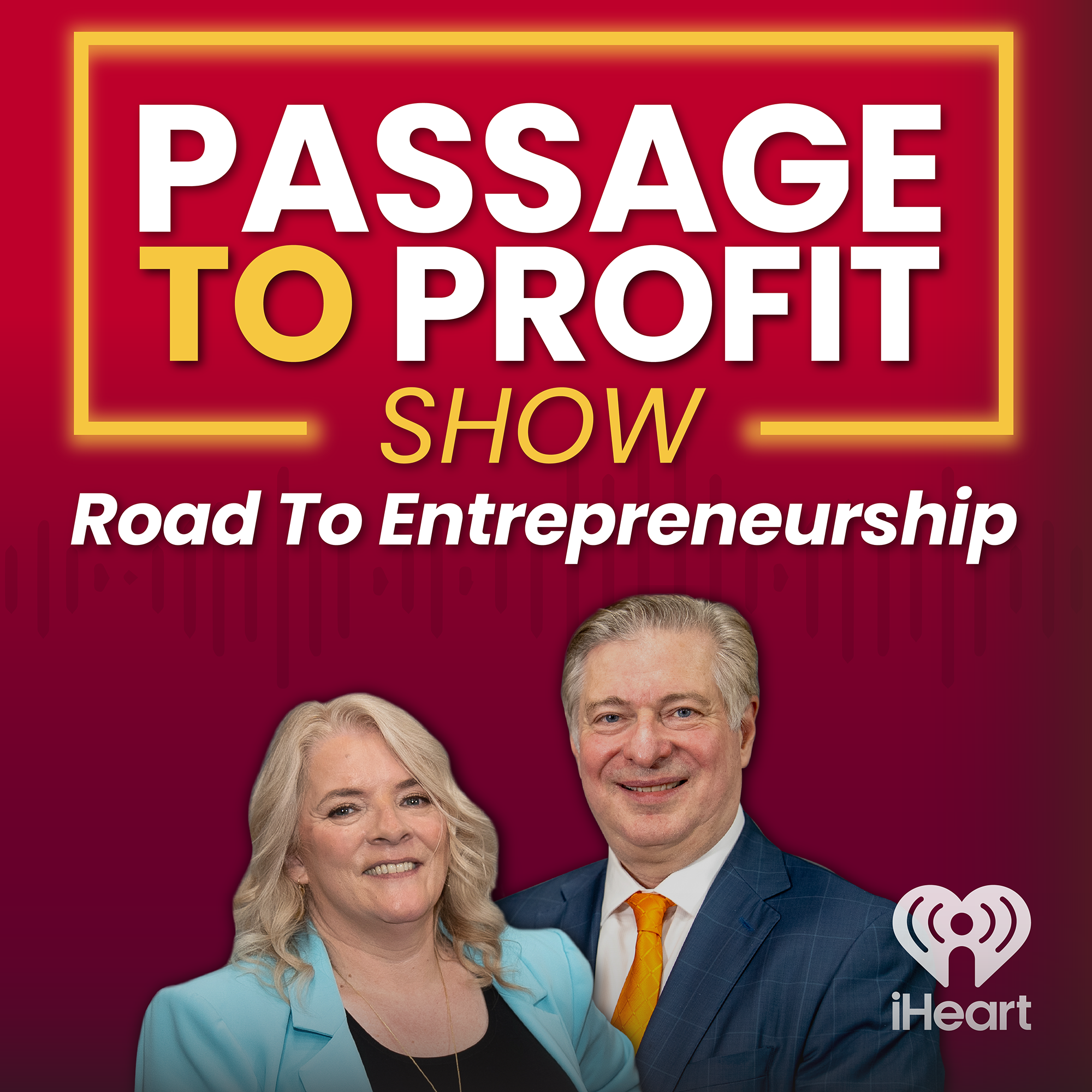
[00:00:25] Speaker B: Welcome to Passage to Profit, the road to entrepreneurship. Our our guest today is Todd Drollett, a self made millionaire and A and E star who's closed over 1700 commercial real estate deals. And later in the show he'll reveal the one negotiation mistake that can cost entrepreneurs millions.
[00:00:44] Speaker C: And we also have two amazing presenters. I really do want to hear what these people are going to say myself. So we have Chris Klein, COO and co founder of Bitcoin Ira and he's going to tell us the the true story of Bitcoin in 2026. I really got to hear this. And then this amazing woman, Jessica Slaworski, who founded Ignite Reading and is helping kids learn how to read. And that is a real problem, unbelievably, but yes, it is. So I'm so excited to get into the show today.
[00:01:14] Speaker B: Okay. And on top of all this, we're going to be talking about Taylor Swift and a trademark dispute over her signature. But first, it's time for your new business journey. And I want to ask the panel, when you look back, what was the one decision or moment that most changed the trajectory of your business and what did it cost you to make this decision? So Todd, welcome to the show. What was the one decision that you made that changed the trajectory of your business?
[00:01:40] Speaker D: I wouldn't say there's one. I say almost every day you're constantly making decisions. I think people think there's like a certain point where the world perceives you as successful and it's like, oh, on easy street. But like as an entrepreneur, every day you have to make the difficult decisions if you're the boss. Everybody brings all the problems that they can't solve or don't want to solve to you. So every day you're making new decisions. And anybody who tells you with 100% certainty that they're certain of anything, they're making it up. Because part of being an entrepreneur, you have to. Everyone has to believe that you're 100% certain. And this is what we're doing.
I heard a great quote, like, I'm not a huge fan. Arnold Schwarzenegger but he said once, he said, if you have a plan B, you don't really have a plan A. He's like, you need to have Plan A 1234. So you need to know where you're going and just keep going. So in my organizations, people need to know this is how we're going. But I've never. I'm not a planner. And when I decide we're doing something, this is what we're doing. We figure it out as we go.
[00:02:33] Speaker B: That's great.
[00:02:34] Speaker D: Yeah.
[00:02:34] Speaker B: Chris, welcome to the show.
[00:02:36] Speaker E: Thanks for having me. It's great to be here. I couldn't agree more. It's every day, right? And entrepreneurs, at the end of the day, we like our masters of jumping off the cliff and building the airplane before we land or crash. I suppose for me, I think we were in alternatives within the retirement vehicles for three or four years. And the challenge came across the desk. Should we try out bitcoin? And this was 2016, so Bitcoin, nobody in this room probably knew what it was. I barely knew what it was. The price of bitcoin was less than $100 and it was crazy. And we made a decision, my board and I, to say, you know, let's just make a hard pivot. Because it was a new territory that wasn't saturated with over cost and advertising and other things and what it cost us. The domain was $400 bitcoin, ira.com. and I remember that was the most I ever paid for a domain in my career.
[00:03:18] Speaker B: So you got off cheap?
[00:03:19] Speaker E: Yeah, got off way cheap. And then there was legacy parts of the business. So usually one of the things I learned over the years is the business will always grow. Not everybody will keep up with the growth of the business. And there was. We lost some staff that didn't believe in the pivot, hindsight, 2020 for them. But obviously that's part of the process. Not everybody's going to buy into your dream, and you have to accept that as an entrepreneur.
[00:03:38] Speaker B: So when you're an entrepreneur, you're facing this decision about whether to get into a new market or ad a new technology like bitcoin. I mean, what advice would you give to them in making that kind of decision?
[00:03:51] Speaker E: Close your eyes and jump and you won't regret it. I mean, you're going to make bad decisions. I'm sure Todd can even speak of with some of the deals. You have so many deals. Those has to have been deals that you lost money on or that you regret getting into. And so you have to have a Kind of like golfers will say, you have to have a goldfish brain. You're already moving past whatever just happened seconds ago or days ago to get to the next challenge and take it on.
[00:04:11] Speaker D: In commercial real estate, there's a saying, you know, 40 years ago they used to call it a Bloomberg lease. It was three pages long. Now most pages, most leases are 70, 80, 90 pages. They say a lease is a sum total of your bad experiences. So every time pretty much sticks to two. You're like, ooh, add that paragraph where those reps and words come from.
[00:04:27] Speaker B: Right?
[00:04:27] Speaker D: Exactly.
[00:04:28] Speaker B: Absolutely. Jessica, what was the one decision that you made that changed the trajectory of your business?
[00:04:34] Speaker F: Thanks so much, Richard. Thank you, Elizabeth. And it's really great to be here with you tomorrow and with you, Chris. Oh my goodness. Narrowing it down to one decision when I agree there are so many in being a leader.
And what comes to mind for me is that I began incubating ignite reading within the national nonprofit that I was running and very quickly recognized that it needed to spin out and be a for profit standalone company in order for us to build out the tech infrastructure and scale to meet the needs of our nations literacy crisis. So I found incredible impact investors who believed in our mission. And then as Chris said, I took the leap, which was terrifying, especially because I'm a single parent and I left the comfort and stability of the role that I was in to follow my passion and do something to help kids.
[00:05:25] Speaker B: So what were you feeling when you made that decision? You said you were terrified.
Tell us more.
[00:05:30] Speaker F: Oh, I was scared out of my mind. I was like, oh my gosh, what if this doesn't work? What if I have just walked away from stability and a higher paying job in order to pursue my passion and I just had to trust my gut and my heart.
[00:05:48] Speaker C: Elizabeth, when we started Gear Media Studios and we started the accounting piece, which it's like, oh man, you know, there's so many pieces to this.
We had Gear Media Broadcast productions already for this radio show and everything. And so we just decided to roll the studio into that and have our accountant do all the work for us that she was already doing, plus this. So I didn't have to start with a brand new accountant and brand new set of quick and all that. So I think maybe further down the road we might split it out as Gear Media Studios. But for right now, it just took
[00:06:21] Speaker B: a huge burden off great leveraging resources that you've got. And what prompted that decision, I just was overwhelmed.
[00:06:29] Speaker C: And you know what? It's not my favorite thing to do,
[00:06:31] Speaker E: quite honestly, for me.
[00:06:33] Speaker B: This week we're going to talk about hiring our first assistant. When the law firm started, I was literally working out of the attic of our house and we had the attic remodeled and we had an office set up and so I could have an assistant. And this was about six months in.
And as an entrepreneur, you get used to doing everything yourself all the time.
And for me, it was just amazing to have somebody to help out. But I felt really uncomfortable hiring somebody because I wasn't sure if I could afford to pay them and I wasn't sure if we were going to have enough revenue to cover the cost. But it turned out to be a good decision for us. In any case, now it's time for our amazing guest. Todd Drollett doesn't just close deals. He turns commercial real estate into, into much watched television. With over 2 billion in transactions, 1700 plus deals, and a hit A and E series that captures real negotiations exploding, collapsing, and clawing their way back to life, Todd has built a multimillion dollar empire by outworking and outmaneuvering everyone in the room. Today we're talking to the man who says, in business, there are no scripts, no excuses, and, and no mercy. If you're not ready to win, you
[00:07:46] Speaker D: should be my publicist. That was like the greatest introduction ever. Jeez.
[00:07:50] Speaker B: What was the most intense, high pressure moment you faced in your career?
[00:07:55] Speaker D: So those were earlier on. As I've been doing this so many times and for so long, that just doesn't affect you the same way. Like I was talking to somebody. They're like, you seem unaffected by everything. And I'm just very baseline all the time. I don't react. But negotiating for a living, I always tell. People have tells. It's like when I'm talking to somebody, I'm looking at how they look. I'm listening to what they're saying, the manner in which you're saying it. Is there a slight hesitation? Is there a pattern differential in what they're saying?
So I used to get nervous like anything. But it's like anything you do something a thousand times, 2,000 times, it kind of just wears off.
[00:08:27] Speaker B: But I mean, that's kind of part of the goal though, right? Is you do want to get comfortable working in routines and making decisions. That's sort of the bread and butter of the business. And then the growth comes from executing consistently but also taking calculated risk.
[00:08:44] Speaker D: Yeah, it's, it's 100% taking calculated risks because there's no guarantee in Life about anything. So from a real estate standpoint, I know it inside and out, and I don't really. I don't think about it. But that's why it's like, oh, we started a TV production company, going to networks and trying to convince them, oh, there's 100 shows on TV about risk, residential, real estate and agents and flipping. But there should be a docu series about this trillion dollar industry.
You wouldn't believe how many people are like, nope, nope, boring. Sounds boring. And then ironically, when we got the show, Barbara Corcoran from Shark Tank was actually like a supporter and was like, oh, I'm really looking forward to watching the show. And then she told the story. When they were doing the first season of Shark Tank, all our friends were like, barbara, no one's going to care about business or watching a bunch of shows. And she's like, here we are, you know, 19 seasons later. So.
[00:09:28] Speaker C: Yeah, well, we met her when we first were starting this and we told her we were doing a show about entrepreneurism and ip and she looked at me and she went, boring.
[00:09:37] Speaker D: Well, I fooled her.
[00:09:39] Speaker C: Well, here we are almost eight years later. Sorry.
[00:09:42] Speaker B: Barbara, you sort of reinvented yourself, right, when you went from commercial real estate to media production. Right. And what advice do you have for entrepreneurs who are wanting to reinvent themselves and take themselves to the next stage?
[00:09:58] Speaker D: So commercial real estate's always been like my profit center, so to speak. So I've made enough money from commercial real estate that I could do, like, passion projects. So I own a software company, the TV production company. I'm just somebody that my whole life, if I decide I'm going to do something, I just say, hey, I'm doing this. Like, if I could give advice to entrepreneurs, so many people try to convince other people to do something like, hey, I need to raise money or I need to do this or I need to do that. Hey, I was thinking about doing this thing. I've always just said, I'm doing this thing and I'm starting now. Do you want to be a part of it? If not, I might touch base with you in three months or never again. Everybody wants a proven sure thing, and then they want to invest. It's like, nobody needs you then. So one piece of advice I would give is just start doing it. And if you have to do it on the smallest scale to prove that it works, then do it.
[00:10:44] Speaker C: Todd, I have a question for you. Did you build your brand before you went to get on television, before you pitch the A and E show? Had you done a lot on social media and with the website and trying to build a brand for yourself in
[00:10:56] Speaker D: the media, not social media. Like, I hate social media. Like, I know everyone says you have to do it. Like I get pulled like along doing social media when I was growing up. I'll be 45 at the end of the month. When I was growing up, there was like the truth and then there were lies. Right. But like the world we live in, everybody today is like, oh, that's my truth or that's this. And like with social media, oh, you're not a tax attorney and you're not a accountant or cpa, but you're a tax strategist. So there's all these people on social media that are complete charlatans that tell people to do all these things that are like, if not felonies, they're ridiculous and they'll take one tiny little piece of truth and then they take all this garbage. So I just, I'm not a fan of social media. So I have one, but I'm told constantly I need to spend more time working on it.
[00:11:41] Speaker C: Did you have to build a brand? Did you have to work on building before?
[00:11:44] Speaker D: Oh, 100%, yeah, yeah, sorry.
[00:11:45] Speaker C: So what did you do to build that brand then? If you hate social media? I agree with you. I don't care for it either.
[00:11:50] Speaker D: Well, just so building the brand was just doing the work. So no network would have given two cares at all about me, except. So a lot of the people that are on TV today in the real estate world, they weren't real estate agents. But because the barrier to entry of real estate is so low, you go, take a course and bam. People go, oh, you're a real estate expert. I'm like, really? You went past a 75 hour course and now you're an expert?
So because I have the track record, I've, you know, I was the youngest exclusive Starbucks broker in the country when I was 22. I work with a lot of big global brands, so that helped. And then just getting the resume, if I went and pitched this show 10 years ago, they would have been like, get out of here. So it was literally just the resume of. They're like, this guy seems nuts. So but maybe he has, you know, the bandwidth to do it. And then the show did well and they're like, oh, I'll be dead.
[00:12:36] Speaker C: One more question on that. And then I hand it off to Richard. Did you take any presentation skills training or media training before you tried to get on tv?
[00:12:45] Speaker D: I was born in Saranac Lake, New York, which is a very, very small place in upstate New York. And there was a woman called Sister Carolyn. She was a Catholic nun, and she had a program called Summer Sampler. And my mother put my brother and I in that program. And it was improv. So from the time I was three years old, we were doing improv.
So I never. Where most people have a fear of public speaking, from the time I was three, I remember this woman who's the director used to say, just say anything. Be like, here's where we're starting. Here's where we're ending. This is a script. It doesn't matter if you hesitate, if you talk. So a taught you to not be afraid of speaking. It also taught you to pay attention, which I've realized I haven't done a good job of answering your questions. Like, the first question I didn't answer, I'm like a politician. I go, yep. And then say whatever I feel like saying.
So it taught you to, like, listen to people and react and be on your feet. So I did a lot of that. And then negotiating for a living, and I have to literally be listening to what you're saying, what you're not saying. And so many deals fall apart. I always say every good commercial real estate deal dies three times before it happens. So I have to anticipate. I'm anticipating what people are saying. I'm anticipating what they're thinking. So it's just integrated. So it's like, oh, go do a TV show. It's like, well, it's not like a standard reality show or an actual docu series. So they're just filming what's actually happening. So I don't need to be an actor. And then if you do enough interviews and things, you just sort of. You know, I used to get nervous, and I'm like, it doesn't matter. Like, if people like me don't like me, who cares?
[00:14:11] Speaker B: Yeah. Speaking of negotiation, what are your top negotiation strategies for entrepreneurs?
Entrepreneurs are negotiating all the time. What do you think makes for a good negotiation?
[00:14:23] Speaker D: That's kind of a loaded question. But I would say, number one, if you're just talking about, we're in the middle of the negotiation. If you want something, say it. And then don't speak till the other person speaks. Because so many people will negotiate against themselves. They'll go, oh, I'll pay 500,000. I mean, maybe 550. And then they're staring the person like, I never talk. I'll just let the person keep talking and let Them negotiate against themselves. And then when they get done, I'm like, okay, now we're going to start from wherever you just ended up. People do that all the time. People don't like silence. So that's a huge thing where people just screw up in negotiating. They also will be too friendly and they'll just put all their cards on the table and go, I'm going to be honest. Or I tell people all the time, I'm very direct, straightforward person. But people go, I'm just going to give you my bottom line. Like, don't do that, never do that in negotiation. Because no one ever believes it's really your bottom line. So people can kill deals before they even start because they just put their best foot forward and go, I'm an honest person. Here we go.
[00:15:15] Speaker B: To be a good negotiator, you kind of have to hold some things back, right? You have to have a strategy going in, understanding what it is that you want, what an outcome is, and then take three steps back and start from there.
[00:15:29] Speaker D: That's the biggest thing. So many people start going after, whether it's a goal, a negotiation, whatever, and they don't even know what their actual goal or end is. So you need to know what are your absolute deal breakers? And I always say, never threaten something you won't do. Like, don't say, if you do this, I'm going to punch you in the face. You better be willing to punch that guy three times your size in the face. Because if you don't, nobody will ever believe anything you say the rest of your life. So if you're in a negotiation, you say, I want this raise and if you don't give it to me, I'm leaving. You better be prepared to leave because if you stay, you should have just left because you'll get treated terribly for the rest of the time you're there.
[00:16:02] Speaker B: How do you balance being as active in your career as you are with ordinary life, family life, having some sort of balanced life? Or do you not have a balanced life?
[00:16:14] Speaker D: I didn't have a balanced life for a very, very long time. I was like the stereotypical entrepreneur that I'm just working 80, 90, 100 hours a week and I'll worry about my life later. And then when I turned 30, I had my first panic attack. I thought I was having a heart attack driving to a showing, which I've done thousands of times. And for 10 years I literally had, at the worst, I was having six full blown panic attacks a day that could have last upwards of 20 minutes. So literally, you can't catch your breath, Your heart's racing. Like, some people sweat. I don't. I didn't sweat from them, but it was just like. I would describe it if you went to the top of Iheart Studios and held me off by my ankle, over the edge. Whatever way you'd feel is how is how it feels. And I grew up and always thought of myself as somebody who was mentally tough. I can do anything. Like, I can literally take on the world.
So it's really. For someone who's an entrepreneur, it's just a mind bang because you're like, oh, my God, my brain is giving out on me. This is the thing that I make my living, is my identity. This is who I am. You're losing control. Giving out on me.
[00:17:12] Speaker B: Yeah, you're losing control. How did you handle that? How did you address it?
[00:17:16] Speaker D: So when I went to the doctor and the doctor said, oh, well, you're 30 now, so your brain chemistry just changed, that happens. When I believed it to be true, that was my first mistake. Because they started giving you different drugs and you try different drugs and terrible side effects, and it's not really helping. The problem is if you're having a panic attack.
I've learned now it's like I do meditation. So in two years, I haven't had it. I haven't taken any medicine in two years. So I've. I beat the panic attacks. But a very famous book, how to Win Friends and Influence People by Dale Carnegie. I recommend it to everybody, especially Negotiating.
A lot of people don't realize he wrote a second book, and that book was called how to Stop Worrying and Start Living.
And that book, actually, there were so many people back in the day that had panic attacks and anxiety disorders, but they didn't call it that. They didn't know what it was.
So. But when they're describing it, like, yep, that was all the problem all those people were having. So there was a thing in the book that was kind of an aha moment for me. And then I started meditating and making sure I was sticking to my exercise regimen. It said, if you realize that panic and anxiety comes from your subconscious, it's basically just an alarm that's trying to tell you there's something in your life that's out of balance or out of whack. There's, like something that you're walking through every day that you're ignoring or not addressing that you need to address and change.
So it says if you know that it's Coming from your subconscious, and your conscious always overrules your subconscious. That essentially when that panic starts to happen, if I told you, white house, gray elephant, you can't think of those two thoughts at the exact same moment. You can think, white house, gray elephant, gray elephant, white house, but you can't think of those two things at the same time. If you realize that and then you know your body's trying to warn you and that's coming. If you tell you like I would tell myself, peace and calm, peace and calm, and I breathe in slowly, hold for three seconds, breathe out in the morning, like, you know, make sure I'm like loose.
Eventually It'll be like 20 minutes, then 15 minutes and 10 minutes, 5 minutes. Eventually it gives up and it just. And then eventually you can retrain and reprogram your brain. But when people tell you, oh, your brain chemistry just fundamentally changed, I don't think that's true. It's not true. Because then you don't try to. You don't look for the things. That's just the pharmaceutical industry basically just trying to say, take this pill, take this pill. But you're not solving the underlying problem. It's like in business, if something's going wrong in your business, you can't just close your eyes and go, it'll be okay. You have to go, what's the problem? And fix the problem.
[00:19:29] Speaker C: So, Todd, you're going kind of deep here, which is really cool. I appreciate that. I think a lot of people suffer that, but they don't want to talk about it and they don't know how to fix it. And I love that you did that. Is there something about yourself that you don't normally talk about that you think you can?
[00:19:44] Speaker D: No. I have people tell me I'm interesting and I laugh because I'm like, I don't think I'm that interesting of a person. But a lot of people are worried what other people think about them. And I'm just, I'm not like, unfortunately, my. Well, a being in a business I'm in, you have to have very thick skin. And then in the property management business, tenants complain about everything every day. And it's like this never ending thing. So if I internalized every criticism or every praise, like, I would either have a huge ego or I would be jumping off a building. So I just kind of operate based on what do I want to accomplish, what do I want to do? And that's my barometer. If people like it and they think it's cool, that's awesome. If they don't like it. It's like I'm doing it anyway.
[00:20:20] Speaker C: So that's good. That's a great way to live. Right?
[00:20:23] Speaker D: But I will say this, the panic thing, a lot, I think the stigma has gone away over the last like 10 years, or at least it's a lot less. But when I tell people, I don't think I've ever told that story and not had somebody be like, you know, I've had that, or my brother's had it, or my. So the more I talk about it and the more people talk about it, if people want to talk about it, that's the first step to figuring out how to fix that problem. Because living with panic is terrible.
[00:20:44] Speaker C: Well, and it's amazing because you're super successful and you think that people having panic attacks are like, I'm not going to be able to pay my rent next month. But it's everybody, right? It doesn't matter how successful you are, it still happens to all of us.
[00:20:57] Speaker D: And it comes out of nowhere. So it's like when it just gets triggered, you don't. The worst part about anxiety is a lot of times you don't consciously know what it's coming from because it's coming from your subconscious. So it's the process of figuring out why is this happening to me. And that's doing the hard work of figuring that out. But I think I defended it off for so long because I'm a serial entrepreneur and I run multiple businesses. I could stay busy for so long until my body was just obviously one day like, nope, like you're not superhuman. Welcome to humanity.
[00:21:28] Speaker B: Well, I have a story about anxiety that I'll share with our audience at the end of the program.
But coming up, we're going to be talking with Todd and later we're going to hear about future proofing your retirement and how to make your kids more confident. Readers Passage to Profit with Richard and Elizabeth Gerhardt. We'll be back right after this commercial break.
[00:21:48] Speaker G: Do you hear that? That's the sound of uncertainty lurking under your hood. You know the feeling. I know I do. That sudden sinking sensation when you see a check engine light or your car unexpectedly breaks down and you're faced with sky high repair bills. It's time to shield against unexpected repairs with Car Shield. Car Shield is America's most trusted auto protection company and has an A rating with the Better Business Bureau. Don't let the fear of a breakdown keep you up at night. Trust the Shield Car Shield and say goodbye to terrifying repair boots and hello to peace of mind. Your plan also comes with 24. 7 roadside assistance, courtesy towing, rental car options, and so much more. Don't wait till it's too late. Call car Shield now before a breakdown. Protect your wallet. Protect your car with car Shield. Get our best protection ever. Call now. You'll thank me later. 8002-6121-7680-0261-2176. That's 802.
[00:22:47] Speaker A: Have you outgrown your health insurance plan or just not happy with what you're paying for? The number one reason we all change our health insurance is price. Are you paying too much for your health insurance? Would you like to have better coverage at a better rate or at little or no cost to you? Your life needs are always changing, but have you done anything to improve your health insurance for you and your family? Health insurance laws and coverage are always changing and getting better. It's impossible to do all the research yourself, but now it's all done for you for free. So regardless of your age or medical condition, take a few minutes right now and find out if you can save money or even qualify for zero cost health insurance in your state. Call now.
[00:23:33] Speaker G: Paid for by cheaper health insurance. 8006.
8006-5214-7080-0652-1470. That's 800-652-1470.
[00:23:47] Speaker A: Now back to passage to Prophet. Once again, Richard and Elizabeth Gearhart and
[00:23:51] Speaker C: our special guest, Todd Droulette.
[00:23:53] Speaker B: So, Todd, you were telling us during the break you're going to begin your second season of your A&E TV show. Tell us a little bit about the show and what happens on it. For our viewers who haven't seen it,
[00:24:04] Speaker D: it's called the Real Estate Commission, airs on the AE Network. It's the first and only show about commercial real estate. Unlike typical reality shows, it's a docu series. So it follows me and my team at Titan Commercial Realty Group doing actual deals with real clients. So it just kind of follows that, but it really gives you the behind the scenes. So our second season, we start filming in a couple of weeks. If there are business owners, business executives expanding, looking to buy investment properties anywhere across the country.
If they want to be a part of the show, they can
[email protected] you
[00:24:36] Speaker B: sponsor a business camp. Tell us a little bit about that.
[00:24:38] Speaker D: So it's called the Titans of Tomorrow. It's a free business camp. We do every year. It's a two day camp. We do it at Siena University, which is My alma mater in Loudonville, New York which is the suburbs of the state capitol. For a lot of people who don't know in Albany, it's a two day camp and essentially there's teams of five. The first day we give them crash courses and everything. Entrepreneurship and running a business. Generally it's kids from like New York, New Jersey, Connecticut, but they can technically come from anywhere you want. It's open to 250 kids from 9th grade to seniors in high school and they can apply at the business camp starting right now. It's a one page application at therealestatecommission.com
[00:25:14] Speaker B: Todd Drollett, A&E star who's closed over 1700 commercial real estate deals. Where can people find you?
[00:25:22] Speaker D: On the A and E network or.
Yeah. Or@the realestatecommission.com I'm on LinkedIn. I'm on Facebook. Todd Roll Out I'm the only Todd Roll out in the country.
[00:25:31] Speaker C: Now it is time for AI Use Cases Business Owners Roundtable. I am going to ask each of our guests one way that they're using AI in their business and then we'll have a discussion. So I am going to start with Todd Dro let with therealeestatecommission.com what is one way that you are using AI in your business?
[00:25:50] Speaker D: I use AI to basically streamline leases, drafting leases and drafting letter of intents or non binding documents that you use as a basis for a lease or purchase contract. I use it to summarize things for me.
[00:26:03] Speaker C: Okay, excellent. So Chris klein with Bitcoin ira.com we
[00:26:07] Speaker E: have a standard in our business that every department so whether it's finance, whether it's sales, revenue, marketing, every single department has to have one AI initiative every quarter that they begin and they end. My most recent one that I'm probably most excited about right now is we actually it's not my department, it's the technology. There's such a thing called AI police for the AI. So when you have so much AI working in your business where you've got code being built and calls being reviewed and contracts being and all these other moving parts that there's now police that can watch the robots, watch the robots to keep them honest and make sure that they're doing which I think is just absolutely mind blowing to me.
[00:26:42] Speaker C: Jessica Swierski with ignite-reading.com what's one way you're using AI?
[00:26:48] Speaker F: When we think about leveraging AI it is about making the humans dramatically better at what they are doing. And we are imagining the ways that AI can analyze our tutoring session data quickly, flag where kids are struggling, prepare tutors to show up with the exact right instruction to support kids because we want them empowered by AI. And then we're also currently leveraging AI. This is so exciting to extend the opportunities for kids to have targeted instruction outside of that synchronous one to one engagement with the tutor.
[00:27:25] Speaker C: So, Richard Gearhart, what's one way you're using AI in your business?
[00:27:28] Speaker B: Well, this last week I had a complete and total dumpster fire with AI. I really wanted to throw my laptop against the wall. I was trying to analyze our firm's profitability and get some performance metrics. And so I put a lot of information, our financial statements, the lawyer timesheets, invoice records into Microsoft Copilot so that I could have Microsoft Copilot analyze the data. And it kept coming back with wrong answers. I mean, it was even wrong compared to the information that I put in there in the first place. Like, what is the revenue number? And it would say, okay, well here's your revenue. And then. But I'm looking at the financial statements and our revenue number is different. And so it just got really frustrating for me. And you know, it just says to me, it's, it's not there yet. And part of it is probably I didn't write the prompts in the right way, but I feel like the questions I were asking that it should have been able to give me a good answer.
[00:28:32] Speaker C: So, yeah, so for me, this is Elizabeth. Oh, that was Richard with Gearhart Law. This is Elizabeth with Gear Media Studios. So I use it every day. I use Gemini and ChatGPT and perplexity, and usually Perplexity is in the cloud model. Lately I've been using Google Gemini more than anything else. It's the one that's done the latest upgrades. I think it's better than. But I do have to still use Chat for some things because I've been writing these blogs and I put up through them and said, can you optimize these for LLM Search and give me the FAQs and give me something I can put schema code with for LLM Search and, and I had like some little jokes and like a, you know, kind of a fun blog, but still serious. And Google Gemini just completely sanitized the whole thing. I was like, oh, but ChatGPT left my extra little jokes and stuff in there. So you really, I think, have to use them for different things. Google Gemini is getting to know me a little too well. Though, because it like gives me these personalized answers, like, oh, well, for instance, if you and your Meetup co host Sonia Satya for your next meetup on Podcasting 101 wanted to do this, I'm like, I didn't ask you anything about Sonia or the meetup or anything. You just brought that up.
[00:29:43] Speaker E: Yeah.
[00:29:43] Speaker B: I mean, recently ChatGPT said something like, I think your son Sean would like this. And I was like, I don't remember putting Sean's name into the proud.
[00:29:52] Speaker C: It was on our podcast though.
[00:29:54] Speaker B: Yeah.
[00:29:55] Speaker C: So he knows we have two kids because they've both been on our podcast.
And it brings up the kids to me too.
[00:30:00] Speaker E: This is why you say please and thank you.
[00:30:04] Speaker F: Just looking at how quickly Google Gemini, for example, or like the latest version of Claude, and it's mind blowing what AI can do. And I look at that as so much opportunity.
And we have to make sure that our young people are ready to harness that opportunity because this is not going away and the job market is going to be how well you can manage a team of robots.
[00:30:32] Speaker C: That is so true. And we've been saying on this show, I don't know, for the last year or so, you gotta learn it now.
Because what I'm hearing now is with the job market changing, the people that aren't using AI are the ones that are losing their jobs. You know what that new employment's gonna be, don't you? It's gonna be making the parts and fixing those robots.
[00:30:52] Speaker E: Blue collar is back.
[00:30:53] Speaker C: There are gonna be jobs, just different jobs. Right.
[00:30:55] Speaker F: And no matter what the jobs are, kids have to learn how to read in order to do those jobs.
[00:31:00] Speaker C: Absolutely. And we will get to that. Anyway, this has been AI Use Business Owners Roundtable. You're listening to the Passage to Profit Show. We will be right back.
[00:31:10] Speaker H: Here's a real life story that affects 50% of all of us out there. It's called divorce. If you've gotten divorced and now you're struggling to pay your bills and your credit card debts are completely out of control, you need to call this special debt relief hotline right now. We help people with all kinds of money problems caused by different life challenges. A divorce, a job loss, even heavy medical bills, all these life events can sometimes financially stress you out and cause you to get out of control. We help people get their lives back by showing them ways to consolidate and reduce their debt. In some cases for a fraction of what they owe. If your credit card balances are more than $10,000, call us and learn how to reduce your credit card bills and monthly payments. Now. Here's our number paid for by Debt.com.
[00:31:54] Speaker G: call now at 800-8100-880081-00857.
800-810-0857. That's 800-810-0857.
[00:32:10] Speaker A: Listen, were you forced into getting a solar contract and now you just don't want it anymore? Maybe the solar company misled you? Or is your solar contract buried with hidden fees? Are you not saving the amount of money you thought you would on your energy costs? Don't worry. At the Solar Exit Hotline, we can help you cancel your sol.
If the panels are already installed, our experienced legal team will review your contract and help you cancel it, possibly saving you thousands of dollars. You gotta call right now for complete details. So listen, if you're not happy with your solar contract for any reason, we are here to help you cancel it. Call the Solar Exit Hotline now for immediate options to help you exit your solar contract. This call is 100% free.
[00:32:56] Speaker G: 8009-4140-8580-0800, 941-4085. That's 800-941-4085.
[00:33:10] Speaker A: Passage to profit continues with Richard and Elizabeth Gearhart.
[00:33:14] Speaker B: Quick shout out to our friends at WMOX 1010am in Meridian, MO. Thanks for listening. And if you're new to Passage to Profit, it's a top ranked entrepreneurial podcast and radio show heard in 38 markets.
It's a place where founders share what really works. Now it's time for IP News. Here's a surprising fact. Your signature can be worth millions if someone designs a logo that looks close to it. That alone can stop a federal trademark. In today's intellectual property news, Taylor Swift's company successfully pressured a betting manufacturer to abandon its application for the trademark. Swift Home. Kathy Holm had applied to register Swift Home for pillows, mattresses and sheets. But Taylor Swift's company, TAS Rights Management, filed an opposition with the U.S. patent and trademark Office arguing the cursive Swift in the proposed logo closely resembled her trademarked signature and would likely cause customers confusion.
Shortly after that filing, the company walked away from the application.
[00:34:25] Speaker C: And that, my friends, is the power of trademark enforcement. She obviously has a very active team looking out for her. Because the trademark application was filed, it hadn't even gone very far in the process, and they caught it very early. According to the filing, Taylor Swift owns federal trademarks covering her name on products including clothing and bed linens. So when a company tries to register A similar brand, her watchdogs catch it. And if it has a stylized signature look like her signature, the legal issue becomes what's called likelihood of confusion. So people may think that these are her betting products or that she endorsed this brand and she didn't. And she protects her brand voraciously. So there you go.
[00:35:07] Speaker D: My signature's so terrible, I couldn't make any claims for anything really.
[00:35:11] Speaker E: According to Jessica, my signature is also terrible.
[00:35:14] Speaker F: I can help both of you with handwriting.
[00:35:17] Speaker E: We had something similar in bitcoin, Ira Rabies, because we became like the, the Kleenex or the Band Aid. So it was, and so it was very, it's been very difficult to get and hold that one because people will say what it's the product itself. And, and when you're dealing with bitcoin and you're talking to the trademark office that it's like heads are spinning. So.
[00:35:33] Speaker F: Yeah, well, meanwhile, you can't trademark ignite reading because the word ignite is like the word imagination and it's too commonly used descriptive.
[00:35:43] Speaker C: Yeah. So when you pick a name, you have to be really careful. It's. That's why Apple, it's computers. But it can't say computers in its name. Right.
[00:35:50] Speaker B: Well, you can say computers, you can trademark that. We're getting into the weeds here. Trademark law doesn't require proof of bad intent. It focuses on customer perception. And when you're a global brand and a 14 time Grammy winner whose Eras tour became the highest grossing concert tour in history, your name is not just a name, it's a commercial asset. So Kathy's attorney stated that the company hadn't yet used the disputed mark in commerce and decided it wasn't essential to its business.
But that tells you something important. When the legal risk is high, sometimes the smartest move is to step away.
[00:36:25] Speaker C: And what's also interesting is that the companies had reportedly signed a coexist agreement previously, but once the new logo resembled Taylor Swift's actual signature, it was like, nope, can't do that.
[00:36:39] Speaker B: And here's the takeaway for entrepreneurs. Before investing in branding, you have to do the proper due diligence and analysis. You want to make sure that the name is not going to be confusingly similar to other trademarks out there, and especially not Taylor Swift's trademarks.
And celebrity brands are very aggressively protected. So if you're going to go up against Taylor Swift, well, you better have your ducks in a row.
[00:37:05] Speaker C: Well, because trademarks aren't just about words. Right. They're identity, endorsement and consumer trust.
[00:37:12] Speaker B: Very good.
[00:37:13] Speaker C: Now it is cryptocurrency guy. So we are moving on.
[00:37:17] Speaker E: He's known as Matthew Broderick.
[00:37:18] Speaker D: Yes, the young version.
[00:37:20] Speaker E: The young version.
[00:37:21] Speaker C: You're welcome.
Chris Klein with bitcoin. Ira is going to tell us why we should buy bitcoin. Are you?
[00:37:30] Speaker E: Well, I think that if you are a fan of the future of cryptocurrency, and I'm sure you've probably seen a couple more times than with people considering offering bitcoin as part of the purchase for real estate. There's that. You talked about the reality shows, by the way, which having lived in Los Angeles, I know like when they're at that restaurant, it's at like 4 o' clock in the morning. And that's all paid actors around them having breakfast or lunch. It's all, it's all staged. So it's really cool. I can't wait to check your show out. But there was the flipping or million dollar listing here in New York where the kid, the Guy offered like 13,000 Bitcoin a long time ago. And that would be billions upon billions for a couple million dollar building. So it's just crazy what's happened to it. I have the luxury and privilege to sit at the crossroads of bitcoin and retirement. And in our country today, we have a retirement crisis on our hands, much like literacy crisis that Jessica's talking about, where only half of Americans are actually even participating in a retirement program in any way, shape or form with belt tightening allowing corporations everywhere. Because if anybody runs a P and L, your most expensive part of your business is people, whether it's their salaries or it's otherwise. And so there's places where health benefits are just. I mean, I don't know about the other entrepreneurs here, but we got health insurance.
[00:38:38] Speaker D: Makes me want to throw.
[00:38:39] Speaker E: And it's every year, right? 13% increase year, 20%.
[00:38:43] Speaker D: I wish I made those types of annual increases in revenue.
[00:38:47] Speaker E: So what suffers is the retirement contribution match. And when the contribution match isn't there, like pensions of yesteryear, the incentive falls off. Plus, we all feel rising cost inflation's cumulative. You know, I always, my favorite story about inflation is it may be going down this year. But let's not forget, if you were working out, let's say one year you gained eight pounds, the next year you gained six pounds, then you gained seven pounds and then eight pounds. But man, last year I lost five pounds. You're still fat because it's cumulative and you're going to have to lose a lot more weight to get Back down to your original fighting weight. And that's what inflation does to us over time. And also in elasticity of goods. I mean, my wife will buy the 12 dozen cage free brown eggs because that's what we eat now. Even though regular white eggs are going to lower prices, other things are not. There's a lot of inelasticity in pricing now. So it's a privilege to be there. Because it's getting more expensive to retire, People are worried about it more often than not, more people, we're an aging generation. The boomers are getting there, the next generation is getting there. I'm turning 41 this year and I feel like I'm not even equipped for retirement. And to put in some retirement inside your retirement, some alternatives, whether it's real estate, which we have a lot of folks that do that, or gold and silver, or land. We even have a guy that does John Deere farm tractors in his IRA account and leases them out to local farms.
[00:40:01] Speaker D: Are you self directed ira?
[00:40:02] Speaker E: Yes, self directed.
And so we were able to wedge in a Bitcoin IRA back in 2016. And since then we've grown to over 200,000 users and about 12 billion in assets under custody. So I won't convince you to buy bitcoin, but if you do consider the tax advantages of retirement in general, it's how you create generational wealth. It's how Peter thiel got a 5 billion, $7 billion Roth IRA is because he used, he put tucked his Facebook shares and his Uber shares into his Roth IRA settings.
So often it's a tool that the government gives us and they take everything. To not use that one tool they give us is just a real big disservice to ourselves.
[00:40:40] Speaker C: So can you put bitcoin into a Roth IRA?
[00:40:43] Speaker E: Yes, ma'. Am. That's through us. That's what you can do. And up to 85 other cryptocurrencies.
[00:40:47] Speaker B: So tell us, what is Bitcoin? I don't understand cryptocurrency or bitcoin, any of that stuff. So maybe you could explain it to me.
[00:40:55] Speaker E: Yeah, in the simplest way. It's a new way of thinking about digital money. We've already seen the digitization of money, right? Cash. How many people have cash? I mean, I usually hold on to a couple $2 bills to tip, like the valet or the coat check. So typical currency as we know it has been around thousands of years in different ways. Whether it's through barter and trade, cavemen. In the Roman times, golden coinage started to come out then we went to fiat currency, which is since 1971 all the dollars that are created by the Federal Reserve are no longer, they're backed by the good faith and credit of the United States, not by gold held in depositories. And that's part of why the purchasing power of our dollar has gone down and the cost of everything has gone up. If you look at almost every chart from 1971 on, there's, it's, there's actually a whole website about it like past 1971. It shows all these charts of things that have gotten worse or otherwise since we went off that standard. Bitcoin brings us back. It was born during the great financial crisis of 2008. So I was just getting out of college, so I'm also an entrepreneur born from crisis because there were no corporate jobs so we had to do something different.
And it came out as a fixed supply currency that is not controlled by any government or any national sovereignty. It is driven by consensus, by nodes and power and investors throughout the globe. There only ever would be 21 million bitcoin that ever exist. And so if everybody has, if having one Bitcoin at some point will change your life because the scarcity shock will continue to grow and in fact maybe your daughter and my daughter might see the last one get mined, but It'll be about 21 million 140. So our, our children will be old
[00:42:31] Speaker D: like 80s, 90s, whatever that Bitcoin is will probably be the most valuable one at that point.
[00:42:35] Speaker E: The last one. Yeah, exactly. And, and so that's, that's in essence what Bitcoin is. And then crypto, just to differentiate is other types of cryptocurrencies or tokens for different utility. Ethereum is probably one you may have heard of. It's the backbone of the future of the Internet. It's a way where we'll probably get some of that privacy and security back that we're looking for because we can control our data.
XRP is another one that you'll see all over social media is it will revolutionize digital banking. So right now we all pay our employees once a month or every two weeks. And we have to go through intermediaries, you know, the re, the payroll company, those things. I envision a day where my daughter will work an hour if she does work or if she's not an entrepreneur and she'll get paid instantly because processes and transactions can go at hypervelocity and they don't have to be slowed down by a old school banking regime.
[00:43:21] Speaker C: There was a guy A few years ago, I don't know if it was bitcoin or Ethereum or one of the other ones. He lost his password and he had $450,000 and he couldn't get it out.
[00:43:32] Speaker E: That is the beginnings of bitcoin. So the essence is it's called a wallet and a seed phrase. So when I send you bitcoin, you'll give me a wallet address, which is kind of like me giving your email address I send you, but you don't give me your password to your email. And so the key is the password to the email. And it's a series of 24, 25 words. And they look a lot like those USB drives or what you put photos on. And so one of the stories is a wife here in Jersey found one in a drawer and was cleaning out the junk drawer and tossed it. And There was about 450,000 at that time, probably now 14, 20 million dollars. So the guy actually bought the dump that he knew it went to to try to hunt down his bitcoin ledger. Those are the scary stories that you catch that are in the headlines. And so that there are bitcoins that'll never be found again. So, like, that will. That'll always sit in a tough.
[00:44:19] Speaker B: So isn't bitcoin though? It sound risky because I've followed it over a period of time and it's like one day it's up and then the next day it's crashing. I mean, is that really a sensible place for people to put their money?
[00:44:31] Speaker E: It's when in doubt, zoom out mentality. So in the last 10 years, Bitcoin is up 16,000%. And I don't know any other asset class that's done that. And it will probably. I wouldn't be surprised by 2035, 2040, you'll be talking about $750,000 million dollars bitcoins. Volatility is there really? Bitcoin didn't invent volatility. It just exposes it. It's 24, 7 global, so there's not like a tomorrow Friday afternoon, all the stock markets take a nice break, right, and readjust before they reopen on Monday.
[00:45:00] Speaker B: So what percentage of my retirement assets should I put in bitcoin?
[00:45:05] Speaker E: I will not provide that direct financial advice, especially on the media. But I will tell you that most folks do somewhere between 5 to 25% of their overall portfolio in their retirement.
[00:45:15] Speaker C: So how do taxes work on bitcoin? Let's say? So our accountant actually did tell us to open a Roth ira. So let's say that we decide we're going to put bitcoin in the Roth ira. So then when do we get taxed on that bitcoin?
[00:45:27] Speaker E: So with the Roth ira, this tax structure is you make that money and you don't get taxed on it or you get taxed on it now and you're putting post tax money into the account, okay, It'll grow tax deferred, so no taxes. And then with a Roth in particular, because you pay the taxes on the way in, you won't have to pay them on the way out. So it'll be tax free. Income, that's a very popular tool. It does get more prohibitive for entrepreneurs. If you're making over $150,000 a year or 250,000 as a couple, it gets you, you're not eligible for a Roth. So traditionals are out there.
SEPs are very popular for small business owners like ourselves because you can do upwards of almost $60,000 a year, which is great because what you're doing is if you make 100,000 and you put the $8,000 a year in now, you've lowered your taxable income to 92,000. And I don't know what you guys, I'm only 41, but I've only seen taxes go up and I don't think they're going to slow down anytime soon.
[00:46:15] Speaker C: So then I just want to follow this up real quick. So then let's say that we put it in something like a Roth IRA.
We take it out 10 years from now and it's like blown up in value and it's a ton of money. Do we pay any taxes on that? And how is it like cashing out of stock? You just go to the broker and say, I want like United States dollars for this instead of this.
[00:46:36] Speaker E: Yes to both those. So when you pull it out, when you distribute it, you would distribute it completely tax free. You could also just sell it and leave it in the Roth IRA wrapper until you're ready to take distribution and hand it out into your kids or your grandkids in an inherited Roth ira. So you pass that tax savings down to the next generation. And yeah, you. I could go on my mobile app right now and we could buy some bitcoin and, and sell some and get US Dollars. We could swap it for gold. Mari. Our next generation, which is the big buzzword, is tokenization. So your world's going to get tokenized in some fashion where it's. It's difficult to get a buyer to come in and say oh I want to do the $50 million for this building here on Fifth Avenue. If that's even. That's probably cheap for Fifth Avenue, isn't it? But to fractionalize that so that there's a more liquidity market around it and more people can get involved in that. So on our book of 12 billion we have probably about 3 or 4 billion in real estate, venture capital, private equity, private shares that will. We're building a tokenized secondary marketplace for that so you can swap it into any kind of asset. You could even do it into your business. At some point people will start tokenizing instead of just doing IPOs and those types. This will be a fast track to raising capital. And that's why the government has wrangled with the clarity bill and all the, all this regulation around it, because those are all the answers and they'll do the same thing with AI. Next is how do we answer all these things that could go wrong in this new technology. But it's a train that's on the tracks and it's full speed and it's here whether we like it or not. Just like our AI conversations we just had.
[00:48:02] Speaker D: Do you think bitcoin will be like actual currency that gets used every day or do you see it more as like a Mickey Mantle rookie card or a Pokemon card or a Picasso?
[00:48:13] Speaker E: It depends on your use case. That's a great question, Todd. I consider my bitcoin more like gold. I'm holding it and handing it down to the next generation. There is litecoin, there's four times as many that would more think like silver to gold, more of that used in that case. There are places already in this country where it is being used on a day to day basis. El Salvador, Zimbabwe, parts of Turkey. Wherever currency crisis has happened over the last five to 10 years, you will find Bitcoin is reigning supreme. Most recently in Iran when the real basically plummeted to zero value in dollars cents. Bitcoin itself in terms of the real went parabolic and the number of new wallets opened in that region at that time online was something like of the numbers we've never seen before. So when things go bad, I'm not saying that things will go bad in the US but other currencies have followed suit and have developed really debase their currencies drastically. That that's where people run to because gold's a little hard to take a bar gold down to the store and get groceries. Bitcoin's a lot easier for transactions.
[00:49:08] Speaker C: Will we be using it on Amazon?
[00:49:10] Speaker E: Yeah, I think so. Actually, Litecoin almost, this was one of those that almost worked out for them. Ticketmaster Live Nation was finishing a deal with, with Litecoin, which is more of a mercury, like a merchant services crypto, right before COVID hit and, and then the whole, that whole industry just kind of was gone for two years. So that deal kind of dried up. Time kills deals. But I hear that they're maybe back on at the table doing that. So just like you go and you see PayPal, Apple Pay, credit card, they'll be cryptocurrency. And even now a lot of the betting sites take it and they give you premiums for it. So if you give Bitcoin to like DraftKings or the predictive markets, they'll give you more promotional rewards for signing up.
[00:49:50] Speaker B: So a couple of questions first. In your ira, can people just buy small amounts of bitcoin, like fractions of a bitcoin? So if they have $2,000 to invest, they could sign up for your offering and, and invest that amount of money. They don't need hundreds of thousands of dollars to buy a whole bitcoin.
[00:50:09] Speaker E: I'm glad you asked that question because that is one of the most common misnomers when I talk to folks as well. I don't have $100,000 to afford a bitcoin. You don't need it. It actually goes to the 10th decimal point, which is known as the satoshi. And that's kind of a weird name, but that's what it's called.
[00:50:22] Speaker D: And Toshi.
[00:50:23] Speaker E: The name, the name of the inventor. Yeah, the, the acronym or the pseudonym of the person that invented it. And so you can buy once satoshi. It's a couple of dollars and dollar cost average. Your way in they'll be to build up to a bitcoin will become more and more difficult. But having just a half or a quarter like you can go down and buy $5 worth of Bitcoin for an IRA of any, any setting your maximum every year is 7, 500 if you're under 50, 8,000 if you're over 50. Our firm has a minimum of $1,000 to get started just to set up all the tax process and all those types of things.
[00:50:55] Speaker B: So if somebody is like looking to build a secure retirement, what are some of the habits that they need to develop in order to make sure that they have money available when they retire?
[00:51:08] Speaker E: Start early. Financial literacy is just about as bad as reading literacy these days for kids.
I was joking about the Ameritown.
[00:51:14] Speaker D: It might be worse.
[00:51:15] Speaker E: It might actually be worse. Financial literacy is just. You were joking about the P. L's and the things. I went through business school, and we didn't even dive into some of those things heavily. It was learning rules and, like, things that I don't use, no offense to my alma mater. Thank you for the piece of paper and here's your $100,000. But there was definitely a lot of things that were missed. And maybe I just didn't go to that class. It was the University of Colorado Boulder. I might have missed that week. I don't know. It was a big party school.
But learning, being able to learn those things is. Is critical. And starting early is really critical if you can get your kids starting. Isabella started.
[00:51:48] Speaker B: So what does starting early mean, though?
[00:51:49] Speaker E: I mean, 20s is probably when you start making money. I mean. Yeah.
[00:51:53] Speaker B: So you, you, you siphon off a piece of your monthly paycheck.
[00:51:59] Speaker E: Yeah, if you can.
[00:52:00] Speaker B: And what is a good percentage.
[00:52:01] Speaker E: Yeah, if you can. If you can max out that contribution every year starting when you start earning income. So that 75, that'll. That'll make a world of difference when you get to your 30s, 40s, and the 50s, and even Warren Buffett, you could do no crypto and just put it in cash and fixed income, get some yield. The compounding interest will be powerful to get you there if you want to be creative. So Isabella started when she was 4. She did some commercials. So I set up a Roth IRA for her, and she had earned income and now she works. If you don't have your kids on the payroll, put your kids on the payroll because that really helps. So she's growing.
[00:52:29] Speaker B: What if you're older? What if you're in your 40s, maybe, and you really haven't done, you know, started early like you recommended. What can a person in that situation
[00:52:39] Speaker E: do in that situation? What I often find is entrepreneurs are the least prepared for retirement because we're building, we're putting our retirement in our business. Right. Our shares of our business. Our plan is that someday somebody will buy it for more. We can exit, leverage those shares, however, and, and if you, if you should have an llc, you should have an S Corp set up. And if you're not, if your account's not doing that basic stuff for you, then fire your accountant personally. But those S Corps and things that will make you eligible for SEP IRAs. If you're a high earner, there's a tool called the Solo K. You can put up to about 180,000 a year away. So if you have a really good year and you don't want to give all of it to Uncle Sam, that's when you use that tool to tuck away those funds in tax deferment and grow them tax free.
[00:53:20] Speaker B: Okay? And if you're not an entrepreneur, if
[00:53:22] Speaker E: you're not an entrepreneur, do the max contributions is the best. But you're probably in that age. You're going to need to think outside modern, into modern portfolio theory. So traditional portfolio theory is, I did stocks, bonds, mutual funds, like my grandfather's economy. He bought GE stock, he had his pension from Hiram Walker, and that was success for him. That wasn't. That was the way his market worked. Our world, you're going to have to think outside the box a little bit. You're going to have to think about real estate, precious metals, cryptocurrency. Have that. You still want your bonds, your mutual funds, your stocks, but you need to take at least a quarter of your overall portfolio and put it into, yes, more volatile, yes, more risky assets, but you have a longer time horizon. This isn't money you're taking off the kitchen table for your kids to eat. This is money that you won't probably tap into for 30 or 40 years. And you have the best, best amount of time for those assets to mature through that volatile stage.
[00:54:11] Speaker C: So, Chris, one last question quickly. Does cryptocurrency mirror the stock market? If the stock market crashes, what happens with crypto?
[00:54:20] Speaker E: So that's a great question. All markets are acting very weird since COVID and I think that's because of how much liquidity has been injected into the market.
We've printed more money in the last three years than we did in the hundred years before that. As far as putting currency into the marketplace, which is landing in lots of different places. For example, silver over the last month looked like a crypto stock. If you look at the charts, it barreled to $125 an ounce and then crashed down to what, $75 an ounce. And these are not words you normally hear with things like gold and silver. There is a correlation with the tech stocks and Bitcoin because investors treat them as such. So right now, some of the software stocks are getting downward pressure because AI is kind of messing up their valuation because it's like, well, used to spend five years to build a software that nobody else could build. And AI is being able to build competition much faster.
There will be a day where decoupling occurs between those, and that'll be when scarcity of the asset, especially with bitcoin, will kick in where it's like, okay, there's only so many of these to go around.
That hasn't happened yet. We're hardwired as a country and as people to abundance like we grew up with, just more and more and more and more and more. There'll be a day when scarcity starts to kick in, and you'll see that decoupling take place. But right now, everything. I mean, I'm an economist at the end of the day, and I'm having a hard time keeping track of some of these things. Just some of it just doesn't make sense. So diversification, as everybody will tell you, is key. Is putting things in a lot of different baskets, not just one.
[00:55:44] Speaker C: Great. Well, how do people Find you Bitcoin?
[00:55:47] Speaker E: Ira.com they can download the app. And one cool thing, because you guys look at all these questions you had, and you're my target demographic.
We have real crypto, real people. So you.
[00:55:56] Speaker B: I'm a target for many people.
[00:56:00] Speaker C: I'm really strong.
[00:56:01] Speaker E: Yeah. Well, no, you can actually. Shockingly enough, 75% of our clients were born before 1976. So it's not a misnomer. That's a young man, young woman's game. It's actually your generation that loves.
[00:56:13] Speaker B: That's an assumption.
[00:56:16] Speaker C: Well, I think it's pretty obvious.
[00:56:18] Speaker B: Is it that obvious?
[00:56:20] Speaker E: Okay, but last on that, so you can actually call. There's real people that have helped thousands of Americans put this into their retirement. It's 877-936-7175. And you can talk to a real human being about crypto and retirement.
[00:56:32] Speaker C: Is that your company?
[00:56:33] Speaker E: Yes, ma'. Am.
[00:56:34] Speaker C: Wow, that's awesome.
[00:56:36] Speaker B: Passage to Profit with Richard and Elizabeth Gerhardt.
[00:56:38] Speaker C: We have been hinting about this the whole show, and now we are finally ready to get into Jessica Slirski's ignite reading, and she is going to talk about our children. Right. So please tell us what it is, what you're doing, everything.
[00:56:57] Speaker F: Thanks so much. And it's been really fun as a lifelong educator and a teacherpreneur to sit and listen about what you're doing in commercial real estate and then to hear all about bitcoin. And by the way, my head is still spinning thinking about all the thumb drives I've thrown away and wondering what may have actually been on those thumb drives. So lesson learned.
[00:57:19] Speaker B: Could have been a security code for bitcoin. Right?
[00:57:22] Speaker F: Right.
So I run ignite reading. I'm a lifelong educator. I started my career as a Classroom teacher. And, you know, not a lot of people know that we have a literacy crisis in our country and that our national reading rates for children as young as 4th grade are showing that we only have about 30% proficiency. Meaning as we look at our young people, only about 3 in 10 of them know how to read.
And if you don't know how to read when you're in third grade or fourth grade grade, you are not going to magically learn how to read before you hit middle school or graduate from high school, if you're even going to persist to graduate from high school. So this is a massive problem. And it's a problem that doesn't need to be a problem, because we actually know what it takes to teach kids to read. And this is all about making sure that we put everything we can into ensuring that they learn to read on time, which is before they leave first grade.
[00:58:28] Speaker B: Why aren't kids learning how to read?
[00:58:31] Speaker F: For decades, there has been a misconception in K12 education that learning to read just kind of magically happens by placing beautiful books in front of kids and telling them to guess words or use pictures to try to figure out what the words are. I am not making this up for real, that is how so many classrooms were teaching kids to read. And yet what the research shows and has shown all along is that learning to read is not natural. It doesn't magically happen. It's not something like learning to speak. The thing about oral language is that our brains have evolved such that speaking is a very natural process, which is why our toddlers might walk around using certain colorful words that we didn't actually teach them, but they probably overheard us entrepreneurs using in one of our many meetings.
Learning to read is not like that. Our brains have not evolved to the point that reading is natural. We have to literally hardwire the brain to be able to look at a word like passage or a sentence or a phrase passage to profit and automatically be able to read it. And there's a process for doing that. So little kids need to learn to crack the code. They have to learn that these squiggly lines are letters, that each letter makes a specific sound, and that you then begin to put those letters and sounds together to read words that are increasingly complex, and to then read sentences and then to read paragraphs.
[01:00:18] Speaker C: When we were in Atlanta, I had a meeting with the teacher of my daughter, and she said, well, your daughter is sounding these words out. She said, she's not learning that here.
We're doing word chunks. You must be Teaching her at home. And I said, yeah, I read to my kids all the time and I am teaching her to sound out these words.
And she's 30 now, so she was in that demographic that just kind of got lost, right?
[01:00:41] Speaker F: Yeah. There is an entire generation of kids who did not learn how to read. And heartbreakingly, that's still happening in many classrooms and school systems across our country.
[01:00:54] Speaker B: So what's the solution?
[01:00:55] Speaker F: Here's the good news. A little bit of optimism is that there is a lot of policy happening right now that is mandating that school systems abandon these ineffective strategies, that they adopt evidence based reading curriculum and that they train teachers to use these programs. That is necessary and it is not sufficient. Because the other layer of this is that all of our brains are different.
And when you're a classroom teacher, when you're a parent, that is what makes teaching and parenting so special. Maybe also a little bit maddening.
And you can't just teach one lesson and then assume that you're done. Because the different learners in the room in front of you, their brains may need different things. I'll give you an example. The letter S makes the sound S. The letter H makes the sound H.
And when you put S and H together, they make one sound, sh. When you're a little kid, that is downright mind blowing. For some kids, you can be taught that one time and then you can start practicing sounding out some words that have that sh sound.
For some little kids, they can learn that once they can practice it, it's mapped to the brain and then they can start reading words like shack. For other kids, they might need to have this explicit, direct instruction 10 times other kids, 100 times other kids, a thousand times before it is automatic. And so a one size fits all lesson is not going to work. And the solution is that we have to stop approaching teaching and learning with the factory model that we had at the beginning of education hundreds of years ago. Right. We have to leverage technology.
We have to differentiate instruction and we have to give our babies exactly what they need as learners when they need it so that they learn to read on time. And that's what my company is doing. We're providing that individualized one on one instruction every single day to make sure kids learn to read on time.
[01:03:05] Speaker C: So do you have people that are working one to one with children then?
[01:03:10] Speaker F: We do.
[01:03:10] Speaker C: Is this localized? Is it across the country?
[01:03:13] Speaker F: So we are operating in 24 states nationally, we have a core of highly trained, highly accountable tutor educators. So what we figured out is the flywheel to recruit and train at scale non educators to be expert reading instructors who then are meeting one on one with kids. So that human component is essential. But then we leverage the technology to ensure that all day, every day, they are teaching exactly what that child needs based on everything we know about who that child is as a learner on their journey to becoming fluent readers.
[01:03:54] Speaker D: Is it tutoring or is it during the day, like getting pulled out of their classroom and they're doing the reading?
[01:03:59] Speaker F: It is tutoring, but it is embedded during the school day as part of that literacy ecosystem. So the teacher does the whole class lesson. The teacher then may do some small group instruction, and then these kiddos get another at bat or another opportunity with their ignite reading tutor who they meet with virtually for 15 minutes a day.
[01:04:22] Speaker B: I learned how to read, but I never knew the difference between right and left very well. So if somebody says go to the left, I have to really think about it. It's not reflexive. And I just say if I want to say go to the right, then I have to think about it. Do I mean right or do I mean left? And so maybe I had a similar experience when I was a kid on those things.
[01:04:45] Speaker C: So, Jessica, I did want to ask you, how did you identify this problem? Because that is oftentimes one of the biggest things for an entrepreneur is to find a problem.
[01:04:54] Speaker F: I started as a fifth grade teacher in the Bronx in New York City.
And I was so excited to be a teacher. And I was just like, I'm going to teach them all these great books and we're going to read Bridge to Terabithia even though it's depressing and, and I'm even going to tackle Shakespeare with them and do Romeo and Juliet.
And then very quickly realized that almost half the kids in my classroom still couldn't read.
And I was a fifth grade teacher and my teacher prep program had not taught me of all things, had not taught me how to teach kids to read.
And I went my first two years of teaching, trying everything to teach them to read, but having not been trained and equipped myself, I was pretty much useless. And that was an awful feeling. I vividly remember crying during my prep periods because I was so frustrated. Crying on the train, on the way home. I cried a lot and yet I didn't give up. And in my third year of teaching, I went to a different school.
They made me a first grade teacher, which was terrifying because I taught fifth graders and now these were like such little babies and they peed their pants and vomited and forgot they were at school and called me mommy sometimes.
And yet I loved them so much. And I was taught how to teach reading. And I remember in that moment being so grateful that I finally knew and then so angry because I was like, this is not hard.
And I just lost two years and my kids, all of my kids I'd been teaching, I can't get those kids back. And that was when something was ignited in me. Just a desire to want to help as many kids as possible learn to read. And I had no idea how that I was going to do that. I had no intention that I would become a CEO or start multiple companies in service of literacy.
I just thought, I want to help kids learn to read as many as I can everywhere.
[01:06:55] Speaker B: So what could parents do to help their kids learn how to read?
Signing up with your program. Are there things that parents can do to help their kids read better?
[01:07:05] Speaker F: Yes. The easiest, most simple thing that they can do is read to their kids every night, even if it is only for five minutes.
And coupled with that also simple is talking to their kids. Talking and talking and talking. Because all of that rich oral language that plays a role in kids ability to be reading ready and once they do learn to crack the code, it comes in in terms of comprehension, which is another important piece of reading. So, Todd, I'm looking at you and I'm looking at your beautiful wife and I know this is going to sound kind of crazy, but you all can be reading to your baby even while she's still pregnant. You could pick up a really cute book. I highly recommend Mo Willem's Pigeon series, one of my favorites, Don't Let the Pigeon Ride the bus or Drive the bus. And Todd, you could read a nighttime story to your baby that's not even here yet. That reading aloud to your kids is so powerful, so meaningful, and then also speaking, singing, all of that oral language, and those are simple tricks that families can do. More sophisticated things they can do would be advocating showing up at the school saying, how are you teaching kids to read? Why am I looking at your school's literacy data and seeing that there's only 30% proficiency, what's happening here? This is not okay. The advocacy train is a bit more complex, but we also need parents who are going to fight not only for their own kids, but all of the
[01:08:35] Speaker E: kids, getting them to want Izzy Cane read, but wanting to read because it is, it's a practice. Right? It's just like anything we do, you need touches and those types of things. So I would do and I travel a lot for media tours and business. I buy two of the same book. So like we just finished last year. I remember I was on the road. Phantom Toll Booth is one of my favorite as a kid. So I pick Terabithia. I pick all the ones. Lionel, which? The wardrobe, anything. I know she's going to be reading the next year and I'll read a page, she reads a page, page. I'll read a page, she reads a page. And that was frustrating at first because she just wanted to get through the page. And eventually she started realizing that there's a voice to reading. And I think that's when you get that that's crack. You're talking about cracking the code. I feel like once you hear it in your head as you read it, that's where I think kids really start to click.
[01:09:16] Speaker F: I love that you went here. So you are getting at how to make reading a pleasurable experience.
So many thoughts on this. The first is reading is not going to be pleasurable if you don't know how to read. And so many kids who aren't being taught to read then have books placed in front of them. And they are in such a struggle to even just decode the words on the page, they can't do the work of comprehension, which is where the joy of reading comes in. So cracking the code leads to fluency, which is the bridge to comprehension. And when I talk to parents or even educators about how to get kids to fall in love with reading, thing number one, we must urgently teach them to read. And we have to know beyond a shadow of a doubt that they have learned to read. Thing number two, let them read whatever they want.
[01:10:08] Speaker C: Okay, so this is my one piece of advice, because both my kids are readers. Captain Underpants.
[01:10:14] Speaker F: Exactly.
[01:10:16] Speaker B: Sillier.
[01:10:16] Speaker F: Those are the gateway drugs.
[01:10:20] Speaker E: I read the worst stuff of this. That's why she doesn't like it.
[01:10:23] Speaker C: So how can people find you?
[01:10:25] Speaker F: They can find
[email protected] and they can also find me on LinkedIn. Jessica Sleworski.
[01:10:35] Speaker C: Okay, thank you. Passage to Profit with Richard and Elizabeth Gehart. We'll be right back.
[01:10:39] Speaker A: It's more than a rebellion when your teen is slipping into drugs or alcohol. When social media and pornography consume their time and their mind. When depression, depression and even suicidal thoughts cast a shadow over your home. As a parent, you feel powerless. There is hope. At Turnabout Ranch, troubled teens step away from the chaos and into a clarity of nature. On a working cattle ranch, care for horses, learn responsibility, build trust and rediscover purpose. It isn't theory. It's real work, real therapy, real healing. Families from across the country have found transformation right here. Just when they thought hope was gone. If your teen is struggling with addiction, harmful online behaviors, even weight management, call right now and get the help you all need.
[01:11:26] Speaker G: 8002-7714-3280-0277-1432.
800-277-1432. That's 800-277-14328.
[01:11:39] Speaker B: Passage to profit Alicia Morrissey is our programming director at Passage to Profit, and she's also a fantastic jazz vocalist. You can scroll to the bottom of the passage to profitshow.com website and check out her album.
[01:11:55] Speaker C: Now it is time for Secrets of the Entrepreneurial mind. And we are going to start with Todd Drowlett with TheRealEstateCommission.com Todd, what is a secret you can share with our listeners?
[01:12:08] Speaker D: So this secret is from a friend of mine whose name was Bob Baer, who passed away a couple of years ago. He was a founder of the NASCAR track in Loudoun, New Hampshire. He was a NASCAR guy. He was a developer builder, casino developer. The one piece of advice he gave was anytime you can buy a dollar for 50 cents, buy it. He said people make their mistake and go broke. When you buy something for a dollar, hoping it goes down to 2, hoping it goes to 10, his advice was always, you make money when you buy, not when you sell. So make sure it's a good value when you buy it and then you'll never get hurt.
[01:12:41] Speaker B: To be a good negotiator, you kind of have to hold some things back, right? You have to have a strategy going in, understanding what it is that you want, and then take three steps back and start from there.
[01:12:52] Speaker D: That's the biggest thing so many people start going after, whether it's a goal, a negotiation, whatever, and they don't even know what their actual goal or end is.
So you need to know what are your absolute deal breakers? And I always say, never threaten something you won't do. So if you're in a negotiation, you say, I want this raise and if you don't give it to me, I'm leaving. You better be prepared to leave because if you stay, you should have just left because you'll get treated terribly for the rest of the time you're there.
[01:13:16] Speaker C: That is so true. Thank you. Chris klein with bitcoin ira.com I like
[01:13:22] Speaker E: your guy because right now would be the time to buy Bitcoin 50% down.
[01:13:25] Speaker C: Is that your secret Mine actually comes
[01:13:28] Speaker E: from my co founder and business business partner, Camilo Concha. He's a serial entrepreneur and five or six years ago he said, you know Chris, when we walk as businessmen and ladies, when we walk, you're headed in a direction and you need to keep your compass. But you're going to have initiatives along the way. Treat those initiatives like seeds, toss them ahead of you, toss them ahead of you, and as you continue to walk, you're going to see which ones germinate into little ground lanes. Those are the ones that you water and the ones that don't. Those are the ones you ignore. And that's a great way to keep your business moving forward without getting pulled in 20 directions like stretch art.
[01:13:58] Speaker C: Love that. Jessica Slaworski with ignite-reading.com what's your secret?
[01:14:03] Speaker F: I think my secret to entrepreneurialism is that I see a problem and instead of just being annoyed by it, which I think so many of us who aren't crazy, obsessive entrepreneurs can just be like, well, that's annoying and go on with their day. And for me, I cannot let it go. And that's my pattern. I get bothered by things that shouldn't be the way they are and then I can't stop sleep until I do something about it. So my secret is to be obsessive and to just go for it. Especially when it's a big hairy problem that can solve so many of our societal ills.
[01:14:38] Speaker C: Excellent. Thank you. Richard Gearhart with Gearhart Law. What is your secret?
[01:14:41] Speaker B: Expect the unexpected, right? I have a friend who once said where leaders go, there are no maps. And so you don't always know where you're going as an entrepreneur. But that's part of the fun is charting new territory. But it's also not going to be easy and you got to expect a lot of ups and downs along the way.
[01:15:03] Speaker C: Very profound. And me, Elizabeth Gearhart with Gear Media Studios, mine today is going to be Trust but Verify. And you all know what I'm talking about. I'm talking about this AI stuff, right? Don't believe Google, Gemini or ChatGPT or Claude. Ask them all and then use your own brain to figure out which one is right.
[01:15:22] Speaker B: So that's it for us. Passage to Profit is a Gear Media Studios production. It's the nationally syndicated radio show appearing on 40 stations across the U.S. in addition, passage to Profit has also been recently selected by Feedspot Podcasters Database as a top 10 entrepreneur interview podcast. Thank you to the P2P team. Our producer, Noah Fleishman and our program coordinator Alicia Morrissey and our social media powerhouse Carolina Tabares. Look for our podcast tomorrow anywhere you get your podcasts. Our podcast is ranked in the top 3% globally. You can also find us on Facebook, Instagram X and on our YouTube channel. And remember, while the information on this program is believed to be correct, never take a legal step without checking with your legal professional first. Gearhart Law is here for your patent, trademark and copyright needs. You can find
[email protected] and contact us for a free consultation. Take care everybody. Thanks for listening and we'll be back next week.
[01:16:23] Speaker E: It.